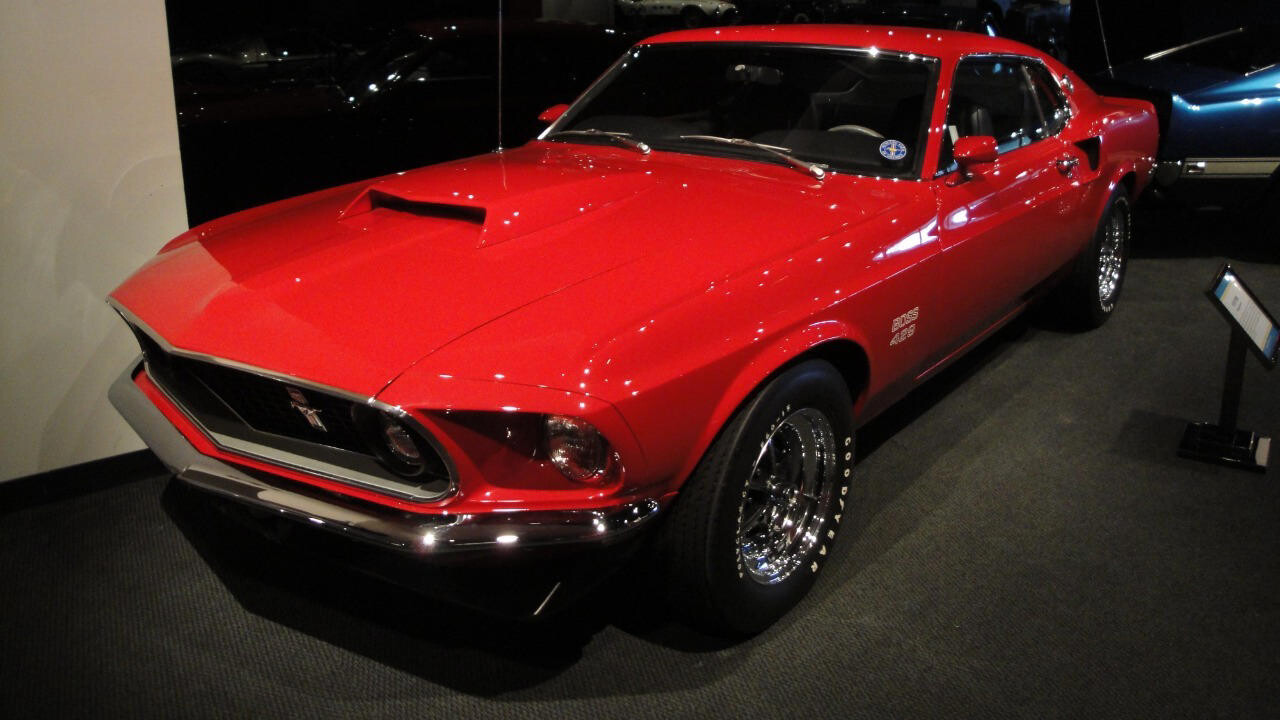
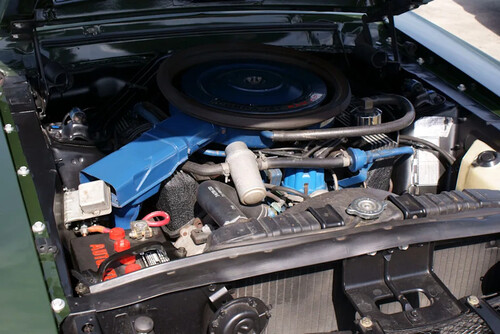
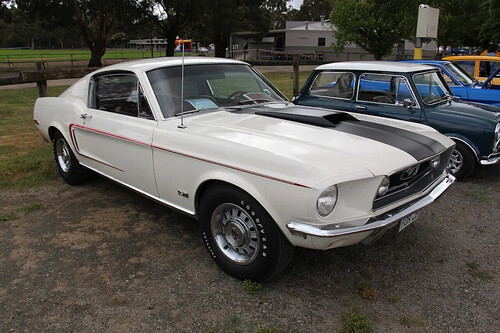
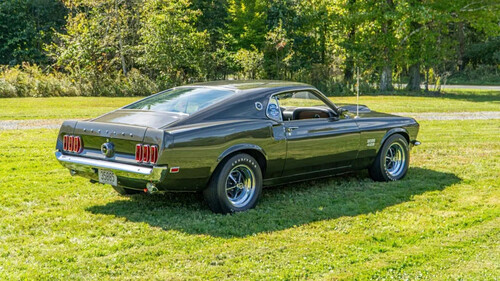
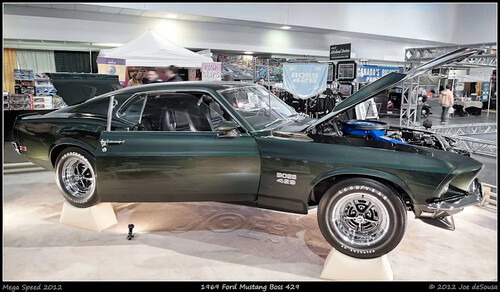
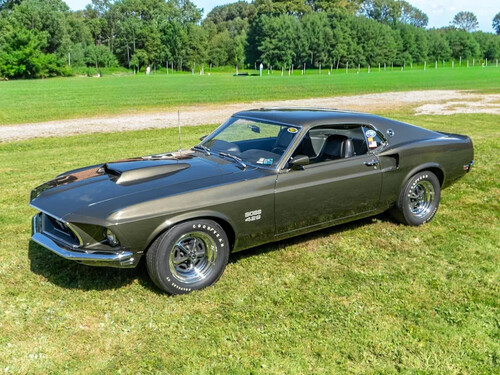
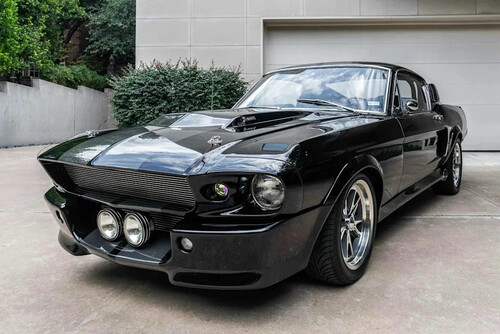
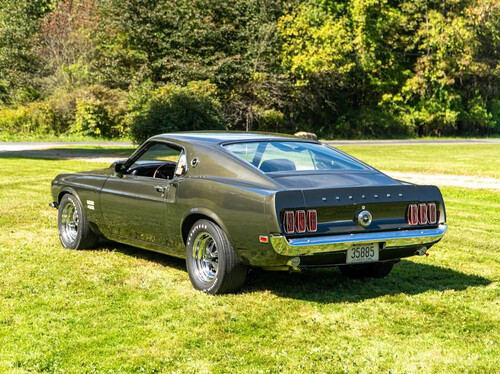
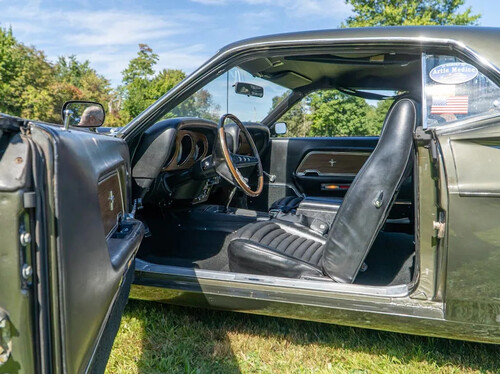
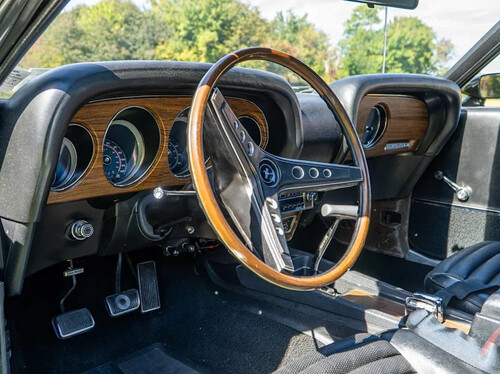
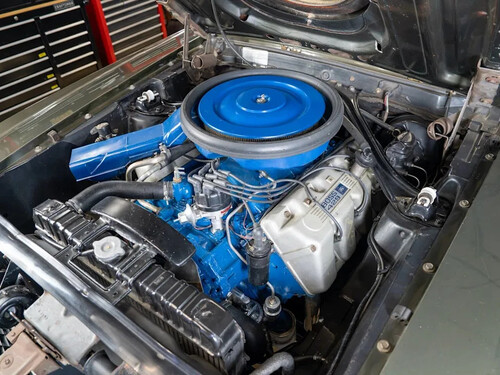
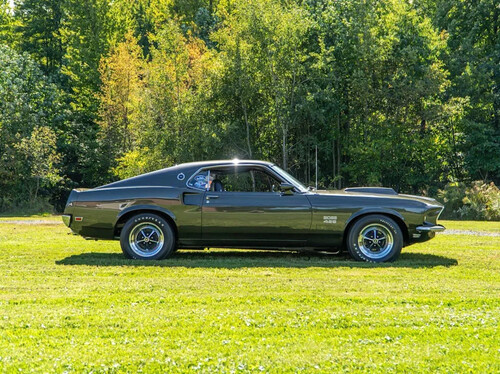
To meet racing rules Ford created the 1969 Mustang Boss 429 and it stuckThe 1969 Mustang Boss 429 began life as a rule book workaround, a road car built so Ford could run a radical engine in NASCAR. What started as a compliance exercise quickly became one of the most coveted muscle machines of its era, a car whose rarity, engineering quirks, and racing backstory have only grown more magnetic with time. More than half a century later, the Boss 429 has outlived the regulations that created it and turned into a benchmark for how racing ambitions can shape street legends. The NASCAR rule that forced Ford’s hand By the late 1960s, NASCAR had turned into an arms race. Manufacturers were chasing speed with slippery bodywork and ever larger, more exotic V8s. Dodge rolled out the Charger Daytona, and Ford answered with, but the company also wanted a new engine that could dominate long superspeedway races. NASCAR rules required that any engine run in competition had to be installed in a minimum number of production cars, which pushed manufacturers to build limited runs of barely tamed race hardware for the street. Inside Ford, engineers were already working on what became the Boss 429, a big block with a NASCAR focus that shared little with the small block performance engines of the day. The sanctioning body’s requirement for a production base meant Ford needed a showroom model to host this massive powerplant. Rather than shoehorn it into the full-size Torino alone, the company decided to pair it with its most marketable performance nameplate, the Mustang. That decision, driven by regulations rather than marketing brainstorms, is what set the 1969 Ford Mustang Boss 429 in motion. Homologation first, showroom second Homologation rules shaped the car from its earliest sketches. Internal planning made clear that the project existed to get the Boss 429 engine through NASCAR’s approval process, not to create a high-volume muscle variant. Both the Boss 302 and Boss 429 programs were conceived with that same purpose, and period accounts describe how Both the Boss because most racing divisions demanded a road-going version of any race engine. Ford needed at least 500 examples on the street to satisfy the rule makers. One later account of the program notes that to make the Boss package race legal, Ford had to units. That figure set the minimum, but Ford ultimately produced more, turning the homologation special into a short-lived but genuine showroom offering. The Mustang was chosen because it was already Ford’s performance halo, and the company understood that a limited run of extreme big block cars would generate attention even if the original intent was purely competitive. Why the Mustang got the monster Choosing the Mustang as the Boss 429’s host was not obvious from an engineering standpoint. The car’s engine bay was designed around smaller V8s, and the new semi-hemi big block was physically enormous. Ford’s full-size platforms offered more room, but the marketing value of tying the NASCAR engine to its youth-oriented pony car outweighed the packaging headaches. Contemporary enthusiasts have continued to highlight that the Ford Mustang Boss that tied race eligibility to production cars, which explains why such a track-focused engine ended up in a relatively compact coupe. Ford’s decision also created a neat internal hierarchy. The small block Boss 302 targeted Trans-Am road racing, while the big block Boss 429 targeted NASCAR ovals. Both sat at the top of the Mustang range, but the 429 was the more exotic, lower-volume machine. Marketing could present it as the most extreme Mustang on sale, even if its real job was to get the engine onto high-banked tracks in the hands of professional teams. Kar Kraft and the surgery required Fitting the Boss 429 into the Mustang required far more than a simple engine swap. The standard assembly line could not handle the modifications, so Ford turned to Kar Kraft, a specialist shop in Detroit that already had experience with the company’s GT racing efforts. Owners and historians have pointed out that Kar Kraft, a, became the solution for building 1969 Ford Mustang Boss 429 production cars. Kar Kraft reengineered the front structure, reshaping shock towers and inner fenders to clear the wide cylinder heads and intake. The front suspension geometry changed to accommodate the new layout, and the battery moved to the trunk to help balance weight. The cars arrived at Kar Kraft as regular big block Mustangs and left as Boss 429s, each one essentially a hand-finished homologation special. This process limited production and added to the mystique, since no other Mustang variant went through such extensive off-line surgery. The Boss 429 engine itself The heart of the car was the Boss 429 engine, a 429 cubic inch V8 with semi-hemispherical combustion chambers and large free-flowing heads designed for high rpm power. Period coverage of the program describes it as a NASCAR-bred 429 cubic inch semihemi engine that turned the Mustang into an extreme experiment in big block performance. The design shared little with the more common 390 and 428 street engines and instead prioritized airflow and durability at racing speeds. Modern commentators have called the Boss 429 the most misunderstood Ford engine of its era, in part because its street tune was deliberately conservative. One detailed video breakdown refers to the Boss 429 as the most misunderstood Ford engine of all time and explains how the factory specification left plenty of performance on the table for race teams to unlock. That gap between the engine’s potential and its showroom output has fueled decades of tuning, with builders still finding new ways to extract power from the architecture that started life in NASCAR garages. From rule book obligation to street legend At launch, the Boss 429 was not meant to be a mass-produced muscle car in the conventional sense. One later retrospective notes that when Ford unveiled the Boss 429 Mustang in 1969 it was not aimed at high volume sales. Instead, the program existed to satisfy homologation requirements first, with retail customers almost an afterthought. Yet the car’s combination of understated styling, massive engine, and limited availability quickly attracted enthusiasts who understood what they were looking at. Collectors now look back at the production run as tiny by muscle car standards. One widely cited figure puts total output at 1359 units for the two model years, which helps explain why The Mustang Boss 429 is one of the most valued and sought after muscle cars. That scarcity, born from the original 500 car minimum and the complexity of the Kar Kraft conversion process, turned what could have been a footnote into a cornerstone of Ford performance history. Subtle body, serious hardware Visually, the Boss 429 did not shout as loudly as some of its contemporaries. The cars wore modest graphics and relatively clean bodywork compared with the wild wings and nose cones of the NASCAR aero specials. The real clues were the widened front wheel openings, the functional hood scoop, and the slightly nose-down stance created by the reworked suspension. Enthusiast write-ups often emphasize how the 1969 Ford Mustang Boss 429 combined a relatively understated exterior with one of the most serious drivetrains Ford had ever offered in a road car. Underneath, the package included heavy-duty suspension components, a close-ratio four-speed manual transmission, and a stout rear axle to cope with the engine’s torque. Power steering and power brakes were common, making the car more usable as a daily driver than its racing roots might suggest. Yet the overall feel remained raw, with a big cam idle and a sense that the car wanted to stretch its legs far beyond legal speeds. The NASCAR connection that never faded The Boss 429’s competition mission gave it a direct link to Ford’s stock car efforts. The engine allowed the company’s teams to challenge rivals on long superspeedways, and the homologation cars ensured that NASCAR could point to a real production base. Later summaries of the era describe the 1969 Ford Mustang Boss 429 as a high performance brute designed with NASCAR in mind, and enthusiasts still refer to it as a NASCAR bred beast rather than a typical street performance package. That racing connection remains central to the car’s identity. One enthusiast post flatly calls the Ford Mustang Boss 429 a NASCAR bred beast and stresses that the Boss 429 is not just an engine, it is a legend. The continued use of that language decades after the original cars left showrooms shows how deeply the NASCAR story is woven into the model’s reputation. Owners and fans do not separate the street car from the race program that created it, and that unity is part of what keeps interest high. From homologation to collector royalty As muscle car values climbed, the Boss 429 rose faster than most. Auction houses now treat the model as a blue chip collectible, in part because of its limited production and in part because of its unique backstory. One detailed profile from a major auction company traces how the car went from a tool of homologation to a piece of history and explains how the Boss 429 Mustang in the eyes of collectors. Surviving examples command significant premiums, especially those with original drivetrains and documentation. The model’s status as one of 859 built in a given configuration or color can become a selling point, and restored cars often headline major events. What began as a compliance car is now treated as a crown jewel, with owners preserving them as much for their story as for their performance. Modern builds and the 9.8 liter monsters The Boss 429’s legend has also inspired modern reinterpretations. Builders and engine specialists have taken the original concept and pushed it far beyond anything contemplated in period. One striking example is a 1969 Ford Mustang fitted with a Kaase built big block that displaces 9.8 liters and produces 1,062 horsepower. Coverage of that car highlights it as a 9.8 Liter 1,062 BHP Kaase Powered Ford Mustang, a modern tribute that shows how far the basic architecture can be stretched. These builds keep the Boss 429 name in circulation among younger enthusiasts who may never have seen an original car in person. By pairing period-correct styling with contemporary power levels, they underline the engine’s inherent strength and the flexibility of the Mustang platform. At the same time, they reinforce the idea that the original homologation cars were only scratching the surface of what the design could do. More from Fast Lane Only Unboxing the WWII Jeep in a Crate 15 rare Chevys collectors are quietly buying 10 underrated V8s still worth hunting down Police notice this before you even roll window down