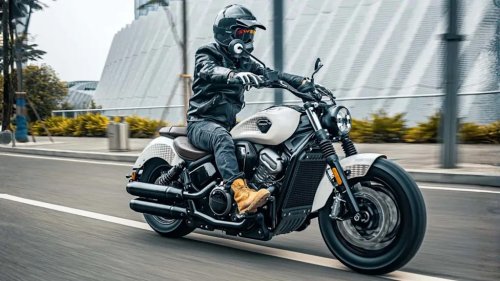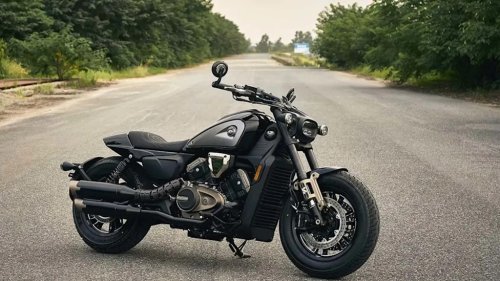
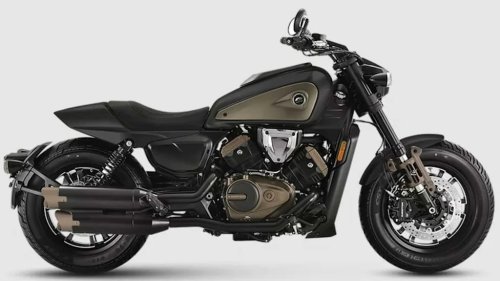
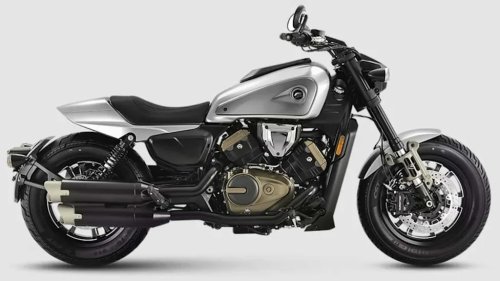
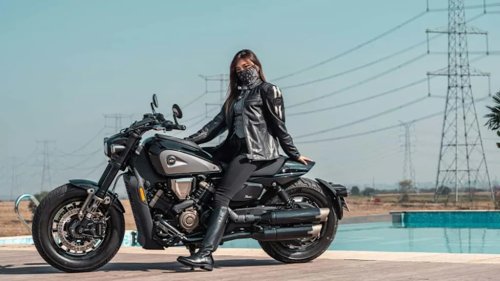



















QJ Motor SRV600 V4QJ Motor's V4-powered cruiser will soon feature an automatic transmission, and purists are surely going to lose their minds.If you've spent more than five minutes on motorcycle social media lately, you've probably seen the comments. Every time a manufacturer announces an automatic transmission, a certain corner of the internet reacts as if someone just proposed banning manual gearboxes altogether. The outrage is usually immediate, predictable, and completely disconnected from reality.Because, despite all the doom and gloom, manual motorcycles still vastly outnumber automatic ones, and nobody is forcing anyone to buy anything they don't want.The latest target of that outrage is QJ Motor's SRV 600 V4. Newly released type-approval documents from China show the company preparing an automated-manual version of its V4-powered cruiser. The system appears to use paddle shifters mounted on the left handlebar, while electronic actuators handle clutch operation and gear changes. The traditional shift lever is gone, and evidence suggests the rear brake may have been relocated to the left handlebar as well, creating a riding experience that's much closer to a scooter than a conventional motorcycle.QJ Motor SRV600 V4QJ Motor SRV600 V4Photos by: QJ MotorThe Future Of Riding?Yamaha to Debut Y-AMT on MT-09, I Can't Help But Wonder WhyIs This New American EV Motorcycle Just An Indian Motorcycle In Disguise?AdvertisementAdvertisementBefore anyone starts typing angry Facebook comments about the death of motorcycling, let's take a step back and look at what QJ Motor is actually building here. The SRV 600 V4 is already one of the more unusual cruisers on the market. Available in both a traditional cruiser style and a version that borrows heavily from the Harley-Davidson Fat Bob aesthetic, the bike uses a 561cc V4 engine producing a claimed 67 horsepower. That's a pretty distinctive setup in a segment where parallel twins and V-twins dominate almost everything.The automated version doesn't fundamentally change any of that. The motorcycle still uses a six-speed gearbox. It still sends power to the rear wheel through a belt drive. It still has actual gears instead of a CVT you'd normally see on scooters. The only difference is that the bike takes over clutch duties and can handle shifting on the rider's behalf. That's hardly some radical departure from motorcycling. If anything, it's following a path that several major manufacturers have already started exploring.Honda has been proving this point for years with the Rebel 1100 DCT. Riders who have spent time with that bike quickly discover something interesting. A cruiser and an automatic transmission complement each other remarkably well. Cruisers are built around comfort, accessibility, and relaxed riding. They aren't machines designed to reward constant gear changes or aggressive riding techniques. Eliminating clutch work simply allows riders to focus more on the road, the scenery, and the experience itself. That's not a compromise. It's a feature that aligns perfectly with what many cruiser riders are already looking for.QJ Motor SRV600 V4More importantly, automatic motorcycles help remove barriers to entry. Every experienced rider remembers what it was like learning clutch control, hill starts, and low-speed maneuvers. While those skills eventually become second nature, they can be intimidating for newcomers. Automatic transmissions reduce that learning curve and make motorcycles more approachable to people who might otherwise never consider riding. That's a positive development for an industry that constantly talks about attracting new riders and growing participation.AdvertisementAdvertisementWhat's always puzzled me about the backlash is that it treats motorcycling as some sort of exclusive club that benefits from keeping people out. The reality is exactly the opposite. More riders mean more motorcycles sold. More motorcycles sold means healthier manufacturers, stronger dealerships, better aftermarket support, and more investment in new products. It means larger riding communities, more events, more advocacy, and ultimately more people to share the road with.Motorcycling has survived fuel injection, ABS, traction control, ride modes, quickshifters, adaptive cruise control, radar systems, and a long list of other technologies that were supposedly going to ruin everything. Yet here we are. Riders still ride. Enthusiasts still buy motorcycles. Track days are still packed. The roads are still full of people enjoying two wheels in whatever way makes them happy.So if QJ Motor wants to build an automatic V4 cruiser, that's perfectly fine. If Honda keeps expanding DCT, that's fine too. The same goes for Yamaha's Y-AMT and KTM's AMT systems. The existence of these motorcycles doesn't diminish manual bikes in any way. They're simply additional choices in a market that benefits from having more options rather than fewer.At the end of the day, nobody is taking away your clutch lever. Nobody is confiscating your shift pedal. The motorcycles you already love aren't going anywhere. But if automatic transmissions help bring more people into riding, that's something worth embracing. The future of motorcycling depends on getting new riders excited about two wheels, not convincing them they're doing it wrong before they've even started.Source: QJ Motor