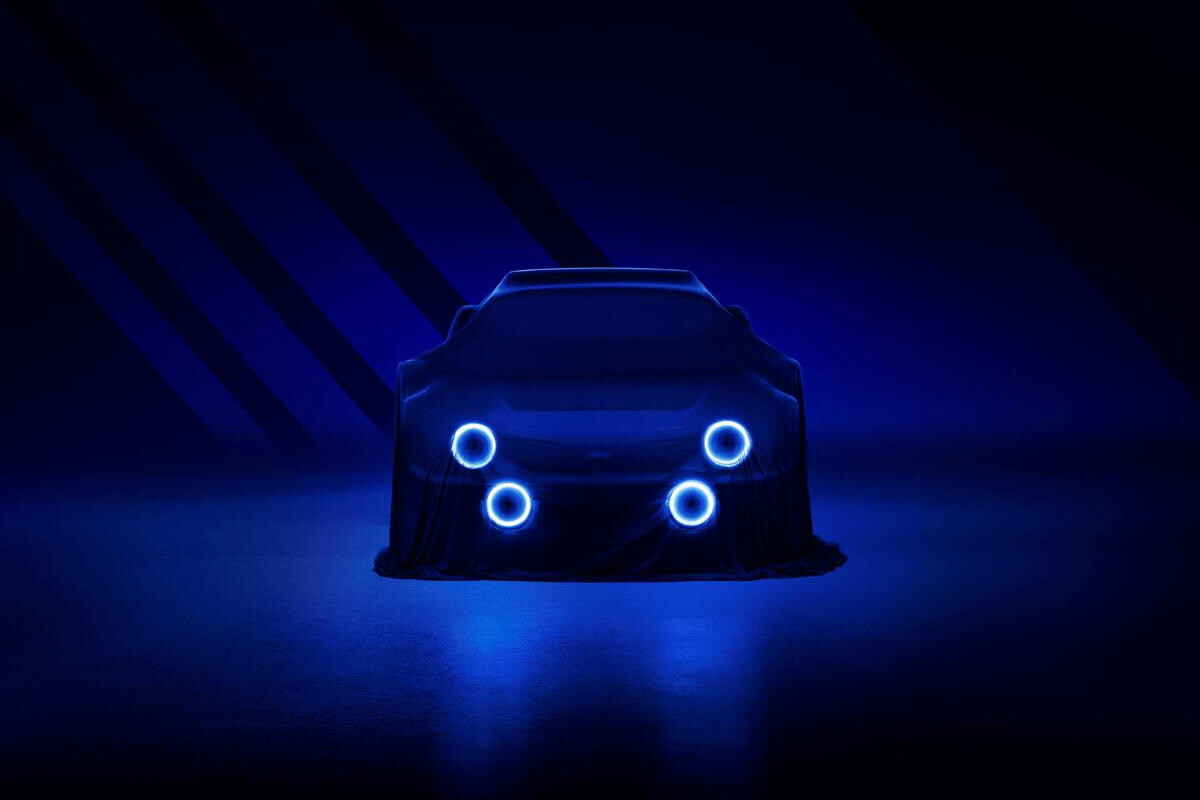
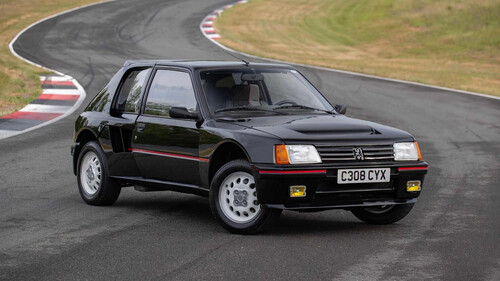
If you look at rallying in the 1970s, few people would argue that it is boring. The contenders were rear-drive small sedans such as the Ford Escort Mark 2 and Fiat 131 Abarth, and you would be forgiven for wondering why the windscreen wipers weren't fitted onto the side windows, such was their preference for hitting even straights at least a little bit sideways. Then there were some mad supercar-like rally cars in the '70s that shouldn't have worked, but they did.The Ferrari-engined Lancia Stratos was a cheese-shaped missile that looked like nothing else on a dirt stage, and even the rear-engined Porsche 911 was sent off on rally duties. The rally scene was booming in the '70s, with fans deciding there was no better way to spend a Saturday afternoon than standing in a forest in an anorak, with nothing but a flask of tomato soup for company.Which begs the question: who decided in the '80s that what rallying really needed was spicing up? Yet, the decision was made in 1982 to introduce Group B to rallying. This relaxation of the rules allowed Group B machinery to start from pretty much a blank canvas, creating lightweight mid-engined cars with composite bodywork, with turbocharged engines pumping out more than 500 horsepower through all four wheels. The only obligation was to make 200 road-going examples of these new rally cars. If you thought the sight of a Ford Escort Mk2 going full chat through a forest was exciting, then things were about to get a lot crazier. The Ford RS200 Was Ford's Entry Into Group B, But It Didn't Last Long Bring A Trailer1986 Ford RS200 Evo Specs With manufacturers given almost carte blanche to create the fastest rally machines the world had ever seen, Ford wanted in on the action. The Blue Oval had a long history of success in rallying and toyed with the idea of bringing a Mk3 Escort to the party, in the shape of the RS1700T. The car was switched from front- to rear-wheel-drive and featured a turbocharged, Cosworth-developed 1.8-liter engine. Quite quickly, Ford decided that, despite a huge amount of cash being poured into the project, the RS1700T wouldn't be quick enough on loose surfaces. Ford Decided To Build A New Rally Car Bring A Trailer Legendary rally driver Malcolm Wilson had raced a lot of Fords and became the test driver for a new, ground-up Group B competition. Wilson had something useful for the engineers at Ford, aside from his extensive experience and talent. He had bought an ex-Blomqvist Audi Quattro to drive in 1983 and the Ford team would use it as a benchmark to test the new car, which would be named RS200. It was unlike any production Ford, while cars like the Peugeot 205 T16 at least had a passing resemblance to a model you'd see in a supermarket car park.The RS200 has an aluminum honeycomb chassis wrapped in a composite body, and the all-aluminum RS1700T Cosworth BDT engine placed in the middle. Power was sent to all four wheels, and the car had 250 horsepower in road trim and more than 420 horsepower in competition spec. Unfortunately, even after all this development, the RS200's rally career was short-lived. The RS200 Barely Had Time To Get Its Wheels Muddy Before Group B Was Banned Bring A Trailer +The RS200 made its competition debut in September 1985 at the Lindisfarne rally, but was entered into just 13 rallies in Group B’s final 1986 season. The car had a sad connection to the end of Group B, with RS200 driver Joaquim Santos crashing into spectators in Portugal, but this infamous era came to a close as a result of the deaths of Henri Toivonen and Sergio Cresto when their Lancia Delta S4 burst into flames in Corsica. The RS200 Road Car Became Even More Ferocious Bring A Trailer Highlights Of The Ford RS200 Evo The Evo RS200 featured a bored-out RS200 engine to 2.1 liters Spartan cabin has a red-rimmed XR3i steering wheel Held the record for the world's fastest accelerating road car for 12 years The road version of the RS200 had a fairly manageable 250 horsepower. The interiors aren't exactly plush but had creature comforts such as an XR3i steering wheel, gray carpeting, door inserts, red Sparco seats, and a few other niceties. The Ford RS Owners Club says 148 of the 200 quota was made. Ford was working on an Evolution version of the RS200 but, with Group B scrapped, decided to make 20 road cars into Evo spec, with four being converted later. The RS200 Has A Bigger Engine And Bonkers Power Bring A TrailerThe RS200 Evo had a new exhaust manifold, and more power was teased out of the powerplant, which had been bored out to 2.1 liters. There was no official power figure, but around 600 horsepower was often quoted, depending on where the boost was set. The RS200 Evo was even 'the fastest accelerating car in the world' for 12 years, with Stig Blomqvist hitting 62 mph (100 kph) in a Guinness world record time of 3.07 seconds. Buying An RS200 Evo Today Bring A Trailer Shortly after Group B was banned, it was mind-blowing to think that there were plenty of competition-spec RS200s, Peugeot T16s, Audi Quattro S1s lying around gathering dust. Many of these cars, and substantial parts, were bought up by teams and drivers in the UK rallycross scene. In the '90s, it wasn't unusual to see RS200s going door handle to door handle with short-wheelbase Audis on muddy circuits. Some of these RS200s were said to be pumping out up to 800 horsepower. Here's How Much You'll Need To Get The Keys To An RS200 You probably wouldn't want to race an 800-horsepower RS200 in close combat with four or five other cars in a muddy field these days, however. To get your hands on one of the road cars today, expect to pay on average $402,779. For an Evolution, expect to pay at least $100,000 more. When an Evo appeared for auction in 2021, it fetched $502,500. The Return Of The RS200? Boreham Motorworks Boreham Motorworks, an official brand license partner of the Ford Motor Company, has announced that it will be bringing back the RS200 in 2025. The details are scant, but the car is expected soon, and it will be made using Ford’s original blueprints and built as a “period-sympathetic” model. Expect the new RS200 to follow a similar path to Boreham Motorworks' Escort Mk1, which will be limited to only 150 examples. This is a Mk1 RS200 created using advanced manufacturing techniques and modern materials. Boreham's entirely new, ground-up build of a road-legal RS200 is expected to be revealed in the summer of 2025 – stay tuned for the big return of a rally legend.