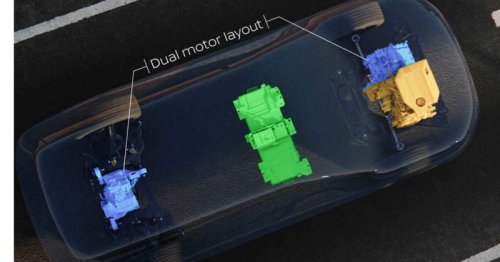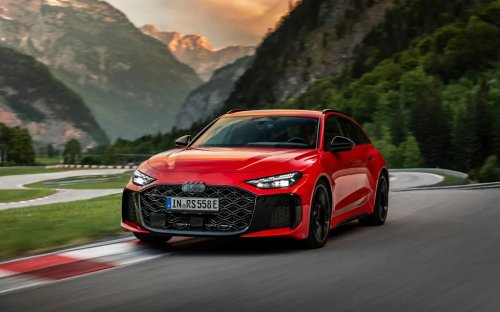
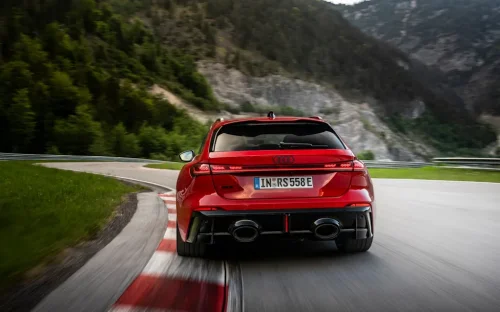
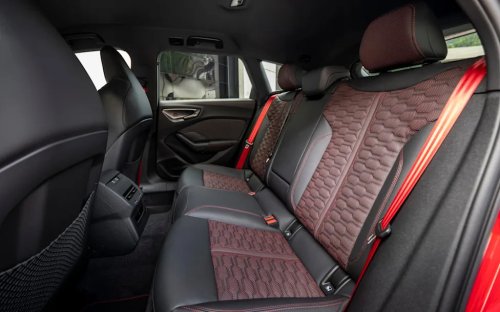
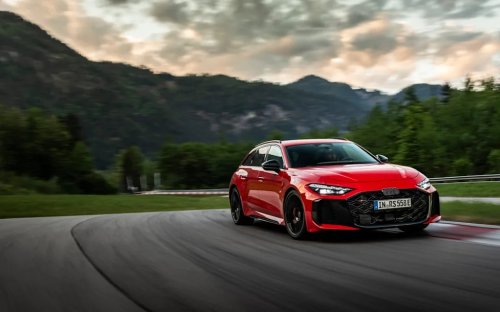
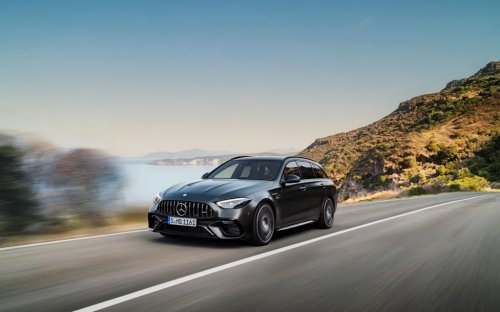
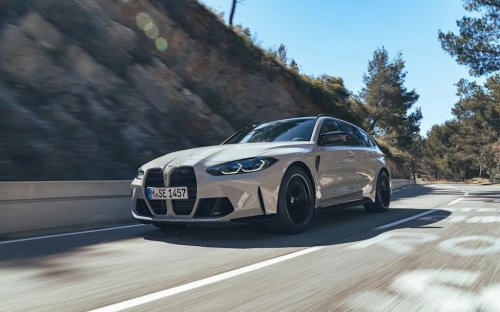




















The RS5 provides up to 52 miles of purely electric range - Tobias SagmeisterThe latest RS5 is either proof positive that the battery-electric revolution is failing, or that it is winning. The truth is, well, it's a bit of both.Certainly the battery-powered Audi e-tron GT wearing the hallowed RS high-performance badge hasn't set markets alight, but that's more to do with hubris on the part of its maker as well as changing attitudes towards battery-electric motoring. The e-tron GT might have looked like the future when the concept appeared in 2018, but in his first week in office, Donald Trump's big Sharpie struck down most of Joe Biden's environmental legislation and in May 2026 the US Environmental Protection Agency said there had been "an overwhelming rejection" of electric vehicles (EVs).Or did RS owners simply vote with their feet? Wealthy folk don't like being told what to buy and Sebastian Tuntke, RS marketing boss, admits: "RS customers just didn't want a battery car."AdvertisementAdvertisementSo unlike Mercedes-AMG, which replaced the V8 engine of the rival C63 saloon with a four-cylinder unit (a decision it has since apparently reversed), or BMW, which steadfastly continues with its time-honoured straight-six-cylinder engine in the M3, Audi has done a bit of both for the RS5, which is available in estate (Avant) and saloon forms.The hardwareThe 2.9-litre V6 twin-turbocharged engine gains variable-geometry turbos, reworked exhaust manifolding and water-to-air intercoolers which are more efficient in space and cooling performance. The unit also uses the Miller combustion cycle in which the inlet valves are kept closed for longer, providing a longer power stroke. As a result, Audi claims a 20 per cent improvement in fuel economy under load and an increase in power from the previous unit's 444bhp to 503bhp, along with peak torque of 442lb ft.A torque-converter eight-speed automatic gearbox containing a 175bhp/339lb ft electric motor directs the drive into a Torsen torque-sensing differential distributing torque front-to-rear between 70/30 and 15/85 per cent. The 25.9kWh gross (22kWh net) lithium-ion battery gives an electric-only range of 52 miles (as long as you don't use all of the 87mph EV top speed).With a total power and torque output of 630bhp and 608lb ft, the 0-62mph time is 3.6sec, although the top speed is limited to 155mph (177mph in the Vorsprung model). The quoted WLTP fuel consumption on a PHEV is meaningless, but 72.4mpg is claimed for the standard model, with CO2 emissions of 89g/km.Audi has designed a brand-new rear axle for the RS5 - Tobias SagmeisterThere's also a remarkable rear axle, which with the use of planetary gearing and an electric motor can supply up to 737lb ft of extra torque to each wheel by driving or braking across the axle. It's basically a highly accurate torque-vectoring system, which can point the nose into a turn and mitigate tail slides and nose-on understeer.AdvertisementAdvertisementAlthough the width, exaggerated by extended wheelarches, gives the RS5 a thuggish appearance, the overall look seems unconvincing. The only shared component with the standard A5 is the bonnet, but the rest of the front seems to be endless air ducts, while the fretwork gloss black grille looks very vulnerable to damage. The sills are so wide you wipe them with your trousers when alighting and then there are the ridiculous oval exhaust trims which barely hide the round genuine exhaust outlets inside.The standard Avant costs £91,300 (£89,400 for the saloon), the Carbon Black model is £97,385 (£95,485) and the fully loaded Vorsprung is £109,385 (£107,485 for the saloon). Add a few of the exorbitant option packs (£8,490 for ceramic brakes; £4,195 for the techno pack with 360-degree cameras; £2,210 for a sunroof and £1,495 for metallic paint) and your wallet is in for a beating.Inside jobThe interior is an improvement on Audi's much-criticised recent efforts. Materials and construction seem up to snuff, but there's so much of it squashing you into the sports seats in front of the spread of glass screens on the facia, including one for the passenger.Not only does it look a little cramped, there is not much room inside since this is effectively an A4-sized vehicle. The rear seats are just big enough for a couple of full-sized adults, but the boot swallows only 361 litres (1,302 litres with the rear seatbacks folded).Despite an improved interior, space is still lacking - Tobias SagmeisterThe facia graphics are overbright and distracting, although there's a logic to the touch tiles once learned. It's all fairly straightforward, but I thought we'd gone beyond merely cramming the heater controls into a touchscreen these days.AdvertisementAdvertisementThere are myriad settings for the drivetrain and the all-independent suspension featuring twin-valve damping. You can decide to run in hybrid mode or pure EV, then there are the driving-dynamics settings for Comfort, Balanced or Dynamic. Add in various RS settings accessed via questionable red buttons on the steering wheel, along with the set-up for the braking electricity recuperation, and even before you pull away there's a fair bit of decision making.On the roadThe launch in Austria involved a small racing circuit on which to test the tail-out credentials of the RS5, which it passed with aplomb. Audi has always been sensitive to the nose-on cornering tendencies of its high-performance all-wheel-drive cars, so let's just say that if you want to drive the RS5 fully sideways it is possible. With 603bhp overcoming the grip of the 285/30/21 rear tyres (each costing £260) the drifting 2.4-ton Audi was a sight to behold.But that sort of tyre-shredding behaviour tells you nothing about the dynamics of a car where it matters, on the road. On Alpine passes it feels heavy and wide, requiring precise steering to place the car on the approach to corners. The steering seems accurate but lifeless, while the brakes are super-sensitive and powerful.The RS5 has accurate steering and a satisfactory ride quality - Tobias SagmeisterThe all-wheel-drive set-up including the nifty rear axle is undoubtedly sophisticated, but most of what this car achieves on the road it does with mechanical grip from its tyres. It feels a bit of a blunt force; there's not much of the lightness of touch of high-performance rivals such as the BMW M3 or the Alfa Romeo Giulia Quadrifoglio.AdvertisementAdvertisementThat said, the ride quality (at least on manicured Austrian roads) is pretty good and in the Comfort setting the body settles down, while the drivetrain will deliver an estimated 37mpg once the battery has used all its extra urge.The Telegraph verdictI can see how RS enthusiasts will like this car, but those new to the market perhaps less so. The looks are challenging, luggage space is at a premium and from the driving seat the RS5 feels heavy and large. And that's not to mention the diminishing benefit-in-kind tax and VED advantages a PHEV used to attract.It's great fun for a while but, as they say of luxury yachting, the two best days are the one when you take delivery and the one when you hand it back.The factsOn test: Audi RS5 AvantAdvertisementAdvertisementBody style: five-door PHEV estateOn sale: nowHow much? from £91,300How fast? 155mph, 0-62mph in 3.6secHow economical? 72.4mpg (WLTP Combined), 37mpg on testEngine & gearbox: 503bhp/442lb ft, 2,894cc twin-turbo V6 petrol engine, eight-speed automatic gearbox containing 175bhp/339lb ft electric motor powered by 25.9kWh (gross) lithium-ion battery, four-wheel drive with central Torsen differentialMaximum power/torque: 630bhp/608lb ftCO2 emissions: 89g/km (WLTP Combined)VED: £280 first year, £640 next five years, then £200Warranty: 3 years/60,000 miles (optional extensions in years 4 and 5)The rivalsMercedes-AMG C63 S E Performance, from £101,055Despite the removal of the V8 engine, the Mercedes-AMG C63 S E Performance still delivers explosive accelerationMercedes admits the decision to drop the V8 engine might have been an error. For now this high-performance saloon is a 476bhp hybrid with all-wheel drive, but sales have been slow.BMW M3 Touring, from £109,560With its high-performance engine, the BMW M3 Touring is a solid alternative - Enes Kucevic PhotographyA monster estate, with 551bhp from its twin-turbo straight-six. Large grille aside, the styling is more subdued than the Audi's, but without a PHEV system the fuel consumption is a parlous 27mpg with commensurate tax and VED penalties.AdvertisementAdvertisementTry full access to The Telegraph free today. Unlock their award-winning website and essential news app, plus useful tools and expert guides for your money, health and holidays.