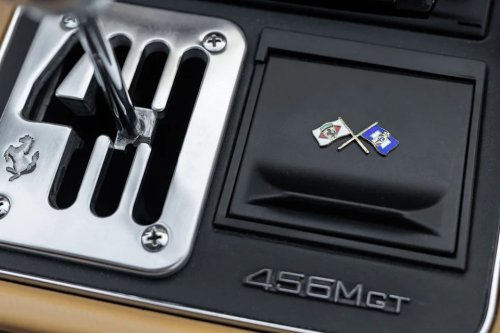
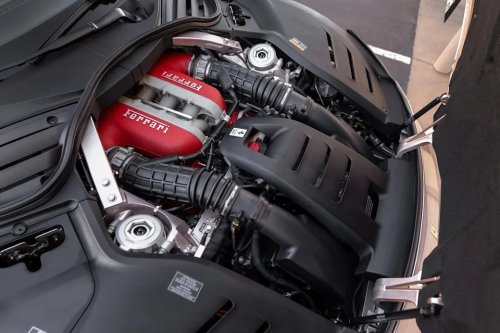
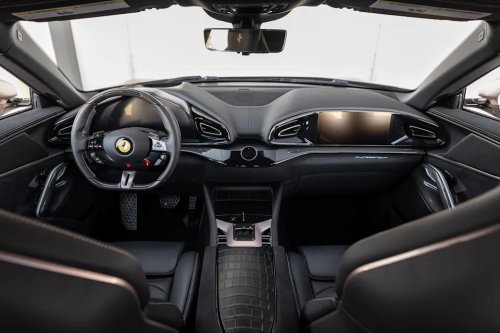
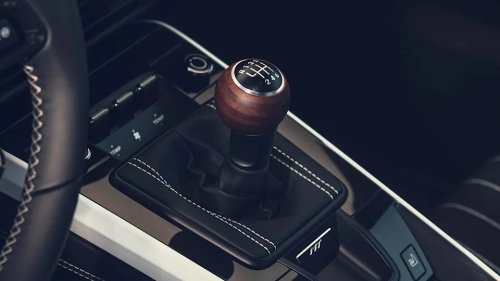
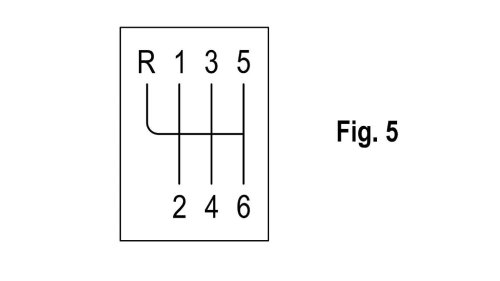
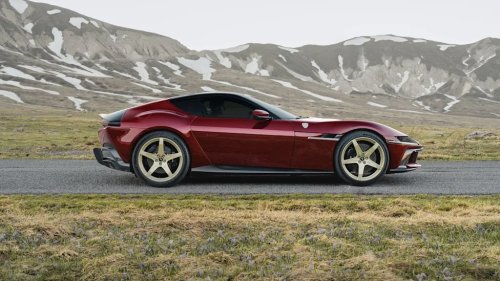
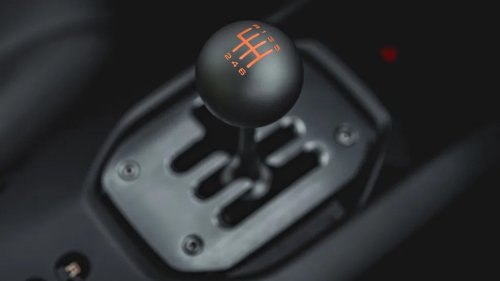
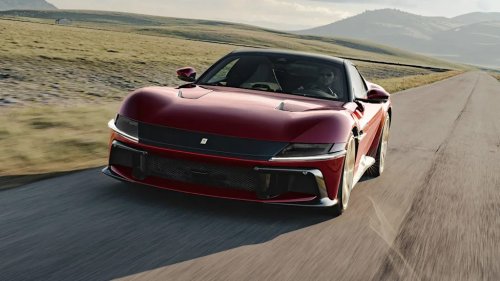
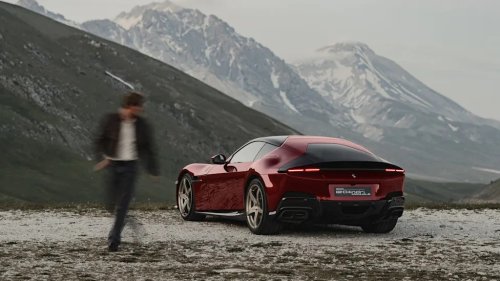
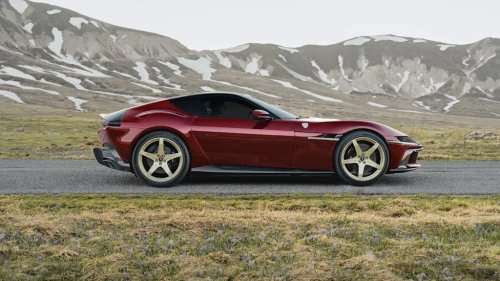
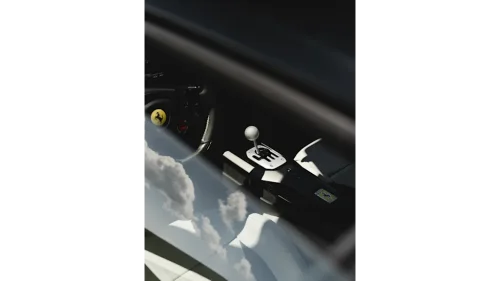
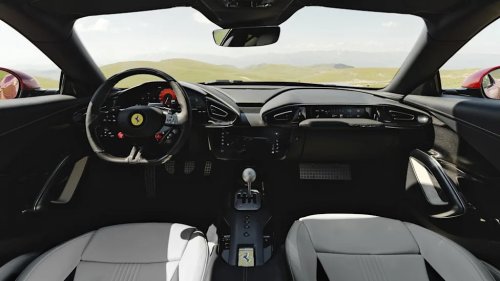
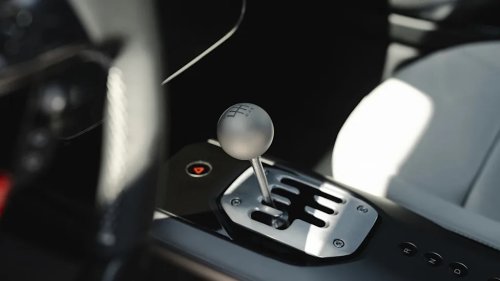
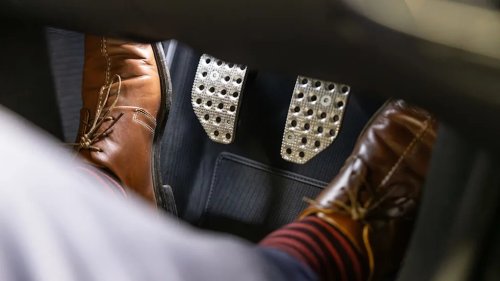
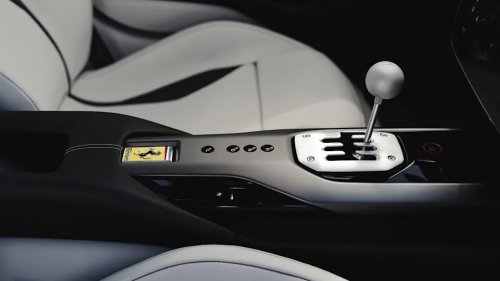
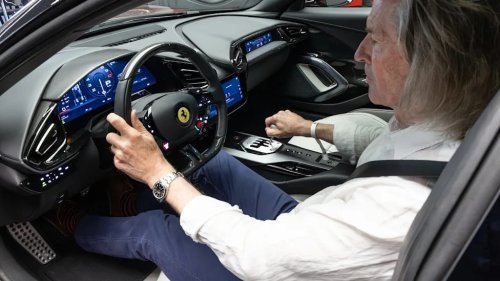
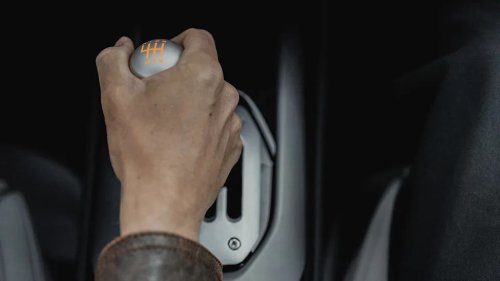
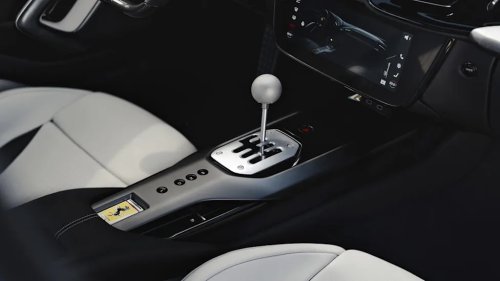
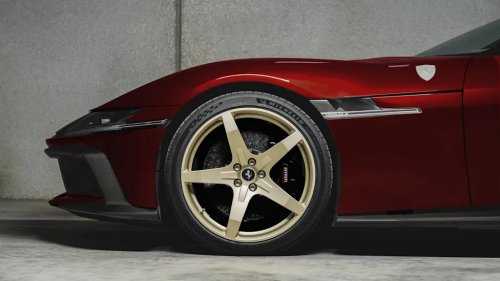
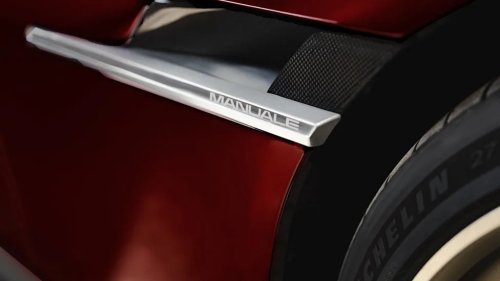
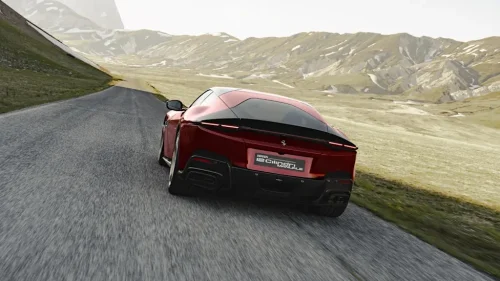
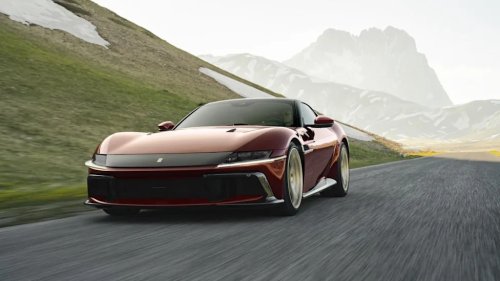
Ferrari 12 Cilindri Gets a Fake ManualFerrariWe've entered the age of the blue pill automobile. First, Mercedes-AMG launches an electric car that makes you think you're driving a rumbling, thundering V-8. Except you aren't. And now Ferrari has launched a car with a stick shift and clutch pedal that makes you think you're physically controlling the gears in its transmission. Except you aren't. That car is the Ferrari 12 Cilindri Manuale. If you believe the only proper Ferrari is a Ferrari with a V-12 engine and a traditional manual transmission, it's been designed and engineered to let you believe what you want to believe.Launched in the shadow of the the controversial Luce, the form of the 12 Cilindri Manuale is comfortingly familiar, but like the Luce, it's also a very different sort of Ferrari. Maranello has always been focused on building cars with engineering and technology that deliver maximum performance, both in a straight line and around corners. Even the Luce hews to this core philosophy. But the 12 Cilindri Manuale is a Ferrari that sacrifices some of that ultimate execution in the name of entertainment. This is a limited edition iteration of Ferrari's flagship 12 Cilindri grand turismo whose headline technology makes it slower.FerrariThe Manual Is Back—Kind OfMaranello openly admits the decision to develop a physical shifter and clutch pedal that allowed 12 Cilindri Manuale drivers to control the car's dual-clutch transmission was made purely in response to customer demand. Replacing the 12 Cilindri's slick eight-speed dual-clutch transmission (DCT) with a conventional manual was a nonstarter, however. Not only would that have required a wholesale rework of the car's floorpan, but there were no conventional manuals that could handle the 818 hp and 500 lb-ft of torque pumped out by the screaming V-12 under that long, lovely hood.AdvertisementAdvertisementInstead, a small engineering team headed by Ferrari's powertrain project engineering lead Valentin Marguet focused on developing a traditional mechanical interface— shifter and clutch pedal—that through a combination of servos and software actuated the gearsets and clutches in the DCT. "I see it as a layer on top of the DCT," said Marguet, who spent five years working on the development of that transmission, which made its production debut in the SF90. "I knew I had to bring back the mechanical experience while using what the DCT was offering in the best way."Marguet and his team thus spent a lot of time and effort working with Ferrari's chief development test driver Raffaele de Simone evaluating manual transmission cars from Ferrari's classic fleet. The goal was not only to ensure the actions of both the shift lever and the clutch pedal felt totally analog, but also that they felt true to the Prancing Horse's heritage—right down to the clack-clack-clack of the lever as it was worked through a modern version of the metal gate that has been a feature of Ferraris since the 1950s. "That mechanical layer is authentic," said Marguet of the kinematic mechanisms that anchor the shift lever and clutch pedal.FerrariEngineering the Illusion"We wanted to bring back the truth of the [gear change] gesture," Ferrari chief product development officer Gianmaria Fulgenzi told us of the 12 Cilindri Manuale's sole reason for being. Does it? We won't really know until we've driven the car. But it felt true enough as we played with the shifter and clutch in a lovely dark red Manuale coupe (the color's called Rubino Micalizzato) inside Ferrari Centro Stile at Maranello. There's a proper, springy heft to the clutch, and the metallic tactility of the shifter action feels as if you're genuinely moving gearsets back and forth. A strong detente snaps the lever to the center of the gate—crucial for quick second–third and fourth–fifth upshifts—and you press down on the top of the perfectly spherical aluminum shift knob as to push it across to the left and then up to engage reverse.The metal shift gate only has slots for six forward speeds. That's because in manual mode the system—dubbed Manuale by-wire—only uses the first six ratios of the eight-speed DCT, and not just because an eight-slot gate would simply be too confusing to use. The closely stacked first six ratios in the DCT best suit the high-revving characteristics of the car's 6.5-liter V-12, which produces its 818 hp at a dizzying 9,250 rpm, according to Marguet. "And you can still go above 186 mph in sixth," he said with a grin.AdvertisementAdvertisementDe Simone said Manuale by-wire lets drivers skip gears and to perform proper heel-and-toe downshifts, just as if they were driving a conventional manual. Manuale-by-wire is actuated by pressing the clutch pedal, which also introduces orange tones on the dash and on the backlit H-pattern atop the shift knob. The system's sensors prevent nasties such as over-revving if you switch to manual mode while moving and attempt to engage too low a gear or mistakenly grab second instead of fourth on a hurried downshift (the lever simply won't go into the slot), but if you're a klutz with the clutch while pulling away from a standstill, you can still stall the car.FerrariSlower on Purpose, More Fun by DesignIt's hard to grasp that underneath it all is the regular Ferrari eight-speed dual-clutch transmission that, left to its own devices in automatic mode, will drive the 12 Cilindri Manuale with the same seamless, hands-free efficiency as in the regular car. It's also hard to grasp that this is the first Ferrari that is unquestionably faster if you sit back and let the transmission do all the thinking. If you want to access the 12 Cilindri Manuale's 211-mph top speed, the transmission must be in automatic mode. And as no driver, no matter how skilled, can pump a clutch and move a lever fast enough to match the Ferrari DCT's lightning-quick upshifts, you're unlikely to beat the car's claimed 0–124-mph time of less than 7.9 seconds if you choose to shift gears yourself.The 12 Cilindri Manuale isn't only the first Ferrari in more than a decade with a stick shift in a center console. It's also the first Ferrari in more than a decade without paddles behind the steering wheel. And that speaks volumes about the 12 Cilindri Manuale's place in the modern Ferrari performance hierarchy. "For a performance car, the manual transmission is not something," Fulgenzi said last year when asked about the prospect of bringing a manual transmission back to Ferrari. "When you have your hand on the wheel and you can use the paddles, there's nothing better than that. Nothing, nothing, nothing."None of that is going to matter, though, said recently departed Ferrari chief marketing officer Enrico Galliera. He said owners who have for years asked Ferrari to build a manual transmission car—Maranello's last sports car with a manual was the F430; the last V-12 manual was the 599 GTB; and the last Ferrari of any kind with a manual was the California—weren't worried it may not have the outright performance of a paddle-shift model. "Our clients were willing to compromise on performance to have a manual gearbox," Galliera said. "They said, 'If you have to take out horsepower, that's fine. We want the pleasure of driving it.'"FerrariExclusivity Comes at a PriceFor all that, manual lovers have been a relatively small subset of Ferrari's customer base in recent years—barely 30 manual 599 GTBs were ordered from the factory in the five years to 2012, and just two stick-shift Californias were sold between 2010 and 2012. That perhaps explains why the 12 Cilindri Manuale will be a limited edition model, with production capped at just 1,499 vehicles. Keeping volumes low means Ferrari will also be able to charge a big premium for the car to recoup the cost of engineering and developing the Manuale by-wire system: Based on Italian pricing, the 12 Cilindri Manuale will sticker for more than $680,000 when the car arrives in the U.S. next year, a hefty 47.5 percent bump over the base 12 Cilindri coupe price.AdvertisementAdvertisementIn addition to the Manuale by-wire transmission, that money buys you a unique five-spoke forged alloy wheel with a choice of four different finishes, a metal laser-etched shield on each front fender, and pinstriping on the black panel between the headlights, the front splitter, and on the wings at each rear corner of the car that pays subtle tribute to the iconic 365 GTB/4, aka the Daytona. All cars will be configured through Ferrari's exclusive Tailor Made customization program, with 25 iconic Ferrari exterior colors that can be mixed and matched with exclusive leather and Alcantara interior trim.The Ferrari 12 Cilindri Manuale will only be available as a coupe; there are no plans for a Manuale by-wire version of the 12 Cilindri Spider. "We came to the conclusion that the coupe is the one that represents the purest Ferrari execution," Galliera said. Believe it.Photo credit: FerrariPhoto credit: FerrariPhoto credit: FerrariPhoto credit: FerrariAdvertisementAdvertisementPhoto credit: FerrariPhoto credit: FerrariPhoto credit: FerrariPhoto credit: FerrariAdvertisementAdvertisementPhoto credit: FerrariPhoto credit: FerrariPhoto credit: FerrariPhoto credit: FerrariAdvertisementAdvertisementPhoto credit: FerrariPhoto credit: FerrariPhoto credit: FerrariPhoto credit: FerrariAdvertisementAdvertisementPhoto credit: FerrariPhoto credit: FerrariPhoto credit: FerrariPhoto credit: FerrariAdvertisementAdvertisementPhoto credit: FerrariPhoto credit: FerrariPhoto credit: Ferrari






















 +34 others