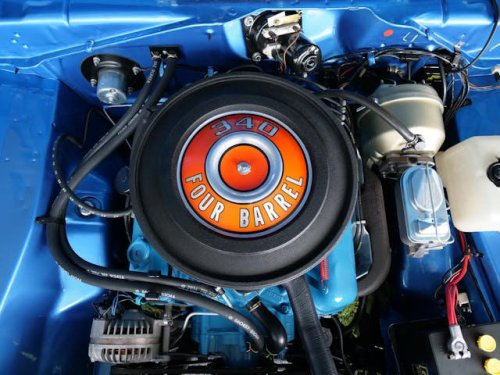
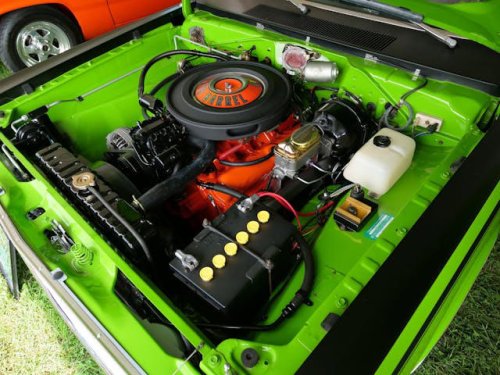
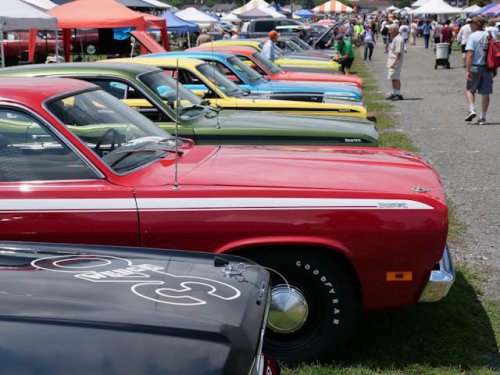
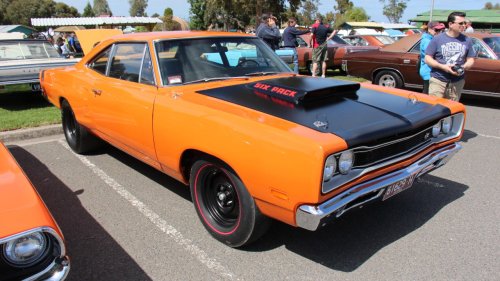
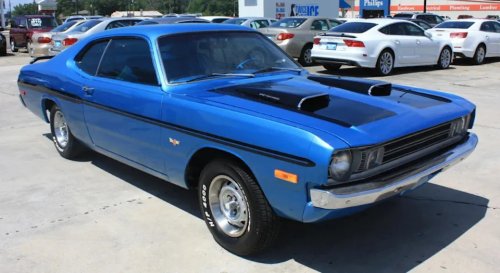
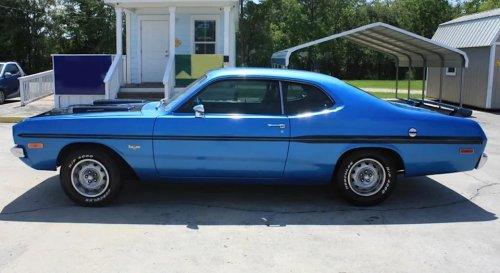
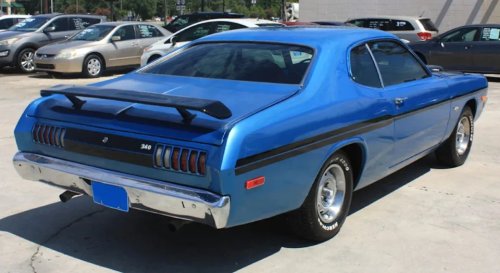
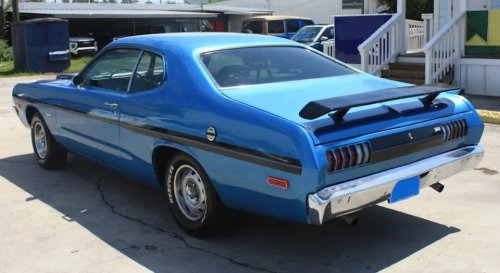
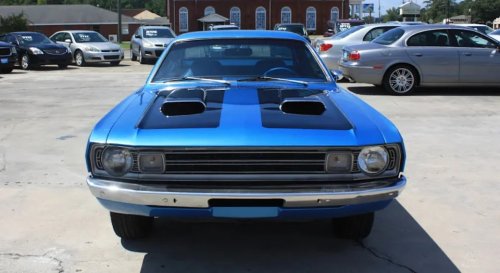
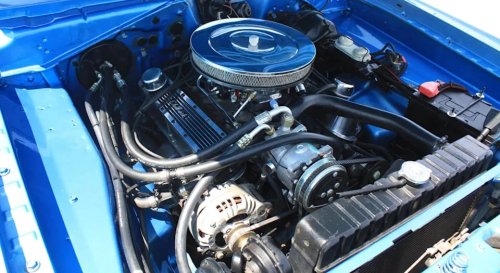
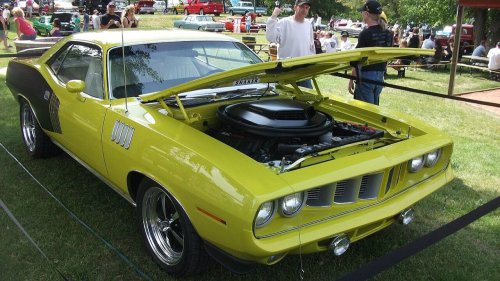
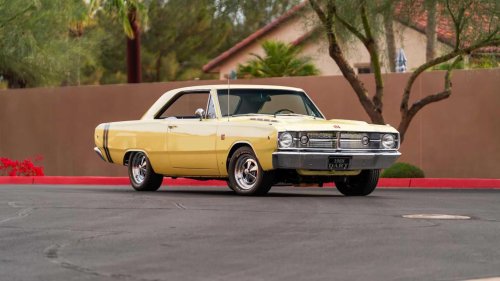
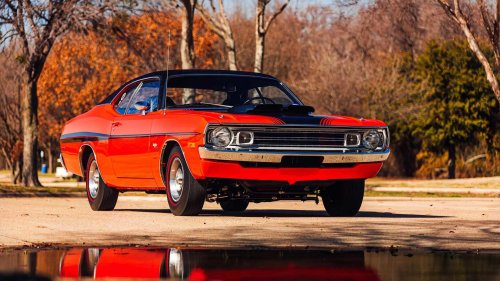
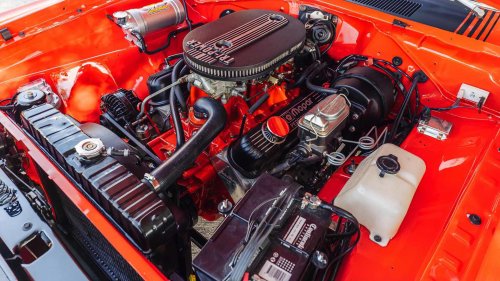
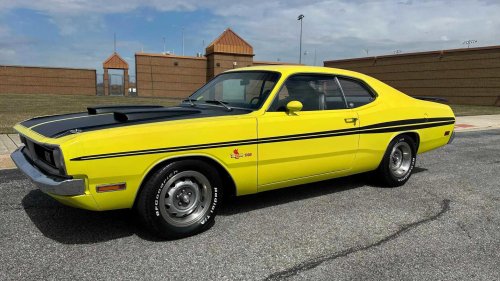
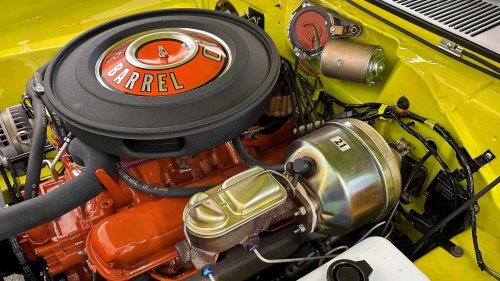
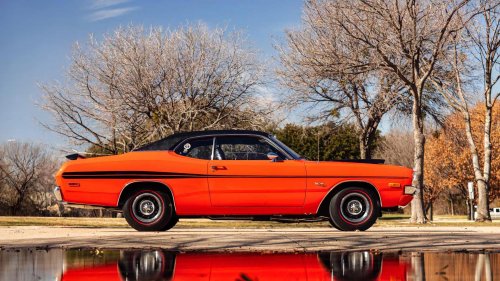
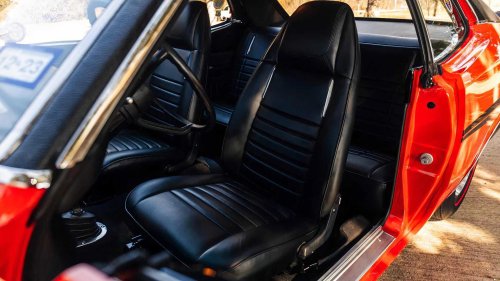
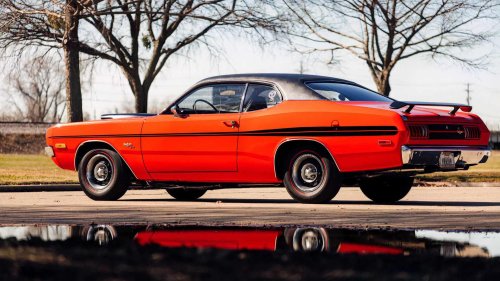
At the height of the muscle car era, performance usually came with a warning label. Bigger engines meant heavier cars, higher prices, steeper insurance premiums, and a growing gap between what enthusiasts wanted and what they could actually afford. For a lot of gearheads, the golden age of horsepower was starting to feel exclusive, reserved for those willing to pay the price in more ways than one.Luckily, not every performance car followed that formula. Some manufacturers quietly figured out a different path. The result was a kind of muscle car that remained humble. There was no need for flashy advertising to be taken seriously. No, this demonic Dodge only needed to show up and prove itself where it counted, on the strip.As any good gearhead can appreciate, this approach mattered at local drag strips and stoplight showdowns, where weight, traction, and throttle response often beat raw cubic inches. It also mattered to casual enthusiasts who wanted something quick without committing to a full-time race car budget.Today, that overlooked formula still makes sense. In fact, budget collectors are in luck because there is one compact, factory-built Mopar that delivered legitimate performance by working smarter, not bigger. It earned respect where it counted, avoided the pricing insanity that followed other muscle cars, and remains one of the most attainable ways to experience the era as it was meant to be driven. Meet the demonic Dodge that was built for us budget-minded gearheads. The Dart Demon 340 Was Dodge’s Lightweight Muscle Car Shortcut via Bring A TrailerWhen Dodge introduced the Dart Demon 340 in 1971, it was taking a very deliberate shortcut to speed. Instead of trying to chase larger engines, Dodge leaned into something every street racer already understood. It was quite simple, less weight makes everything faster.Built on the compact Dart platform, the Demon was conceived as a smaller, cheaper, and more agile alternative to the brand’s heavier Chargers and Challengers at a time when insurance costs and tightening regulations were beginning to squeeze traditional muscle cars.Production of the Dodge Dart Demon 340 was short and to the point. It ran for just two model years, 1971 and 1972, before the Demon name itself was dropped. Total production of the Dodge Demon reached 128,495 units. However, fewer than 20,000 of those units had the top-option trim with the 340-cubic-inch V8. In fact, the ‘71 model only had 10,098 units with the top option, and the ‘72 model year had even fewer at just 8,700 coupes with the 340 V8.via Bring A TrailerUnder the hood sat Chrysler’s legendary 340 cubic inch small-block V8. Rated at 275 horsepower (and commonly pushing higher figures on a dyno) in 1971 and slightly detuned in 1972 due to emissions changes, the engine was famously underrated. High compression, free-breathing heads, and a willingness to rev made it far more potent than the numbers suggested. Paired with a curb weight that hovered around 3,200 pounds, the Demon had the capabilities to embarrass larger cars with more advertised power. And that is exactly what makes the Demon special today. It was fast without excess, simple without being boring, and genuinely usable. Why The Demon 340’s Power-To-Weight Ratio Mattered More Than Cubic Inches via Bring A TrailerIn the golden age of muscle cars, cubic inches were the bragging rights currency. Bigger numbers on the fender usually meant bigger respect at the drive-in. The Dart Demon 340 quietly proved that mindset was already becoming outdated. Not only was the engine notoriously underrated at 275 hp (HotRod's dyno run showed actual stock output to be closer to 320 hp), but tipping the scales at just over 3,100 pounds, the Demon carried significantly less mass than Dodge’s big-block Chargers and Challengers. That weight difference transformed how the car performed everywhere. Acceleration improved, braking distances shortened, and the car felt sharper off the line and through corners. The 340 small-block did not need heroic displacement because it was not dragging excess bulk down the track.via Bring A Trailer The engine itself was perfectly matched to the platform. The 340 was designed to rev freely and deliver strong mid-range torque. The throttle response was immediate, while the gearing felt more aggressive. When going toe-to-toe with heavier muscle cars, the Demon could launch forward almost effortlessly, surprising drivers used to heavier muscle cars that needed more time and space to build that same momentum. This was the budget-friendly, lightweight muscle car that delivered more than what was expected from it.Looking back, it’s clear that the Demon’s power-to-weight advantage paid off. The weight transfer at launch improved traction without exotic suspension tricks. It also meant the Demon punished mistakes less. Drivers did not need perfect launches or massive horsepower to run competitive times. So, over time, gearheads began to realize that consistency became the advantage with this one.Now, over five decades later, this is why the Demon 340 still resonates with knowledgeable enthusiasts. You see, this mighty little Dodge embodies the time when importance was finally placed on efficiency-based performance. The performance capabilities of a muscle car of this size came decades before anyone was ready for it or really expected anything like it. It wouldn’t be until decades later that the concept the Demon was built around really became mainstream. The Dodge Demon 340 was a car that delivered real speed by working smarter, not harder. How The Dart Demon Earned Respect At The Drag Strip via Bring A TrailerThe Dart Demon 340 did not earn its reputation through advertising hype or showroom bragging. It earned it the hard way, one pass at a time, at local drag strips across the country. This was a car built perfectly for grassroots racing.Its compact size and lighter weight gave it an immediate advantage off the line. With less weight over the nose, the Demon transferred weight rearward during launches, helping plant the tires without elaborate suspension setups. Pair that with the 340’s strong low- and mid-range torque, and the result was a car that left hard and stayed composed through the run. It was the kind of setup racers loved because it worked with minimal fuss.via Bring A Trailer A Low-14-Second Quarter Mile Time, Bone Stock The Demon 340 could launch itself from 0 to 60 in the low 6 seconds. Maybe even more impressive, period-correct Demon 340s routinely ran quarter-mile times in the low 14-second range, and well-driven examples could dip into the high 13s with nothing more than tires, gearing, and tuning. That placed the Demon squarely in the mix with much larger and more expensive muscle cars. Importantly, it did so without stressing driveline components or requiring constant wrenching between runs.The Demon’s success wasn’t limited to factory form either. Its straightforward engineering made it the perfect rig for gearheads to modify. And racers of the ‘70s and beyond wasted no time taking advantage of this fact, making cam swaps, intake upgrades, and rear-end changes. In the ‘70s, the drag strip meant something. And that drag strip credibility the Demon earned is why the gearheads still admire and respect it all these years later. Why The Dart Demon 340 Is Still One Of Mopar’s Best Muscle Bargains via Bring A TrailerBack in the early ‘70s, sure, the Dodge Dart Demon was a pretty sick rig, but its biggest appeal was actually its starting sticker price. You see, in 1971, a Demon 340 stickered at just over $2,759. This was savings for young gearheads, especially compared to big-block Chargers and Challengers that required at least a few hundred dollars more to get into the base model and even more for more capable trims.Even better, the Demon delivered real V8 performance without forcing gearheads to break the bank. So, for budget-minded gearheads, it's easy to see why the Demon’s value-first mindset is exactly why it draws the attention of gearheads over 50 years later. Dodge Demon 340 Pricing Today via Bring A TrailerToday, the Demon 340 remains a budget-friendly entry point into genuine Mopar muscle. J.D. Power notes that the average retail price of the Dodge Demon 340 sits at just $16,700 today, with the higher-end examples averaging closer to $30,600. Now, that’s music to a budget-minded gearhead’s ears.However, it’s important to realize that today’s price varies based on mileage, documentation, and overall condition. Thus, premium examples often fetch a great deal more, with prices hovering in the mid-$40,000 to low-$50,000 range. For example, Classic.com data indicates that the average auction price of a Demon 340 is sitting around $38,358 today.Just take this 1971 Dodge Demon 340 4-Speed that sold via Bring a Trailer, for instance. Finished in yellow paint with black racing stripes, one lucky gearhead was able to snag this Demon for just $53,000. Even at this price, that puts it far below six-figure Mopars while still offering factory V8 credibility and real performance history.For modern gearheads, the Dart Demon 340 also fits how enthusiasts actually use classic cars today. It is easier to drive, easier to maintain, and easier to enjoy on real roads than many larger muscle cars. Parts availability remains strong, and tuning knowledge is widespread.In a market where muscle car prices have seemingly soared into another dimension, detached from reality, the Demon 340 stands out as an honest value option. It is respected because it earned that respect the hard way, and it remains desirable because it still delivers exactly what it promised from day one: smart, accessible performance.Sources: Classic.com, DodgeGarage, HotRod, Hagerty, Hemmings, J.D. Power.



















 +22 others