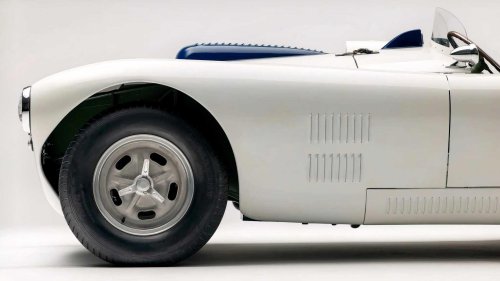
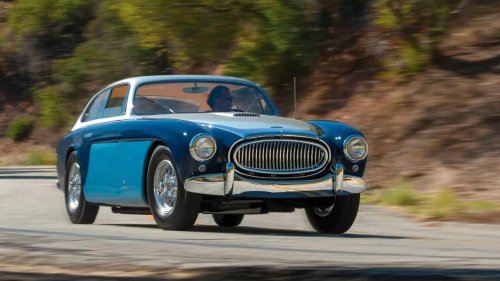
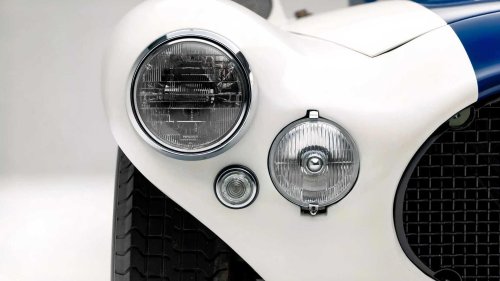
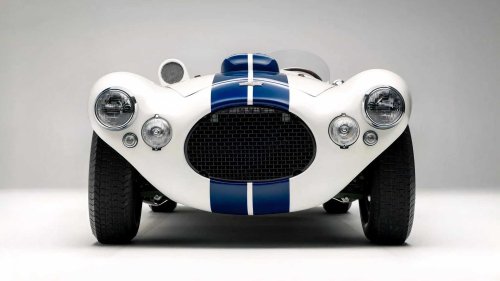
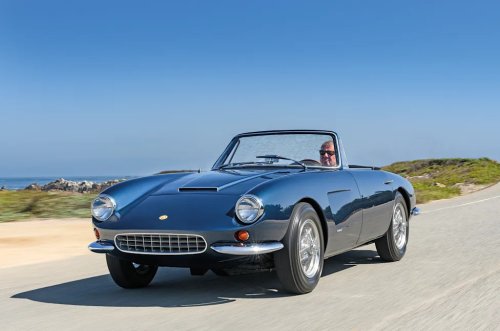
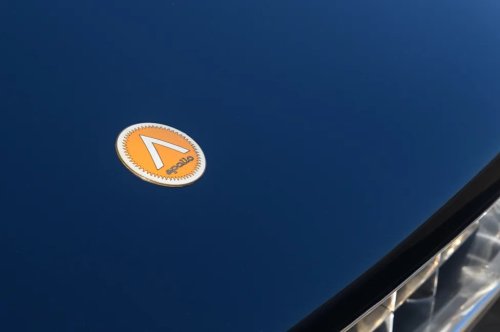
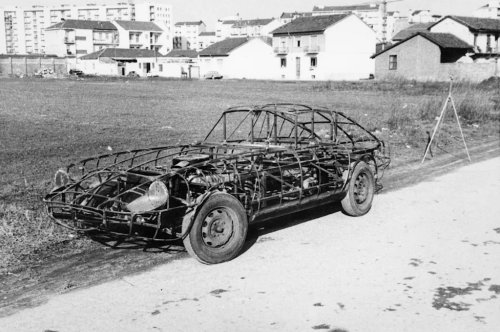
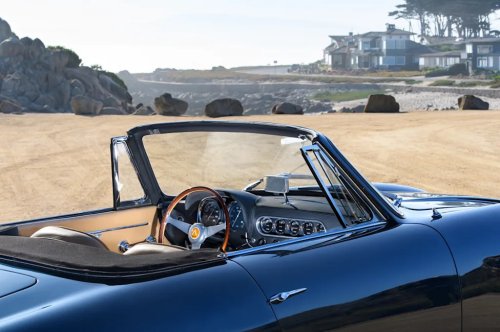
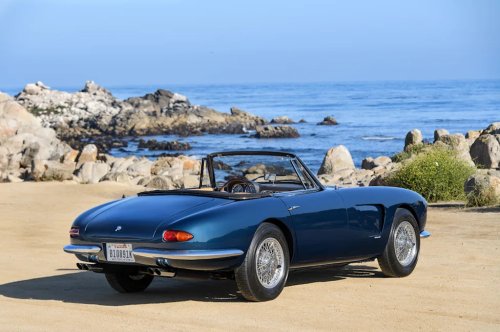
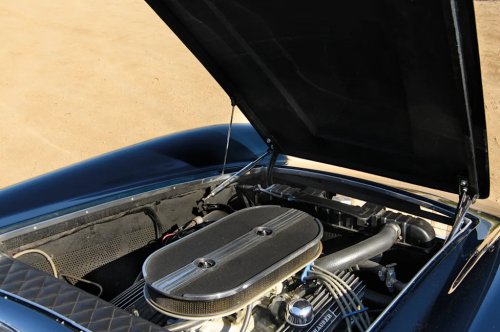
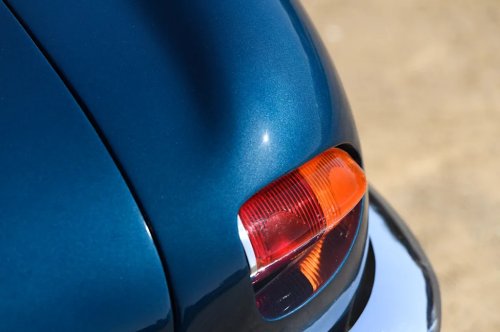
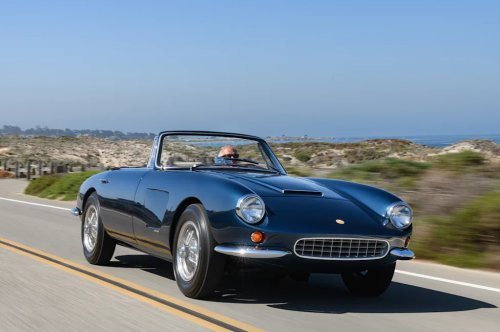
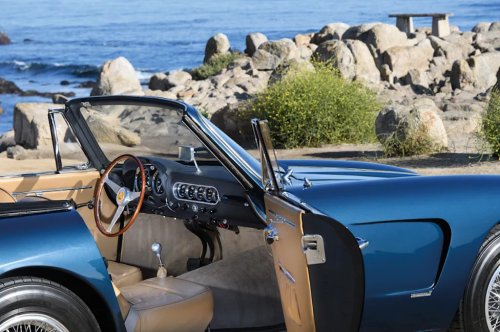
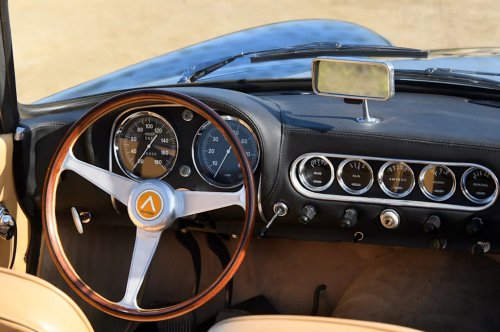
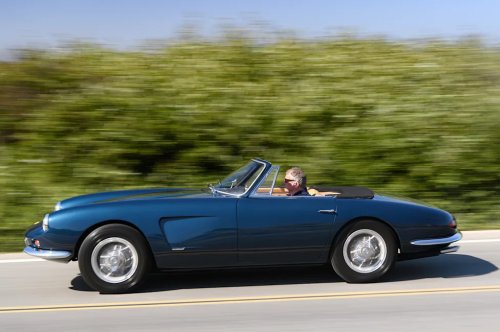
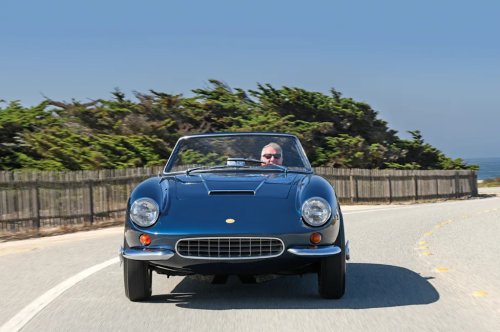
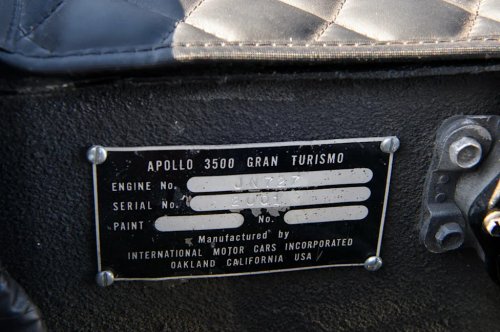
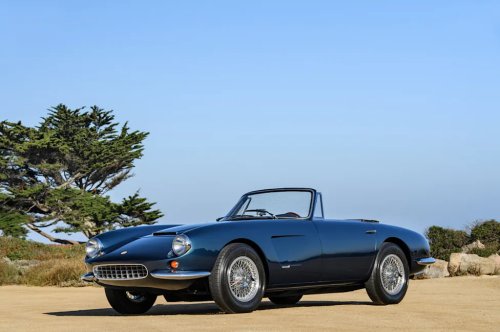
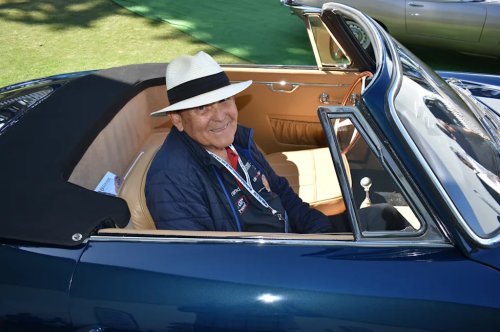
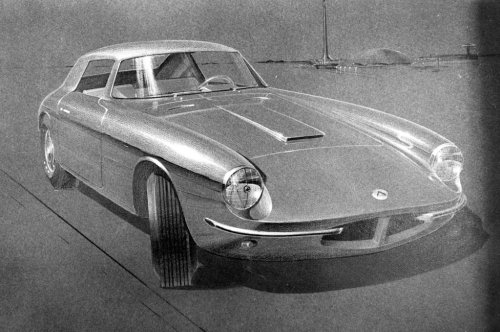
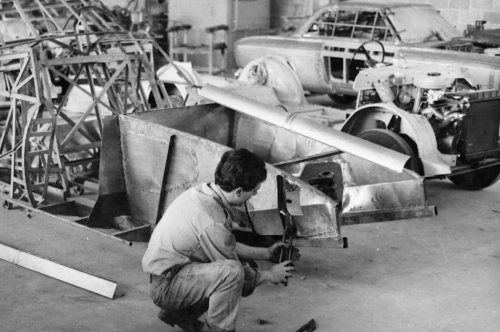
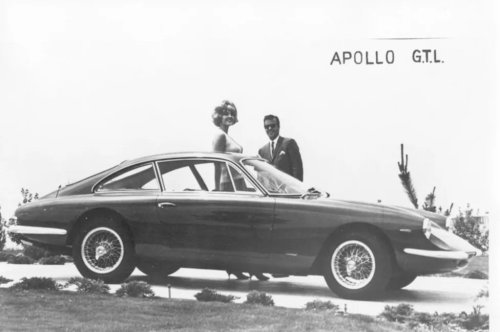
This American classic car thinks it’s a FerrariClassic & Sports CarMartin BuckleyMon, September 14, 2026 at 4:00 AM UTCAdd us on GoogleClassic & Sports Car – Apollo 3500 GT: the American that thinks it’s a FerrariIn the early '60s, Milt Brown was a young Californian from a comfortable but not gold-plated background who dreamed of building a car of his own design.To dream of such things, even if most didn't get beyond scale model or prototype stage, was not an unrealistic fantasy at the time.There were fewer regulations about safety and smog, and in sunny, wealthy California it seemed anything was possible: it was, after all, both the home of the DIY sports car – as detailed monthly in the likes of Mechanix Illustrated – and a Mecca for imported exotica.AdvertisementAdvertisementIt was a heady combination that could hardly fail to stoke the enthusiasm of a young man who, by the age of 17, was driving himself to school in an MG TD and designing his own Class H racing car.Classic & Sports Car – Apollo 3500 GT: the American that thinks it’s a FerrariA decade later came his Apollo, a true American Grand Touring car in the European mould, combining Italianate styling with practical US engineering and ingenuity.Of the 88 built between 1962 and '65, this car, chassis 2001/204B, is perhaps the greatest prize: the first of just nine Apollo Spiders (and only five still known to exist).This is the only one of those nine to have the 3½-litre Buick Special all-aluminium V8, a crucial element in the good handling and sporty feel of the early Apollos.AdvertisementAdvertisementIn many ways it was the availability of this engine, in the new compact Buick sedan, that consolidated Brown's thoughts on the project.Classic & Sports Car – Apollo 3500 GT: the American that thinks it’s a FerrariThe bodies for all of the Apollo coupes were built in Turin by Frank Reisner's Intermeccanica, which could make shells for a fraction of the cost of the likes of Bertone or Pininfarina by using local freelance artisans who beat the steel panels out on tree stumps.He committed to building two a month, sent painted and trimmed to Milt Brown's Oakland works where they were mated to their drivetrains.Priced at $7105, the first production Apollo 3500 GT coupe was shown at the LA Auto Show in January 1963.AdvertisementAdvertisementThe creation of the open-top Apollo seems to have been the result of a casual conversation.Classic & Sports Car – Apollo 3500 GT: the American that thinks it’s a FerrariBrown, now a sprightly octogenarian who takes a keen interest in his belatedly appreciated offspring (and still owns one), takes up the story: "I was in Italy at Intermeccanica coming up with improvements for the coupe in spring '63."We knew we were going to have a stand at the San Francisco Auto Show in the fall and had talked about a convertible, so we got on the phone to Scaglione, talked about it, had a meeting – and two days later he came back with sketches."We said, 'Fine, let's go ahead,' and the car arrived a month before the show.AdvertisementAdvertisement"Because of this car we got a premium spot, much better than Ferrari."Classic & Sports Car – Apollo 3500 GT: the American that thinks it’s a FerrariOne of the board members of IMC (International Motor Cars, the company Brown formed to build the Apollo) was Dr Hayden Gorden.A car enthusiast, nuclear physicist and Apollo stock-holder, Gorden bought the convertible and kept it for many years."When he wanted to get it restored I helped him," recalls Brown, "but then he passed away and the car was left outside for two winters."Finally, his widow put it up for sale at a gas station in California near where I live."She wanted $50,000 but it had mouldy seats and rusty wheels and nobody knew what it was, so it just sat there for six months.AdvertisementAdvertisement"I couldn't afford it, but I later got a $25k insurance settlement and gave her another five."Classic & Sports Car – Apollo 3500 GT: the American that thinks it’s a FerrariThe car came second in class at the Pebble Beach Concours d'Elegance back in 1995 and was later sold to Brown's former sales manager George Finley, who also owns two coupes.Brits know this car's compact motor as the Rover V8.In the Apollo it sits well back and very slightly askew under the front-hinged bonnet, running Offenhauser manifolds with the dynamo doubling as the rev-counter drive.In the back, the boot is mostly full of a spare Borrani wheel and an internal fuel filler; later cars had them on the outside.AdvertisementAdvertisementWhat initially look like E-type rear lights are probably Ferrari (my guess is 250GT PF Coupé).Classic & Sports Car – Apollo 3500 GT: the American that thinks it’s a FerrariDelicate quarter-bumpers and a simple egg-crate grille add minimalist jewellery to a shape that is pretty – almost beautiful – but doesn't entirely come together.Franco Scaglione's reworking of Ron Plescia's original design is an improvement, but still has too much nose in proportion to its tail.The Spider arguably works best, but it is almost annoying to look at because it's so nearly right. Better to drive it.You sit low in soft, semi-bucket seats with fixed backrests.It is a narrow but spacious two-seater cockpit; talking with E-type owners, Brown realised that tall, well-nourished Americans had trouble getting in, particularly women in short skirts.Classic & Sports Car – Apollo 3500 GT: the American that thinks it’s a Ferrari"We had a lot of legroom; 20-35% of our customers were over 6ft tall, so they couldn't fit in an E-type."AdvertisementAdvertisementThe large transmission tunnel was a conscious design decision by Brown to keep air flowing around the gearbox in the name of reduced heat soak, as well as easier access when it's time to swap the clutch.Negotiating the doors is slightly awkward and your feet sit deep in the footwells.Apart from slightly offset GM-sourced pedals, the atmosphere of the Apollo is authentically Italian, including lots of exposed screwheads, Lancia door furniture and locks, a Nardi wood-rim steering wheel and Ferrari-type Veglia instruments.Classic & Sports Car – Apollo 3500 GT: the American that thinks it’s a FerrariThe example pictured here features the optional lapbelts and chrome gearknob, but it lacks air-conditioning.AdvertisementAdvertisementChromed frame tubes for the easy-to-manipulate top are another high-quality touch, and convertible number one is unique in having chrome on top of the doors as well as around the central instrument cluster.The Apollo 3500 GT is quick, if not blisteringly so, on 200bhp.Yet it offers sufficient urge to keep on-the-road progress both interesting and effortless, as you would expect from a car that weighs 700lb (318kg) less than a Chevrolet Corvette (or about the same as a Triumph TR4).Classic & Sports Car – Apollo 3500 GT: the American that thinks it’s a FerrariIt is flexible or free-revving to choice, with a deep, fruity burble, and feels good for 0-60mph in 8.4 secs and 130mph – as quoted in enthusiastic reviews in the specialist press, the road tests consistently praising the car's detail quality and finish.AdvertisementAdvertisementWhat you don't expect is the overall 'together' feel of the Apollo.Brown's ladder-type, 4in square-section chassis doesn't rattle or shimmy and the four-link Buick rear axle refuses to hop or wind up when asked to put power down out of a corner.The ride feels smooth, the well-balanced brakes much better than the all-drum specification suggests.Classic & Sports Car – Apollo 3500 GT: the American that thinks it’s a FerrariThe front suspension and steering are also Buick, but Brown quickened the ratio by lengthening the drop arm, which makes for steering that is light and direct – rather like an E-type, in fact.The Borg-Warner T10 'box, as found in the Corvette, is normally a hefty thing to use; in the Apollo, with Brown's modified linkage, the change is light and precise with longish movements.The general attitude is neutral in corners, refined in a straight line and with an overall sense of a civilised machine that is not out to give you a fight.Brown is adamant that the 5-litre, iron-block engine makes the later 5000 GT another animal altogether: "That extra 150lb makes it feel like a different car."Classic & Sports Car – Apollo 3500 GT: the American that thinks it’s a FerrariProduction at Oakland finished in mid-1964 with 39 cars completed; four unfinished shells were sold off to be completed by their owners.To keep Reisner on side after the collapse of Apollo (and with hopes of reviving it), Brown allowed him to sell bodies to a firm in Texas that marketed the car as the Vetta Ventura; 19 bodies went out but only 11 cars were completed, the remainder being built up by a garage called Precision Motors as late as 1971.Bizarrely, Apollo production did restart – briefly – in Pasadena when local attorney Robert Stevens bought the assets of the company: this meant that two versions of the Apollo were being offered concurrently in 1965.Classic & Sports Car – Apollo 3500 GT: the American that thinks it’s a FerrariSome 24 bodies were shipped to Pasadena, but only 14 were built up; six were bought and assembled by the firm's shop foreman and the remaining four, left unclaimed at LA docks, were disposed of in a customs auction and finished off in the '80s.Had the Apollo project surmounted the problems of under-capitalisation that made finding the money to build the cars the issue – rather than finding the buyers – then it might have gathered the momentum to become the success it deserved to be.(Although you do wonder how long sending bodies 6000 miles across the world would have stood up as a business model.)Like the UK's Gordon-Keeble it wasn't just another hybrid of convenient components but a car of real charm, capability and integrity that found wide acceptance and came tantalisingly close to commercial success.Classic & Sports Car – Apollo 3500 GT: the American that thinks it’s a Ferrari"We got instant acclaim, particularly in LA," says Brown. "About 70% of our production went to Hollywood."Car culture in the '60s was 'you are what you drive' and it made a big impression: it looked expensive, but it was easy to drive and to live with."Most people only know the Apollo from its appearance in The Love Bug as the 'Thorndyke Special' – at least those who didn't assume it was a Ferrari or a George Barris prop.But it is a much less ephemeral car than that fleeting image suggests, competently engineered by a man who had a good eye for what made buyers' toes curl when they went shopping for an exotic."It was my idea to keep the lettering on the gauges in Italian, and I always thought a sports car should have a grabhandle," reflects Brown."It gives a subtle message that this is a fast car."Images: Tim Scott/Fluid Images/Robb NorthrupThanks to Worldwide AuctioneersThis was originally in our November 2019 magazine; all information was correct at the date of original publicationMilt Brown's Apollo mission"I got my first car, a '35 Chevy, when I was 14. The owner of a local shop got an early Jaguar XK120 and it looked like a spaceship."I fell in love with sports cars and decided to build my own when I was 17. I sold that and went to Europe."I landed in London and the first place I went was Lotus. I was stunned: they had just a small admin building, a showroom, and were making cars in a lean-to."My parents had built a carport and workshop that was bigger than the factory!"Classic & Sports Car – Apollo 3500 GT: the American that thinks it’s a Ferrari"Then I went to Italy, saw a Formula Junior race and thought, 'That's going to go big in the US.'"I went home and built America's first Formula Junior, then decided I wanted to build a GT – especially after seeing the new all-aluminium Buick engine."I met Frank Reisner at Turn One of the Monaco GP in 1960. He told me he built custom bodies in Italy."I already had a $50k quote from Pininfarina for a prototype – when you could buy a house for $10k in America – but Frank had low overheads."Classic & Sports Car – Apollo 3500 GT: the American that thinks it’s a Ferrari"So my wife and I took off to Turin. I started designing a frame for the Apollo on the boat home."My high-school buddy Ron Plescia, who designed a body for my Crosley special, had just graduated from LA Art School."We had been sketching cars for years, and because we'd been thinking about it so long it just came together."Another high-school friend, Newton Davis, wanted to start a business and had the money."We got a Buick engine and Ron did a quarter-scale model. Working on it together it took about two weeks."I put a seat from a Lotus I'd bought on the chassis and drove it around to test it, then sent the chassis and the model to Italy, and five or six months later we had a car."Classic & Sports Car – Apollo 3500 GT: the American that thinks it’s a Ferrari"Scaglione refined it, but the basic shape was Ron's."While I was working in England the E-type came out and I loved the shape: I wanted Italian styling with E-type proportions."The Apollo hit the spot in the market. It was more than a Jag, but cheaper than a Ferrari."I sold the first after the LA show to a student at Berkeley. We had sold three or four when George Finley pitched up; he had been on the Lincoln-Mercury training programme and said: 'I want to be your sales manager.'"He really saved the day: in a year he set up seven dealers."We sold a car to Pat Boone and after that it took off."Classic & Sports Car – Apollo 3500 GT: the American that thinks it’s a Ferrari"He traded in his Ferrari because it was hard to drive: people forget that they had a race-car chassis and no power brakes or steering. Our car was a daily driver and we even offered an automatic transmission."What ruined us was doubling production without doubling our capital."After the Apollo GT, I began building custom homes. I was depressed for a decade because we had a car people wanted."I never made the same mistakes again: I always had businesses that were properly funded."FactfileApollo 3500 GTSold/number built 1963-'65/88 (79 coupes, nine Spiders)Construction square-section steel tubular frame, steel bodyEngine all-alloy, ohv 3524cc V8, Holley four-barrel carburettorMax power 200bhp @ 5000rpmMax torque 240Ib ft @ 3200rpmTransmission four-speed manual, RWDSuspension at front independent by wishbones rear live axle, four links; coil springs, telescopic dampers f/rSteering recirculating ballBrakes drumsLength 14ft 8¼in (4478mm)Width 5ft 5in (1651mm)Height 4ft 1in (1245mm)Wheelbase 8ft 2in (2489mm)Weight 2485lb (1127kg)0-60mph 8.4 secsTop speed 130mphMpg 17-22Price new $7105We hope you enjoyed reading. Please click the 'Follow' button for more super stories from Classic & Sports Car.


















 +59 others