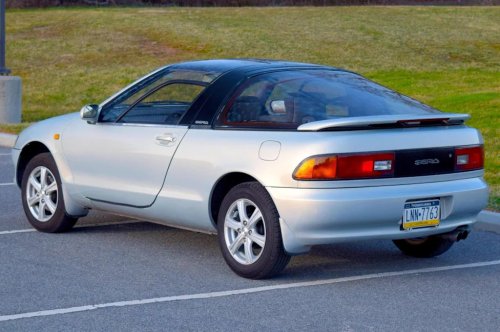
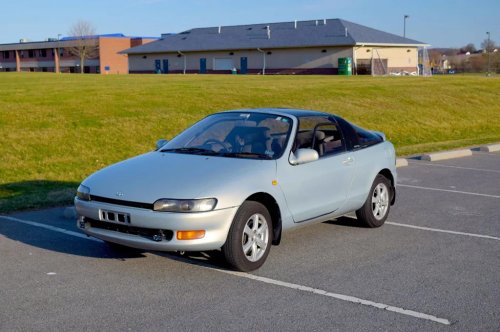
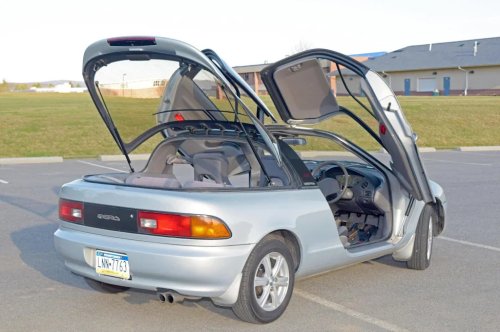
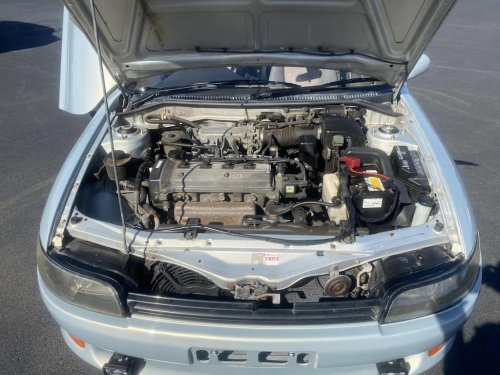
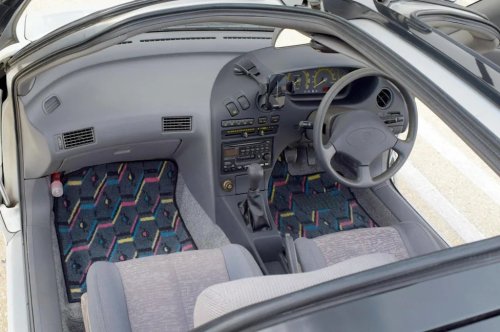
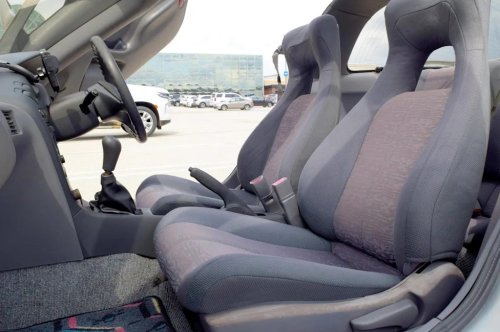
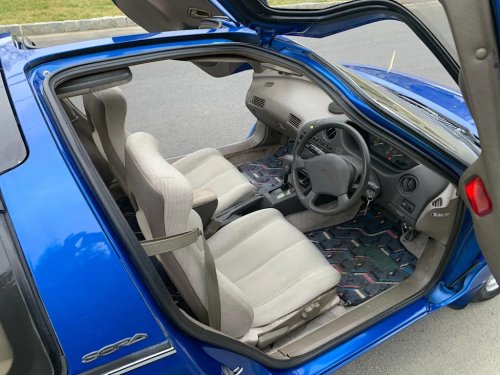
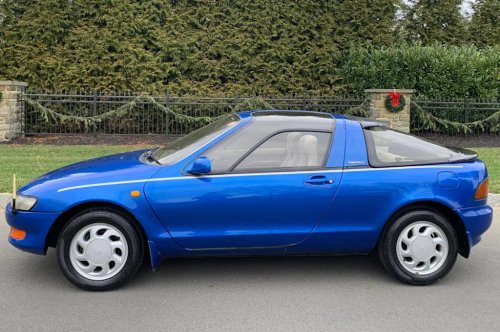


















Autoblog and Yahoo may earn commission from links in this article.Butterfly doors have become a mainstay of exotic supercars, but the high-end look doesn't originate with a million-dollar vehicle of any sort. While it wasn't the first model to offer butterfly doors, the 1990 Toyota Sera brought the unique feature into the public eye. Originally priced at around $11,000, the Sera hatchback established that the doors could be both functional and stylish. In no time at all, exotic automakers from around the world adopted the eye-catching butterfly doors, effectively elevating the aesthetic of some of the world's most expensive high-performance vehicles.Cars & BidsFrom experiment to productionThe Sera's origins date back to the 1987 Tokyo Motor Show where Toyota unveiled the AXV-II. The model was supposed to be nothing more than an experiment designed to explore automotive innovation over the next decade. In reality, however, the AXV-II was nearly ready for production, and members of the press were invited to take it for a spin prior to the show.Cars & BidsThe AXV-II went into production in 1989 and deliveries began in spring 1990. Toyota dropped the odd moniker in favor of a more fitting nameplate. Thus, the Sera nameplate was born. In addition to a futuristic aesthetic, the Sera was the first model to undergo new manufacturing techniques in the automaker's production process. The updated process not only made production of low-volume models faster, but the simplified methodology resulted in higher-quality body panels.AdvertisementAdvertisementThe highlight of the Sera was its doors. The futuristic coupe featured doors that hinged at the A-pillar and roofline, allowing them to tilt up and forward when opened. In short, they looked like butterfly wings, hence the name. The weight of the butterfly doors is supported by a gas strut, and they can be opened in as little as 17 inches of space. Toyota's own engineering documents indicate that the Sera's butterfly doors were designed to minimize overhead clearance compared to more conventional gullwing doors. Cars & BidsThinking about selling your car? Get an instant cash offer online now. Click here to get started.16,000 units over three phasesAll Sera models came equipped with a 1.5-liter four-cylinder engine that generated 104 horsepower and 97 lb-ft of torque. It could be mated to either a four-speed automatic or five-speed manual gearbox, both of which sent power to the front wheels. While the Sera's butterfly doors were certainly the highlight, the model itself featured a futuristic aesthetic. Cars & BidsNotably, the Sera features front windows that are integrated into the glass roof. The rear hatch is constructed entirely of glass and lacks a supporting steel frame. In all, the Sera features six distinct glass pieces. Removable interior roof panels and air conditioning came standard in an effort to combat the heat created by the sunrays. The Sera can seat up to four passengers thanks to its front bucket seats and rear bench seat. The hatchback could also be optioned with Toyota's Super Live Sound System (SLSS), which included 10 speakers.The Sera's production was completed in three phases, although the vast majority of examples were produced between March 1990 and May 1991. In the first phase, roughly 12,000, or 75%, of the Sera's total production run left the factory. Models were available in six colors, with either a tan or gray interior. In phase two, which took place between May 1991 through June 1992, just 2,300 units left the production line with a few notable changes. The updated model came with different seat materials and a pastel pattern on the seats. A screw-on fuel filler cap was added to the list of standard equipment as well.Cars & BidsPhase three, produced from June 1992 to December 1995, saw a production run of just 1,550 units. A plastic spoiler with an LED brake light was the only external change. Other notable updates included revised engine components, side impact beams, and stronger door struts.AdvertisementAdvertisementJapan's economy flourished in the 1980s, but quickly fell into a steep decline in the 1990s. As a result, the Sera was pulled from production. While it was only ever sold in Japan, examples of the Sera have made their way around the world, with several models showing up in the United States in recent yearsCars & BidsShopping for a new car? Click here to get a great deal on your next vehicle. Powered by Carvana, no haggle pricing, 100% online.Supercars and butterfly doorsToyota put an end to the Sera in December 1995, but its legacy lives on in the exotic cars that have adopted the butterfly door design. The McLaren F1 is arguably the most notable successor. Designer Gordon Murray specifically indicated that the supercar's butterfly doors were inspired by the Toyota Sera.Cars & BidsThe McLaren F1, with its million-dollar price tag, wasn't the only high-priced model to utilize butterfly doors similar to those found in the Sera. Despite their beginnings, butterfly doors quickly became associated with high-performance exotics, many of which carried seven-figure price tags. The Ferrari LaFerrari and Bugatti Tourbillon are among the more notable vehicles. Even vehicles in the low six-figure range, like the BMW i8, featured butterfly doors.Ultimately, Toyota used butterfly doors to make the Sera seem more expensive than it actually was. While the model did have a rather short production run, its influence on the industry as a whole is undeniable. Butterfly doors went on to become a defining visual feature of modern high-performance super cars in a rather short amount of time.Cars & BidsFinal thoughtsWhile the 1967 Alfa Romeo 33 Stradale may be the first vehicle equipped with butterfly doors, it was the Toyota Sera that put the unique feature on the map. The doors were just a part of the aesthetic of an experiment-turned-production vehicle, though. The Japanese automaker went above and beyond, with windows that stretched into the glass canopy and SLSS audio system. The Sera has slowly been trickling over to our shores in recent years, but with around 16,000 examples produced, most of us aren't likely to experience the affordable hatchback that played a role in shifting the supercar aesthetic.AdvertisementAdvertisementDisclaimer: Autoblog aims to feature only the best products and services. If you buy something via one of our links, we may earn a commission.This story was originally published by Autoblog on Aug 26, 2026, where it first appeared in the Features section. Add Autoblog as a Preferred Source by clicking here.