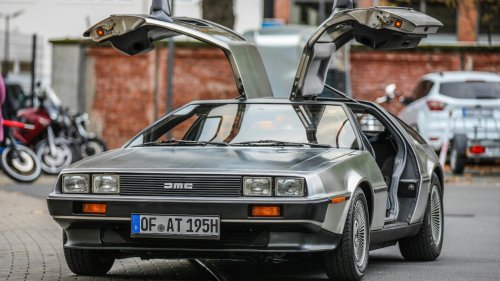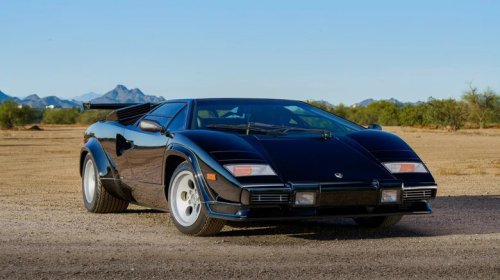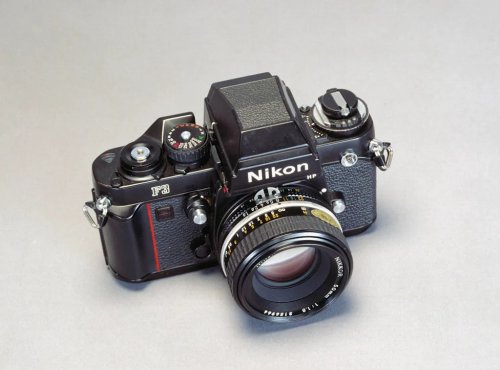
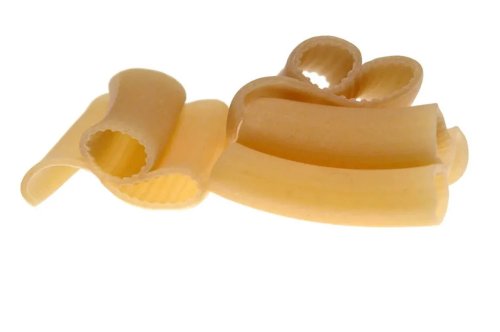
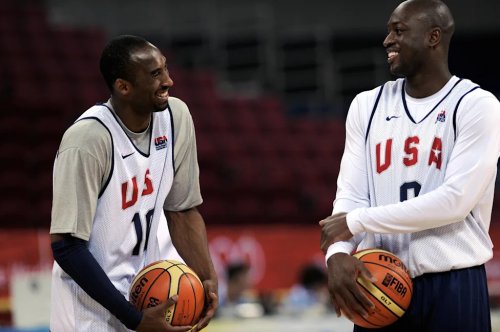
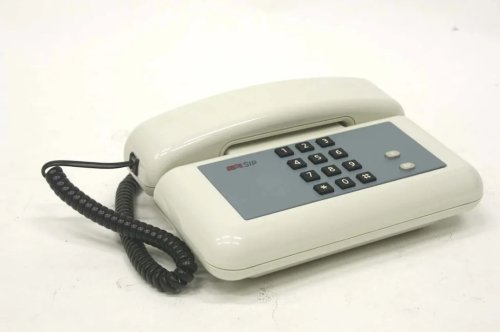
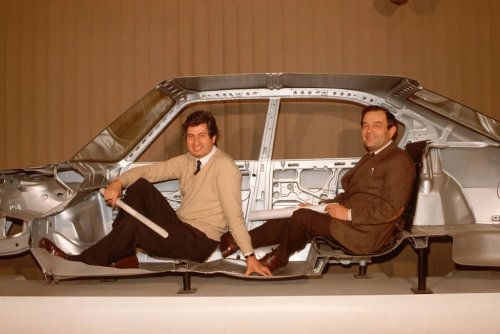





















Autoblog and Yahoo may earn commission from links in this article.The GreatestIf you were to make a short list of some of the greatest automotive designers in the world, a man by the name of Giorgetto Giugiaro would probably hover near the top. Throughout his storied career, the Italian maestro of design penned not only some of the most exotic and desirable automobiles in human existence, but true motoring icons beloved by the masses. His design achievements include sporting classics like the DeLorean, the Lotus Esprit, the BMW M1, the DeTomaso Mangusta, and the Maserati Ghibli and Merak, At the same time, he also drew up beloved cars that have gone on to be loved by millions of everyday motorists around the world, including the original versions of the Fiat Panda, the Volkswagen Golf and Scirocco, the Subaru SVX and even the Hyundai Pony. In 1999, a jury of 132 journalists named him the Car Designer of the Century, and it's not hard to see why. But in between sketching some of the most aesthetically beautiful creations on four wheels, the man also designed a few stylish objects that weren't vehicular transportation. These include cameras that became a favorite among professional photographers, a watch that became a screen-used icon, and even a basketball used for high-level international competition. These weren't concept sketches or things he drew up on the weekends, these were actual things that were mass-produced, that some are still in use today.SSPL/Getty ImagesView the 2 images of this gallery on the original articleNikon F3If you are around people who like cars for long enough, you would know that photography and the automotive world go hand in hand like peanut butter and jelly. Like the automotive world, the photography world is a tribal environment built on fierce brand loyalty. In the same way that there are Ford and Chevy guys, photographers from hobbyists to actual photojournalists swear by the brands on their camera bodies, whether it be Sony, Canon or niche brands like Hasselblad or Leica.AdvertisementAdvertisementHowever, Giugiaro's design expertise would bring photography into the modern era. In 1980, Nikon released the F3, a 35mm film SLR (single-lens reflex) camera that eventually became the camera of choice for a generation of photojournalists. Through its 21 year production run, it was a bridge that connected Nikon's past fully mechanical technology with 80s-era electronic innovation. Renowned for its rugged dependability and distinct styling; including the first appearance of Nikon's iconic red stripe on the grip, the F3 earned the unwavering trust of press professionals, Hollywood filmmakers, and even NASA astronauts on the Space Shuttle. Following the success of the F3, the Nikon/Giugiaro partnership evolved to include subsequent models including the Nikon F4, F5, and F6 film SLRs. Giugiaro design would continue into the digital age, as he would pen professional digital SLRs including the Nikon D1, D2, and Nikon D4; which became workhorses for photojournalists around the world.Seiko "Ripley" WatchSome of Giugiaro's most storied designs are objects that got their fame from being on the movie screen. For instance, the DeLorean DMC-12 was a highly publicized vehicle when it was released in 1981, but its major claim to fame was its role as the time machine in the storied Back to the Future trilogy. Shortly after its introduction in 1976, the S1 Lotus Esprit got a starring role as James Bond's car in The Spy Who Loved Me. Nicknamed 'Wet Nellie,' the car was known for being able to transition from car to submarine; as demonstrated in a titular chase scene that takes place both on land and underwater. In a similar vein, the Seiko Giugiaro 7A28-7000, aka the "Ripley," has the same notoriety. In 1983, Seiko released a line of motorsport-inspired watches that it dubbed the speedmaster line. Its unusual, blocky, futuristic aesthetics stood out from anything else that Seiko made at the time, but its claim to fame was on the wrist of Sigourney Weaver in the 1986 James Cameron horror/action classic Aliens. Taking place in the year 2179, Weaver's character Ellen Ripley wakes up after a 57-year hypersleep only to face the same creatures that she faced in the original Ridley Scott-directed film. AdvertisementAdvertisementApart from its starring role, the watch itself features some landmark tech, as it's powered by the world's first analog quartz chronograph movement. Giugiaro's influence is best exemplified in its unusual design, which is marked by a lego brick-shaped casing housing the chronograph's pushers. In the decades since the movie and the watch's release, the "Ripley" has gained a cult following among watch aficionados, which earned it a reissue by Seiko as a part of its Spirit collection in 2015.Giugiaro DesignView the 1 images of this gallery on the original articleMarille PastaPasta may be an easy, quick dish to make at home, but for Italians, it is a culinary obsession that is treated like a religion. Whether it is carbonara, cacio e pepe or ragù alla bolognese, the country can't get enough of its national dish. Surveys and studios have shown that the average Italian eats anywhere between 50 to 60 pounds of pasta per year; double of what Americans eat during the same period. In 1983, Neapolitan pasta brand Voiello commissioned Giugiaro to design a brand-new pasta shape. According to a 1991 interview, Giugiaro recalled that the pasta was "tested with all kinds of sauces," as it had a strict set of requirements to meet, including that it "should not absorb too much sauce."The name of the noodle was "Marille," a patented shape that Giugiaro took from the cross-section of a car door weatherstripping gasket. Resembling a double-inverted open rigatoni, Marille was envisioned as an absolute masterpiece of food technology. Unlike traditional rigatoni, it featured textured ridges on its inner, concave surfaces, which were specifically engineered to trap and hold rich sauces rather than absorb them. AdvertisementAdvertisementDespite its brilliant aesthetics, Marille was ultimately short-lived. The pasta suddenly disappeared from the market not just due to poor marketing, but also a fatal structural flaw. Its unusual shape meant that the thick junctions that connected its unique elements cooked much slower than other areas of the pasta. Unlike more uniform pasta shapes like rigatoni or even spaghetti, the kinks in the Marille caused it to have an uneven texture that affected how it tasted when cooked.FILIPPO MONTEFORTE/AFP via Getty ImagesView the 2 images of this gallery on the original articleMolten G-Series basketballIt's unknown whether or not Giugiaro was a hooper or 'knew ball,' but his design has had a significant impact on the sport of basketball, especially outside the United States. In October 2004, Japanese sports equipment and automotive supplier Molten — the official game ball supplier for International Basketball Federation (FIBA) competitions — introduced the G-Series ball, which visually changed the way the sport looked and felt on the global stage. Unlike the basketballs seen on the hands of today's stars like Jalen Brunson or Victor Wenbanyama, the Giugiaro-designed G-Series ball introduced features that makes it distinct from the traditional eight-panel design ball used in the NBA. Notably, the G-Series is made up of a two-tone, 12-panel design consisting of two contrasting rings that loop around the ball for additional visibility on the court. Molten and Giugiaro say that the unique design with more panels helps seasoned players find the seams for better grip and long-range shooting ability. Over the years, the G-Series has evolved into today's BG-series, which remains the official ball for FIBA-sanctioned competition including the Summer Olympic Games, as well as the Australian NBL and Super League Basketball (SLB) in the UK.National Museum of Science and Technology "Leonardo da Vinci" via Wikipedia CommonsSirio TelephoneBefore today's smartphones, messaging apps and social media, the home landline was one of the centers of social life for teenagers and young adults. Back then, catching up with friends after school meant being tethered to a wall by a coiled cord, often for hours at a time. These marathon phone sessions were a staple of these golden years, though parents were often the ones on the hook for these pre-9PM calls. For a generation of said adolescents and young adults in Italy, the Sirio was the gateway between them and finding out the latest hot gossip, connecting with a crush, or figuring out the game plan for that night's hang out. AdvertisementAdvertisementDesigned by Giugiaro in 1987 and produced by Brondi and FATME for the then state-owned telecommunications giant SIP, the first Sirio became a common sight in Italian households and offices. The Sirio's sleek, compact design allowed it to be mass produced, but its simplistic design also allowed for functionality and ease of use. Later versions, like the Sirio Plus, added features like speakerphone and speed-dial, and was even adapted into a version for use in public spaces. In the end, the Sirio wasn't just a phone; it was a piece of futuristic design for every home.Vittoriano Rastelli/CORBIS/Corbis via Getty ImagesBeyond Cars, Beyond DesignIf there is anything to take away from all this, it is that the man Giugiaro is a designer who knows that no request was too strange to take seriously. Throughout his career, he designed more than just cars; he took every opportunity to apply his principles. Whether it be cameras, firearms, pasta, church organs, or even city buses, Giugiaro treated it like a design exercise; a new way to apply his principles.Giugiaro wasn't styling cars. Everything with his name attached oozed style, and cars were just the tip of a very tall iceberg.This story was originally published by Autoblog on Jul 14, 2026, where it first appeared in the Features section. Add Autoblog as a Preferred Source by clicking here.