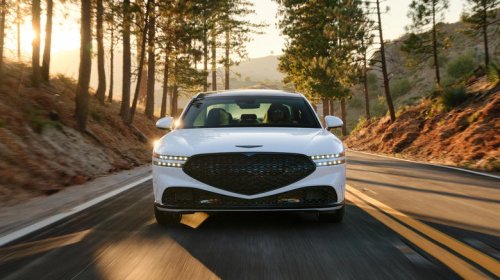
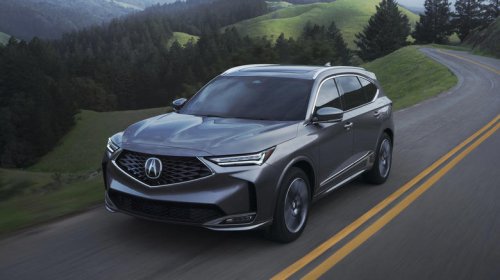
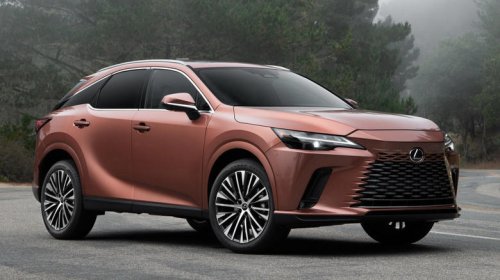
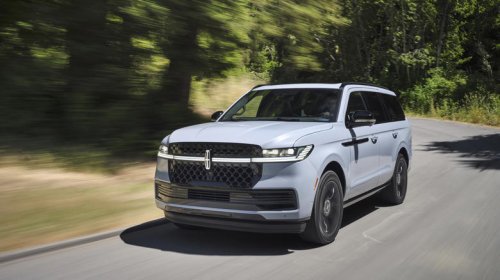
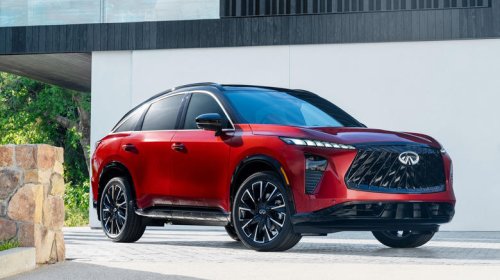
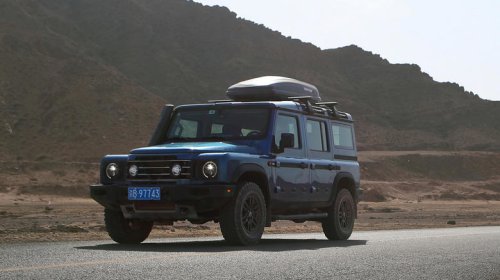
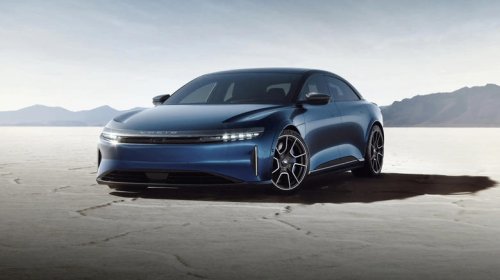
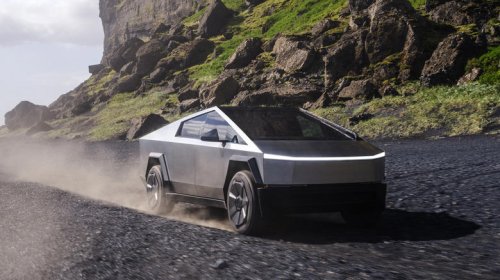
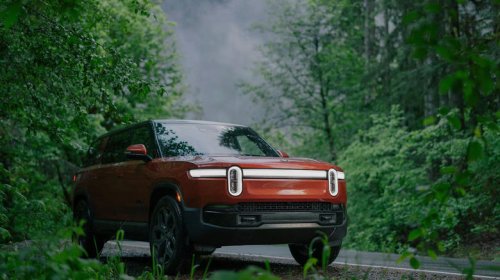
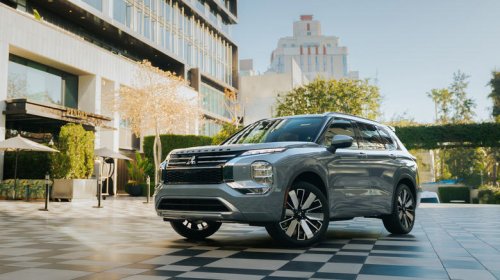
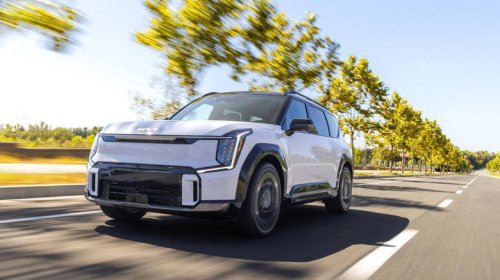
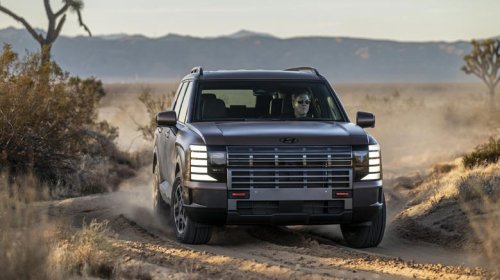
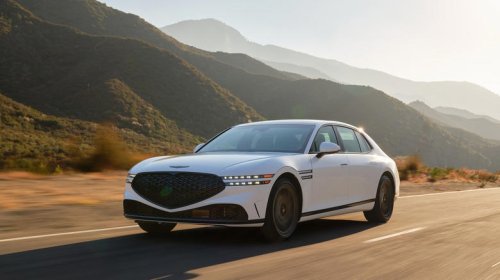
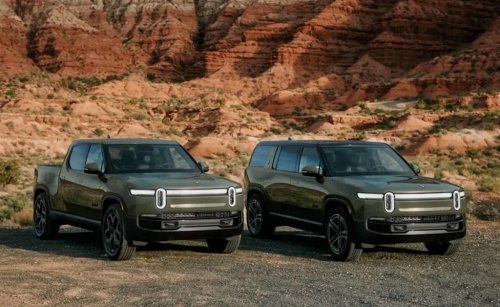
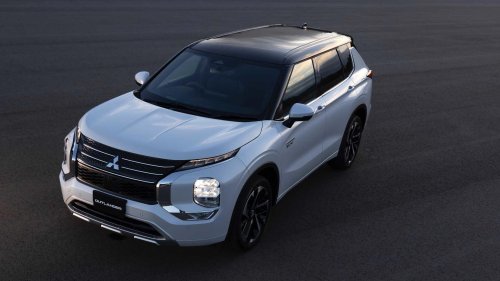
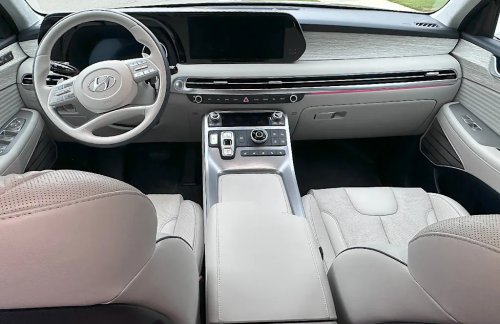
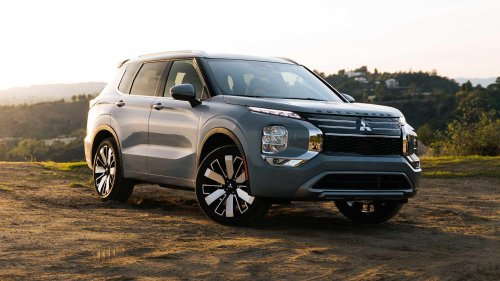
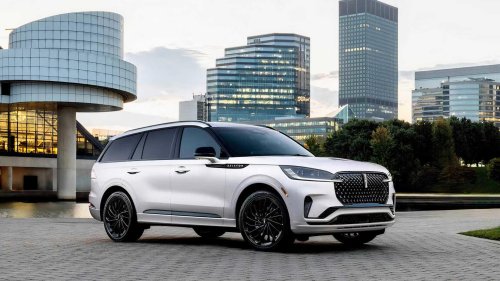
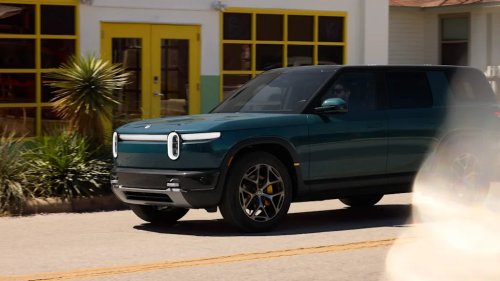
Front view of a white Genesis luxury sedan driving head-on through a pine-lined mountain road.According to S&P Global Mobility, the average age of vehicles in the United States, including cars and light trucks, hit the 12.8-year mark in 2025, a rise of 0.2 years over 2024. More strikingly, the average age of passenger cars was 14.5 years. Cars are also becoming more expensive to repair because they are equipped with more tech than ever before. For instance, replacing an LED headlight can cost over $1,000, compared to $10 for the halogen bulbs we used back in the day. As a result, a good warranty can act as a financial safety net, helping protect you from potentially expensive repairs.This led us to investigate the warranty offerings of automakers operating in the U.S. to see which ones offer the longest coverage, prioritizing the basic bumper-to-bumper and extended powertrain warranties. However, we also considered additional factors, such as anti-corrosion warranties, roadside assistance coverage, and hybrid/EV battery degradation thresholds. Some manufacturers also offer complimentary maintenance, which played a role in our evaluation as well. With that in mind, these are the car brands with the longest warranties in America. Acura (4 years/50,000 miles; powertrain: 6 years/70,000 miles)Front 3/4 view of a silver 2025 Acura MDX with the Advance Package navigating a sharp curve on a scenic mountain road.Looking for a budget-friendly luxury offering? Acura might be the best choice currently on sale in the U.S. It received the "Best Value Luxury Brand" award for 2025 from Kelley Blue Book, and it also performs well in Consumer Reports' 2025 reliability study.Of course, this isn't too surprising, as Acura models share their DNA with Honda cars. Still, Acura says it builds its cars under the "Precision Crafted Performance" motto, and they come with a longer warranty than their Honda counterparts. While Honda covers its new cars with a 3-year/36,000-mile limited warranty, Acura offers a much longer 4-year/50,000-mile limited warranty. This is a bumper-to-bumper warranty, meaning Acura will replace most defective parts free of charge — it includes the 12-volt battery, but not consumables like filters or brake pads.Once the base warranty expires, Acura offers two additional years and 20,000 miles on the powertrain alone. This warranty covers the whole powertrain, including the engine, transmission, and FWD or AWD system. Meanwhile, the high-voltage battery in hybrids is covered by an 8-year/100,000-mile warranty. Acura also offers a lifetime limited warranty on all exhaust components. As for the body, Acura provides a 5-year warranty with unlimited mileage against rust.Cars produced from 2022 onward with less than 50,000 miles on the odometer are also eligible for Acura Care. This extended warranty covers additional goodies, such as roadside assistance, compensation for trip interruption, and rental car reimbursement. Lexus (4 years/50,000 miles; powertrain: 6 years/70,000 miles)Front 3/4 view of a copper-colored 2026 Lexus RX 350 Premium AWD parked on a coastal mountain road.In 2025, Lexus fell three spots in Consumer Reports' reliability rankings. One possible reason is the performance of the latest GX SUV, which features a new 3.4-liter twin-turbo V6 that was subject to a recall. However, Lexus ranks highest of all brands in the U.S. in the 2026 JD Power dependability report — the JD Power study covered only vehicles older than 3 years, so that might explain the discrepancy.Either way, the brand's trust in its own products is clearly reflected in the 4-year/50,000-mile basic warranty. It covers everything apart from wheel alignment and balancing, which is covered by a 1-year/12,000-mile warranty. Like Acura, Lexus offers a 6-year/70,000-mile powertrain warranty.Lexus also offers an 8-year/100,000-mile warranty on hybrid vehicles. It covers the hybrid/battery control modules, and inverter/converter. Meanwhile, Lexus offers an even longer 10-year/150,000-mile warranty on hybrid batteries. This warranty might become more common in 2026, as 47% of Lexus' cars sold in North America in 2025 were hybrids. Unfortunately, the powertrain of Lexus' only EV, the RZ, is only covered by a 6-year/70,000-mile warranty. Lexus offers a longer 6-year rust-through warranty than Acura.Every new Lexus vehicle is also eligible for LexusCare. One of the main benefits of LexusCare is complimentary service, with the first two scheduled services done at no additional cost in the U.S. and Canada. The program also includes roadside assistance, travel protection, and trials for Lexus' connected services. Lincoln (4 years/50,000 miles; powertrain: 6 years/70,000 miles)Front 3/4 view of a Grey Mist 2025 Lincoln Navigator Reserve with the Jet Package moving swiftly down a paved road.Lincoln offers the same basic and powertrain warranties as Acura and Lexus, alongside a 5-year corrosion coverage. The base warranty is essentially bumper-to-bumper and covers everything except maintenance and wear items. Hybrid- and electric-unique components are covered with an 8-year/100,000-mile warranty, including the battery. However, the services expand beyond just repairing your vehicle. With an accent on effortless ownership, Lincoln will pick up your vehicle from your desired location, service it, and return it clean and ready to drive.Lincoln also offers four extended service plans, which cover repairs of key parts for up to 10 years or 175,000 miles. The PowertrainCARE plan covers 29 engine and transmission components, while BaseCARE covers 84 key components, including the brakes, front suspension, and A/C. The ExtraCARE plan adds interior tech to its coverage, such as the power seat motors and instrument cluster. Finally, the PremiumCARE plan covers more than 1,000 components, including the rear suspension and safety equipment. All these extended service plans are transferable, adding value to your vehicle.Lincoln has also made great strides toward making its vehicles more reliable. In 2024, Lincolns were listed among the least reliable used cars by Consumer Reports. But in CR's latest reliability study, the automaker jumped 17 places and finished in seventh. Lincoln had the same overall rating as Lexus and finished higher than Acura and Genesis. Infiniti (4 years/60,000 miles; powertrain: 6 years/70,000 miles)Front 3/4 view of a 2027 Infiniti QX65 in "Sunfire Red" paint parked on a light-colored stone driveway.Infiniti pushes past the 4-year/50,000-mile basic warranty of its closest rivals, Acura and Lexus, by adding another 10,000 miles. The powertrain warranty is similar to its rivals at 6 years/70,000 miles. However, Infiniti doesn't sell any hybrids in 2026, and you can get longer powertrain warranties on Acura and Lexus hybrids. As for rust, Infiniti offers a 7-year coverage with unlimited mileage.In JD Power's 2025 U.S. vehicle dependability study, Infiniti finished in 15th place. Nissan's luxury arm was ahead of Genesis, Mercedes-Benz, Acura, and Lincoln, but behind Lexus, Porsche, and BMW. Still, there are concerns about the reliability of Nissan's/Infiniti's 2.0-liter turbocharged engine with variable compression, the KR20DDET. The NHTSA has issued a recall because these engines could stall during driving. The jury is still out on the longevity of Nissan's latest twin-turbo V6, the VR35DDTT.If you are worried about the engines, but still like Infiniti's latest offerings, the automaker offers an optional extended warranty plan of up to 8 years/120,000 miles. Called Elite Extended Mechanical Protection, it covers mechanical breakdowns, emergency roadside assistance, towing reimbursement, and trip interruptions. Ineos (5 years/60,000 miles; powertrain: 5 years/60,000 miles)Front 3/4 view of a blue Ineos Grenadier equipped with a roof cargo box driving through a desert landscape.Ineos currently sells one model in the U.S., the Grenadier, which is available in Station Wagon SUV and Quartermaster pickup variants. It's technically not a Land Rover Defender, but it sure looks like it. Unlike Land Rover, though, Ineos wanted to keep the original's ethos as an off-road-oriented vehicle. So while the latest Defender is a modern unibody SUV, the Ineos Grenadier is an old-school body-on-frame brute. And it's not just the chassis — the Grenadier has front and rear live axles, as well as a recirculating ball steering system.Now, live axles are great for robustness and durability, which is important in a vehicle designed for extended off-road use. However, Ineos opted for a 3.0-liter turbocharged inline-six from BMW, which may worry some buyers. Fortunately, it's BMW's famed B58 engine, which is often described as the modern-day 2JZ in enthusiast circles thanks to its robustness and reliability. In this application, it produces 281 hp and 331 lb-ft of torque.With all that in mind, it isn't too surprising that Ineos covers the Grenadier with a relatively long 5-year/60,000-mile basic/powertrain warranty. Furthermore, Ineos offers 12-year corrosion coverage, higher than most automakers. Both these warranties are transferable if you ever sell your Grenadier, and customers also receive 3 years of roadside assistance. Lucid (basic 4 years/50,000 miles; powertrain: 8 years/100,000 miles)Front 3/4 view of a deep blue Lucid Air Sapphire electric sedan parked on an expansive salt flat.Lucid Motors is currently one of the most advanced EV makers, with range and performance figures that exceed other industry leaders. Notably, the Lucid Air Grand Touring might be the greatest EV on the market, with an EPA-estimated range of 512 miles. The high-performance Sapphire trim, meanwhile, sprints to 60 in a coma-inducing 1.89 seconds.The real kicker? The hi-tech, 924-volt architecture is covered by an excellent 4-year/50,000-mile basic warranty. Meanwhile, the powertrain is covered by an 8-year/100,000-mile warranty. Lucid Motors also covers replacements if the battery loses more than 30% of its capacity during the same period. Lucid Motors also offers an outstanding 10-year corrosion warranty, while the body paint is covered by a 4-year warranty. These warranties transfer to subsequent owners if they have proof of ownership. Roadside assistance is only available as an extra, though.As for reliability, Lucid Motors cars are a mixed bag. The structural parts are sound, but they tend to suffer from software-related problems. On a more positive note, Lucid Motors is working on upgrades to resolve these issues. Tesla (basic: 4 years/50,000 miles; powertrain: 8 years/150,000 miles)Front 3/4 view of a stainless-steel Tesla Cybertruck kicking up dust as it traverses a dark, volcanic beach.Tesla's basic warranty of 4 years/50,000 miles matches that of Lucid Motors. However, the EV giant offers longer powertrain and battery warranties on selected models. That's right, not every Tesla car is covered by the same powertrain warranty. The powertrains of the Model 3 RWD, Model Y RWD, and Model Y AWD are covered by an 8-year/100,000-mile warranty, same as Lucid's vehicles.The powertrains of the Model 3 Premium RWD, Model 3 Premium AWD, Model 3 Performance AWD, Model Y Premium RWD, Model Y Premium AWD, and Model Y Performance AWD are covered by a longer 8-year/120,000-mile warranty. Finally, the automaker's high-end vehicles — the Model S, Model X, and Cybertruck — are covered by an 8-year/150,000-mile powertrain warranty. Every Tesla car comes with the same, excellent 12-year body rust warranty, though. All warranties are transferable to the next owner.In the 2026 Consumer Reports reliability and owner satisfaction study, Tesla finished in ninth place, ahead of giants like Ford, Audi, Mazda, and Volvo. However, Tesla didn't fare too well in CR's 2025 used-car brand reliability study, where it finished 26th. Still, it's important to note that this study covered cars produced five to 10 years ago, like the original Model S. If the extended powertrain warranties are anything to go by, the EV maker should climb up a few places in the next study. Rivian (4 years/50,000 miles; powertrain: 8 years/150,000 miles)Front 3/4 view of a red Rivian R1S electric SUV parked on the side of a damp road, framed by a dense, lush green forest.Overall, Rivian offers warranty coverage similar to Tesla's. Also, like Tesla's EVs, not every Rivian comes with the same powertrain warranty. Notably, Gen 2 dual-motor Rivian EVs equipped with the standard battery come with an 8-year/120,000-mile battery and drive unit warranty, and a 4-year/50,000-mile basic warranty. All other models, including the dual-motor, tri-motor, and quad-motor versions with the standard+, large, and max batteries are covered by an 8-year/150,000-mile battery and drive system warranty. Every Rivian is covered by an 8-year corrosion warranty.What's interesting is that Rivian offered a longer warranty coverage on older Gen 1 (2022-2024) models. Perhaps in an effort to showcase tech superiority over its rivals, the automaker covered its large-battery, quad-motor monster EVs with an outstanding 5-year/60,000-mile basic warranty and an 8-year/175,000-mile powertrain warranty. Since these warranties are generally transferable, used Rivians are a particularly good buy. No wonder Rivian EVs hold their value really well, too.Still, the 2026 CR reliability study for new cars ranked Rivian in 26th place. Owners report numerous issues: suspension noise, interior rattles, and software instability. However, they also praise Rivian's customer service. Rivian will soon expand its offerings with two new models, the R2 and R3, so hopefully they also solve most reliability problems. Mitsubishi (5 years/60,000 miles; powertrain: 10 years/100,000 miles)Front 3/4 view of a silver Mitsubishi Outlander parked on a checkered stone plaza in a modern urban setting.Mitsubishi is a shadow of the automaker it once was. Back in the day, enthusiasts eagerly waited for Lancer Evos, but today you'll only find crossovers and SUVs in the Japanese automaker's lineup. They even revive older nameplates for crossovers, like with the Eclipse Cross.But at least Mitsubishi edges out its Japanese rivals with warranty coverage. Every Mitsubishi model comes with a 5-year/60,000-mile bumper-to-bumper warranty, and a 10-year/100,000-mile powertrain warranty. The latter also covers the battery in the automaker's electrified offerings. This is important, because Mitsubishi's most popular model, the Outlander, went hybrid-only for 2026.Mitsubishi even matches some luxury brands by offering two-year/30,000-mile limited maintenance coverage. Customers get 5 years of unlimited roadside assistance and a 7-year/100,000-mile corrosion warranty. That said, Mitsubishi's powertrain warranty isn't fully transferable, meaning subsequent owners are limited to 5 years/60,000 miles. The free limited maintenance is not transferable either.Overall, Mitsubishi has an excellent value-to-warranty ratio. Notably, the Mitsubishi Outlander is not only among the cheapest three-row SUVs in the U.S., it also comes with excellent warranty coverage. It's also worth noting that Mitsubishi finished just below the industry average in JD Power's 2026 dependability study, outperforming rivals such as Honda and Mazda. Kia (5 years/60,000 miles; powertrain: 10 years/100,000 miles)Front 3/4 view of a white 2026 Kia EV9 electric SUV driving fast on a sun-drenched road.Kia and Hyundai have been stealing headlines with their problematic Theta II engines. Fortunately, the latest offerings from these Korean automakers are more reliable. Kia, in particular, finished 10th in CR's reliability study, two places higher than its sister brand, Hyundai. The automaker finished even higher in JD Power's study (ninth), and ranks third in Repair Pal's reliability ratings.In other words, Kia is clearly climbing up the reliability rankings lately, which is also evident in the warranty coverage. Kia offers a 5-year/60,000-mile basic warranty on all cars, alongside a 5-year/100,000-mile anti-perforation warranty and 5 years/60,000 miles of roadside assistance. Furthermore, the Korean automaker covers all its powertrains, including gas, hybrid, and electric, with a 10-year/100,000-mile warranty. Kia will also repair or replace EV batteries if they dip below 70% after 10 years or 100,000 miles. Unfortunately, Kia's powertrain coverage isn't transferable – second-hand buyers are only covered by the basic warranty.Overall, Kia offers outstanding coverage for a budget-oriented brand. It sells one of the cheapest crossover-SUVs with the Soul. The Niro hybrid is also one of the most fuel-efficient cars on sale in the U.S., and the 2025 Kia K4 made you wonder why other cars are so expensive. The variety of Kia's lineup is also impressive. It includes everything from compact cars to electric three-row SUVs, with an electric pickup truck probably joining the party soon. Hyundai (5 years/60,000 miles; powertrain: 10 years/100,000 miles)Front 3/4 view of a bronze 2026 Hyundai Palisade ICE XRT Pro navigating a dusty desert trailKia and Hyundai operate under the Hyundai Motor Group and share many components. So it's hardly a surprise that Hyundai offers the same basic and powertrain warranties as its sister brand. Like Kia, Hyundai also offers 10-year/100,000-mile coverage on EV batteries.However, Hyundai offers a longer 7-year, unlimited mileage anti-perforation warranty, compared to 5 years/100,000 miles for Kia. For drivers in the salt belt or coastal areas, these extra 2 years of corrosion protection can prove very beneficial. Furthermore, both companies offer 5 years of roadside assistance, but Hyundai doesn't put a limit on mileage.Until 2025, Hyundai offered 3 years or 36,000 miles of complimentary maintenance, but the program was discontinued for 2026. The Korean automaker still offers Hyundai Shopper Assurance, which includes flexible test drives, streamlined online purchasing, and transparent pricing. In addition, the three-day worry-free exchange policy allows customers to swap their new Hyundai for another model within three days of purchase.Hyundai finished just behind Kia in the CR's 2026 reliability study. These brands use identical engines, so that's not too surprising. Hyundai also has a comprehensive range of vehicles, from small crossovers to three-row EVs. Based on the Boulder concept, a body-on-frame SUV designed for America should also arrive by 2029. Genesis (5 years/60,000 miles; powertrain: 10 years/100,000 miles)Front 3/4 view of a white Genesis G90 luxury sedan cruising along a mountainous highway during the golden hour.As Hyundai's premium brand, Genesis comes with mostly the same warranty coverage as Hyundai and Kia. The basic bumper-to-bumper warranty is 5 years/60,000 miles, higher than any other premium brand. All powertrains are covered for 10 years/100,000 miles.That said, Genesis covers corrosion for up to 7 years with unlimited mileage, which is higher than Kia and Hyundai. The real difference is in the user experience, though. Every new Genesis vehicle is covered by the Service Valet program — Genesis will pick up your vehicle from any desired location, service it at the nearest retailer, and then return it. Genesis technicians can even perform remote diagnostics with the Service Valet program. The Korean luxury automaker also provides a long complimentary scheduled maintenance for 3 years/36,000 miles.Despite sharing components with Hyundais and Kias, though, Genesis vehicles didn't do too well in CR's 2026 reliability study. The brand finished 21st, far behind Lexus (third) and BMW (fifth). However, Genesis' latest engines have proved more reliable than their predecessors. Notably, the 2.5-liter turbocharged Smartstream engine used in the latest GV70 and GV80 SUVs has proved significantly more reliable than the previous Theta II engines. Genesis vehicles have come a long way in other areas, too. Back in 2023, the G90 impressed Jalopnik with its combination of luxury, tech, and refinement at a relatively affordable price. Want more like this? Join the Jalopnik newsletter to get the latest auto news sent straight to your inbox, and add us as a preferred search source on Google.