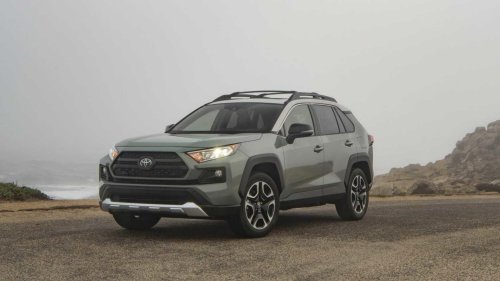
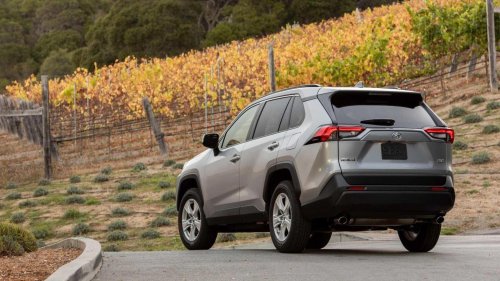
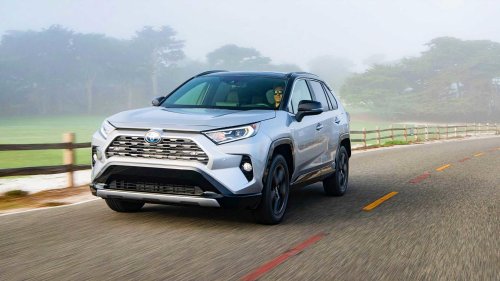
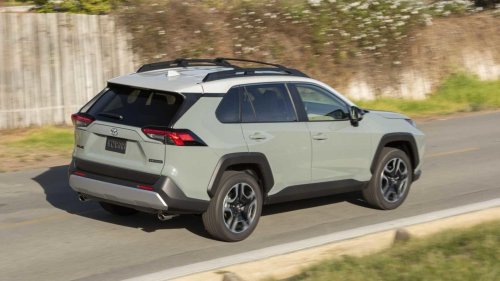
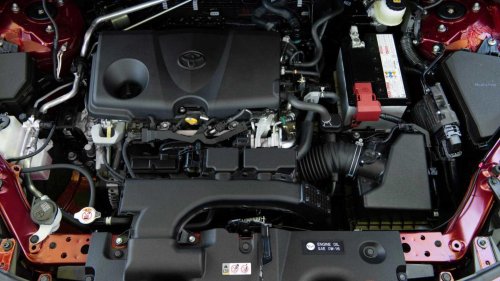
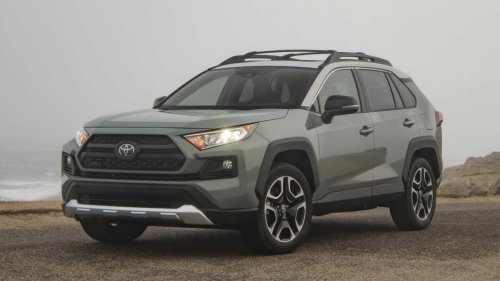
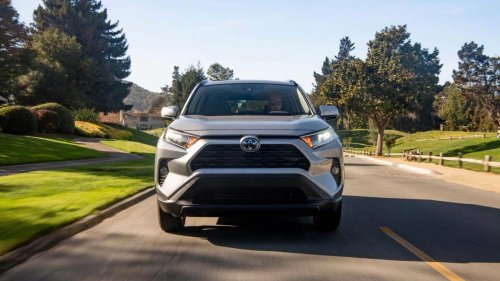



















This year, the American automotive landscape has experienced a shift in the used car market. This industry has established itself as the primary destination for budget-conscious buyers. Automakers continue to phase out compact, entry-level models in favor of high-margin and more expensive SUVs and trucks. This has led to the average transaction price of a new vehicle increasing beyond what the typical household can manage. Reports by CarEdge suggest that almost half of all Americans feel priced out of the new market entirely.By contrast, the secondary market has entered a period of much-needed stabilization. Average pre-owned retail prices are down by six percent. The national median has settled at an even more accessible $17,990. If you're looking to optimize your budget, going the used route has become the most logical strategy. Doing so avoids the initial depreciation hit, leading to a drastically lower principal loan amount. This helps offset today's elevated auto loan interest rates and insurance premiums. Toyota's Leading Reliability Reputation ToyotaToyota’s class-leading reputation for reliability in the U.S. is based on a dedicated commitment to disciplined engineering. The Japanese brand is conservative when it comes to rushing unproven technologies to market. Competitor brands frequently chase the latest trend by introducing innovative drivetrains or complex electronics that are prone to early failure. Toyota instead opts for a famously careful approach that continuously refines proven platforms and components over long production cycles.This philosophy rests on the company's foundational manufacturing culture, which gets factory line workers to halt assembly when a defect is spotted. Doing so ensures that quality control is embedded into the vehicle at every stage of production, instead of having it checked as an afterthought. Toyota's cars consistently experience fewer mechanical breakdowns, leading to exceptional and predictable long-term ownership costs. These cars also hold their residual value far better than the industry average. The RAV4 Is A Used SUV That'll Last Forever Toyota The 2021 Toyota RAV4 is the best used SUV option you can consider for several reasons. Reliability is undoubtedly the most appealing factor. The RAV4 features the brand's 2.5-liter four-cylinder Atkinson-cycle gasoline engine and eight-speed automatic transmission. It may not be the most performance-oriented drivetrain, but it is designed to stand the test of time without being subject to heavy mechanical servicing.In terms of perception and reputation, J.D. Power doesn't rank the 2021 model, but it does award the mechanically identical 2022 model year with an 81/100 quality and reliability mark. iSeeCars gives the model an 8.7/10 reliability score, indicating that it will experience an average lifespan of 13.9 years or 170,340 miles, with a 29.5 percent probability of reaching 200,000 miles. Expect High Value Retention Rates Toyota According to Edmunds' True Cost To Own calculator, you can expect the 2021 Toyota RAV4 to lose $11,550 of its value over the course of five years, which is somewhat better than its rivals. This depreciation doesn't include all the other finances you'll have to incur during your ownership experience, such as insurance, fuel, and maintenance.For reference, the 2021 model year range pricing started at $26,350 for the base front-wheel-drive LE. J.D. Power indicates that the 2021 model sells for anywhere between $23,705 and $37,590, but it includes the hybrids and PHEV Prime models in this evaluation. On the depreciation front, iSeeCars suggests that you can expect to lose $7,440 or 28.2 percent after five years, which is far better than the RAV4's main rivals. What Makes The RAV4 Such A Trusted Name Toyota The Toyota RAV4 benefits from a resilient reputation in the U.S. thanks to a long history of reliability, practicality, and brand trust. As one of the pioneers in the compact SUV segment, it has consistently delivered durability, low maintenance costs, and versatile performance for families and individuals alike. Toyota's proven engineering and high resale values further boost consumer confidence.The 2021 RAV4 benefits from this reputation while adding fuel efficiency and environmental appeal through its efficient naturally aspirated engine. It's also available in a wide range of trims to appeal to a range of economic groups, while blending comfort, interior quality, advanced safety systems, and Toyota's reliability to ensure a high demand in the used car market. This demand moderates its depreciation rate, as more expensive SUVs and crossovers from trusted brands retain value better than less-efficient or less-established alternatives. Impressive Fuel Savings Toyota Efficiency is the RAV4's strongest suit, with the EPA estimating that the front-wheel-drive model will return a 28/35/30 MPG result on its city/highway/combined cycle, together with a 435-mile range thanks to a 14.5-gallon gasoline tank. The EPA's testing also reveals that you'll get to save up to $750 on gasoline every five years compared to the average new vehicle currently sold in the U.S. You'll spend $2,250 on gasoline every year. You can also expect to spend $65 for a full tank of gas and $3.75 to drive 25 miles.Upgrading to all-wheel drive doesn't sacrifice efficiency too much. The EPA estimates this variant will return a 27/33/29 MPG result, while covering 420 miles on a tank. Expect to save $250 on gas over five years. This will cost you $2,350 in gas every year and $3.88 to drive 25 miles. A Simple But Effective Engine Toyota As we've already mentioned, the Toyota RAV4 features a naturally aspirated 2.5-liter four-cylinder gasoline engine with an eight-speed automatic, driving your choice of the front or all wheels. Toyota's system produces 203 horsepower and 184 pound-feet of torque, which is enough to get it from 0 to 60 MPH in 9.3 seconds with a limited 112 MPH top speed. Toyota limits the model's towing capacity to 3,500 pounds. How To Keep Your RAV4 In Pristine Condition ToyotaThe 2021 Toyota RAV4 operates on a straightforward, dual-interval maintenance schedule. The Japanese brand designs this to maximize longevity, starting with minor service reminders every 5,000 miles or six months for tire rotations and multipoint inspections. Following this is a full synthetic oil and oil filter change utilizing 0W-20 oil every 10,000 miles or 12 months. Intermediate benchmarks require replacing both the cabin and engine air filters at 30,000 miles, flushing the engine coolant at 100,000 miles, and replacing the spark plugs at 120,000 miles.If you are frequently towing or driving in dusty environments, the brand advises you shorten the oil change and drivetrain fluid intervals to every 5,000 miles. Because this vehicle relies heavily on standard consumable parts, routine maintenance remains highly affordable, with basic oil and filter changes typically running between $75 and $120 depending on whether you visit an independent shop or a dealership. For common mechanical repairs out of warranty, consumers can expect estimated out-of-pocket expenses to range from $150 to $300 for a set of front brake pads, $350 to $600 if the brake rotors also need replacement, and roughly $200 to $350 for a standard premium 12-volt battery replacement, keeping the crossover well below the national average for annual upkeep. Issues And Recalls You Need To Be Aware Of Toyota Despite the model's strong safety record, the 2021 Toyota RAV4 has been subject to several notable safety recalls issued by the National Highway Traffic Safety Administration that you should ensure have been resolved. A major campaign involves nearly 100,000 vehicles across multiple Toyota lines due to a defect in the front passenger Occupant Classification System sensor, which can short-circuit and inadvertently deactivate the front passenger airbag during a collision. Additionally, early production runs of the 2021 model year were included in targeted actions addressing potential fracturing in the front lower suspension control arms.There was also a recall for water intrusion risks within the electric power steering gear box that could cause a sudden loss of steering assist, and an engine block casting porosity issue in the 2.5-liter engine that could lead to internal or external coolant leaks. Because all NHTSA-mandated safety campaigns are legally required to be corrected entirely free of charge to the consumer, any pre-owned buyer can simply present their VIN to an authorized Toyota dealership service center to have these components inspected and replaced without impacting their budget.