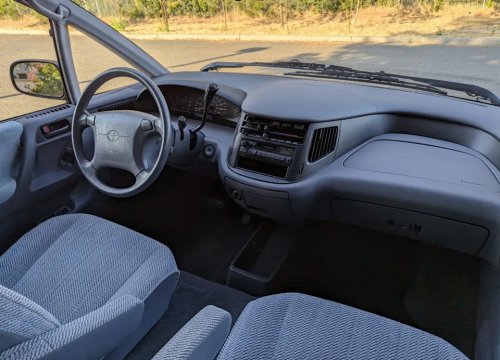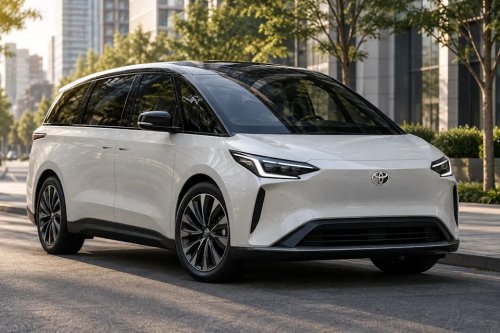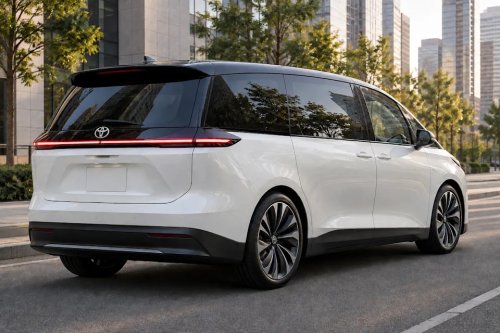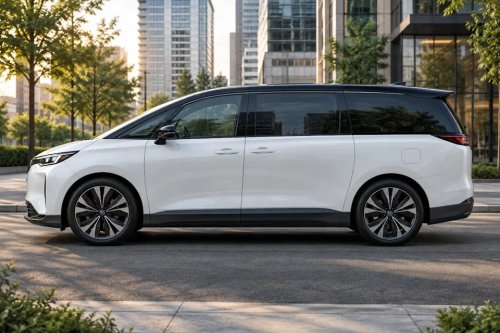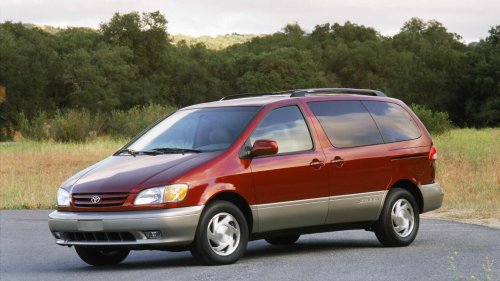
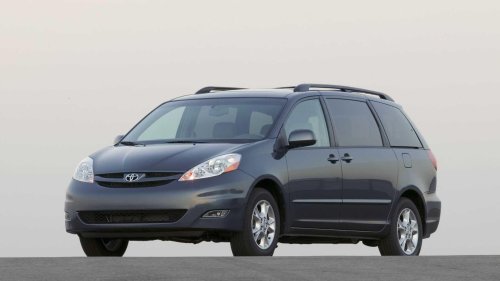
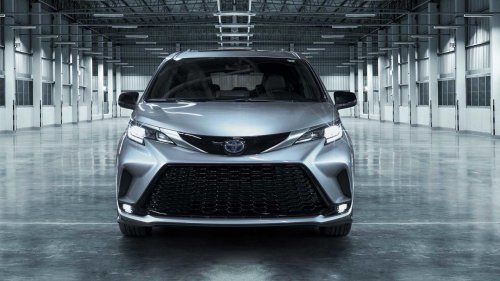
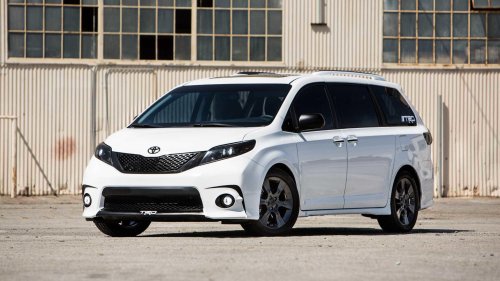
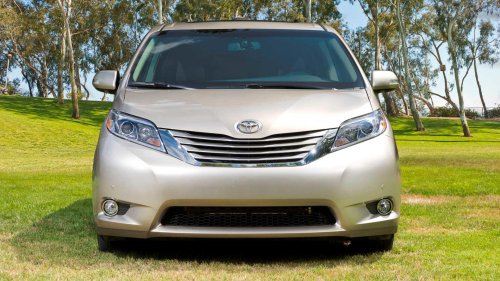
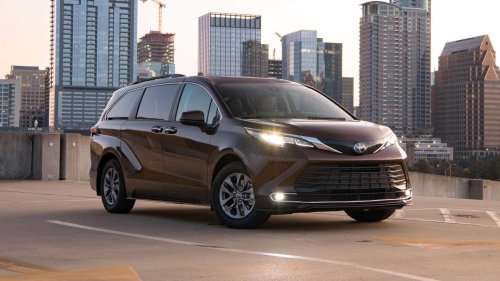
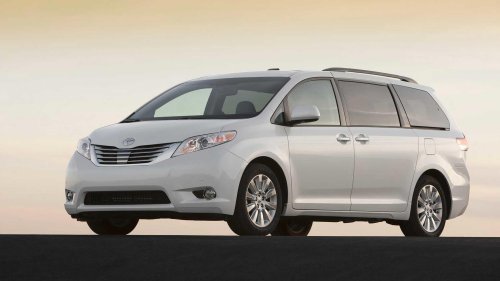
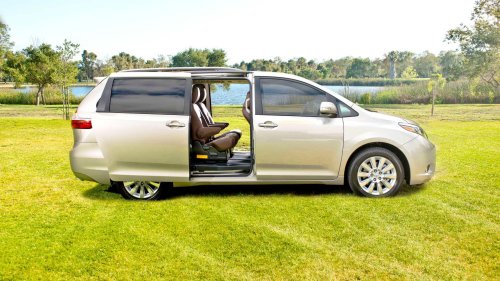
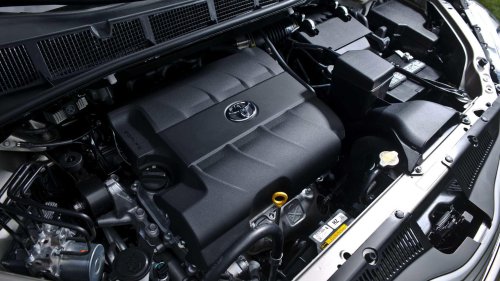
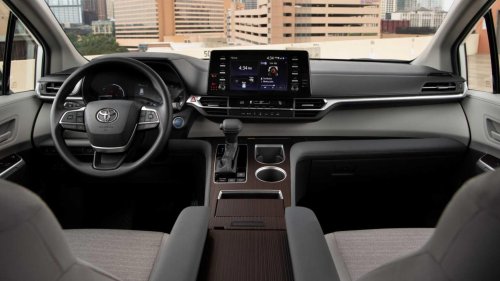
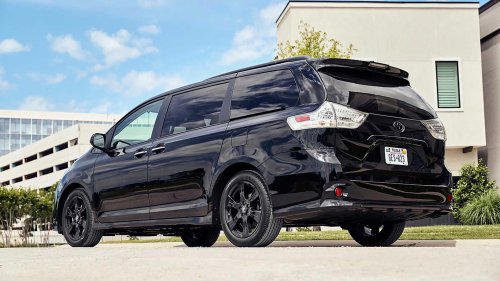



















Jump LinksFirst Generation (1997 - 2003)Second Generation (2004 - 2010)Third Generation (2011 - 2020)Fourth Generation (2021 - Present)2016 Toyota Sienna: 3rd Generation2020 Toyota Sienna: 3rd Generation2022 Toyota Sienna: 4th Generation2011 Toyota Sienna: 3rd Generation2007 Toyota Sienna: 2nd Generation2004 Toyota Sienna: 2nd GenerationChecklist for Buying Used:What year is Toyota Sienna most reliable?What is the most common problem with the Toyota Sienna?Which is better, Honda Odyssey or Sienna?Since its debut in 1997 (for the 1998 model year), the Toyota Sienna has evolved from a run-of-the-mill family hauler into an electrified powerhouse. And over the last almost-30 years, it’s established itself as the undisputed cornerstone of the modern minivan market. Toyota’s flagship minivan continues to dominate the family vehicle segment by bringing cavernous practicality to the playing field, along with Toyota’s reputation for bulletproof longevity. But as we know by now, not every vehicle rolling off the production line is a masterpiece, and it’s the same with the Sienna. If you are preparing to buy used, there’s a labyrinth of production years to comb through, which requires far more than just a kick to the tires.Some Sienna iterations offer longevity, high resale value, and robust standard safety, while frustrating factory defects and recurring, expensive trips to the mechanic plague others. By cross-referencing extensive owner reports, minivan reliability metrics, and official safety data from authoritative sources, we can separate the reliable options from the money pits. Whether you are searching for the best year for Toyota Sienna or trying to identify the Toyota Sienna years to avoid, this data-driven analysis will give you the answers you seek.Reliability data has been sourced from the NHTSA. Recalls and complaints listed, as well as feedback from consumer surveys, have been taken into account. Authoritative sources are listed at the end of the article. Toyota Sienna Generations Overview To pinpoint the best Toyota Sienna years, we need to first understand the structural and mechanical evolution. Over four generations, Toyota has completely re-engineered this van, transitioning from a basic V6 people-mover to a highly sophisticated vehicle that marked a turning point with hybrid powertrain adoption in 2021. First Generation (1997 - 2003) ToyotaThe first-generation Sienna replaced the mid-engine Previa. Toyota focused on conventional practicality and safety, launching the front-wheel drive (FWD) van with a highly reliable but modest 194-horsepower 3.0-liter V6 engine, which was paired with a 4-speed automatic transmission. While it lacked the interior volume of later models, its relatively compact 114-inch wheelbase made it easy to drive in tight spaces. It was also the first minivan to offer front seat-mounted side airbags, and by 2001, optional Vehicle Stability Control was introduced. In 2001, Toyota also introduced a minor facelift that updated the exterior styling, revised the front grille and taillights, and improved interior amenities like a standard rear defroster and available JBL audio systems. Second Generation (2004 - 2010) Toyota With the launch of the second generation in 2004, Toyota expanded the minivan's footprint. This was done to address consumer demands for more cargo capacity and passenger volume. This era includes the following model years: 2004 Toyota Sienna 2005 Toyota Sienna 2006 Toyota Sienna 2007 Toyota Sienna 2008 Toyota Sienna 2009 Toyota Sienna 2010 Toyota Sienna This iteration of the Sienna introduced a fold-flat third-row seat and a 3.3L V6 engine that offered 230 hp. By 2007, Toyota upgraded the powertrain to a 3.5L V6 and also increased the output to 266 hp. The transmission was also upgraded to a 5-speed unit, but perhaps crucially, the second generation became the only minivan in North America to offer an all-wheel drive (AWD) option. However, early models faced failing power sliding doors problems, dashboard cracking due to severe UV degradation, and, most alarmingly, premature transmission failures and broken door check welds. The introduction of optional rear-seat DVD entertainment systems showcased Toyota's dedication to luxury, but these screens often failed prematurely. Third Generation (2011 - 2020) Toyota The third generation introduced a significantly more aggressive design language and a heavy emphasis was placed on technology and driving dynamics. The model years: 2011 Toyota Sienna 2012 Toyota Sienna 2013 Toyota Sienna 2014 Toyota Sienna 2015 Toyota Sienna 2016 Toyota Sienna 2017 Toyota Sienna 2018 Toyota Sienna 2019 Toyota Sienna 2020 Toyota Sienna Toyota initially offered a budget-friendly 2.7L 4-cylinder engine, but it was dropped in 2013 due to a lack of consumer demand. The 3.5L V6 remained, eventually receiving a direct-injection upgrade in 2017 that pushed power to 296 hp. This new engine was paired with the new 8-speed automatic transmission. Also new was the sport-tuned SE trim. By 2018, the active safety suite became standard equipment and included features such as lane departure alert and adaptive cruise control. While generally highly reliable, the 2011 model year suffered from first-year redesign teething issues, which included interior rattles and faulty power doors. The mid-cycle refresh in 2015 saw a significant improvement in interior material quality. Fourth Generation (2021 - Present) Toyota The fourth generation, which also includes the 2021 Toyota Sienna, 2022 Toyota Sienna, and 2023 Toyota Sienna, is a radical departure from its predecessors. In a controversial but forward-thinking move, Toyota made the bold decision to drop the V6 engine and transition the Sienna into a strictly hybrid-only platform. Powered by Toyota’s 2.5L 4-cylinder engine paired with dual electric motors, this system produces a combined 245 hp routed through an electronically controlled CVT (continuously variable transmission). This transition to an all-hybrid lineup sacrifices top-end acceleration for hybrid efficiency. The fourth generation offers luxury trims like the XSE, Platinum and the Limited, alongside the outdoors-focused Woodland Edition, which features standard AWD and slightly raised ground clearance. Standard Toyota Safety Sense 2.0 ensures that occupants and other road users are protected."While the powertrain isn't exciting in any way, it does the job straightforwardly and efficiently but feels gutless when called on to overtake. But add its smoothness to a comfortable ride from the suspension, excellent visibility, light and easy steering, and it's an easy vehicle to drive the rest of the time. While pleasant, it's not an entertaining car to drive, but you don't buy a minivan to be entertained on a back road; you buy it to cart around the family in the most stress-free way possible. On a fundamental level, the Toyota Sienna offers the best fuel economy by quite some margin and is excellently thought out, which makes it a solid default recommendation when matched with Toyota's reputation for reliability and longevity."- Ian Wright, Senior Road Tester, CarBuzz Best Toyota Sienna Years For Reliability We list the three best years for the Toyota Sienna in descending order here; your mileage may vary. 2016 Toyota Sienna: 3rd Generation Toyota J.D. Power Quality and Reliability Score: 79/100 RepairPal Reliability Rating: 3.5/5.0 CarEdge Rating: A- By 2016, Toyota had successfully ironed out the early structural and electrical bugs that plagued the third generation when it arrived in 2011. The minivan utilizes the tried-and-tested 3.5L V6 engine paired with the older, but highly dependable, 6-speed automatic transmission. This is important, because the 8-speed unit also had teething problems when it was introduced in 2017. Buyers looking for maximum Toyota Sienna reliability without the premium price tag of a newer hybrid will find the 2016 iteration a sound choice. While it lacks standard Apple CarPlay or the most advanced safety suites, it provides a bulletproof mechanical foundation. 2020 Toyota Sienna: 3rd Generation Toyota J.D. Power Quality and Reliability Score: 81/100 RepairPal Reliability Rating: 3.5/5.0 CarEdge Rating: A- The 2020 model year is the highly refined swansong of the V6-powered Sienna platform. Achieving an impressive 81/100 Quality & Reliability score from J.D. Power, this final year of the third generation is virtually bulletproof because the Japanese automaker spent an entire decade perfecting this architecture, resulting in a vehicle that suffers from exceptionally few owner complaints. It features the upgraded 296-hp direct-injection V6 and a sorted 8-speed automatic transmission. It comes fully loaded with modern tech necessities that earlier models lacked, including standard Apple CarPlay, Amazon Alexa compatibility, and the comprehensive active safety suite with automatic emergency braking. 2022 Toyota Sienna: 4th Generation 2022 Toyota Sienna J.D. Power Quality & Reliability Score: 77/100 RepairPal Reliability Rating: 3.5 / 5.0 CarEdge Rating: A- 2022 is our pick for the best Sienna model year, because while the 2021 model introduced the new hybrid platform, 2022 refined it. Sure, 2021, the fourth generation’s debut year, saw minor production quirks, but Toyota quickly addressed these. By fully embracing electrification, this generation achieves a fuel economy of 36 MPG combined, which severely undercuts the long-term fuel costs of its V6 predecessors. This model year is packed with advanced tech and is built on the rigid TNGA-K platform, which vastly improves handling. Despite a recent Toyota Sienna recall concerning a minor issue with third-row seat bolts (which was quickly addressed and rectified at no cost to the owner), the core powertrain and electrical systems exhibit stellar reliability. Toyota Sienna Years To Avoid If you want a Toyota Sienna that won't let you down, you might want to steer clear of some models. These are the three years to avoid when buying a used Toyota Sienna, in descending order. 2011 Toyota Sienna: 3rd Generation Via: Toyota The 2011 model year was the launch of the third-generation Sienna, and unfortunately, it fell victim to the classic "first-year" curse. There was a significant spike in owner grievances compared to the relatively quiet 2010 model, and most of the prevalent issues centered around premature/excessive tire wear and expensive interior accessory failures. The power sliding doors would also malfunction, fail to latch securely, or break their internal cables, which is accompanied with an expensive repair that requires a complete motor assembly replacement. The NHTSA also recorded a higher volume of safety complaints regarding the seat belts and airbag sensors."The contact stated that the sliding doors failed to function automatically and required to be opened or closed manually. The contact stated that while attempting to open the front driver's side door in icy and snowy weather, the door made an abnormal cracking sound and failed to open. The contact stated that the passenger's side door made an abnormal cracking sound but opened as intended."- NHTSA Complaint 2007 Toyota Sienna: 2nd Generation Toyota2007 was highlighted by the introduction of the more powerful 3.5L V6 engine to the Sienna lineup, but the minivan is also victim to severe and costly mechanical failures, including severe transmission issues that would often lead to failure. Sudden loss of engine power, transmission slipping, and violent jerking at highway speeds were among the reported issues. The 2007 Sienna was also plagued by the defective dashboard material that would crack, melt, and become sticky when exposed to UV light, and replacing it was another multi-thousand-dollar endeavor. Along with the persistent power door failures, the 2007 model is a severe financial liability."The liftgate is opened by depressing a rubber covered button. The rubber has melted to a point that it is molten. Each time you touch the latch your fingers are turned black and it is extremely difficult to remove. [This is a recurring problem] but there have been no recalls."- NHTSA Complaint 2004 Toyota Sienna: 2nd Generation ToyotaThe absolute worst offender in the entire Sienna lineage is the 2004 model. As the inaugural year of the second generation, the hype was countered by the model logging the highest number of overall complaints of any model year in the Sienna’s history, according to data from Car Complaints. The minivan suffered from structural anomalies and paint degradation, but the worst defect was the failure of the factory door welds. The specific weld holding the driver’s side door check strap (a component located between the hinges, designed to limit how far the door opens and keep it held open at specific detent positions) would simply tear completely away from the vehicle's metal body, which would require extensive, complex, and very expensive repairs. Alongside this structural flaw, the newly introduced automatic sliding doors were prone to internal cable snapping and rapid motor burnout, trapping passengers. From a mechanical point, the minivan also saw frequent engine-related issues such as premature oxygen sensor failures, rapid alternator deaths, and severe oil sludge buildup if maintenance schedules weren't adhered to."The contact stated that the passenger side automatic sliding door failed to open and the wires were corroded. The failure recurred multiple times. The vehicle was not diagnosed or repaired."- NHTSA Complaint Toyota Sienna Reliability Comparison By Generation Toyota When evaluating the most reliable Toyota Sienna generations, the data dictates a clear, undeniable hierarchy. Analyzing reports from authoritative sources, we can rank the generations from most reliable to least reliable: 4th Generation, 3rd Generation, 1st Generation, and the notoriously flawed 2nd Generation.The fourth generation (2021-Present) currently reigns supreme in long-term predictability. Yes, the more recent years do not have sufficient long-term data to go on, but Toyota’s mastery of hybrid technology is on full display here. Because the hybrid system utilizes an eCVT with far fewer traditional moving gears and employs regenerative braking that significantly reduces brake pad wear, these vehicles require less frequent mechanical intervention. The 2.5L engine is fundamentally under-stressed and functions well alongside the electric motors. While early 4th generation models faced a minor Toyota Sienna hybrid recall regarding third-row seat bolt torque bypasses at the factory, the powertrain itself has proven exceptionally robust.Following closely is the third generation (2011-2020). While it suffered from initial teething issues in 2011, the later years (specifically 2015-2020) are legendary for their durability. The 3.5L V6 engine is a proven workhorse capable of easily surpassing 200,000 miles with basic fluid changes and maintenance. The most common problems in this generation were largely relegated to power sliding door motor failures and premature wear on factory-fitted tires. However, from a strictly mechanical standpoint, the late third-generation models are tanks - proverbially speaking.The first generation (1998-2003) was remarkably reliable, but it is now severely handicapped by its sheer age. Even the most pristine garage-kept examples are over two decades old, which means that rubber gaskets, vacuum hoses, and suspension components are actively failing due to basic material degradation. Common problems included oil sludge buildup in the 3.0L V6 if synthetic oil changes were neglected.Finally, the second generation (2004-2010) was ambitious but terribly flawed. The introduction of complex power-folding seats, automated doors, and early AWD systems completely overwhelmed Toyota’s quality control. Common problems ranged from cracked, melting dashboards and snapped sliding door cables to broken welds on the front doors and premature transmission slipping. These were all issues that were expensive to repair. While later years like 2009 improved marginally, the generation as a whole carries the highest volume of consumer complaints. Used Toyota Sienna Buying Guide: What To Check ToyotaBefore beginning the paperwork on a used Sienna, executing a rigid inspection protocol is non-negotiable. Here are some aspects that affect the Sienna’s values that prospective buyers should check before buying a used example: Maintenance records (Has this Sienna been maintained regularly?) Model year (See the rest of the article above: Is it a generally reliable model year?) Cosmetic condition (Is there damage to the exterior or interior? Scratched or faded paint?) Number of previous owners (How many people have owned the car before you?) How many miles it's been driven (Does it have high mileage?) Accidents on the vehicle's record (Has it been in an accident?) Mechanical condition (Does it have problems?) CarEdge data indicates that a Sienna will cost approximately $6,407 in maintenance over its first ten years, beating the industry average for minivans by nearly $2,800. However, there is also a 17.03% chance that a Sienna will require a major repair during that time.Toyota Checklist for Buying Used: Power Sliding Doors: Manually and electronically operate the sliding doors multiple times. Listen for grinding noises or cable hesitation. This is a notoriously expensive fix on second and early third generation models. Transmission Engagement: On 2007-2010 and 2017 models, especially, test the vehicle at highway speeds. Any jerking or delayed shifting is a red flag. Dashboard Condition: For 2004-2010 models, inspect the dashboard for sticky residue or severe cracking. This is an indication of UV degradation. Service Records: Verify oil change intervals, particularly on first generation V6 engines. These units are prone to sludge buildup. Conclusion ToyotaThe Sienna has earned its pedigree as an absolute titan. By pivoting from robust, naturally aspirated V6 engines to highly advanced, fuel-sipping hybrid powertrains, Toyota has ensured the vehicle remains critically relevant in a rapidly changing automotive landscape. However, brand loyalty should never supersede critical data analysis. While the late third generation and the current fourth generation models represent the minivan’s pinnacle of dependability, the early second generation iterations are fraught with costly engineering missteps. If your priority is uncompromised efficiency and cutting-edge tech, then we’d recommend the 2022 Sienna. Conversely, if you’re after mechanical simplicity, then your search should be for a pristine 2016 or 2020 third-generation model. FAQs What year is Toyota Sienna most reliable? The 2020 model has perfected the V6 powertrain, while the 2022 model offers exceptional hybrid dependability, drastically lower fuel costs, and is indicative of superb long-term value retention. What is the most common problem with the Toyota Sienna? The most persistent problem across the second and third generations is the failure of the power sliding doors. The internal cables would snap, or the motors would burn out, leading to expensive repairs. Which is better, Honda Odyssey or Sienna? The Sienna is objectively better for buyers prioritizing fuel efficiency and available AWD. The Sienna also dominates in long-term reliability metrics and overall cost of ownership.