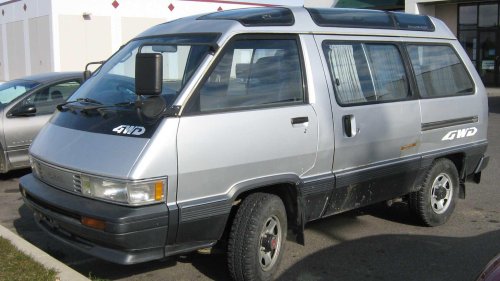
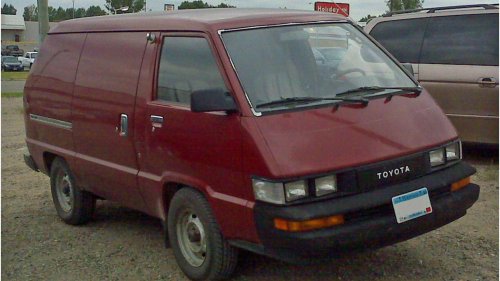
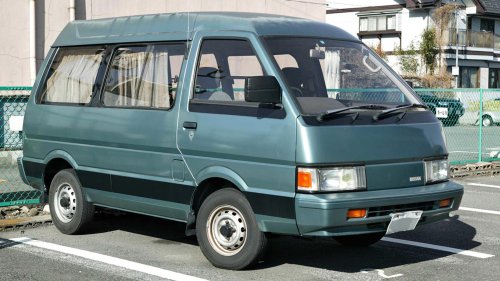
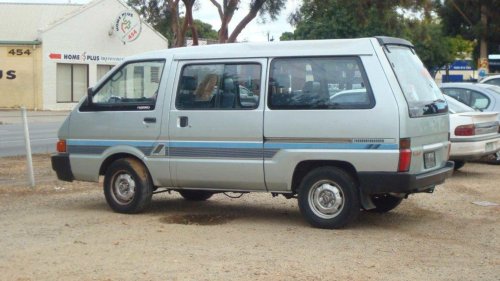
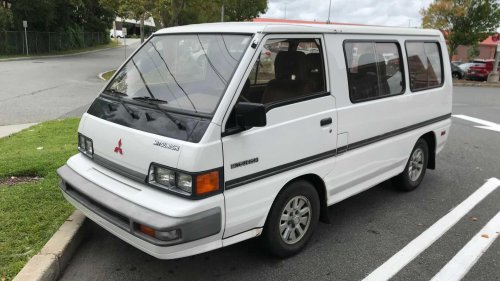
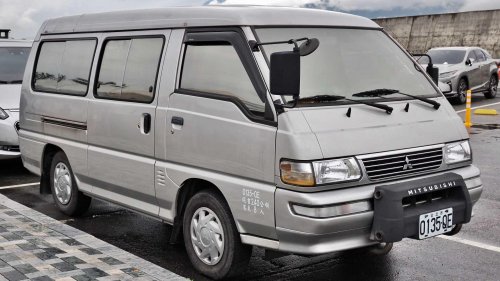
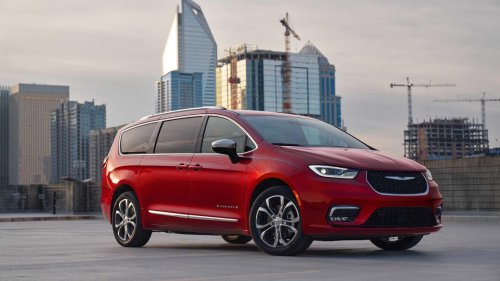
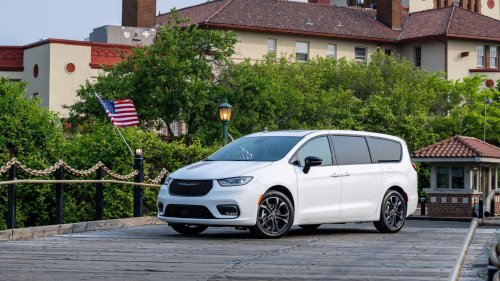
The minivan had technically existed as an automotive category since the 1930s, but it wasn’t until the 1980s that this humble family hauler took on the form we know today. Minivans exploded during this decade as a result of changes in the way American families lived their everyday lives. Baby gear became bulkier, older children began to attend multiple extracurricular activities necessitating the transport of heavy sports gear, and people got busier and busier leading to the need for a highly practical vehicle.Enter the minivan: not glamorous or sporty, but it got the job done.While American brands launched models such as the Chrysler Town and Country, the Plymouth Voyager, and the Dodge Caravan, Japanese brands took a little longer to adapt to American drivers’ tastes. Before the launch of bestselling models such as the Toyota Sienna and Nissan Quest, there were these three: quirky minivans that had originated on the Japanese market and were brought to the US with little to no adaptation. Let’s take a closer look at their history and their features. Toyota Van Dave_7/Wikimedia CommonsThis model was sold in the US as the unimaginatively named Toyota Van between 1984 and 1989, however it was known around the world by many different names, and has a much longer history which stretches back to the 1970s and into the present day.This particular incarnation of the model was sold in its home market of Japan as the Toyota TownAce, and made its debut in 1982. Two years later, the model made its way to the US market as the minivan trend was beginning to pick up steam. The Van was not, however, an especially stylish model; it had a practical, highly utilitarian character, with a lumpy, blob-like silhouette.The American version of the model was initially powered by a 2.0-liter inline-four engine, which produced 87 horsepower. Later on, in 1986, this was replaced by a 2.2-liter inline-four, which produced 102 hp. The vehicle was notable for its unusual layout, with the engine placed under the cabin floor and accessible through the driver’s seat.James B Bleeker/Wikimedia Commons Transmission options included a 5-speed manual, 3-speed automatic, and 4-speed automatic. The model was available in both rear-wheel-drive and four-wheel-drive configurations over the course of its US market lifespan, however AWD was only available between 1987 and 1989.One of the Van’s most interesting features was an option offered on the model’s LE (Limited Edition) trim level: a mini fridge/freezer with built-in ice maker. This device used the vehicle’s air conditioning refrigerant lines as its cooling system. It, however, stopped being available when the Van’s successor in the US, the Previa, arrived on the market in 1990. Nissan Van Tennen-Gas/Wikimedia CommonsAlthough this model was known as the Vanette elsewhere in the world, in the American market it was simply sold as the Nissan Van, between the 1987 and 1990 model years. The Vanette had originally been released in 1978, but the only model that was sold in the US was the Vanette’s second generation, which made its Japanese debut in 1985.While most examples of the Vanette sold around the world were equipped with engines under 2.0 liters in size, Nissan had to adapt the model to American consumers’ demands. The need for highway driving capability and air conditioning meant that the US version of the Vanette was fitted with a larger 2.4-liter inline-four engine, which produced around 106 hp.TuRbO_J/Wikimedia Commons However, fitting the model with a larger engine led to serious issues. The Vanette was not designed with this engine in mind, and its size meant that overheating was a major concern. The model quickly developed a reputation for being prone to catching fire.In the early 1990s, after it had already been withdrawn from the US market, Nissan initiated a recall. Most Nissan Vans in the US were crushed, although a handful survive. In 1993, the Van was replaced with a better known Nissan minivan, one that remained in production until 2017: the Quest. Mitsubishi Wagon UnclePulltab/Wikimedia CommonsThe last member of our trio is the Mitsubishi Wagon. Known elsewhere in the world as the Mitsubishi Delica (from the words “Delivery Car”), this model was sold in the US between 1987 and 1990. The passenger variant was called the Wagon, while a windowless cargo van version was marketed as the Mitsubishi Van.Unlike previous generations of the model – which were primarily focused on the Japanese market and later expanded into Australia and Asia – the third-generation Delica was sold on the North American and European markets as well. The US version of the model was powered by a 2.4-liter inline-four engine, which produced 104 hp. The transmission lineup included a four-speed automatic and a five-speed manual.User3204/Wikimedia Commons Although the Delica disappeared from the US market in the early 90s, elsewhere in the world the model remained in production even after subsequent generations had been released. A Chinese variant of the model was still being produced up to 2013.Once the third-generation Delica had hit 25 years of age, some JDM examples of the model began to be imported to the US. However, in recent years, these vehicles have been the subject of a curious phenomenon within the state of Maine. The local Bureau of Motor Vehicles has been deregistering imported Mitsubishi Delicas, on the grounds that the model is now classified as an “off-road vehicle”.The reasons for this seem to be related to the Delica’s right-hand-drive layout and its lack of safety and emissions control devices. According to local government, this is enough to relabel the model as an off-road vehicle, despite the fact that it is anything but, in reality. The Minivan: A Family Vehicle That Nearly Went Extinct, But Is Making A Triumphant Return Chrysler The minivan is one of the most frequently mocked automotive categories, often the subject of jokes about its lack of style, sportiness, or performance. However, despite the public’s perception of the minivan as boring and utilitarian, it enjoyed a period of high popularity towards the end of the 20th century, and is making a comeback today.The origins of the minivan can be traced back a lot further than you might think. The first ever minivan was an experimental vehicle from the 1930s called the Stout Scarab, which never had a large-scale production run. After the Scarab, the minivan was dormant for several decades throughout the post-war period, as wagons and sedans were the default family vehicle instead. In the 1980s, however, the minivan truly came into its own.Chrysler Automakers began to release several minivan models to suit changing consumer demand. The minivan’s heyday continued into the 90s and through to the turn of the millennium, when SUVs and crossovers began to take its place as the family vehicle of choice.The rise of the SUV nearly drove the minivan to extinction, with a drastic fall in the number of new minivans available for sale. Today, just six models from this category can still be found on dealers’ lots: the Toyota Sienna, Chrysler Pacifica, Kia Voyager, Honda Odyssey, Kia Carnival, and the all-electric Mercedes-Benz VLE-Class, which recently made its debut.The minivan has enjoyed a comeback over the past couple of years: sales numbers have increased and automakers have expressed an interest in releasing new models in the future. Mercedes-Benz’s release of the VLE-Class shows that there is still a place for the minivan in the modern automotive world, and that “minivan” does not have to be synonymous with frumpy or uninteresting.The three models we have taken a look back at may not be the most well-known or the most popular, however they represented an important part of the minivan’s early history as an emerging automotive category. If you happen to have one of these three minivans in your garage today, you are part of a very exclusive club.Sources: Toyota, Nissan, Mitsubishi



















 +81 others