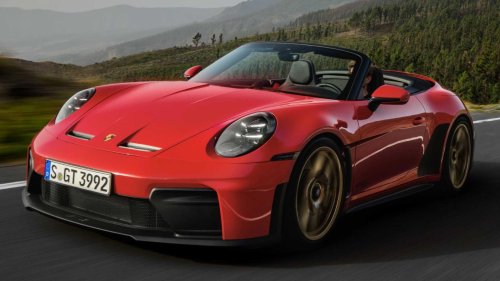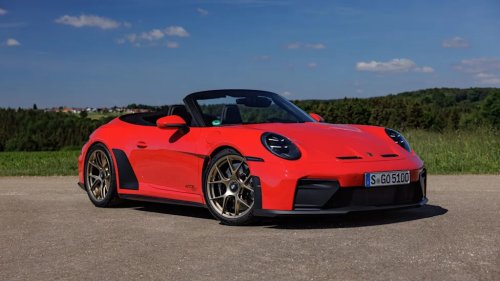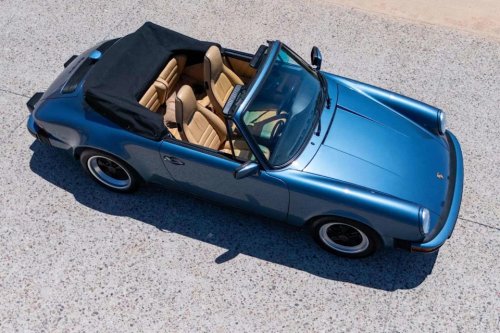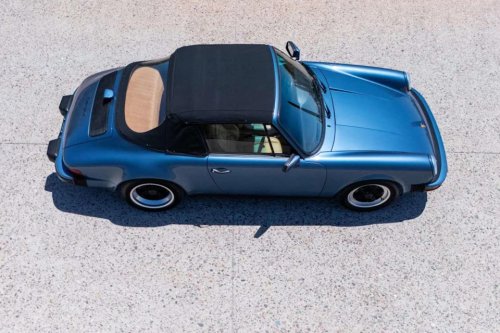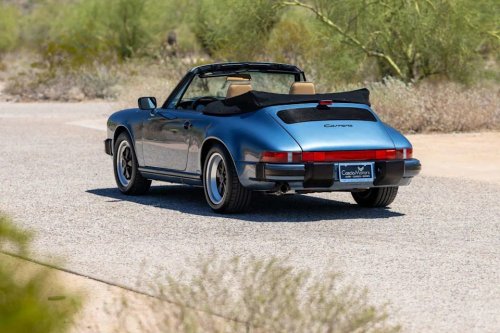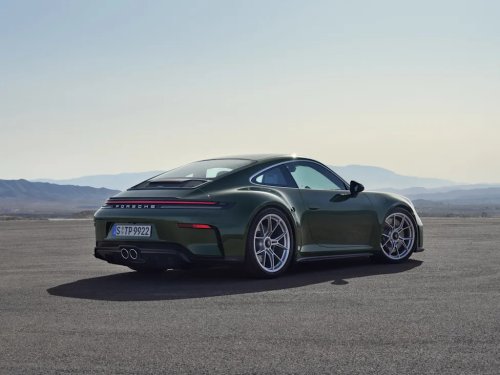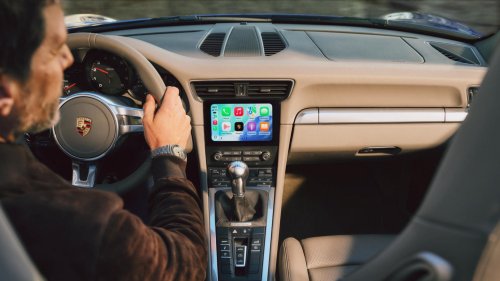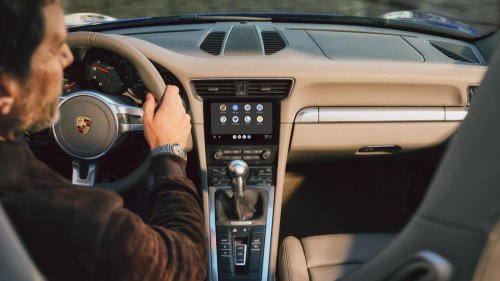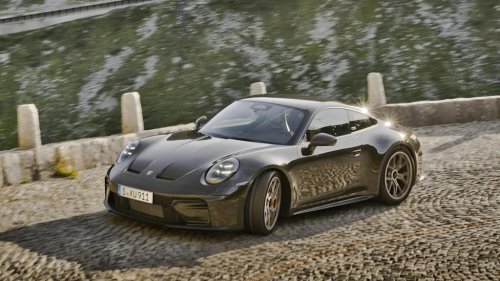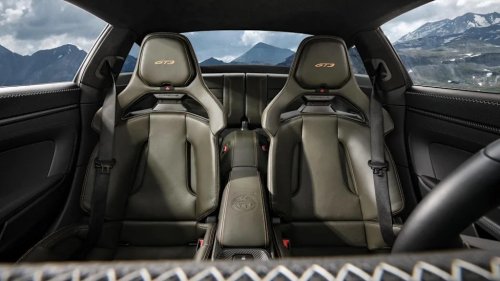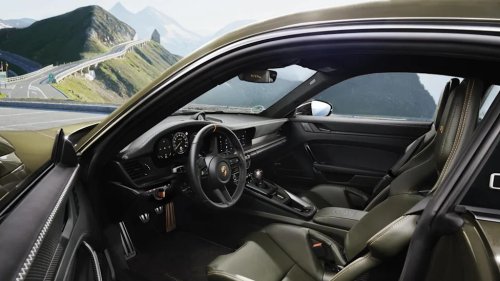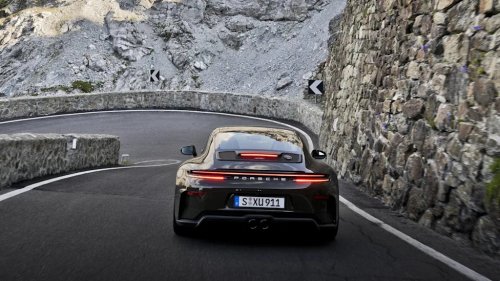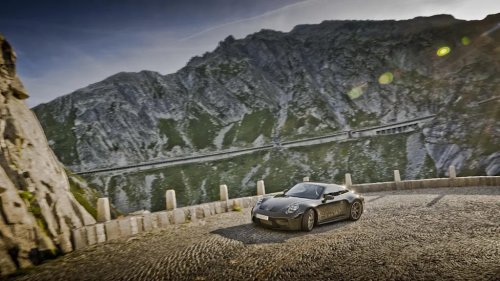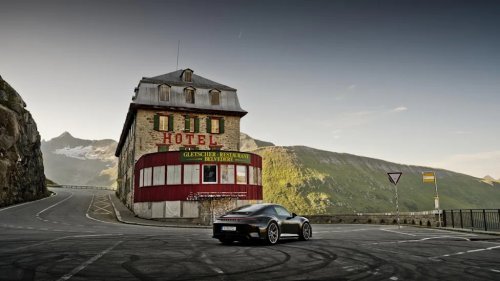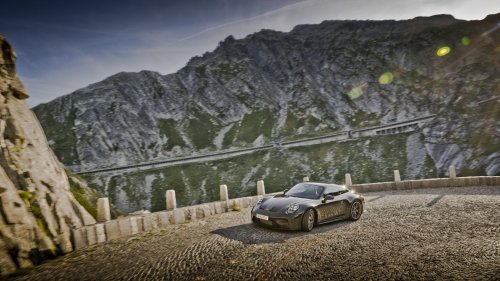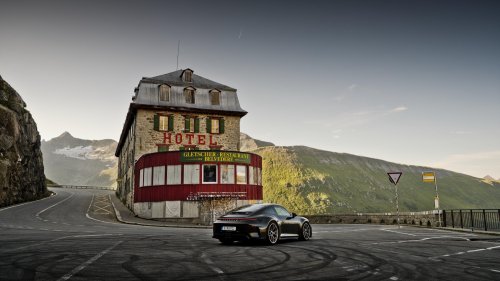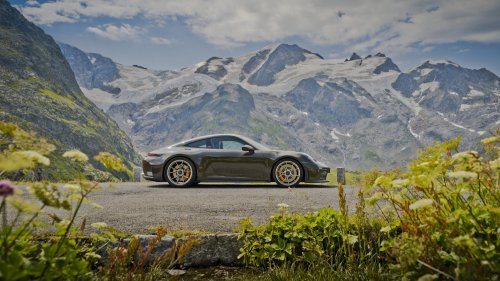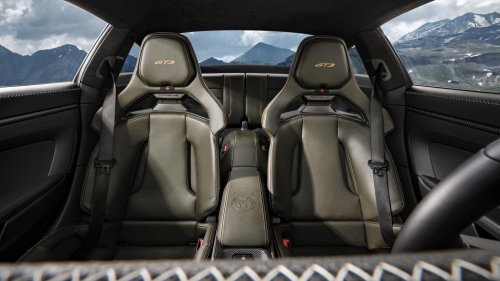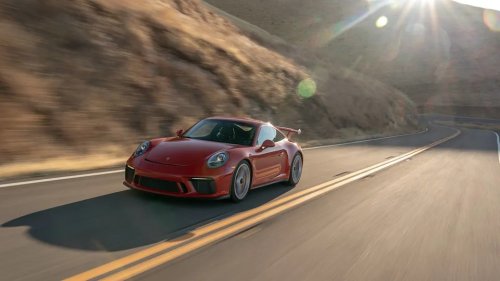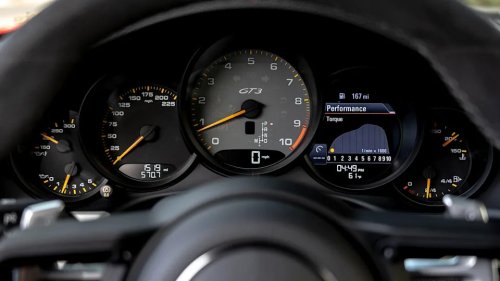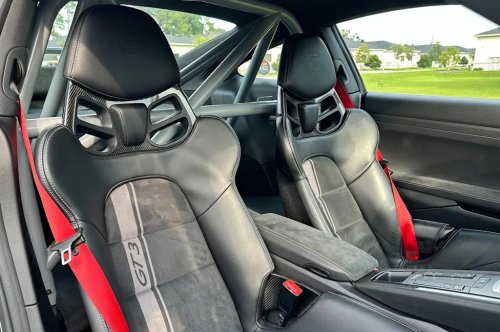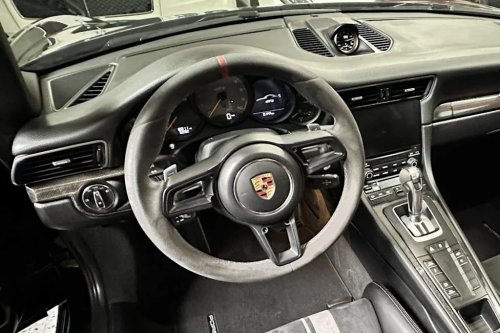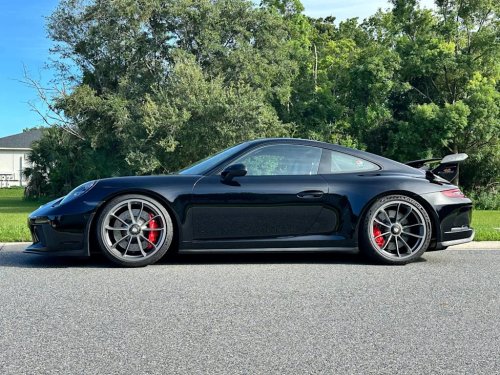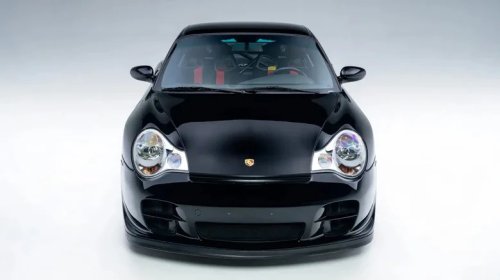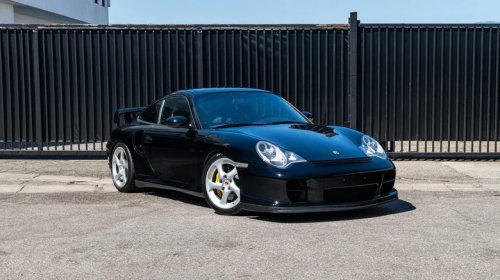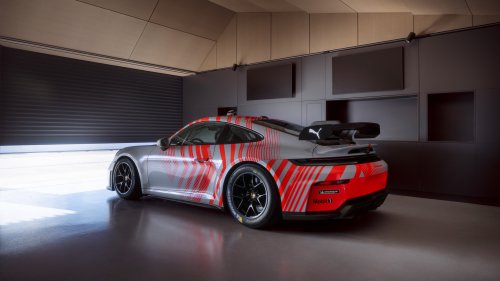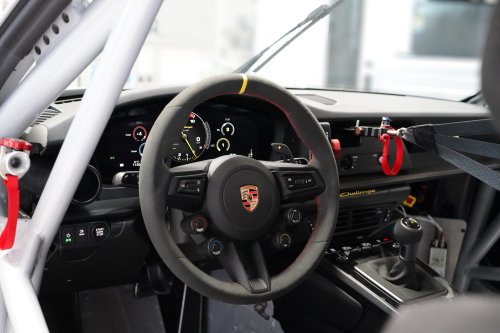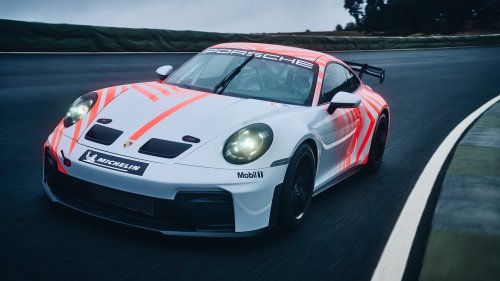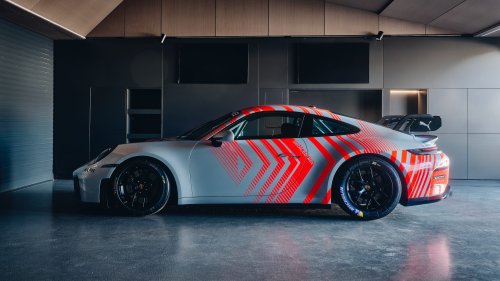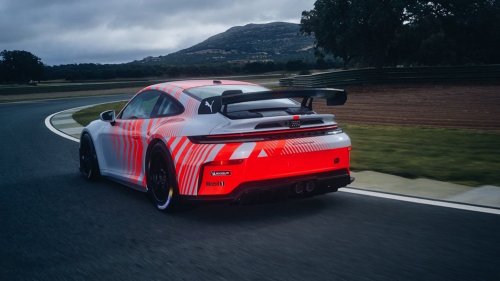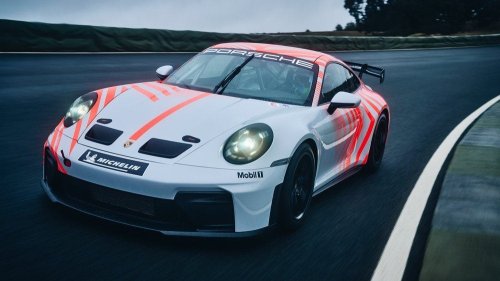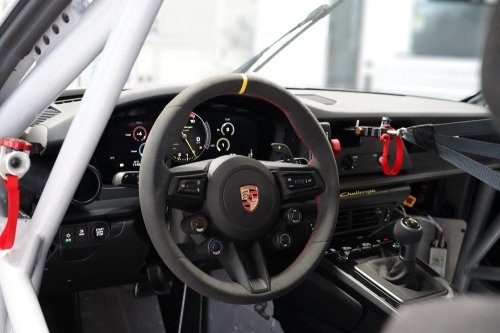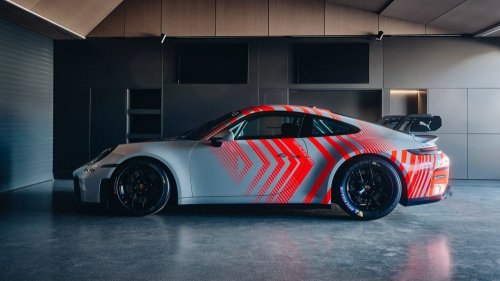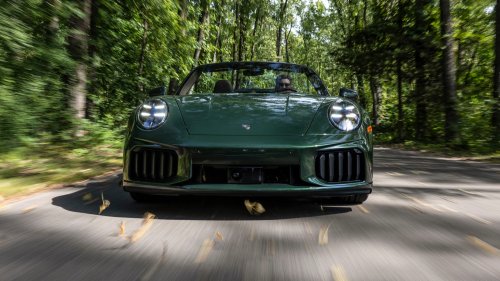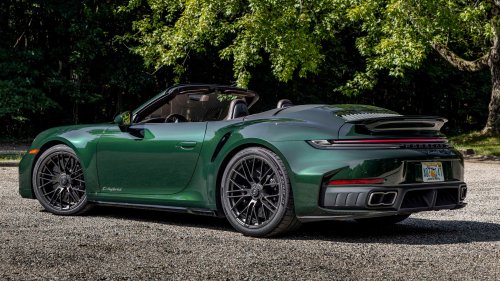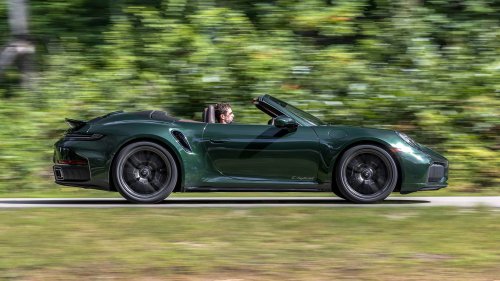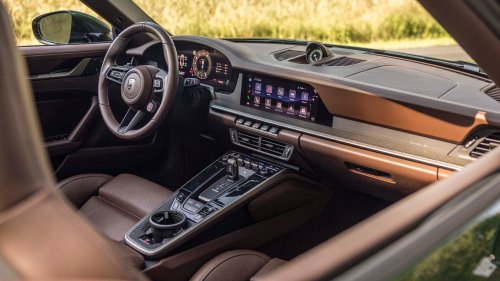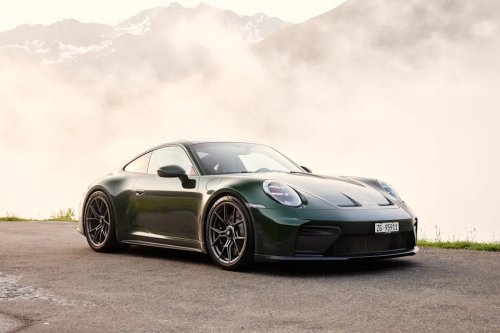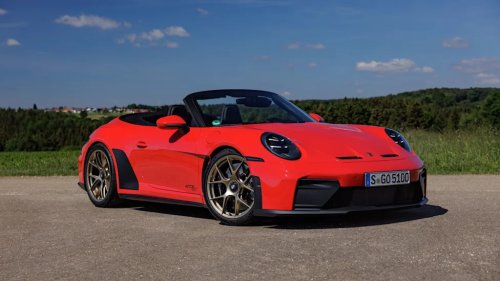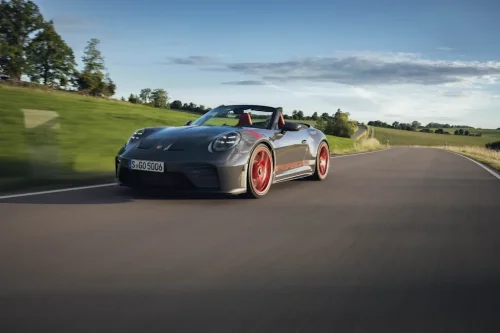
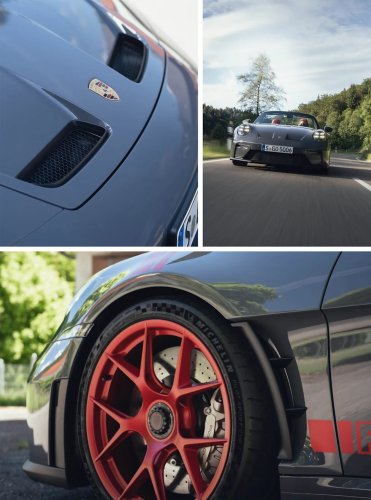
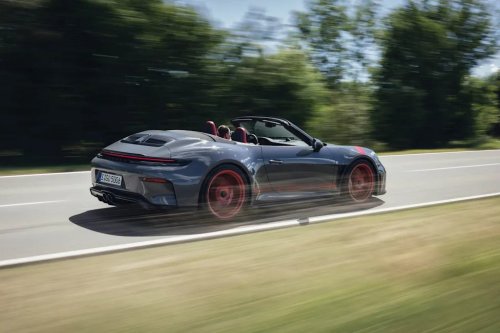
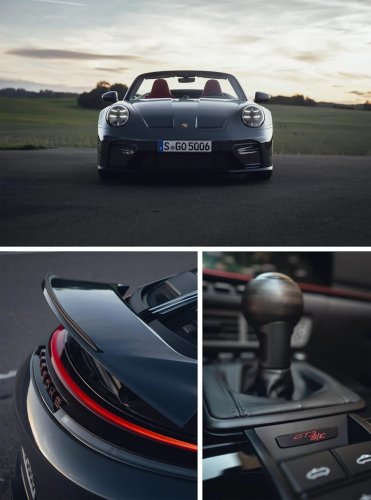
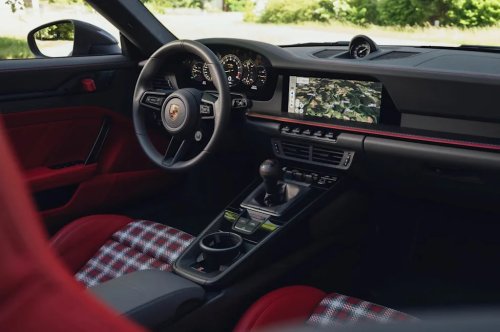
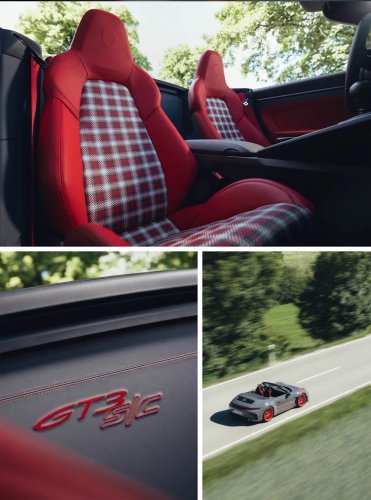


















The GT3 Convertible Makes Perfect SensePorscheTwelve seconds. That's how long it takes to raise and retract the roof on the Porsche 911 GT3 S/C. It's not a significant performance metric in this car, but it's the only one that's not improved over the standard Carrera cabriolet. Couldn't Porsche's Motorsport division have tweaked the voltage or turned up the electric motors to shave a half-second off the time? I asked several engineers, who all responded with looks of puzzled indifference. For what it's worth, the roof of the 911 Turbo S cabriolet is no quicker.The point of the GT3 S/C is not to be the fastest 911 to drop its top but to bring open-air motoring to the GT3 experience. The roof of the S/C (short for Sport Cabriolet) is one of very few components unchanged from lesser 911 convertibles, although, to be fair, it already features lightweight magnesium components. But the emphasis here is on making this open 911 worthy of the GT3 badge it wears.PorscheCentral to the whole GT3 thing, of course, is the 4.0-liter horizontally opposed six mounted in the back, this still revving all the way to 9000 rpm. It's not just the last naturally aspirated 911 engine; it's also one of the best in the car's 60-plus-year history. For the current "992.2" generation, Porsche has managed to preserve the engine's 502-hp output despite meeting onerously stringent emissions standards. There is also speculation this could be the last generation of GT3 motivated purely by internal combustion. Which would make the S/C a near-guaranteed collector's item.AdvertisementAdvertisementBack in the here and now, the 911 GT3 S/C is as glorious as the badge suggests, and also no mere engine and transmission upgrade. Elsewhere, the S/C is a combination of standard and optional GT3 bits and a splash of S/T, the limited-edition 992.1 lightweight coupe that informed much of the 992.2 GT3's suspension tuning. Like the S/T, the S/C gets carbon-fiber fenders and doors. This also means that the cabriolet features the older door pulls instead of the newer flush design, a detail that will appeal to 911 geeks. What we call the hood, and what Porsche calls the luggage compartment lid, is also made of carbon fiber.PorscheThe S/C also comes standard with its rear anti-roll bar, drop links, and rear undertray made from carbon fiber, part of the lightweight Weissach Package on the GT3 coupe. Also included in the $275,350 base price are magnesium wheels, which save around 20 pounds, and carbon-ceramic brakes which shave another 44 pounds. Even the six-speed manual transmission, the only gearbox available, saves 37 pounds versus the PDK automatic. Another big chunk of weight savings comes from deleting the rear seats, as in the GT3 coupe, and lightweight carpet from the S/T makes a contribution. All told, the GT3 S/C is the lightest 911 convertible in the lineup, at a claimed 3322 pounds.That's only 55 pounds heavier than the GT3 Touring coupe, and as such, the S/C's suspension is unchanged. As Porsche GT boss Andreas Preuninger explains, they started with the GT3 coupe suspension, which felt good. Then, "We started playing around with the damping, we started playing around with spring rates, but always it got worse. . . . So, at the end of the day, we decided we leave it as it is, which is working beautifully on the car."PorscheAccordingly, the S/C drives as near to exactly like a GT3 Touring as I could perceive. Which is damn-near perfect. It remains astonishing how well the suspension handles bumps and rough surfaces. Even in its stiffer damper setting the car merely tightened its responses but never got harsh.AdvertisementAdvertisementI mentioned the engine already, but it deserves more praise for the way it readily builds revs and then, around 5000 rpm, increases its climb rate. At no point through the rev range does it feel strained; it's as comfortable sitting at 7000 rpm as it is at 3000 rpm. Then there's the manual transmission, with its surprisingly quick clutch take-up (yes, I got caught out and stalled, but only once) and velvety shift lever. It's a car that shouldn't be so smooth to operate, given it's hard-core heritage and componentry, yet feels effortless.PorscheThis is hardly a car about numbers, but in that regard, Porsche says the GT3 S/C will run from 0 to 60 mph in 3.7 seconds, likely conservative. It also runs up to a 194-mph top speed with the roof up, should you have access to a high-speed oval track or an autobahn. An aside to that effortlessness is a no-lift shift logic to the transmission that works at any speed, not just flat-out at redline. Push in the clutch and leave your foot steady on the gas pedal, and the revs just stay put waiting for you to choose the next gear. Is this necessary? Not at all. But it's a fun party trick.The brakes were also impressive for their feel and modulation, even when cold. Porsche's carbon-ceramic brakes, along with those of other automakers, have been prone to numbness of feel in the initial application phase until they have some heat in them. But the GT3 S/C seems to have minimized this trait.The S/C preserves the GT3 experience with little compromise. It's not so much a question of why, but why not? With the top open, the area formerly occupied by the rear seats is even easier to access, and Porsche also has an optional removable luggage box that's custom fit to the space. There's also a power-operated wind deflector that reduces turbulence with the top down. My test drive would have been conducted completely with the roof folded away but for heat-wave temperatures in the Swabian Alps, where I drove it.AdvertisementAdvertisementBuyers will also get to choose whether to take the Porsche Street Style package, a $34,190 option that adds fender stripes and a large "Porsche" script along the doors. It also brings a red-leather interior with plaid woven-leather seat centers. The downside is that these come with the 18-way adjustable comfort seats, which are nice but lack what I found to be the perfect support of the optional carbon-fiber buckets. In the S/C, these buckets no longer have the removable head pad of the regular GT3, designed to accommodate a helmet. They are deep and comfortable, such that even with power height adjustment, you fall into position rather than climb into the car. But, for me, they were definitely the best option, with the base seat being a four-way adjustable power bucket.PorscheThe S/C also brings a few incremental improvements to its interior over the GT3 coupe. The digital gauges have been tweaked to be more legible. In terms of readability, the center tachometer now sports a full needle—before, the middle of the dial was an inset display, and the rev indicator was shorter. There's also a fun Easter egg in the minimalist center-tach view. Push and hold both steering-wheel rotary buttons, and the digits rotate from vertical orientation to radial.PorscheAll said, the largest problem with the GT3 S/C is exactly like that of the coupe: price and availability. There's no official cap on production numbers, but it will still be a limited-volume car in what will almost certainly be high demand. Even if you can afford one, there's no guarantee you'll be able to acquire one from a dealer allocation, which typically go out to established regular big spenders.Which can at least be of some comfort to the those of more modest finances, in that the GT3 S/C is a dream car even for the rich.You Might Also LikeIf You Can Only Own One Car, Make It One of TheseThese Are the Most Popular Cars by State