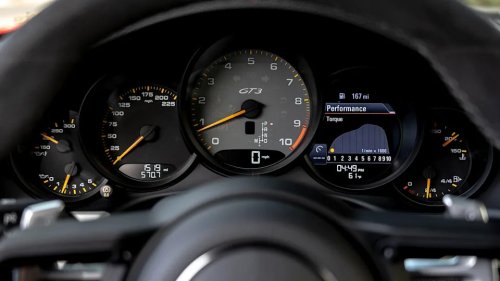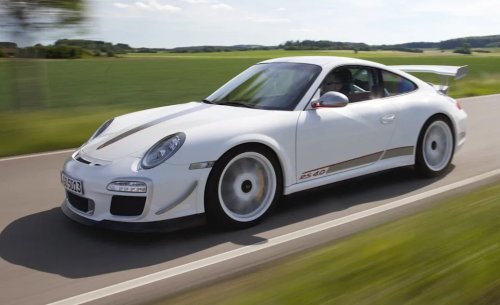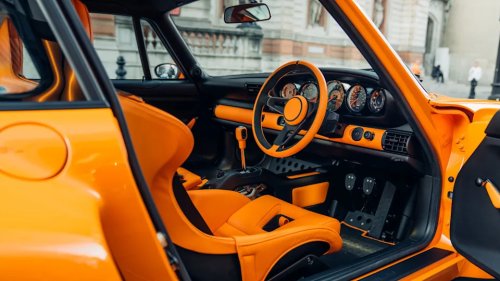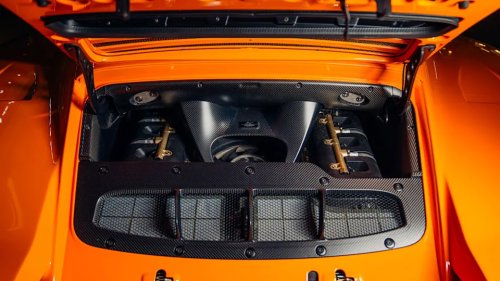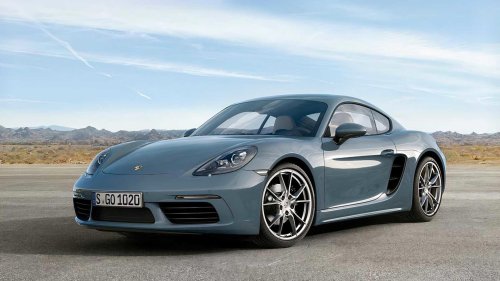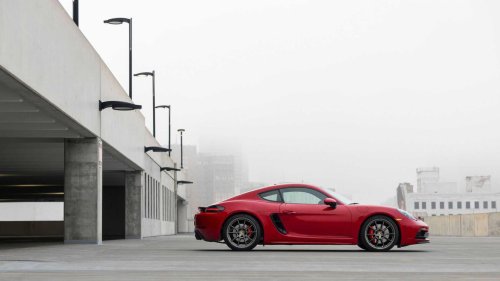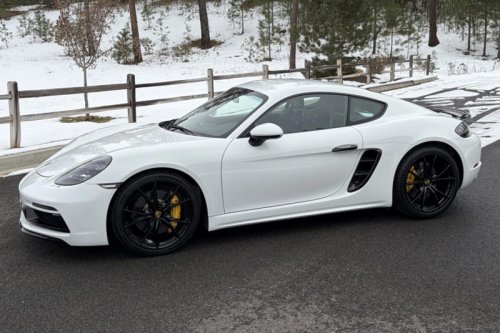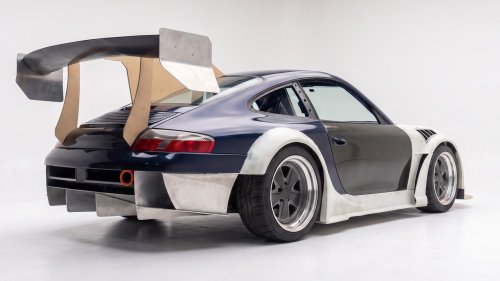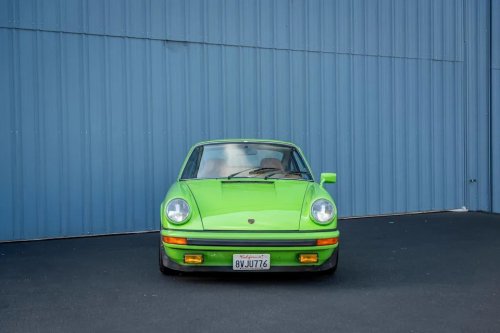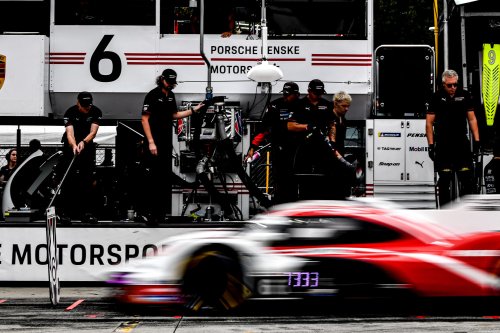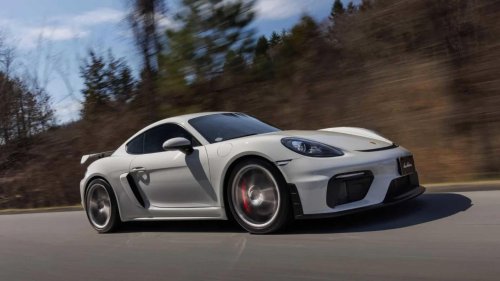
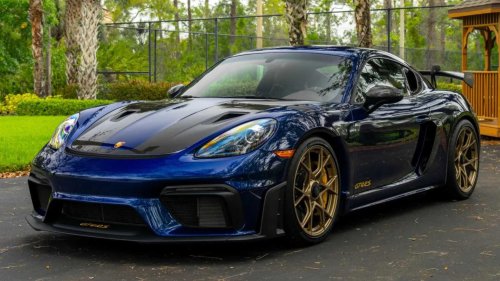
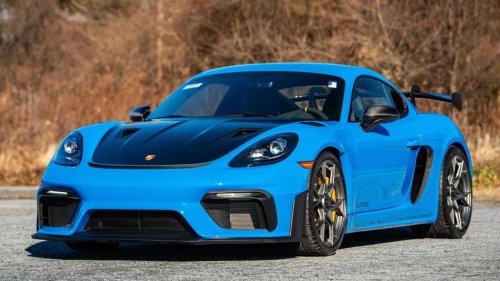
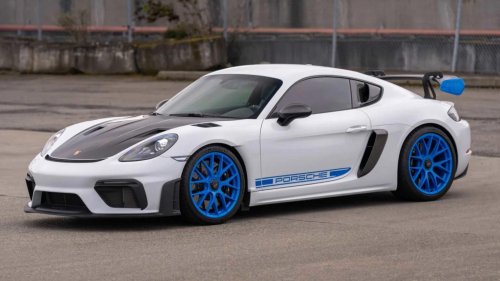
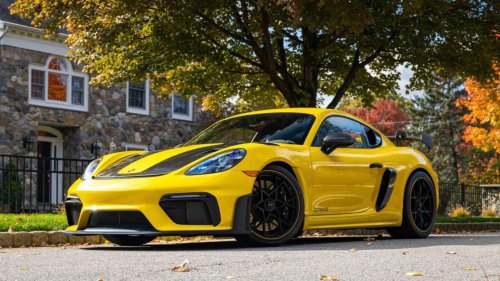



















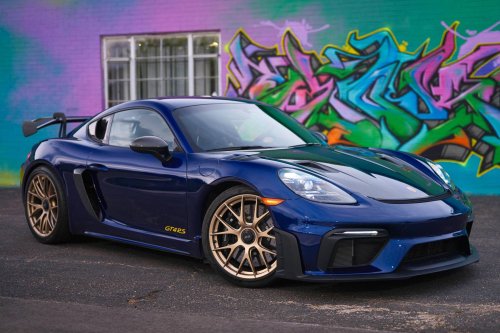
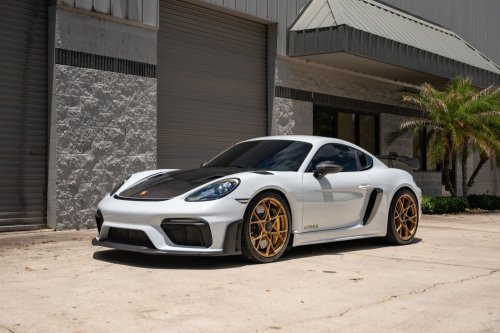
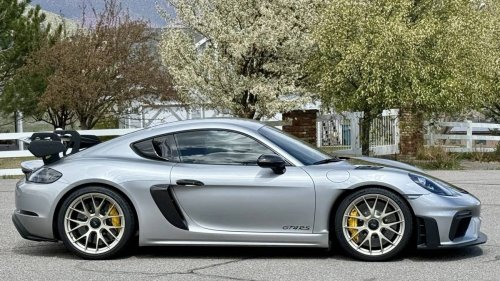
You’re on the track, and the pit lane hums with expectation. Every driver around you is in a six-figure machine that should dominate and line up with quiet confidence. You’re in your Porsche 718 Cayman GT4 RS, rolling slowly forward, the intake howl already slicing through the noise. By the finish line, you’re not just keeping up with the rest, you’re leaving behind everything in sight. Porsche gave drivers what performance driving should feel like, constantly challenging hierarchy, redefining expectations, and proving that in a world increasingly shaped by complexity, purity still matters.That’s the paradox that the GT4 RS is built on. On paper, it’s behind the Porsche 911 GT3 in Porsche’s hierarchy, but on the track, it challenges and occasionally embarrasses its more decorated, more expensive sibling. With the Porsche 718 Cayman GT4 RS, Porsche didn’t just build an affordable fast sports car; it produced a philosophical shift. Porsche engineers transplanted a GT3-derived engine into a mid-engine chassis to produce the GT4 RS, stripping weight obsessively and letting the Motorsport division take full control. This gave Porsche a rare car that offers zero compromise, where it isn't just chasing numbers but chasing purity, and in doing this, Porsche gave us one of the most well-respected driver's cars of its generation. How A Street Car Became A Race Car: The GT4 RS Origin Story Porsche For years, the Porsche Cayman was designed to live in the shadow of the 911 until the GT4. With the GT4, Porsche produced a Cayman that was precise, balanced, and loved by purists, though deliberately restrained. In the years before the GT4, Porsche handled it with a lot of restraint, ensuring they didn’t make the Cayman outperform its flagship. That changed in 2015 with the arrival of the Porsche Cayman GT4, which spilled over into the 718, which started the fourth generation in 2016. This was the first time Porsche showed a willingness to let its mid-engine platform really stretch its legs, producing a car that only got beaten in a straight line by the 911 because of the 911's more efficient PDK transmission. The setup was more aggressive and had genuine track intent, blurring the line between a road car and a race car.Then Porsche took the leap from GT4 to GT4 RS, and this is where everything shifted. With both cars using the same 4.0-liter naturally aspirated flat-six, Porsche had to deliberately detune the engine of the GT4 RS so it didn’t beat the flagship sports car. With development firmly in the hands of Porsche’s Motorsport division, the same minds behind its endurance racing machines, the Cayman wasn’t just a tuned street car anymore; it was a lightning-quick race car that could function on the road. Porsche took the lessons they learned in the GT4 RS Cup program and fed them directly into the road-going version, from aerodynamics to chassis tuning, reinforcing the Cayman’s racing DNA. The Cayman moved from the mid-engine secondary option to what could actually be the purest expression of performance driving. A 911 Engine In A Cayman Body — The GT4 RS Specs That Change Everything PorscheThe Porsche 718 Cayman GT4 RS is a racing powerhouse due to its engine, a 4.0-liter naturally aspirated flat-six engine lifted directly from the Porsche 911 GT3. This engine is deliberately detuned to produce 493 horsepower, down from the 502 horsepower produced by the 911, and revs to a staggering 9,000 rpm. But numbers alone don’t capture it. This engine delivers power in a linear and relentless form, producing one of the loudest and most intoxicating engine notes in modern performance cars. Unlike the GT4, the GT4 RS is offered exclusively in the PDK transmission only, because the manual transmission can’t handle the torque produced by the 4.0-liter engine. This is a decision that constantly polarizes enthusiasts. But the result is insane: perfect gear selection, lightning-fast shifts, and maximum performance consistency.The Porsche GT4 RS can hit 0–60 mph in approximately 3.4 seconds, similar to the 911 GT3 (992.2), with a top speed of 196 mph. There’s also the Weissach Package, an option Porsche offers that includes extensive carbon fiber, magnesium wheels, and additional weight savings meant to sharpen both acceleration and handling. The GT4 RS is built to be a different beast from the standard Cayman in aerodynamics, featuring functional vents, a massive rear wing, and underbody airflow management to generate serious downforce that keeps the car planted at speeds that would have caused lesser machines to feel light. GT4 Vs. GT4 RS Vs. 911 GT3 — Which Porsche Track King Actually Wins? PorscheThe standard GT4 was engineered to offer balance and engagement, with its manual gearbox and slightly less aggressive tuning, making it the purist’s choice. It was less intimidating, more interactive for drivers, and a better option for mixed road use. The GT4 RS built on that foundation and turned the volume to the loudest. It offered less weight, more power, and sharper aerodynamics, which made it significantly faster on a track. On the Nürburgring lap, the Porsche GT4 RS with the factory-approved Manthey Performance Kit hit times of 7:03.12, just four seconds shy of the standard PDK 911 GT3, proving just how serious it is and placing it deep into territory that had always been typically reserved for far more expensive machines.The 911 GT3 is a completely different beast, no matter how hard the GT4 RS tries to compete. It offers prestige, a longer legacy, and slightly superior straight-line performance, which the GT4 RS can’t compete with. Although the GT4 RS counters with a mid-engine balance, which has sharper turn-in, better rotation, and a level of confidence that keeps telling drivers to push harder and sooner, the 911 GT3 will remain the performance enthusiast's go-to option. So, who wins the battle of the Porsche sports cars? The GT4 offers driver engagement and value, the GT4 RS is the ultimate track weapon, but the GT3 is that prestigious all-around dominator. What It's Actually Like To Drive A GT4 RS On Track Porsche When you floor the throttle of a Porsche GT4 RS, the first thing you notice isn’t the speed, but the sound. With the intake sitting just behind your head and pulling air through side-mounted ducts, at 9,000 rpm, this vehicle doesn't just roar, it screams. The mid-engine layout makes turn-in immediate, helping the car rotate with more precision, with an almost telepathic feel in its responses. In the Sport and Sport Plus modes, the PDK transmission feels perfectly calibrated, with instant upshifts and surgical downshifts. The friction that it removes from the driving experience lets you focus entirely on the line.Inside the cabin, Alcantara dominates, with carbon fiber used to trim weight. Bucket seats are an option to lock you in place. Interestingly, you can choose to spec a half roll cage for your track-driving days. With this, let’s talk about the compromises. Ride quality is firm, as is expected on track-focused cars, and even borderline harsh on imperfect roads. The noise from the intake becomes a burden at some point. Storage is not a focus of this vehicle. It won’t be a good option for a daily driver for most people. Buying A GT4 RS — Pricing, Market Trends, And What To Watch Out For Porsche When the Porsche 718 Cayman GT4 RS first launched in 2022, it cost significantly more than the GT4, with an MSRP of around $163,650, just $20,000 less than the 911 GT3, but real-world pricing quickly diverged due to demand. By the time dealer markups were included, the prices of early examples shot up to well beyond that figure. The market has since stabilized, with the extreme markup era cooling, but prices remain strong, especially for low-mileage cars and Weissach-equipped examples.Before buying a used Porsche GT4 or GT4 RS, check its track history. Many GT4 RS cars have been driven hard, so inspect accordingly. Inspect the tires for tire and brake wear; these consumables burn out quickly under track conditions. The PDK is known to generally be robust, but evaluate it nonetheless. Also, check the Weissach documentation, and confirm its authenticity if it was equipped. To own, expect running costs to be significantly higher than a standard Cayman, and some of those costs are because track use accelerates tire wear, meaning you’d complete brake replacement cycles regularly.Source: Top Gear, Porsche, Bring A TrailerFAQQ: How much horsepower does the GT4 RS have?The Porsche 718 Cayman GT4 RS produces 493 horsepower from its 4.0-liter naturally aspirated flat-six engine.Q: How much does the Porsche GT4 RS cost?It launched at around $160,000, though market prices vary depending on demand, mileage, and specification. Today, used options cost between $170,500 to over $225,000.Q: Is the GT4 RS faster than the 911 GT3?On a track, it can be—thanks to its mid-engine balance. The Porsche 911 GT3 retains advantages in top-end speed. However, the 911 GT3 consistently has superior Nürburgring lap times than the fastest iteration of the GT4 RS.Q: Does the GT4 RS come in manual?No. It is exclusively available with Porsche’s PDK dual-clutch transmission.Q: What engine does the GT4 RS use?It uses a 4.0-liter flat-six derived from the Porsche 911 GT3.