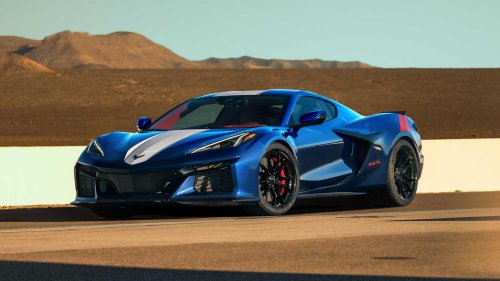
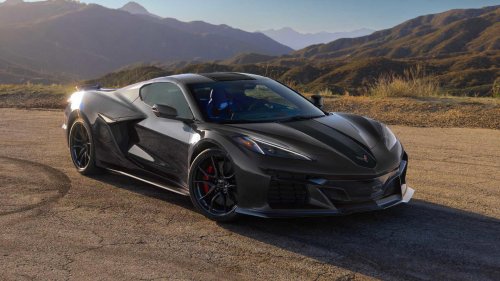
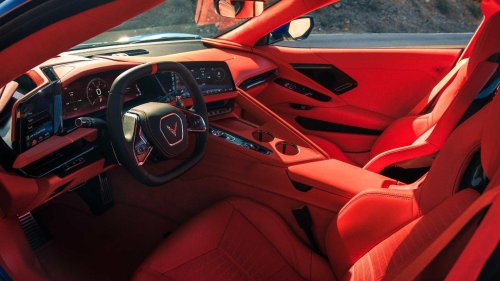
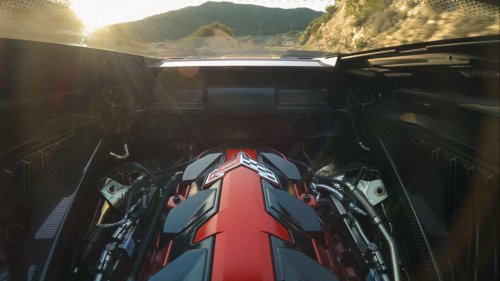
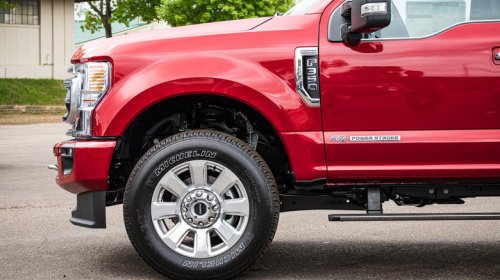
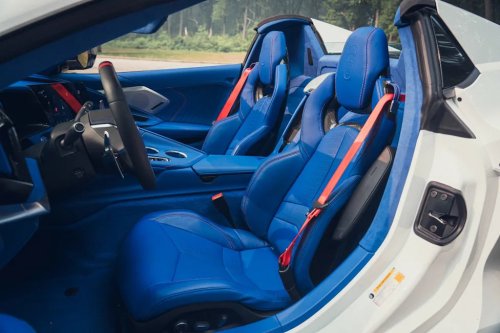
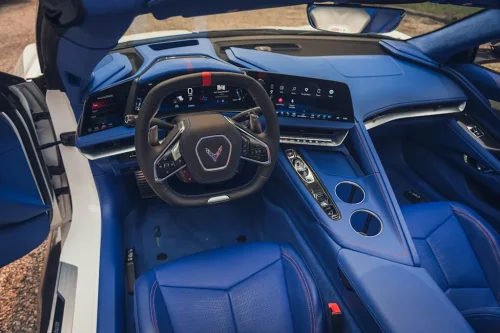
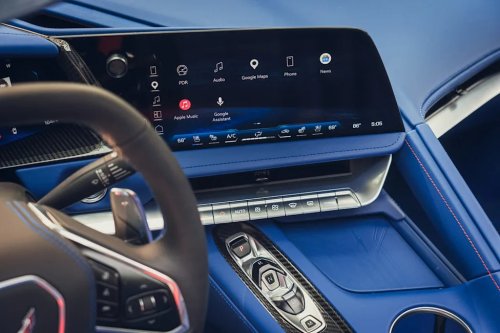
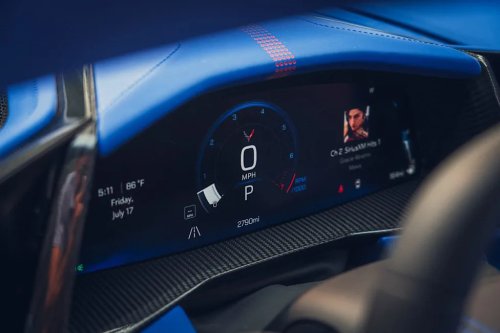
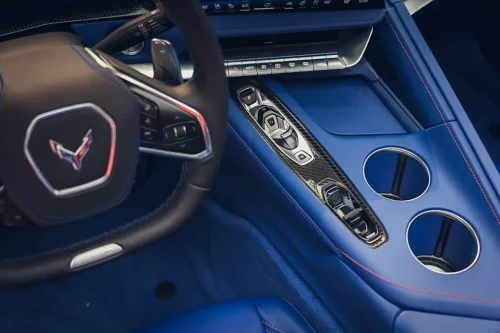
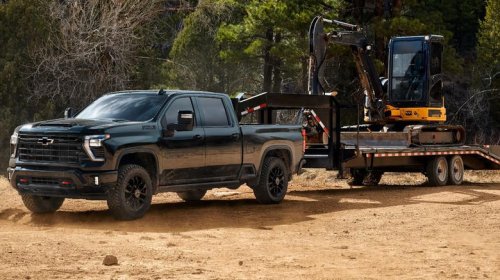
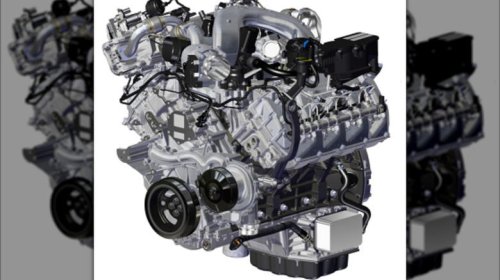
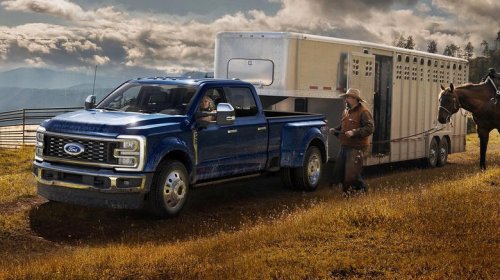
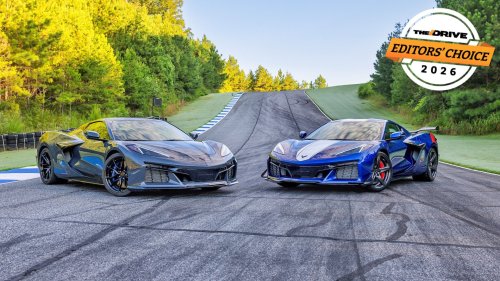
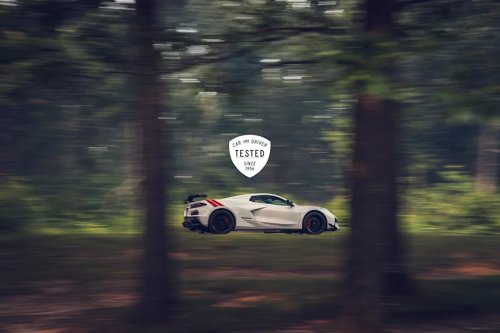
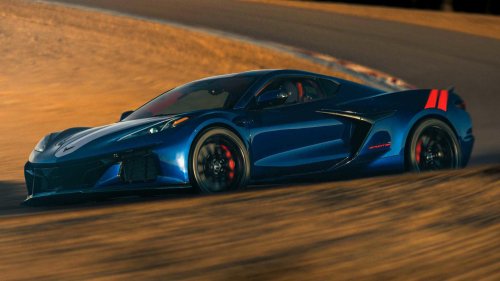
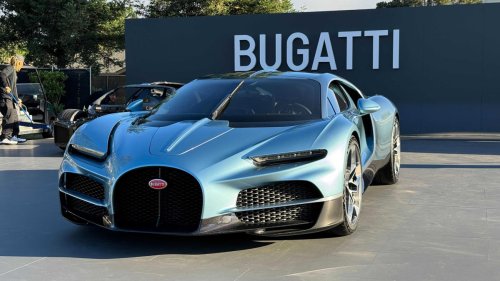
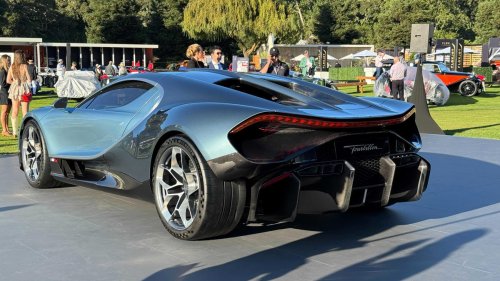
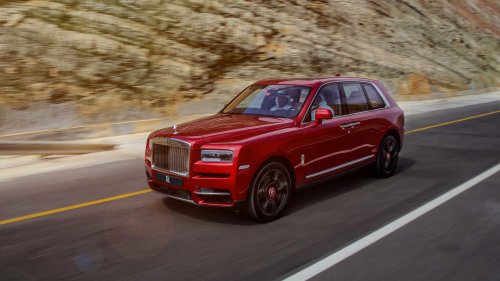
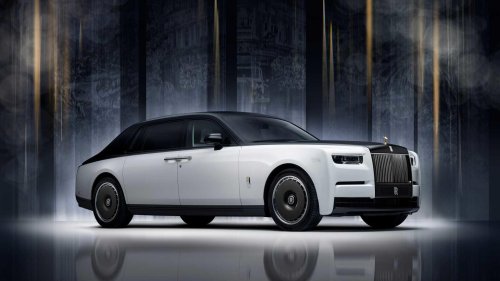
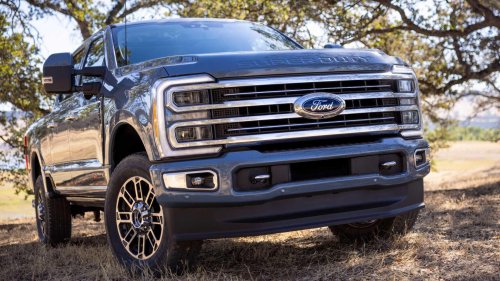
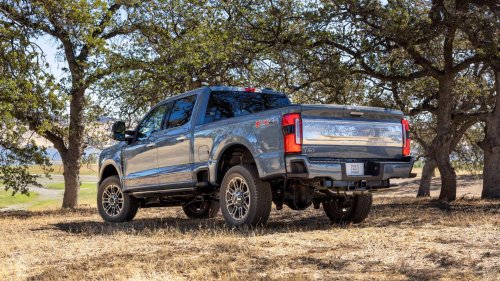
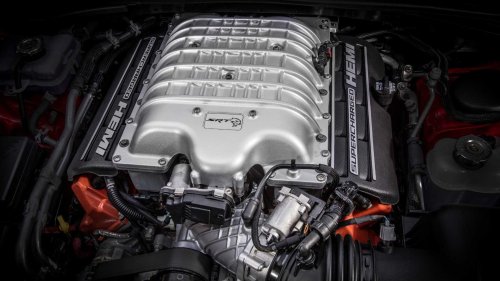
When the C8 Chevrolet Corvette Grand Sport was revealed in March, it signaled a rare stand against the trend of downsizing engines. Behind the cabin sits a brand-new 6.7-liter V8 engine, making it the largest engine offered in any Corvette today. That puts it in the rarefied air of high-capacity engines available in new cars today, with just four passenger vehicles on the market offering larger powertrains than the Grand Sport. It’s an impressively mixed bunch, too. The Corvette Grand Sport And Its Gigantic Engine ChevroletWith the Grand Sport set to “round out” the C8 Corvette model range, which has been on sale since 2019, it serves as the introduction of the new General Motors LS6 engine. A naturally-aspirated 6.7-liter V8 engine producing 535 horsepower and 520 lb-ft, with the hybrid X taking those numbers up to a mighty 721 horsepower and 145 lb-ft. It's comfortably the largest capacity engine in the range, the next-nearest being the 6.2-liter LT2 V8 seen in the current Stingray (set to be replaced by the LS6 for 2027) and Z06.Not to be confused with the big-block LS6 deployed by GM in the ‘70s, or the small block seen at the turn of the millennium, the new engine is a development of the LT2. Its extra capacity comes courtesy of an increased stroke, while changes include a revised intake plenum and larger throttle bodies. There’s no other real way to describe it than gigantic in a modern context, but there are a handful of models on sale that best the LS6’s capacity. Cars On Sale With Bigger Engines Bugatti Tourbillon Jared Rosenholtz/CarBuzz/ValnetHow do you follow up on the legendary quad-turbo W16 found in every Bugatti since the Veyron? You build an 8.3-liter, naturally-aspirated V16 engine. Yeah, you read that right. That dwarfs the LS6 in every measure and sits in the center of the Bugatti Tourbillon. It needs a good amount of space in there, too, thanks to its meter-long crankshaft.Co-developed with British engine experts Cosworth, the V16 standalone produces a monstrous 986 horsepower, just as much as the Veyron had in 2005. For the Tourbillon, that’s then paired up with three electric motors for a total of 1,775 horses, making it the most powerful Bugatti ever built.Jared Rosenholtz/CarBuzz/Valnet The stats are mesmerizing. The 60 mph sprint is covered in two seconds flat, pretty much limited by tire physics, and it boasts a 277 mph top speed, with a version capable of hitting 300mph almost certainly in the pipeline. Forget the Grand Sport, even the twin-turbo hybrid ZR1 Corvette won’t have a chance of keeping up with the Bugatti Tourbillon on a straight piece of road. At least it should be significantly cheaper. The Tourbillon costs from $4m, and that’s without any options. Just 250 will be made too. Rolls-Royce Cullinan Rolls-RoyceJust about besting the Corvette Grand Sport in engine capacity is the Rolls-Royce Cullinan, utilizing the British luxury manufacturer’s 6.75-liter twin-turbo V12 engine. Specific, but Rolls really insists on measuring to that degree. A similar engine capacity, four wheels, and starting the model name with a ‘C’ is all the Corvette and Cullinan really have in common, though. Where the Grand Sport is designed with driving enthusiasts in mind, the Cullinan is an SUV that exists to be driven in.Despite measuring 210 inches long, 79 inches wide and 72 inches tall, it’s not a vehicle designed with practicality as the forefront. You can have it with five seats, but the one you really want is the four-seat model, which can recline, massage, heat, and cool you on the move. Don’t forget the refrigerator, or fold-out screens mounted in the backrests of the seats in front.Weighing 5,864 lbs, it needs a lot of punch to get it moving. It has that for sure, with 563 horses and 627 lb-ft from its V12, meaning your chauffeur can manage 0–60 mph in five seconds and hit a limited top speed of 155mph, if they drive in an uncouth fashion. Rolls-Royce Phantom Rolls-RoyceFrom one Rolls to another, the 6.75-liter twin-turbo V12 is available in the Rolls-Royce Phantom, the manufacturers’ flagship sedan. Like the SUV, the Phantom serves as a vehicle to be driven in rather than one you’d plan to drive, so choosing between the two is more likely to come down to your preference on how high you want the car to be.Rolls-Royce That is, if you have to choose. We assume there are plenty of driveways in wealthier parts of the States that have both a Phantom and a Cullinan ready to go at any one time. Curiously, despite sharing the same power output, the Phantom has a slightly higher peak torque than the Cullinan at 664 lb-ft. Combine that with a lower curb weight at 5,664 lbs, and it can hit 0–60 mph half a second quicker. Ford F-Series Super Duty FordThere’s just one American-made passenger vehicle with an engine available that’s larger than the LS6 found in the Chevrolet Corvette Grand Sport, and it probably isn’t one you’d have thought about. It’s the Ford F-Series Super Duty range.Be it an F-250 or an F-350 (The F-450, too, but we’re not focusing on work trucks here), you can have it with the ‘Godzilla’ 7.3-liter naturally-aspirated V8 engine. This pushrod engine isn’t remotely focused on high performance, though, rather maximizing the hauling potential of the F-Series with 430hp and 485lb ft of torque.Ford You can also opt for a 6.8-liter ‘Mini Godzilla’ V8, or even a 6.7-liter diesel V8. A pretty wide range of choice for you, there, but not exactly one you’ll be cross-shopping with the Corvette Grand Sport. What Happened To All The Big Engines? StellantisThere are several answers to this question. The biggest killer of large-capacity engines is emissions regulations, as global authorities are demanding ever-stricter CO2 targets on car manufacturers. That means, to achieve high power outputs while maintaining legality, turbocharging and hybridization have been key to delivering immense performance without falling foul of regulations. Naturally, development of those technologies has advanced rapidly over the last decade or so, effectively eliminating large-capacity natural aspiration for anything other than appealing to enthusiasts, both from a cost and efficiency perspective.It’s those reasons we’ve seen cars like the Chevrolet Camaro, V8-powered Dodge Chargers, and anything with a Hellcat engine in it fall by the wayside in recent years. Anything larger than a V8 is typically reserved for ultra-exclusive hyper and supercars now, and the V10 is now dead thanks to the demise of the Lamborghini Huracan, Audi R8 and further back in time, the Dodge Viper.Even as synthetic and sustainable fuels become more common and look ever-increasingly like the best hope that driving enthusiasts can have for combustion-powered cars in the future, it’s unlikely we’ll see a trend of larger engines returning to the fold. The era of ‘no replacement for displacement’ is well and truly done.Sources: Chevrolet, Bugatti, Rolls-Royce, Ford.



















 +20 others