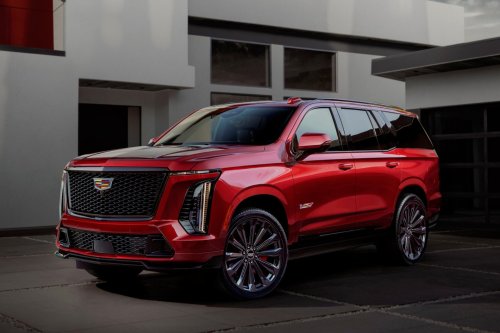
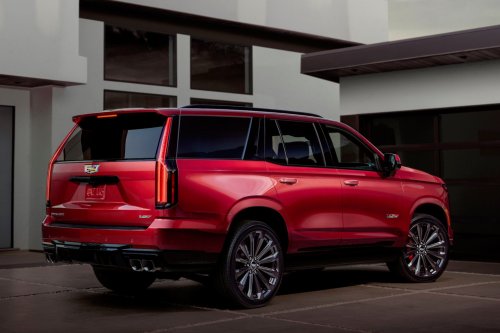
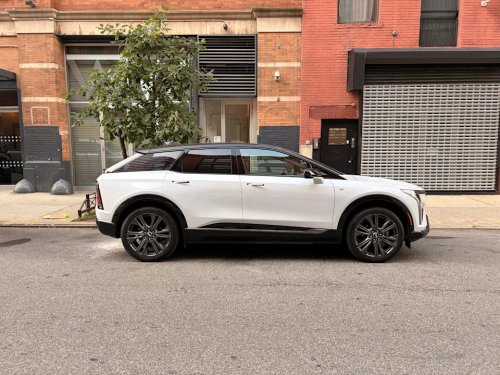
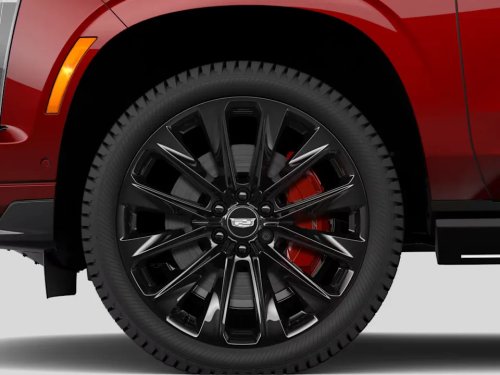
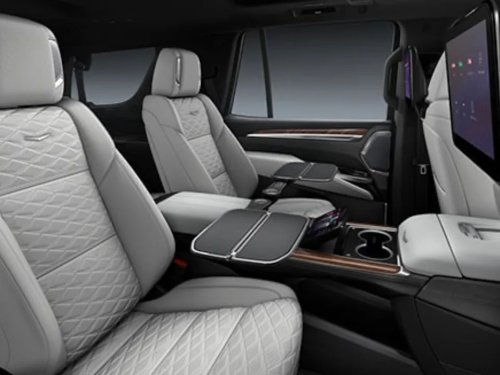
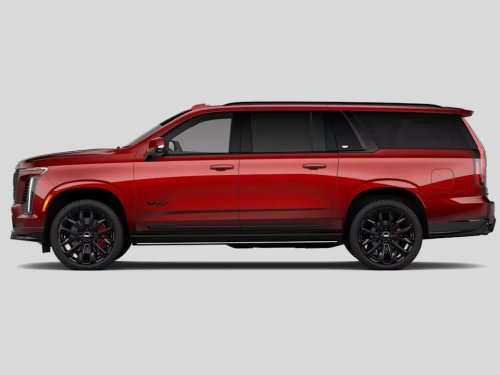
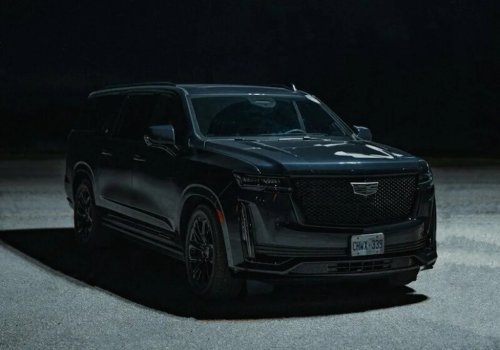
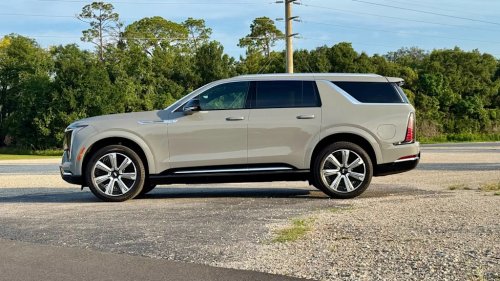
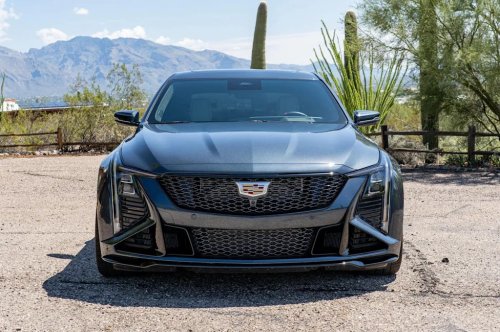
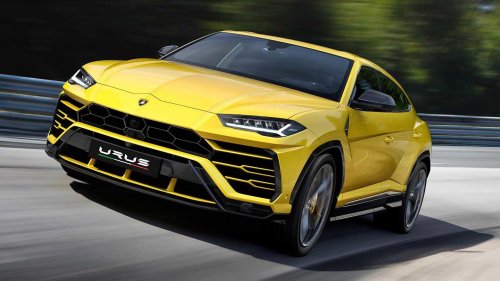
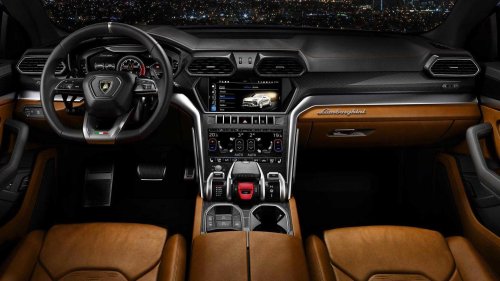
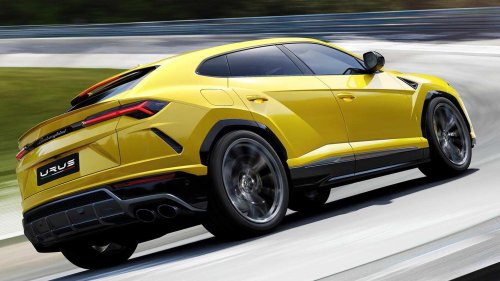
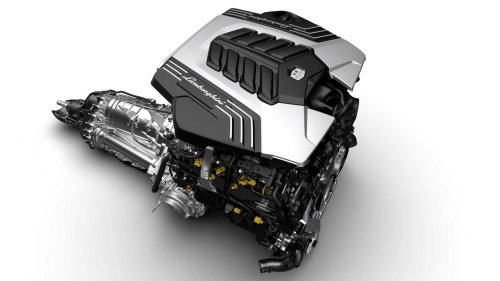
For decades, Lamborghinis have mostly lived in giant posters on bedroom walls or as daydreams. Unless you were a wealthy collector, the exotic allure of a modern creation from Sant’Agata Bolognese just felt untouchable. But times are changing. Higher production volumes, broader dealer networks, and creative financing options have made these Italian marvels more accessible than ever, and nowhere is that more evident than with the Lamborghini Urus.While Lamborghini’s latest supercars remain firmly in the stratosphere of exotic pricing, the Urus offers a different story. Its used values are falling to the point where it can be had for less than some of the performance-oriented SUVs offered by mainstream brands. For instance, you can now snag a lightly used Urus for less than the price of a new Cadillac Escalade-V, the current MSRP of which is $168,000.Pricing and market information were accurate at the time of publication, but the used exotic market evolves rapidly and is subject to change. An Exotic That's Within Reach Lamborghini Key Facts To Know Previewed as a concept in 2012 at Auto China in Beijing Launched in the US for the 2019 model year Is actually Lamborghini's second SUV Lamborghini first tested the waters with an SUV as early as the 1980s, when it launched a civilian version of a rugged off-roader originally developed for a US military contract. Officially called the LM002, it quickly earned the nickname “Rambo Lambo,” and it marked an unprecedented departure from the brand’s low-slung, wedge-shaped supercars. However, it was so far outside the norm that it only managed around 300 units over the seven years it was built.Lamborghini For its second SUV, Lamborghini took a very different approach, and it paid off. Intended as the supercar of SUVs, the Urus packs a powerful engine, extensive use of carbon fiber, and a low, streamlined shape that aligns it far more closely with its supercar stablemates than the LM002 ever did. Launched for the 2019 model year, it arrived just as the SUV boom hit full stride, and the timing could hardly have been better. The Urus immediately jumped to the top of Lamborghini’s sales charts, silencing doubts that a brand known for anything but practicality could successfully sell an SUV.Helping the sales effort was a starting price of around $200,000, less than a Lamborghini Huracán at the time and well below the sticker of a Lamborghini Aventador. Of course, strong demand and limited supply meant most buyers paid well above MSRP, especially once they dipped into the long list of expensive options. Looking at prices today, early Urus models from the 2019 and 2020 model years can be found starting at about $160,000, undercutting a new Escalade-V by roughly $8,000. At that price, you are typically looking at clean examples with around 50,000 miles, which is on the higher side for an exotic.Lamborghini There are cheaper listings, but these tend to come with trade-offs such as a less-than-clean title, accident history, or significantly higher mileage. Pricing suggests the Lamborghini Urus holds its value well as long as mileage stays in check, though potential buyers should also be wary of high insurance and maintenance costs and the likelihood of needing a specialist mechanic – factors that can quickly turn a bargain into a costly mistake.There is also depreciation, but that is hardly unusual, even for Lamborghini’s supercars, unless they are limited-run specials. Even so, the Urus is likely to lose less value over time than the Escalade, a nameplate notorious for steep depreciation. Serious Performance On Tap Lamborghini It’s easy to downplay the Urus as a serious performance machine, especially as it shares a platform with popular grocery getters like the former Volkswagen Touareg as well as the current Audi Q7, Bentley Bentayga, and Porsche Cayenne. However, you’d be wrong in this thinking. Lamborghini spent extensive time developing the Urus to be a true high-performance SUV, having first shown it as a concept in 2012 and only launching the production model six years later, with every detail refined for super-SUV performance.Development focused on ensuring the chassis and body structure were stiffer than any of the Urus’ platform mates, while also shedding weight where possible. The suspension was entirely unique, with a lower ride height and a wider track for sharper handling. Active systems, which include adaptive air suspension, active sway bars, and torque-vectoring all-wheel drive, were all calibrated specifically for the Urus. Even the carbon-ceramic brakes received bespoke Lamborghini tuning for consistent, track-level stopping power.The powertrain, too, while shared with other Volkswagen Group models, was tuned for Lamborghini character. Engineers emphasized low-end grunt, ensuring the Urus leaps off the line like a supercar. The result is nearly 626 pound-feet of torque available just above 2,000 rpm, delivering effortless thrust. Lamborghini emphasized that this could also help get the Urus unstuck in tricky off-road situations. The automaker even offered an off-road package with reinforced bumpers, underfloor protection, and Pirelli Scorpion Zero all-terrain tires.LamborghiniAll the performance tweaks add up to an experience that genuinely approaches a supercar behind the wheel. Speed builds so quickly that hitting close to 130 mph feels like 80, while the V8 growls and barks with a low, guttural tone, even burping between shifts of the lightning-quick automatic.Steering is light but precise, gaining heft in Sport and Corsa (race) modes. Terra (dirt), Sabbia (sand), and Neve (snow) modes let you leave the tarmac, but serious off-roading remains limited, even with the ride height raised to its maximum 8.4-inch setting. In such situations, the Escalade-V is probably better, but in terms of on-road performance, the Urus is miles ahead.Lamborghini The Urus remained unchanged for its first few years. Buyers seeking extra performance will have to limit the search to the 2023 model year, when Lamborghini introduced slightly refreshed Urus S and Urus Performante models each packing 657 hp.A much more substantial change came with the 2025 model year, when the Urus gained a plug-in hybrid system. This marked a name change to Urus SE, and power increased to 789 hp, finally eclipsing the 682 hp generated by the Escalade-V's supercharged 6.2-liter V8. However, these more recent Urus models are still priced closer to their original MSRPs, meaning you'll be hard-pressed to find anything under $200,000. Urus Success Paves Way For Second High-Riding Bull Lamborghini The success of the Lamborghini Urus was immediate and emphatic. In its first full year on sale, Lamborghini’s global deliveries surged by 43% to 8,205 units, an astonishing jump considering the previous year had already been a record for the brand. Of the total, 4,962 were Uruses, meaning the SUV alone accounted for roughly 65% of total sales. For a company historically defined by low-slung supercars, the numbers made one thing clear: the high-riding bull wasn’t just an expansion of the lineup, but rather the main event.Sales have only grown since then, with 2025 marking another record year as Lamborghini delivered 10,747 units globally. The company no longer provides a breakdown by model, but the Urus is still thought to account for around 60% of total sales. That sustained demand has persuaded Lamborghini to develop another model line with a similarly high-riding design. Previewed by 2023’s Lanzador concept, the new model was originally planned as a fully electric vehicle, but weaker demand for battery-powered cars has prompted a shift to a plug-in hybrid powertrain instead, with a debut expected around 2029. The Price Of Standing Out Lamborghini The Lamborghini Urus is now starting to dip into price territory occupied by mainstream performance SUVs, but it remains an exceptional machine. Blisteringly quick and genuinely luxurious, it delivers supercar pace with everyday usability, all while turning heads wherever it goes. Still, steep maintenance and ownership costs ensure it’s far from a budget-friendly indulgence.Sources: Lamborghini






















 +68 others