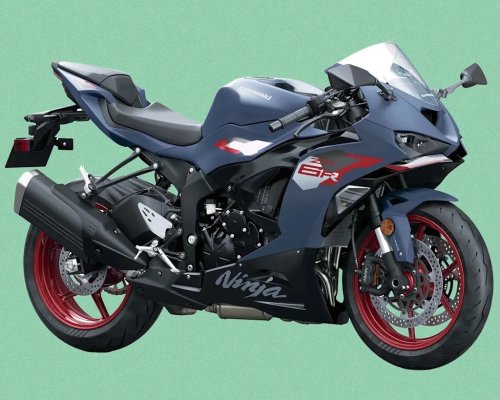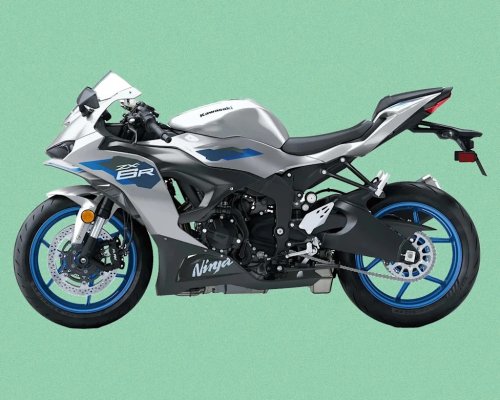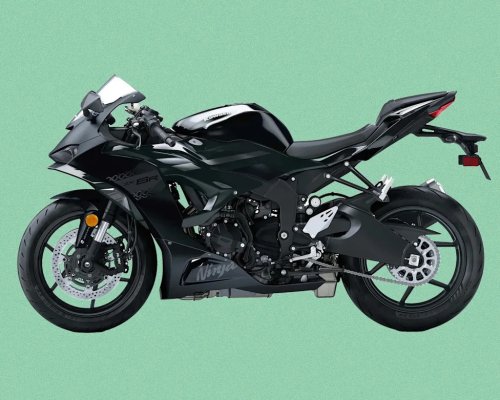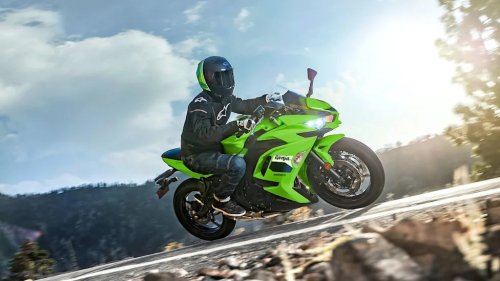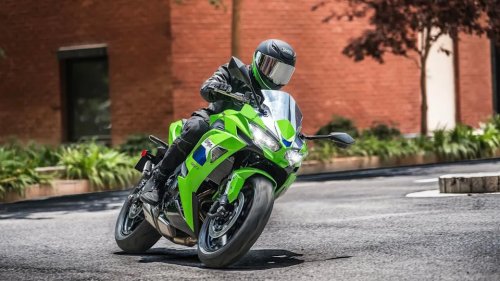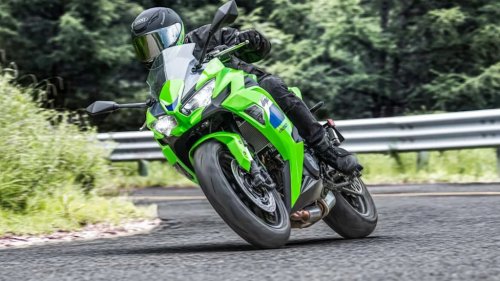
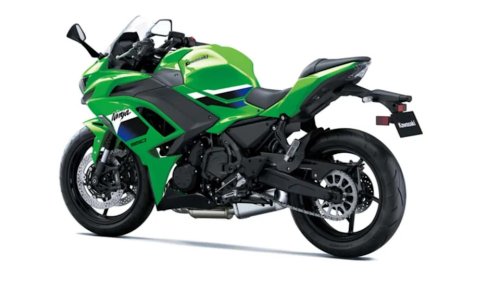
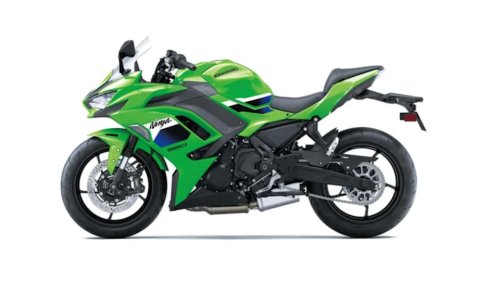
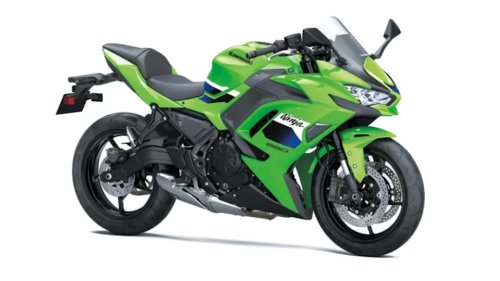
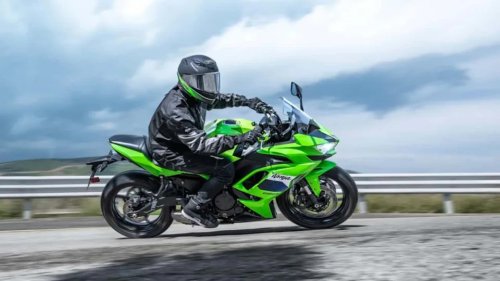
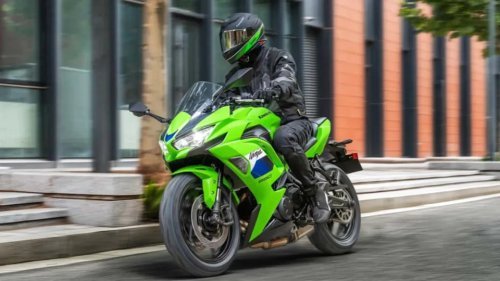
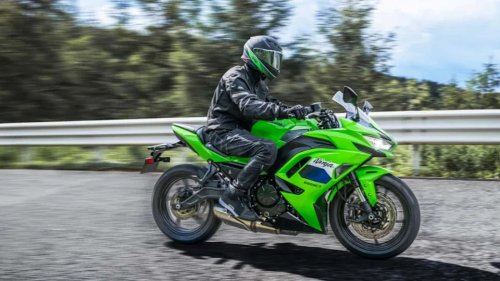
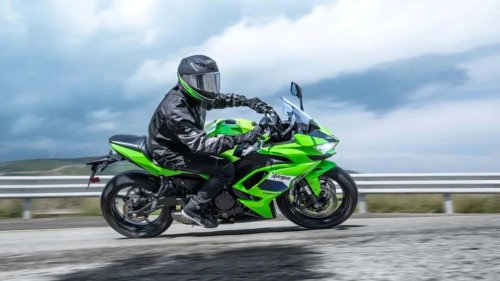
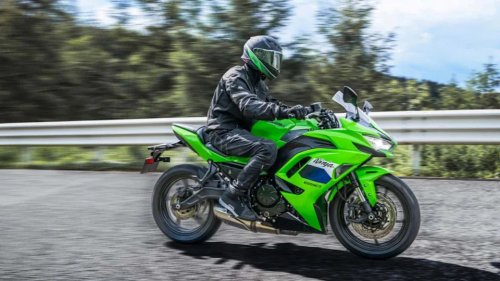
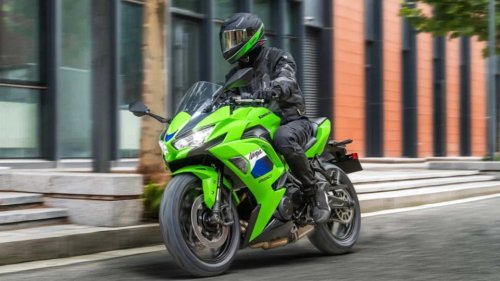
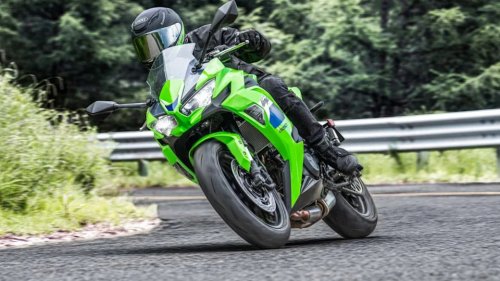
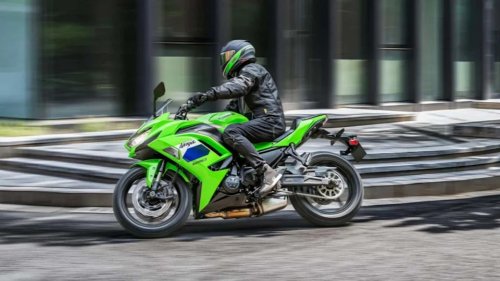
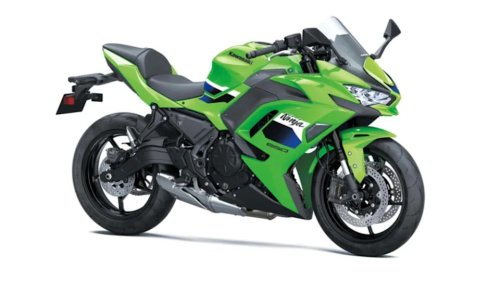
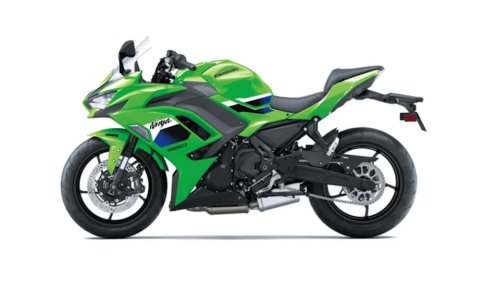
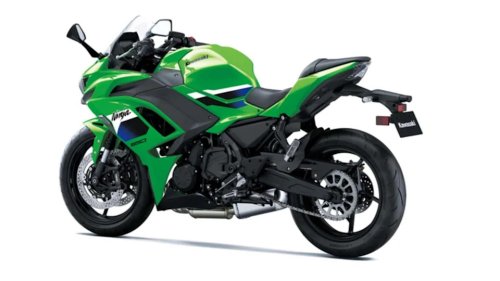

















2027 Kawasaki Ninja 650Kawasaki finally gave its everyday Ninja the front end of a proper sportbike. What took so long?The Kawasaki Ninja 650 has always occupied a slightly weird corner of the sportbike world. It's got the fairings, the Ninja badge, the aggressive headlights, and enough visual family resemblance to Kawasaki's ZX machines to look properly sporty in a parking lot. But look a little closer and there was always one thing giving the game away: that decidedly ordinary front end.For years, the Ninja 650 made do with a conventional telescopic fork and relatively basic two-piston front brake calipers. None of that made it a bad motorcycle. In fact, those simple components fit pretty well with what the Ninja 650 actually is: an approachable, comfortable, everyday middleweight that happens to wear sportbike clothes. But in a market increasingly packed with more capable suspension and increasingly serious-looking hardware, the Ninja's setup was getting hard to ignore.Well, Kawasaki has finally done something about it.2027 Kawasaki Ninja 6502027 Kawasaki Ninja 6502027 Kawasaki Ninja 650Photos by: KawasakiFor 2027, the European-spec Ninja 650 gets a 37mm Showa Separate Function Big Piston inverted front end, replacing the previous conventional unit. Kawasaki says the setup reduces damping pressure and improves control, while the rear shock gets a revised spring rate to better match the changes up front.More importantly for anyone who's ever stared at a Ninja 650 and thought, "Why does that thing still have commuter-bike brakes?", Kawasaki has swapped the old two-piston axial-mount front calipers for four-piston radial-mount units. Radial mounting generally allows for a stiffer caliper installation, and paired with the inverted fork, it gives the Ninja 650 a dramatically more convincing front end both mechanically and visually.And that's really the funny part. Kawasaki didn't need to reinvent the Ninja 650 to make it look considerably more serious. The same 649cc parallel twin and steel trellis chassis remain at the heart of the bike, so this hasn't suddenly become some supersport hunter wearing a friendly seat. It's still fundamentally the accessible, road-focused Ninja 650 we've known for years.2027 Kawasaki Ninja 650Bleed GreenKawasaki Threw An Insane 310 HP Supercharged Engine Into A Jet SkiListen to Kawasaki's First Teaser of the Updated Supercharged Ninja H2There are a few other changes for 2027, too. The 4.3-inch TFT gets a redesigned interface, while Kawasaki's Rideology smartphone connectivity now supports navigation and voice-command functions. There's also a wider front fender designed around the new fork, while European bikes get a 30.9-inch seat height. KTRC traction control remains part of the package.But those aren't the upgrades people are going to notice first. Put the 2027 bike next to the outgoing Ninja 650 and the new inverted fork and radial calipers instantly make it look more like the sportbike its bodywork has been promising all along.2027 Kawasaki Ninja 6502027 Kawasaki Ninja 650Photos by: KawasakiThat's arguably what makes this update so satisfying. Kawasaki hasn't tried to turn the Ninja 650 into a ZX-6R Lite, and it really shouldn't. The whole appeal of the bike is that it's easier, friendlier, and more usable than a committed supersport. It just no longer has to look like somebody finished designing a Ninja and then remembered there was an old ER-6 parts shelf in the warehouse.European pricing hasn't been announced yet, and Kawasaki hasn't confirmed these updates for the US market as of writing. If the revised bike does make it Stateside without a huge price jump, though, the Ninja 650 will finally have the hardware to better match the name stamped across its fairings.2027 Kawasaki Ninja 6502027 Kawasaki Ninja 6502027 Kawasaki Ninja 6502027 Kawasaki Ninja 6502027 Kawasaki Ninja 6502027 Kawasaki Ninja 6502027 Kawasaki Ninja 6502027 Kawasaki Ninja 650Source: Kawasaki Europe