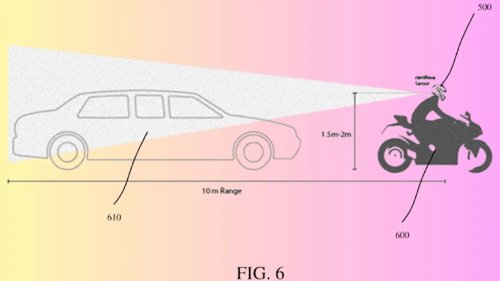
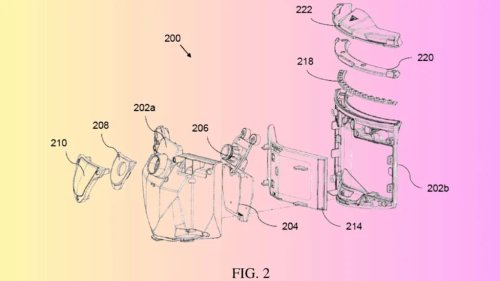
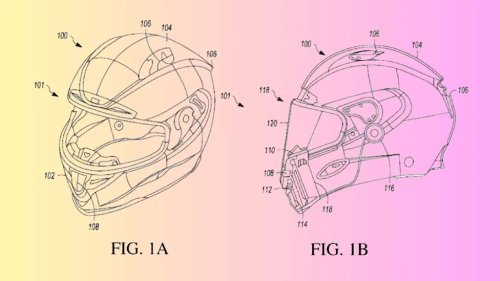
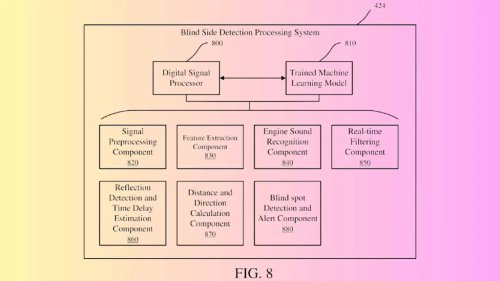

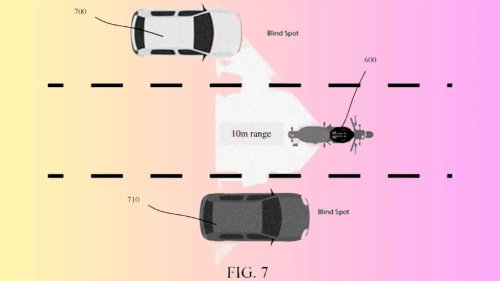



















GoPro Helmet PatentsIf you, like me, have been wondering whatever happened after GoPro bought Aussie smart helmet maker Forcite in 2024, here's a glimpse.Remember back at the beginning of 2024 when GoPro announced that it had acquired the small Australian smart helmet maker Forcite? No worries if you don't; there are so many threads to follow these days, I'm pretty sure that I couldn't tell you exactly what I had for lunch this time last week.For me personally, though, the Forcite thing sticks out in my mind a little more because I had the chance to test their MK1S smart helmet for a short amount of time, so I had some familiarity with it before GoPro was in the picture. And as such, I've occasionally wondered if and when GoPro was planning to make any moves regarding this IP it had acquired a couple of years back. Hat-tip to the excellent Ben Purvis over at Australian Motorcycle News, who spotted a slew of recently-published US patents filed by GoPro that relate to exactly that.As a direct result of his reporting, I've now hit up the USPTO and taken a good look at several of those patents myself. Apart from my previous hands-on experience with the Forcite MK1S, I can also say for certain that these newly-filed patents are a direct result of the Forcite acquisition, because some of them directly credit Forcite founder Alfred Boyadgis as one of their listed Inventors. GoPro Helmet PatentsFor those unfamiliar with how the Forcite MK1S worked beyond the Bluetooth helmet comms systems that many motorcyclists are already familiar with, here's a brief overview. There was a pretty sleek, nonintrusive electronics module that was integrated directly into the chinbar, and included a small camera lens that pointed directly outward. If you, the rider, installed a microSD card, you could record footage on a loop, like a helmet-mounted dashcam. AdvertisementAdvertisementHere in 2026, you might be thinking that action cameras can do this, and you'd be partially correct about functionality, but not about packaging.However, the cool thing about the Forcite integration is that it didn't require a separate, external device; and even though the helmet itself might not be the most lightweight possible full-face helmet you could strap onto your head, it was certainly still lighter than the weight of having a full-face helmet, then adding a helmet mount of some kind for an action camera, and then adding your selected action camera on top of that. If you're a person who's concerned about what leverage forces might be exerted on your head and neck with a helmetcam in the event of a crash, that's another argument in favor of a system like the one Forcite was developing.While the currently-available Insta360 Go3S does have an available POV in-helmet camera mount, battery life isn't as long as the Forcite's was (though video quality is admittedly better). Mounting a camera (even a tiny one) inside your visor, so close to your face, might also give some riders pause if they consider what could happen in the event of a crash; a potential consideration the Forcite's form factor neatly managed to avoid. SMRTRivian's e-Bike Offshoot Debuts a Smart Helmet With Headlights and Brake LightsShoei's GT 3-Air Smart Augmented Reality Helmet Is Finally Here, Expect High DemandAdvertisementAdvertisementThe Forcite MK1S wasn't only about the camera, though; it was also about integration of a sort of rudimentary HUD system. Now, I've long been the type of rider who plugs a route into Google Maps and listens for instructions in my helmet to tell me where I need to turn. While my partner is a person who prefers a dedicated GPS unit so they can reroute on the fly as needed, I'm usually pretty happy with a voice in my ear interrupting my music to tell me, "In half a mile, turn left on California," or whatever. Having an integrated, simple display on my dash that shows distance to a turn and the direction in which I should turn is nice, but I don't tend to like it when things are overly complicated.The Forcite MK1S had what was nominally a HUD system, but while I was skeptical before I tried it, I ultimately appreciated its simplicity. At its heart was some carefully engineered lights at the bottom of the eyeport, just above the chinbar, and dead center on your face if you were wearing the helmet. They had clearly been designed to be visible even in bright daylight conditions, but at the same time not blinding or distracting (like poorly aimed headlights from oncoming traffic, say). And you know what they'd do? Sweep deliberately in the direction where you were supposed to turn according to the navigated route you were currently following. They were simple, well-executed, and effective, and I genuinely appreciated this. I don't want a "smart toaster" or a "smart fridge," but in this case, this particular application of the word "smart" to a previously dumb object was, in my opinion, pretty well executed.It's no wonder that GoPro wanted to acquire it, really. And it's also no wonder that it's building a whole bunch of added complications on top of the foundational systems that Forcite crafted in the first place. GoPro Helmet PatentsThere Are WAY More Than Four LightsFirst, a note: I am going to talk about the blind spot detection system GoPro patented. However, before that, I'm going to talk about how the super-simple light indicator system that Forcite pioneered has 'evolved' according to this latest round of GoPro patents.AdvertisementAdvertisementNow, if you've used any type of modern helmet comms system in recent time, then chances are excellent that you're familiar with a variety of colorful lights that can mean different things, depending on whether they're blinking solidly, or flashing, or blinking alternating colors, and so on. The Forcite MK1S, as I explained above, utilized lights inside the viewing area of the helmet in a very specific (and, in my experience, helpful and easy to remember) way.According to a table of light meanings included in one of GoPro's recently filed patents, it expands on this system of flashing lights. Admittedly, I can't know for certain how effective it will be without having tested this system. However, to my eyes, and with my previous MK1S and helmet comms navigation experiences in mind, the expansion appears to be overly complicated. While it keeps the aforementioned sweeping directional lights to indicate when you should turn left or right, it adds a variety of pulses of lights to indicate other things. And somehow, you're supposed to be able to dedicate your brain power to counting those pulses to determine whether you need to call up your friendly neighborhood Spider-Man or you just need to merge left, all while you're simultaneously paying attention to road hazards and calculating where you need to be in the lane to stay safe. No wonder you're exhausted!If the idea of a HUD is to make things more clear and less complicated for riders, having a lengthy table of different meanings for different patterns of light flashes seems counterintuitive. A few key, important things that you can easily keep in your already-overstuffed brain is one thing; needing to learn an entire new flashing light language to understand what it's trying to tell you defeats the purpose.AdvertisementAdvertisementThere are six flashing light colors utilized in different ways; but they aren't all on the helmet. The Forcite MK1S also had a handlebar-mounted controller (which required separate charging from the helmet), and the GoPro patents seem to indicate that its helmet will also have a separate controller. And both the helmet and the controller, if this table is any indication, will have two separate lighting systems with two separate webs of meaning for all the pretty flashing lights that you have to keep top of mind. Listen, I want to know if weather's coming my way as much as any rider out there. But I don't want to have to whip out a laminated table filled with tiny text in order to help me decipher the code before I get walloped by the next derecho to hit Illinois, you know? And lest you think I'm simply complaining for no reason, there are a total of 38 different things that the lights could be trying to tell you. Thirty-eight.Are you going to remember all of them, along with everything else you no doubt already have going on in your everyday life? I kind of doubt it, which means that if you really want to know what one of the flashing lights means, the safest thing to do would be to pull over and look it up. And here I thought the whole point of a HUD was to be less distracting!AdvertisementAdvertisementTo quote a meme from the time of the ancients, ain't nobody got time for that. Darmok and Jalad, I hope you're proud.GoPro Helmet PatentsGoPro Helmet PatentsGoPro Helmet PatentsPhotos by: USPTOYes, There's Also The Matter Of A Blind Spot Detection SystemOne thing that GoPro also seems to want to bring to its evolution of a smart helmet is a blind spot detection system that utilizes a microphone array mounted to the back of the helmet.This, GoPro says, would be less expensive to develop than the kinds of blind spot detection systems that currently exist on motorcycles and utilize camera and radar technologies. It would use machine learning to take the sound of your motorcycle into account, and also learn to calculate distances and directionality of other traffic around you, based on a number of factors including sound reflectivity and proximity.AdvertisementAdvertisementIt's an intriguing thought, but it's unclear how well it will be implemented, nor how much it will cost to develop. And if you're the type of person who's concerned with the intersection of technology and personal privacy, questions abound regarding the data this system will undoubtedly be collecting, and what right to privacy you can expect to have with any of it. Other patents that GoPro filed include one titled "Image Capture Device With Tracking Capability," and another titled "Image Capture With Face Blurring." As we've all come to expect from any and all new tech and apps that we use on the daily, there will undoubtedly be a raft of Terms and Conditions that you need to agree to before you're able to use this helmet, assuming that it comes to market in the first place.Will you actually slow down and read them?Be honest; most of us don't. We just scroll impatiently to the bottom of whatever it is we're being asked to agree too, then hastily check any boxes that need checking and click Agree so we can get on with our day. Yes, even if we know that we shouldn't. As I mentioned above, it's because ain't nobody got time for that. We're all impatient because we all have too much to do, and we want to get on to the next thing on our list.AdvertisementAdvertisementThe Forcite MK1S helmet required a phone app in order to use when I was testing it. There's no reason to believe that the GoPro evolution won't also require a phone app for its use.How much data privacy can you expect that app to have? That's unclear, but it's worth thinking about, especially because all those smart features on this helmet will essentially turn all of your rides into real-time recording opportunities, potentially with facial blurring (maybe with a side of recognition? Unclear, but not impossible) and tracking capability according to these patent filings.