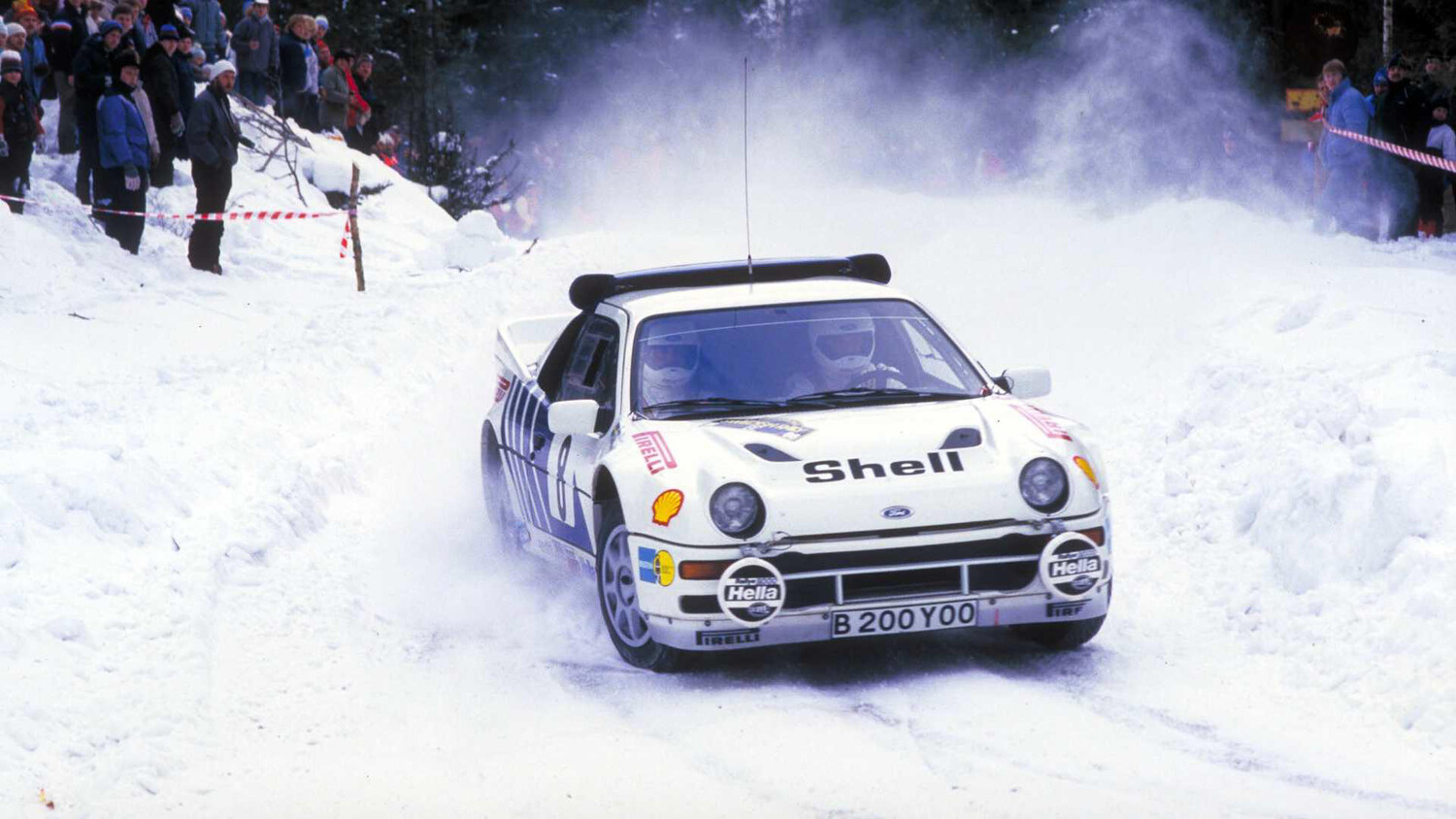
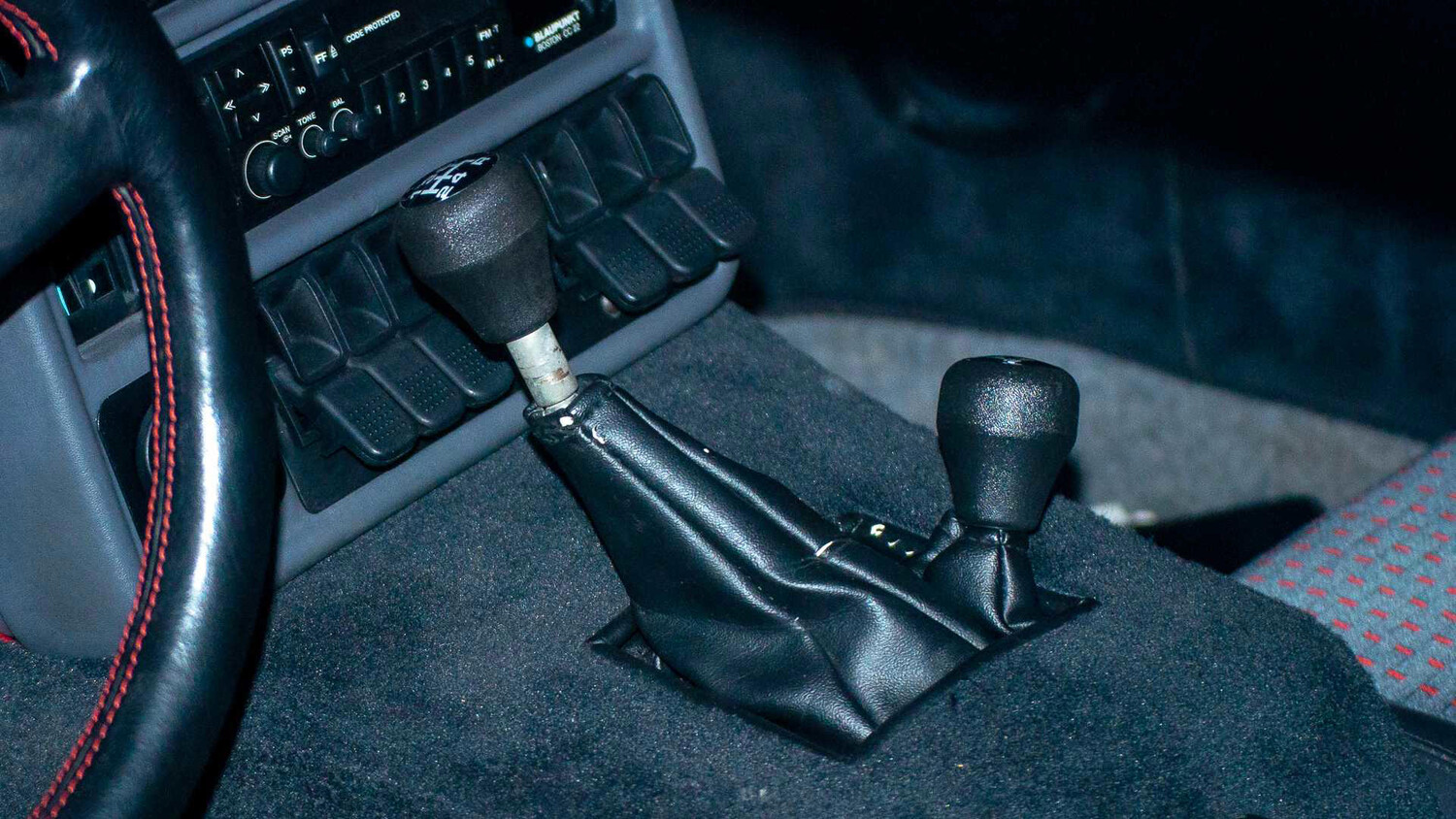
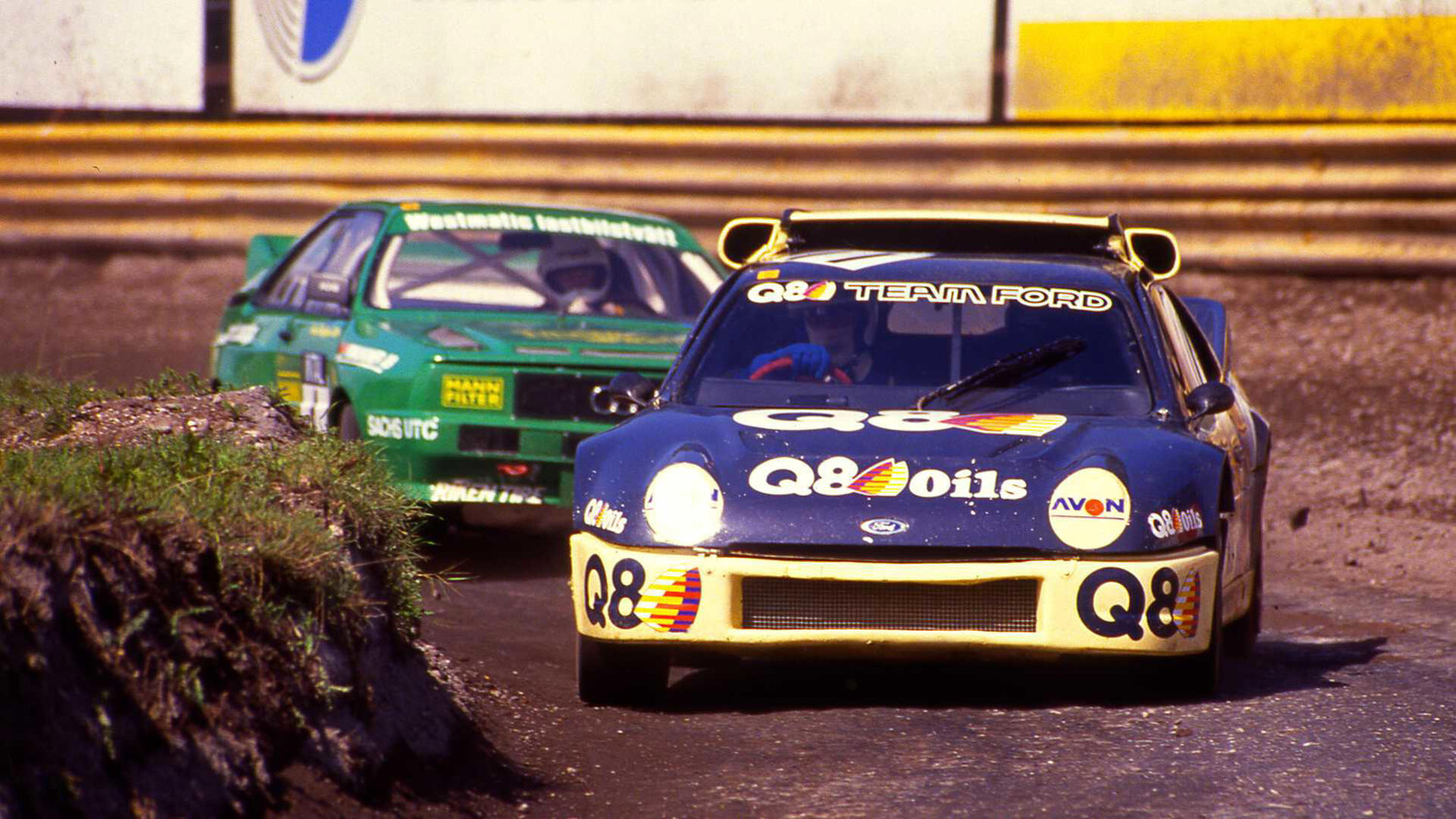
Despite the ever-constant drive towards SUVs and pickups, there are still plenty of 150-plus mph hot hatchbacks up for grabs in North America. Into which you can even squeeze a decent amount of your weekly groceries. Sadly, as of 2020, Ford is no longer on that list, the Blue Oval having retired the Focus RS after an (intermittent) 18-year run, and, in the process, brought a temporary end to its Rallye Sport line. One that included the coveted likes of the Escort RS Turbo, the Capri RS models, and, of course, the Sierra RS Cosworth.And then there’s the RS200. To many Ford skunkworks fans, the oft-overlooked RS200 is up there with the pantheoned likes of the Lancia Delta S4, the Audi Quattro S1 and the Peugeot 205 T16 in terms of sheer gravel-spewing lunacy. Paradoxically, meanwhile, since Ford struggled to sell the road-going models it actually did make, and the mid-engined brute started less than half of the WRC events for which it was developed, the RS200 could even be considered one of Rallye Sport’s biggest flops. Built From Scratch. The RS200 Was Ford’s Route To Group B Rallying James Gent/CarBuzz/ValnetThough the ‘Win on Sunday, Sell on Monday’ days were nowhere near as lucrative as they had been during the 1960s, the World Rally Championship’s global popularity was on an almost vertical ascent in the early 1980s (a soon-to-be era-defining rivalry between Subaru and Mitsubishi would tip things over the edge). But prior to that, Group B, a division as chaotic as it was almost cartoonishly dangerous, was introduced for 1982, and, thanks to the surprisingly open-ended sporting and technical regulations, effectively gave manufacturers free rein.Ford, naturally, wanted in – what better way to market its dynamic RS range, after all…? – and work soon began on modifying the Escort RS1800, with which the Blue Oval had won the ’79 and ’81 titles, into the Group B-spec ‘Escort RS1700T.’ They didn’t get far, mind. The laborious, and expensive, task of converting the Escort from front-wheel drive to rear-wheel drive meant Cosworth’s turbocharged four-cylinder would also have to be mounted sideways, ruining the Escort’s balance before they’d even started. Ford’s director of motorsport Stuart Turner, however, had other ideas, and, shortly after his appointment in 1983, scrapped the RS1700T program altogether in favor of a brand-new model. One, like the Lancia Stratos before it or Porsche’s 959 shortly after, built specifically from the ground-up as a dedicated, mid-engined rally car. The RS200.FordIt was, quite literally, unlike any other road-going Ford, before or since. Indeed, more than two-thirds of the components were purpose-built for the RS200 (rumors that no off-the-shelf Ford parts at all were used are wide of the mark, since the windshield, the tail lamps, and most of the cabin hardware was pure Sierra). Filippo Sapino of Ghia – he of the Ferrari 365 GTC/4, incidentally – designed the highly-un-Ford-like bodywork, complete as it was with an aggressively raked greenhouse, incredibly short rear overhang, and those ‘bug eye’ headlamps. Were that not distinct enough, the Kevlar-bodied rally cars were built by the UK’s Boreham Motorsport (which even announced a RS200 revival model in 2024), while the fiberglass road cars were built by Reliant. Yes, that Reliant. How The RS200 Was Built Chassis, Suspension And Brakes… James Gent/CarBuzz/ValnetBeneath the unique bodywork, meanwhile, lay an all-new, aluminum chassis designed by Tony Southgate, ‘father’ of Jaguar’s Le Mans-winning XJR-9. To this, tubular-steel space frames were mounted to this platform, which could be quickly replaced, mid-rally, if-needed. Behind state-of-the-art Pirelli P700 tires lay dual-spring suspension and truly massive Brembos for maximum stopping power. Testing was conducted by a young Malcolm Wilson, who would later secure Ford two WRC titles as the Blue Oval’s new team manager. Sir Jackie Stewart, who’d enjoyed world championship success with Ford-powered Matras and Tyrrells in Formula 1, was even on-hand as a consultant. …And That Unusual Drivetrain Iconic AuctioneersCertainly the unique element of the RS200’s underpinnings, however, was its drivetrain. An upgraded version of Cosworth’s 1.8-liter turbocharged four-cylinder – ironically the only part of the abandoned ‘RS1700T’ program that survived – was mounted, longitudinally, just in front of the rear axle. Inspired by, but not identical to, the air-cooled four-cylinder behind the rear axle in Porsche’s well-tenured first-gen 911. In road-going trim, Ford’s four-pot punched around 250 hp and 215 pound-feet of torque. In full WRC-spec, this was closer to 450 hp – at a screaming 8,000rpm no less – and 361 lb ft, and some unhinged examples are claimed to have reached upwards of 800 hp.James Gent/CarBuzz/ValnetTo balance the heavy turbo engine, Ford’s rejigged five-speed manual gearbox was mounted at the front, power to which was sent via a driveshaft as normal. Give or take some fettling, this gave the 2,600-ish pound RS200 perfect 50:50 weight distribution, and made the new-boy incredibly nimble. Bizarrely though, some of the power, having just been sent to the front, was then immediately sent back to the rear axle via a second, parallel shaft to power the rear wheels. Though this wasn’t a full four-wheel drive set-up, a laAudi’s all-conquering Quattro S1, torque split could be adjusted via a lever next to the transmission to make the RS200 more RWD-biased on select events, particularly those with tarmac-heavy stages. Problems With The 200 Road Cars A Ford RS That Was Difficult To Drive James Gent/CarBuzz/ValnetThough Ford’s pseudo-all-wheel drive system was clever, it, unfortunately, meant the RS200 was also a brute to drive. Archive tests of the pre-production model state that enormous turbo lag from the Cosworth four-pot led to understeer as the front wheels struggled for grip with power that wasn’t there. Above 6,000 rpm, meanwhile, the turbo boost would suddenly snap into oversteer.To drive the RS200, Ford’s white-knuckling drivers would have to keep the Cosworth on or above the 6,000rpm bubble, lean heavily on the front end into each corner, and allow the 50:50 balance and oversteer to glide the car through. Do-able certainly on loose grip rally stages, thanks to the fantastically alert steering, but not the easiest concept to grasp for customers of the 200 road-going homologated models Ford was required to build. And that wasn’t the only issue. Delays And Build Quality Issues James Gent/CarBuzz/ValnetPerhaps unsurprisingly, the rally-built RS200, stripped to all but the bare essentials to save weight, was hot, cramped, and, with a turbo Cosworth right behind the driver’s ear, incredibly noisy. What can generously be called the cabin ‘design’ amounted to three plastic blocks housing various gauges and cubbyholes. There was no cargo space – again, hardly to be expected on a purpose-built rally car – but owners did at least get Recaro sports seats.The biggest problem, however, stemmed from Ford’s 11th hour decision to scrap the RS1700T project and start afresh with RS200. With Detroit pushing heavily for a 1986 debut, this put Ford, and in turn Reliant, massively behind schedule to get each of the 200 homologation road cars built. So much so that, apparently, many of those rushed 200 had to be sent back and rebuilt. A PR black eye for a Ford being sold brand-new in 1985 for just shy of £50,000 GBP, or around $64,000 USD. That’s around the same price you’d pay for a Ferrari 328 GTS at the time, and is almost double the cost of an entry-level example of the RS200’s nearest ‘rival’, the Porsche 911. The Rare, And Nearly Official RS200 S James Gent/CarBuzz/ValnetThat wasn’t the end of the RS200’s chaotic production run, however. In early 1986, 24 of that planned 200-unit run (which, some suggest, might actually be as low as 147) were rejigged as ‘Evolution’ models. Sadly, the Cosworth four-pot received no extra horses – if anything, a few were actually taken out – but these EVO/E2 models were lightened and received some mechanical tweaks, including new cooling ducts on the roof.Perhaps more interesting, however, was the ‘RS 200 S’ program overseen by Canadian entrepreneur Murray H. de Weerdt, who, having purchased 20 examples from Ford UK sometime in the late 1980s, planned to market “the ultimate RS200.” Like the example pictured above, these RS200 ‘S Versions’ featured a better-quality interior, as well as new road car comforts like wider seats, air-conditioning, more power, and improved cooling. Sadly, official permission from Ford was never received, and only two of the nascent RS200 S Versions remained in North America. One with de Weerdt himself until his passing in 2015. The End Of Group B, And The Ford RS200 FordThe RS200’s true world rally potential will never be known, as the Ford’s sole WRC season was also the final year of Group B competition. And of those 13 rallies, the RS200 competed in less than half of them. Ironically, even the Ford’s only WRC podium – 3rd at the 1986 International Swedish Rally – has since been overshadowed by what happened at the very next round. Having lost control of his RS200 just a few miles into that year’s Rallye de Portugal, Portuguese driver Joaquim Santos speared into a crowd of spectators, killing three – a fourth would later die in hospital – and injuring dozens. That, sadly, would not be the only WRC tragedy of 1986, as, just two months later, WRC prodigy Henri Toivonen and co-driver Sergio Cresto plunged their Lancia into a ravine on the Tour de Corse, and died on impact.Already under fire for Group B’s barely controlled speeds, as well as almost non-existent crowd control, multiple driver and spectator deaths were the final straw for the World Rally Championship’s governing body, and Group B-developed rally cars were banned from competition in 1987. Group B’s watered down replacement – Group S – never materialized, and, unable to modify the RS200 for the heavily-detuned World Rally Championship, and struggling even to sell the road cars it had already built, Ford cut its loses and dropped the RS200 program entirely.FordThe RS200’s day-of-overdue-days would finally come in the early 1990s, when, having established itself as a category front-runner, Ford’s Porsche 911-esque rally car finally secured its first title – the 1991 FIA European Rallycross Championship – with rallycross legend, Martin Schanche.Source: Ford / Valnet (James Gent)