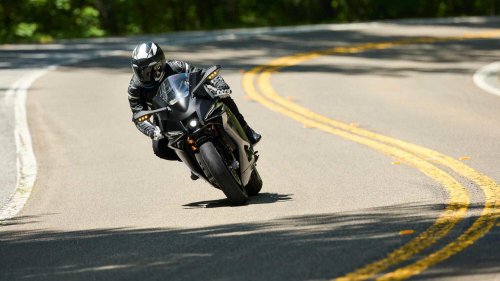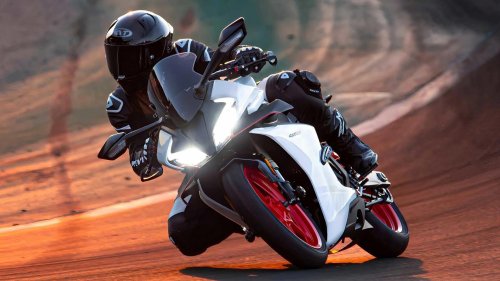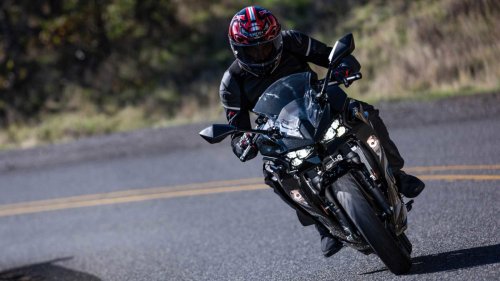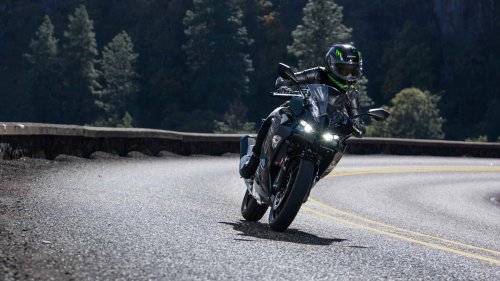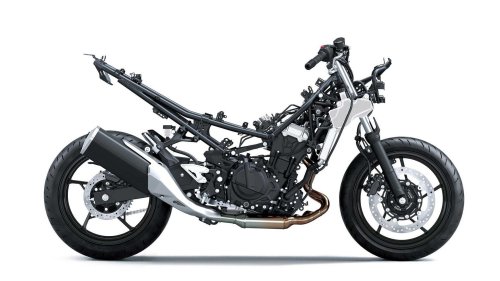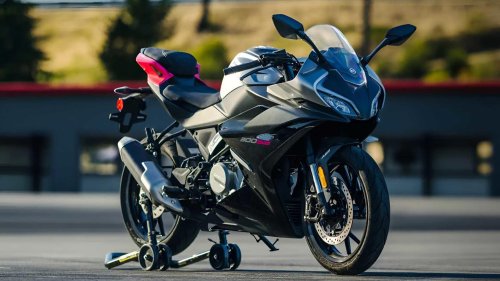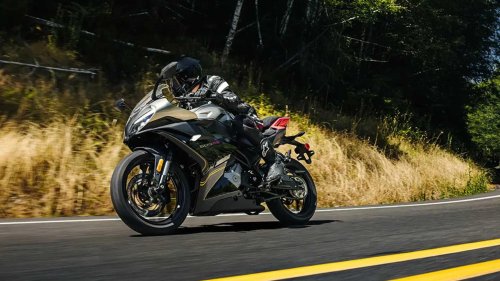

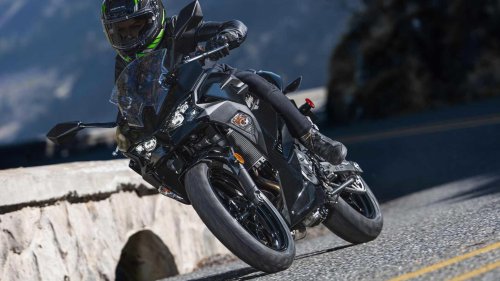
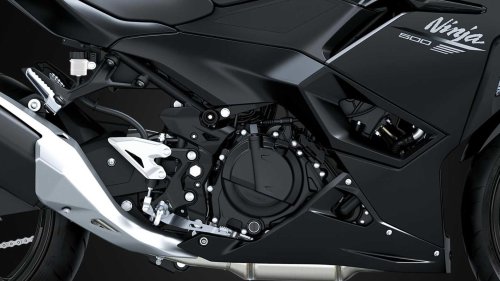
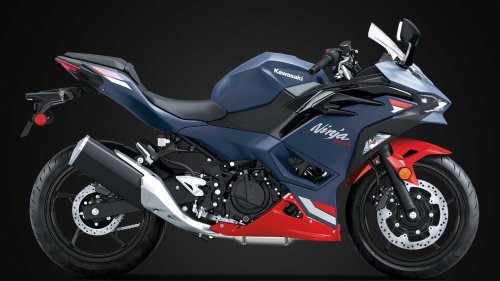
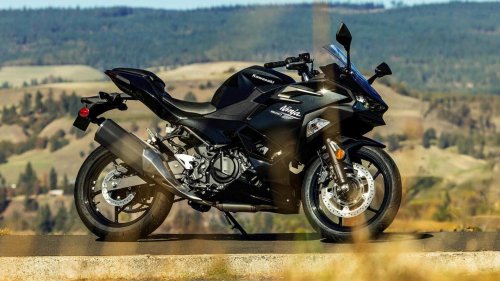
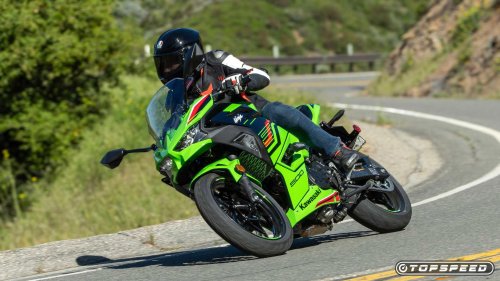
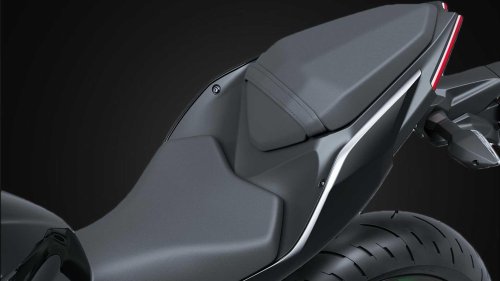
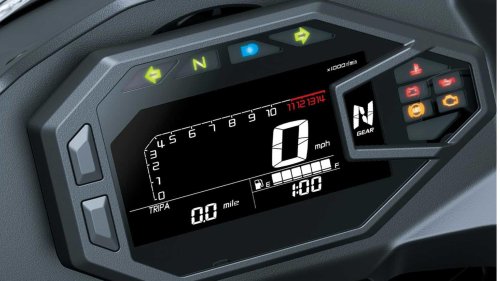
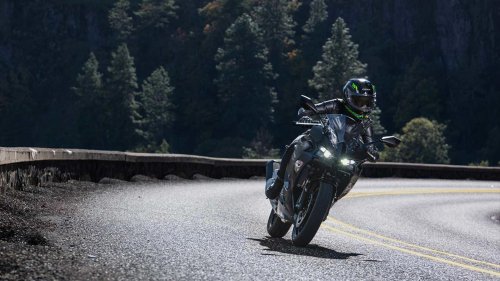



















For a lot of riders, the entry-level class is the part of the market that welcomes beginners. This is also where many riders discover what they actually like/dislike in a motorcycle: a friendly clutch, an honest throttle, a seat height that does not turn every stop into a balancing act, and enough performance to make the ride feel alive without becoming tiring.Considering there will always be new riders, that space stretches far beyond one stereotype today. It includes naked streetfighters, fully-faired sport bikes, cruisers, and even adventure bikes. They try to answer the same basic question in different ways: how do you make riding feel easy enough to enjoy, but still exciting enough to crave? The trick is that “beginner-friendly” and “rewarding” do not have to be opposites. A motorcycle can be approachable and still feel properly engineered, properly sorted, and properly satisfying. A Beginner Bike Doesn't Have To Be Boring Royal EnfieldThe “beginner bike” label can be useful, but it is also a little limiting. It makes a motorcycle sound like a stepping stone rather than a destination. The better way to think about such motorcycles is as a rider’s machine that happens to be friendly enough for newer owners. This distinction makes you realize that the most satisfying bikes in this class are usually not the ones with the biggest headline numbers.HondaThey are the ones that put the controls exactly where your body expects them, deliver power in a clean and predictable way, and stay calm when the road is not perfect. On rough asphalt, in stop-and-go traffic, or while threading through a fast corner, “natural” often matters more than “aggressive.” And that is why a bike like this has broader appeal than the entry-level label suggests. A raw, peaky motor can be entertaining for about ten minutes, but a well-sorted chassis, a smooth throttle, and an ergonomically sensible riding position work every single day. The Kawasaki Ninja 500 Makes Riding Feel Natural Base Price: $5,399–$5,599 (Non-ABS) / $5,799–$5,999 (ABS) KawasakiThe current U.S. pricing puts the Kawasaki Ninja 500 in this sweet spot. The transition from the Ninja 400 to the Ninja 500 was not just a badge change. Kawasaki increased displacement to 451cc, lengthened the stroke, and focused on making the engine feel fuller everywhere in the rev range rather than merely louder at the top. That makes sense in the U.S. market, where a lightweight sport bike often has to wear several hats: commuter bike, backroad bike, first big bike, and sometimes the bike that quietly stays in the garage far longer than expected because it is simply easy to live with. The 451cc Heart Promises Class-Leading Performance KawasakiThe Ninja 500’s engine story is less about chasing a giant number and more about widening the usable band of performance. Kawasaki says the 451cc parallel twin was developed from the Ninja 400 foundation with an additional 52cc, thanks in part to a longer stroke. The result is a motor that is meant to pull more strongly in the low-to-mid range, respond cleanly to throttle inputs, and feel less frantic than many small twins that need to be worked hard to come alive. On paper, the Ninja 500 is quoted at 51 hp, which puts it right in the thick of the class. That number matters less as a brag than as evidence that Kawasaki did not sacrifice performance in the name of friendliness. The engine sits in a segment where Aprilia’s RS 457 is rated at 47 hp, and CFMoto’s 450SS is also quoted at 51 hp, so the Kawasaki is clearly playing in the front half of the field rather than settling for “good enough.” Mechanical Simplicity Meets Modern Refinement KawasakiOne reason the Ninja 500 works so well in urban riding is the assist-and-slipper clutch. Kawasaki emphasizes the light lever feel that proves to come extremely handy when the bike is stuck in traffic, creeping through parking lots, or being ridden by someone still building clutch confidence. The engine’s fueling is also described as linear and smooth, with intake and injection tuning aimed at even torque delivery rather than a peaky hit. That combination reduces fatigue more than people often realize.This is also where the Ninja 500’s maturity shows. Small-displacement sport bikes can feel busy, even buzzy, if the throttle response is abrupt or the power arrives in a narrow slice of the revs. Kawasaki has clearly tried to make this motor the opposite of that. The result should not be mistaken for dullness but refinement, which is a priority for this class. A Chassis That Complements Friendly Ergonomics KawasakiThe Ninja 500’s chassis is a big part of why the bike feels so unintimidating. Kawasaki says the frame is a lightweight trellis design, with the engine acting as a stressed member, and the layout uses a supersport-style short-wheelbase, long-swingarm configuration with optimized trail for light, natural handling. The current model offers a wheelbase of 54.1 inches and a curb weight of 377.1 pounds for ABS models and 372.6 pounds for non-ABS models. That is one of the lightest figures in the class! Confidence In Corners Kevin Wing / TopSpeedThis is where the Ninja 500 starts to feel bigger than its class. The steering geometry and compact footprint are meant to give the bike quick responses without making it twitchy, and that is a difficult balance to strike. Kawasaki’s own description leans heavily on “light, natural handling,” which is not just marketing language. It is the core of the chassis philosophy. The 17-inch wheels add to the riding feel. Democratizing The Sport Stance KawasakiThe ergos matter just as much as the hardware. Kawasaki describes a relaxed riding position, a seat shape made for a more sporty but less strained posture, and a comfortable 30.9-inch seat height. The bike’s narrow midsection and low weight help it reach the ground easily, which is the sort of detail that makes shorter riders breathe easier and taller riders feel less folded up. All in all, the Ninja 500’s ergonomics point toward a triangle that still feels sporty but does not force the rider into a dramatic crouch. A Raw Riding Experience KawasakiFor all its polish, the Ninja 500 does not try to smother the rider with digital intervention. The standard bike keeps things relatively straightforward with an LCD display, smartphone connectivity, an assist-and-slipper clutch, and available ABS. Want more? Then, the Ninja SE is the answer. It brings more convenience and a little more gloss, and that will matter to some buyers. The extras include: TFT instrumentation Special colorways Keyless ignition Bubble screen USB port Competitively Priced To Undercut Rivals KawasakiThis is where the Ninja 500 builds the strongest case for itself. Kawasaki lists the 2026 Ninja 500 at $5,399–$5,599 for non-ABS models and $5,799–$5,999 for ABS versions, depending on color and trim. Compared with rivals, the pricing is still sharp. For reference, the Aprilia RS 457 is listed at an MSRP of $6,799, while CFMoto lists the 450SS at $5,699. That places the Kawasaki in the middle of the class on price, but closer to the value end than the premium one, especially once you factor in the brand’s dealer network and the model’s broad U.S. availability. All in all, it does not win on one dramatic spec. It wins by being good at the stuff that matters most, day after day.Source: Kawasaki