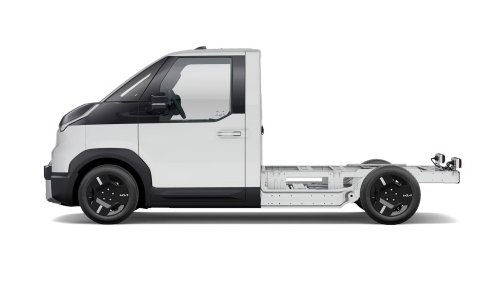
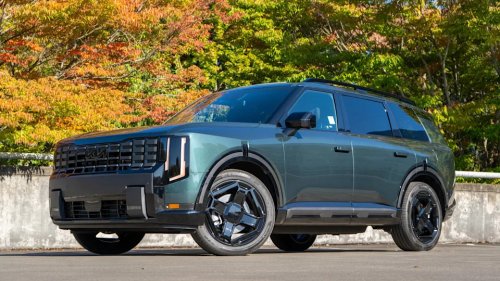
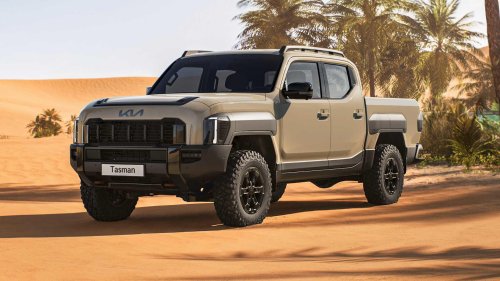
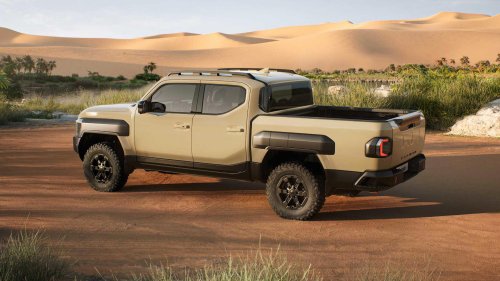
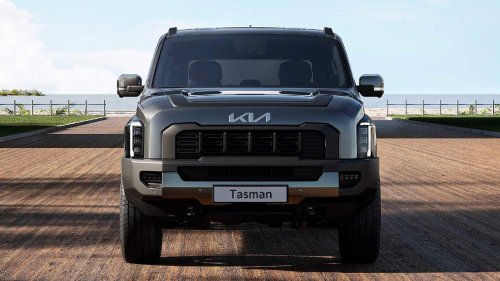
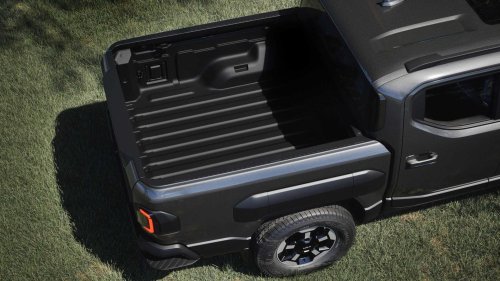
The pickup truck market is one of the most lucrative automotive sectors in the US, given the popularity of the vehicle type with American buyers. This is evidenced by the consistently dominant performance of full-size trucks offered nationwide, with the Ford F-Series and Chevrolet Silverado models claiming a clear 1-2 in the 2025 sales stakes. While Ford managed to sell over 800,000 of its F-Series, the closest car in the ranking is Toyota's RAV4 SUV, of which the brand shifted 479,288 units.As a result, foreign manufacturers can only dream of making it big in the pickup arena. The likes of Honda, Nissan, and Toyota have embarked on projects over the years, and the latest challenger is the Hyundai-Kia group. It's having a tough time of it though, as its Santa Cruz compact truck has struggled to compete against Ford's Maverick in the US, while its new Tasman mid-size is finding it tough going Down Under. There are some clear reasons for this. The Aussie Market Was Kia's First Port-Of-Call KiaThe Hyundai-Kia Group has been pushing to become one of the largest automotive influences in the world over the last couple of decades, with a key pillar of this plan being conquering the very lucrative US market. Across the Kia, Hyundai, and luxury Genesis outfits, it has enjoyed a multipronged effort to take the fight to not only the big US manufacturers, but Western rivals like Honda and Toyota. It has been largely successful so far with its range of cars, but now it wants to take the next step. It started by offering the Santa Cruz compact truck in 2021, but it hasn't made much of an impact.The next phase of its truck adventure is the Kia Tasman body-on-frame truck, which is built to take on established rivals like the Ford Ranger and venerable Toyota Hilux in the mid-size market. It hasn't reached the US as of 2026, with the brand instead deciding to offer it in the Australian market first, where mid-size trucks are king. Known as Utes over there, the king of the hill is the Ranger, though the Hilux runs with it from a sales standpoint. Kia felt that it would have a better chance at quick success offering its new mid-size in a country that loves them, rather than in the US, where full-size offerings remain the dominant force. A year into the Tasman's Aussie journey, the approach has blown up in its face. Kia's New Truck Struggled To Find Favor With Australian Audiences Kia When describing the Tasman's sales performance in Australia so far, the word 'bloodbath' comes to mind. While the Ranger and Hilux led the way in terms of units sold during 2025, with 56,555 and 51,297 finding new owners respectively, Kia only managed to deliver 4,196 examples of the Tasman. It must be noted that the vehicle only went on sale mid-way through the year, but even doubled, the number falls short of 8,500. To rub salt in the wound, fellow newcomer BYD managed to vastly exceed this figure, as the Chinese manufacturer managed to sell just over 18,000 units of its Shark 6 hybrid Ute during its first year on sale in the country.It's hard to believe that Kia is satisfied with the numbers put up by its mid-size challenger but, on the face of it, there are some reasons why the vehicle hasn't proven particularly appealing. The Tasman Is Pretty Expensive Kia As a manufacturer new to a particular sector, it's always a risk to ask for lots of money. Prospective customers have nothing to go on when it comes to previous experience, with Kia's range of cars being a big contrast to a rugged mid-size body-on-frame truck. Kia opted to start its Aussie journey with higher-priced trims of the Tasman, with even the base model starting from around $6,000 more than a base Ranger. Considering how loved Ford's offering is over there, it was a pretty brave ask to get people to spend considerably more cash to have the unproven Tasman.The vehicle has reviewed well for the most part, but its relatively small engine and lack of outstanding features, when combined with its unproven status, has likely led to the reserved interest from Aussie buyers so far. In addition, its awkward styling takes some getting used to, affording another reason for buyers to stick with what they know by opting to remain loyal to the likes of the Hilux and Ranger. The Tasman Lacks Torque Versus Its Rivals Kia Another area where the Tasman falls down compared to its close competitors is torque. It only comes bundled with a 2.2-liter turbodiesel inline-four, which is normally found under the hood of the luxurious Genesis GV80 SUV. It's pretty powerful for its size, with its 210 horsepower figure placing it on par with the Hilux's larger 2.8-liter unit, even if it falls short of the Ranger's available 3.0-liter engine. It really lacks torque though, with the unit kicking out 44 lb-ft less versus the Hilux. The Ranger's larger engine gives it a good beating too, with an additional 116 lb-ft at its mercy. Why The Tasman Has Struggled To Make It Work In Australia Bold styling that has proven unpopular so far High starting price versus rivals Lack of torque compared to the closest mid-size contenders Price too high to justify manufacturers' lack of pickup truck pedigree The Tasman's single-engine option at least outguns the Ranger's entry-level 2.0-liter unit in the power stakes, but it lacks the range needed to take the fight to its rivals as you climb up the price list. Kia's Mid-Size Truck Functions Well As A Workhorse Kia Even though it's been hamstrung by its rather bold pricing strategy and challenging looks, the Tasman has at least proven to be pretty adept at being a work truck. The Kia's 7,700-pound towing capacity puts it on par with lower-end versions of the Ranger, and well over 1,000 pounds clear of what cheaper Hiluxes can manage, so it's certainly a great choice for towing. It can also deal with around 2,600 pounds of payload in its bed, which is comparable to that of the equivalent trucks from Ford and Toyota.The Tasman certainly has potential and, if those interested can wait a while longer, then you'll be able to buy one natively in the US at the end of the decade. Kia Is Set To Debut A Mid-Size Truck In The US By 2030 CarBuzz/Valnet - Generated with AI assistance Despite its tough early start elsewhere around the globe, Kia announced as part of its 2026 investor day presentation that it would be introducing a Kia-badged mid-size truck to the US market by 2030. While it hasn't been confirmed that the truck in question will be the Tasman, it makes the most sense from a development cost standpoint. The brand revealed that the US model will come with standard hybrid and plug-in hybrid powertrain options to enhance its efficiency, while the 277-hp turbocharged 2.5-liter inline-four gas engine will likely also be on the menu. Given America's distaste for diesels, don't expect the engine found in the Aussie version to find its way across the Atlantic.Sister marque Hyundai is also working on a mid-size truck for the American market, meaning the two trucks will likely share an abundance of components, again to keep development costs to a minimum. Given the usual approaches by the two manufacturers, it's likely that the Hyundai will be the more expensive option that offers more refinement, while the Kia will remain the sportier or more rugged specimen, which is priced lower.The Korean giant has secured some handy home runs so far in its quest to make its American dream come true, but crafting success from the US truck market will likely be its biggest challenge yet. With better pricing and a more powerful range of engines, and perhaps a slight redesign, there's every chance Hyundai and Kia could give the current pace setters something to think about.Sources: Kia.



















 +73 others