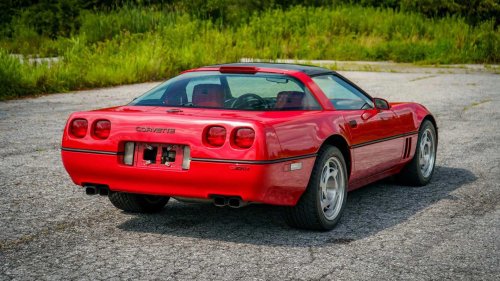
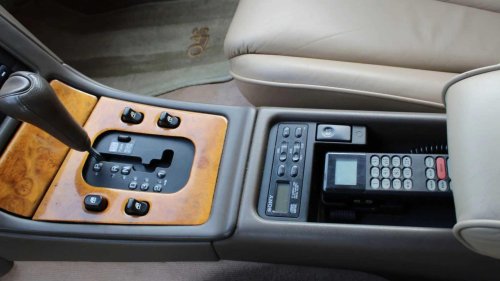
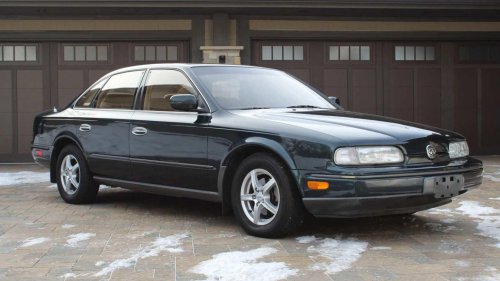
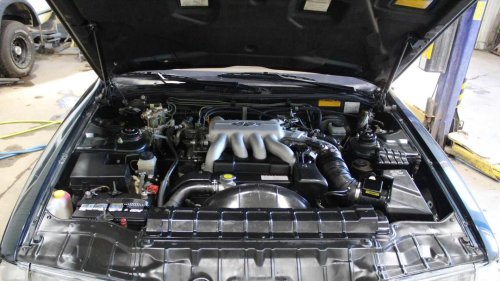
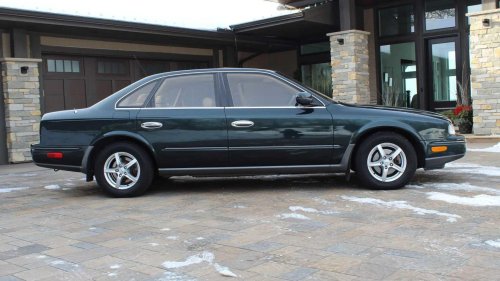
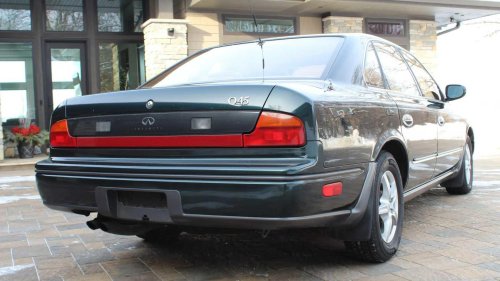
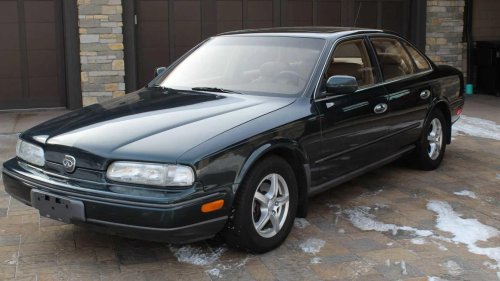
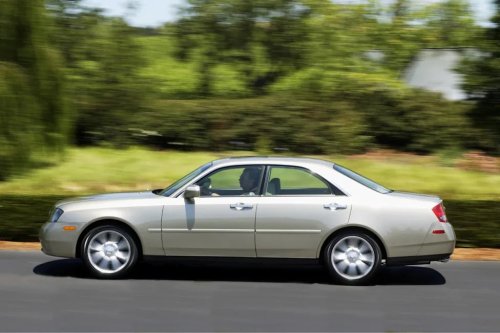
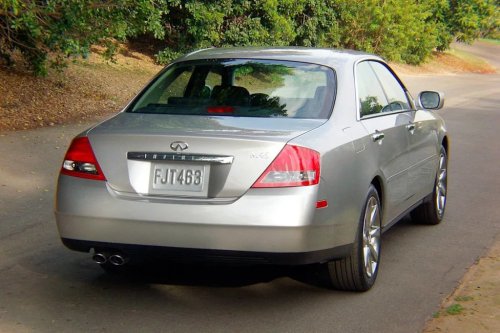
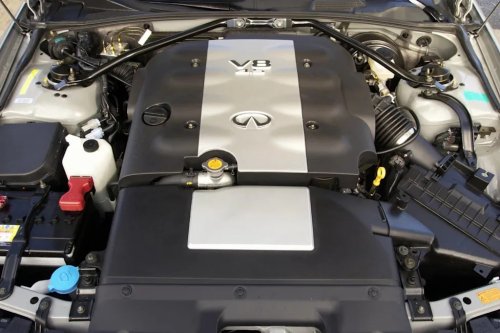
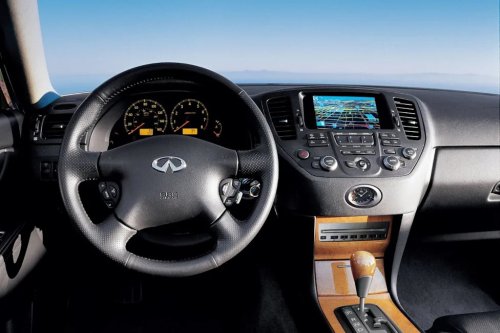
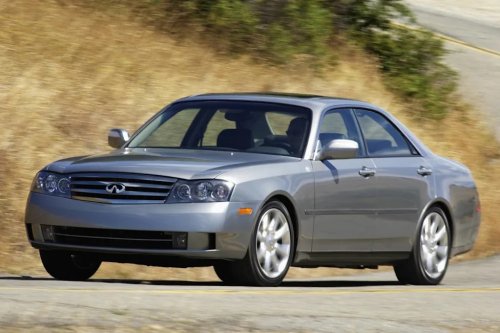
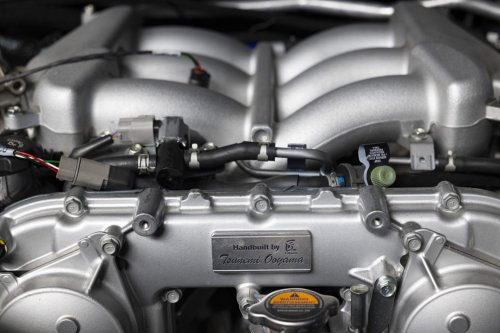
In 1990, if you wanted performance, you bought American or you bought European. You bought something with a low roofline, a two-seat cabin, and enough visual aggression that other drivers understood immediately what they were looking at. A luxury sedan from a brand that had never sold a car in the United States before was not part of that conversation. Infiniti changed that assumption in its first year of existence, with a sleeper car that arrived wearing no front grille, no wood trim, and no interest whatsoever in announcing itself. It had other plans. What Performance Looked Like In 1990 Bring a Trailer The Chevrolet Corvette C4 was America's performance benchmark at the turn of the decade. In 1990, the base L98 5.7-liter V8 produced 245 horsepower and ran from zero to 60 mph in 5.7 seconds with the six-speed manual, according to period road test data. It was a genuine sports car, purpose-built, and the definitive American performance statement for most of the previous decade.A BMW 7 Series from the same year made around 208 horsepower and ran to 60 mph in over eight seconds. The idea that a four-door luxury sedan from a brand nobody had heard of could produce more power than either and run with the Corvette in a straight line was not something the market had prepared for. The Corvette sits among the most enduring American performance benchmarks of the era, which makes what the Q45 achieved all the more striking. The Brand That Hid Its Intentions Bring a Trailer When Infiniti launched in the US in late 1989 for the 1990 model year, it did so with two notable decisions that set it apart from every other luxury launch in automotive history. The first was an advertising campaign that showed rivers, rocks, and geese but never once showed a car. The second was the deliberate use of the letter Q in the flagship model name, a conscious nod to the Q-car tradition in which unremarkable bodywork conceals serious performance. Nissan had been explicit about this intent from the outset. The car was designed to express what the brand called the Japanese concept of luxury: restraint, precision, and technology worn quietly rather than announced. There was no front grille. There was no wood paneling on the dashboard. The center console was clean and driver-focused. It looked, to the uninformed eye, like a well-made Japanese business sedan.That was precisely the intention. The Q45 was a bold engineering statement that the market never fully understood, which is a significant part of why it remains interesting today. Meet The Infiniti Q45: Four Doors, V8, Zero Apologies Bring a TrailerThe Q45 was powered by an all-new 4.5-liter DOHC 32-valve V8, coded VH45DE, producing 278 horsepower at 6,000 rpm and 292 lb-ft of torque at 4,000 rpm in North American specification. Period testers recorded 0-60 times of around 7.2-7.3 seconds, placing it directly alongside the automatic-transmission Corvette C4 of the same year and comfortably ahead of every comparable European luxury car on the market. The important context is that this was a 3,950-lb four-door sedan achieving those numbers. The BMW 7 Series and Mercedes-Benz S-Class of the era were running to 60 mph in eight to ten seconds from similar or larger displacements. The Q45 was not just keeping up with the sports car benchmark in certain configurations. It was doing so while carrying four people in comfort, and it cost $38,500 at launch.Every Q45 came standard with a viscous limited-slip differential and a fully independent multi-link suspension at both ends, derived from the same Nissan 901 Movement program that produced the R32 Skyline GT-R's chassis architecture. The optional Touring Package, designated Q45t, added Super-HICAS four-wheel steering and firmer suspension tuning, the same four-wheel-steering technology fitted to the R32 GT-R launched the same year. The VH45DE And What Came With It Bring a Trailer The VH45DE was a clean-sheet design with no connection to any existing Nissan engine family. It used an aluminum block and head, four valves per cylinder, multi-point fuel injection, and variable valve timing, a combination that was genuinely class-leading in 1989. The engine had been developed as part of Nissan's 901 Movement, an internal program with the stated goal of producing the world's best-handling car lineup by 1990. Other cars from the same program included the R32 Skyline GT-R, the Z32 300ZX, and the S13 Silvia. The Q45 shared its multi-link suspension geometry with the Z32, adapted for the heavier luxury platform.Contemporary technical documentation suggests real output of the VH45DE may have run closer to 300 to 305 horsepower on the 1990 model, with the Japanese manufacturers' agreement potentially influencing how North American numbers were stated. The VH45DE was one of the most technically sophisticated V8s produced by any Japanese manufacturer of its era, and it underpinned the Q45 through the entire first-generation run. The Active Suspension Mercedes Took A Decade To Match Bring a Trailer The Q45a, available from the 1991 model year, introduced what Infiniti called Full-Active Suspension, the first production car sold in the United States to offer a true active suspension system. Ten sensors continuously monitored vehicle dynamics including lateral g-force, body roll, nose dive, squat, and ride height, feeding signals to microprocessor-controlled hydraulic actuators at each wheel. The system could raise or lower the suspension at any corner by up to 20mm in real time, eliminating body roll through corners and dive under braking without sacrificing ride quality.For context: Mercedes-Benz introduced its Active Body Control system, which works on similar principles, in 1999 on the CL-Class. That was eight years after the Q45a went on sale in the United States. The Q45a badge was the only external identifier. A small sticker in the rear window was the other clue. The system represented a genuine technological leap that the market at the time had no framework to properly appreciate. Why The Infiniti Q45 Failed And Why That Matters Now Bring a Trailer The Q45 did not succeed commercially, and the reasons have nothing to do with the car's engineering. The advertising campaign that showed nature footage instead of the car generated significant press coverage and no meaningful sales leads. Buyers who wanted a luxury sedan wanted to see a luxury sedan. The Lexus LS 400, launched at the same time, showed its car clearly, priced it slightly lower, and outsold the Q45 decisively from the outset.The early models also developed two reliability issues that damaged the brand's reputation at a critical moment. Owner reviews document automatic transmission failures and timing chain failures on 1990 through 1992 cars, both of which proved expensive when they occurred. The timing chain issue stemmed from plastic guide rails that could fail, a problem Nissan resolved in 1993 with metal-backed chain guides. The transmission issues were similarly addressed by 1993. By then, however, the Q45's market position had been set. Infiniti responded by softening the 1993 car, slowing the steering, and adding the wood trim and chrome grille that the original design team had specifically rejected. In doing so, it removed the thing that made the Q45 interesting, and the car that followed was considerably less distinctive.The consequence of that commercial failure is that well-preserved first-generation Q45s are genuinely rare today. Many were used hard by subsequent owners who had no attachment to the car's engineering story, and examples with functioning Full-Active Suspension are uncommon because the hydraulic components develop leaks over time that many owners chose not to repair. What A Q45 Costs And What To Avoid Bring a TrailerFirst-generation Q45s from 1990 to 1996 represent one of the most undervalued Japanese performance cars of the era given the technology package on offer. Market data places clean 1994 examples at around $11,237 on average at auction, with exceptional low-mileage cars occasionally reaching $20,000 to $25,000. These are not collector prices, but the pool of well-maintained examples is genuinely small and getting smaller.The buying advice is straightforward. Avoid 1990 through 1992 models unless the timing chain has been replaced and the transmission rebuilt or serviced, or you are prepared to budget for both. The 1993 model year is the practical entry point for a reliable early car, with the chain guides revised and transmission cooling improved. Q45a examples with Full-Active Suspension should be inspected carefully: the system should be tested for proper function at each corner, and any drooping or uneven ride height indicates hydraulic failure that can be expensive to correct. The Q45t with Super-HICAS four-wheel steering is the more maintainable performance variant of the two and the better practical choice for anyone who wants to use the car regularly.The 1990 model, identified by its cloisonné front emblem and the tightest steering ratio of any first-generation car, is the most sought-after by performance-oriented buyers who understand the history. It is also the most likely to need mechanical attention. For a buyer who understands the Q45 for what it was and is willing to sort one properly, it remains one of the most technically interesting and culturally overlooked Japanese cars of its decade.Sources: Edmunds, Classic.com, Hagerty, Bring a Trailer.