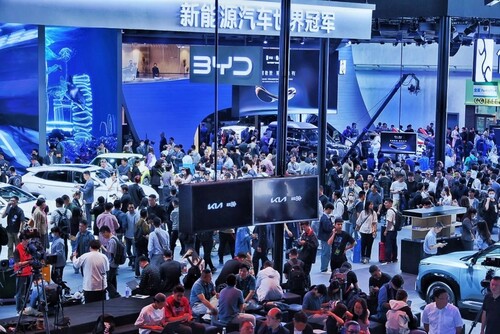
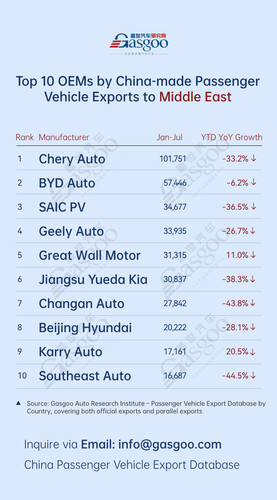
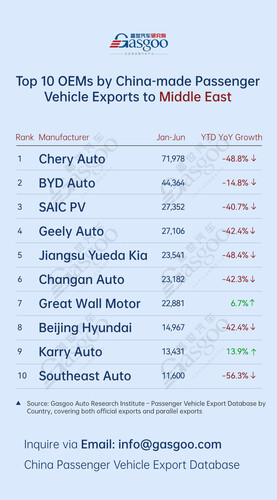
Gasgoo Munich- In recent years, the Auto China 2026 has drifted beyond merely looking international toward genuine global coordination.That shift was palpable at the 2026 show. Chinese automakers like Chery and Great Wall Motor flew in armies of overseas dealers. Foreign media crews prowled the floors with heavy gear. Middle Eastern buyers were everywhere, some even flashing purchase orders on the spot, while Russian delegates quizzed Gasgoo about suppliers.The chatter inside the halls has moved beyond just Chinese and English, a mix of accents filling the air. Conversations have shifted from basic product intros to hard specifics: pricing, specs, delivery timelines. Even deeper, government bodies, industry groups, and certification agencies from various nations are systematically entering the fray.Put simply, this is no longer just a showroom; it’s a global marketplace for the auto industry. It’s a place for deal-making, supply chain matchmaking, policy dialogue, and capital signals. The auto show is evolving from a display window into a vital industry interface.If globalization used to mean Chinese automakers going out, the Beijing Auto Show now marks a reversal: global resources are actively coming in. That two-way flow underscores the growing weight of China’s auto sector within the global system.Government-Led, Industry-DrivenAs global resources converge, one shift stands out: governments are taking a front-line role.Gasgoo noted dedicated pavilions for Germany and South Korea at this year’s event. Discussions on site revealed these delegations were spearheaded by government or semi-official bodies, working alongside industry groups and companies. It signals a strategic elevation in how these nations approach automotive cooperation with China.Consider the German pavilion. It operates within a multi-layered system: led by the Federal Ministry for Economic Affairs and Energy, executed by agencies like the Federal Building and Regional Planning Office and the Federal Office of Economic Affairs and Export Control, and promoted in tandem with the VDA. Logistics were handled by Berlin-based exhibition consultants.The exhibitors themselves are deeply embedded in the supply chain—forging specialists, sealing tech firms, charging interface providers, and software houses. The focus is clearly on technical capability and real-world application scenarios.One detail stands out: this German group has attended the Shanghai Auto Show repeatedly, but this marked its first systematic presence in Beijing. The shift likely reflects a recalibration of how they view China’s regional industrial landscapes.For years, the Yangtze River Delta centered on Shanghai has been a magnet for foreign auto supply chains. Global heavyweights like Bosch and ZF have long anchored their Chinese headquarters or major production bases there.Cui Dongshu, secretary-general of the China Passenger Car Association (CPCA), has noted that Shanghai acts as a strong global hub. The dense cluster of key parts suppliers there provides foundational support to automakers. Given that, previous appearances in Shanghai were essentially about nurturing existing industrial ties.But China’s auto scale is swelling, particularly in EVs and related tech, lifting its global standing. Meanwhile, the Beijing show’s role as a hub for vehicle displays and industry intelligence is growing. Expanding from Shanghai to Beijing is a response to China’s dual identity as both an industrial center and a policy center.Unlike the German newcomers, South Korea is a regular in Beijing. Its organizer is KOTRA, a government-funded agency dedicated to trade promotion and investment cooperation.The exhibitors are similarly focused on components—body structures, chassis systems, electronics, sensors, and software security—highlighting specific product capabilities and applications.That sustained presence ties back to the footprint of Korean automakers in China. Hyundai Motor operates its Beijing Hyundai joint venture in the capital, while Kia maintains production layouts in Jiangsu. Long-term operations by these automakers have fostered a supporting ecosystem, creating continuity in business exchanges.On the organizational front, KOTRA has driven bilateral trade ties since diplomatic ties were established over 30 years ago. Joining them this time was the Daegu Gyeongbuk Free Economic Zone, which manages several investment parks. Data shows South Korea has poured over $75 billion into China, with roughly 28,000 companies operating there.From Germany to South Korea, distinct paths reveal a shared trend: governments and industry groups are diving deeper. Exhibiting is no longer just about display; it’s about dialogue and deal-making. In the process, the functional boundaries of the Beijing Auto Show are being redrawn.Middle Eastern Presence Takes Center StageIf the German and Korean delegations signal sustained interest from traditional auto powers, the 2026 Beijing show was notable for another reason: the dense presence of Middle Eastern faces.The most visible were the buyers and dealers scouting for metal. Visitors in white robes were a common sight, moving between brand stands to grill staff on specs, pricing, and delivery lead times. Some exhibitors reported clients expressing intent to place bulk orders right on the floor.Mirroring that were the overseas dealer events organized by Chinese automakers. Companies like Great Wall Motor and Chery Automobile flew in dealers for brand launches and strategy sessions.Image Credit: CheryGreat Wall Motor invited hundreds—even thousands—of overseas representatives, with a significant contingent from the Middle East. Chery’s "overseas observation group" topped 4,000 people, including dealers and partners across various markets, with the Middle East playing a major role.Beyond mere sightseeing, these events emphasized alignment. Dealers didn’t just watch new model unveilings; they discussed product portfolios and market timing with executives. The conversation at the auto show has shifted from "looking at products" to "discussing cooperation."Another frequent presence: officials and industry representatives from the Middle East. They populated forums and roundtables, outlining local industrial developments and courting Chinese investment.Alongside officials, Middle Eastern certification agencies and service providers also appeared on the floor. Their focus: the standards, testing, and certification hurdles for vehicle exports, creating direct demand for dialogue with automakers and suppliers.The convergence of these diverse players significantly boosted the Middle East’s visibility at the show. It’s a shift that mirrors the changing structure of China’s auto exports.CPCA data shows the UAE became China’s third-largest auto export destination in 2025, with annual sales approaching 600,000 vehicles. Industry insiders note that while the UAE’s domestic market is limited, its ports are transit powerhouses. Massive volumes of Chinese cars enter the Middle East via Dubai’s Jebel Ali Port before flowing to neighboring regions.Saudi Arabia, Iran, and Turkey are also key export markets. In 2025 alone, China exported over 300,000 vehicles to Saudi Arabia.In terms of product mix, new energy vehicles—particularly plug-in hybrids—are becoming a major export component. The Middle East’s scorching heat and sand demand high performance, and Chinese brands are leveraging their accumulated expertise in battery thermal management and climate control systems to gain an edge.Image Credit: Great Wall MotorMohamed Makhtari, CEO of NIO Middle East and North Africa, has noted that battery chemistries optimized for high heat are crucial for maintaining range stability.Several Chinese automakers have gained substantial traction. Chery exported 236,000 vehicles to the Middle East in 2025, leading Chinese brands. BYD followed with 134,000 units, surging 128.4% year-on-year. Great Wall Motor’s exports to the region also jumped more than 100% last year.At the same time, the region is pushing its own energy transition. Saudi Arabia’s "Vision 2030" and policies in the UAE both support the growth of new energy vehicles.Seres’ AITO brand secured a strategic partnership with Abu Dhabi Motors ahead of the show, signing an initial order for 200 units optimized for local heat. Deepal held a brand showcase in Dubai. Against this backdrop, the high visibility of Middle Eastern dealers and agencies in Beijing is hardly surprising.Tied to Investment and LocalizationViewed together, the participation styles of different nations point to a consistent theme: these seemingly scattered moves are all tied to investment and industrial positioning.One clear direction is attracting Chinese automakers to local markets. VDA President Müller stated in April 2025 that Germany welcomes Chinese investment. The deputy premier of Bavaria echoed that sentiment, urging Chinese firms to set up local production bases—a move he said would bring automakers closer to customers while bolstering the region’s industrial base.South Korea is also making moves. Hyundai Motor Chair Euisun Chung toured several Chinese brand booths during the 2026 show. Korean media noted it was his first attendance at the Beijing show in years. While he made no public statements, the visit was widely interpreted as a signal to recalibrate relations with Chinese competitors.Middle Eastern nations, by contrast, have been more specific. At industry forums, Aftab Ahmed noted that Saudi Arabia’s National Industrial Development Center offers free feasibility studies and market research to investors entering the kingdom, while helping match them with local partners.On the financial front, the Saudi Industrial Development Fund provides capex loans for strategic projects, covering up to 50% to 60% of total investment.The government also offers two-year wage subsidies for foreign companies hiring Saudi nationals. Aftab Ahmed emphasized that the policy is designed to ensure sustainable operations, not just one-off project launches.The flip side of "going out" is "coming in"—continued investment within China. Middle Eastern capital has been particularly active here. CYVN Holdings, an Abu Dhabi investor, poured a total of $3.3 billion into NIO in two separate 2023 tranches, securing a 20.1% stake.In January, Mohamed Al Hawi, the UAE’s undersecretary for investment, cited figures showing the country invested $11.9 billion in China between 2003 and 2023. Investment in 2023 alone jumped 120% year-on-year, accounting for over 90% of all Arab investment in China.The Abu Dhabi Investment Authority appears among the top ten shareholders of numerous Chinese listed firms. Mubadala has invested in over 80 projects since entering China in 2015 and opened a Beijing office in 2023. Saudi Arabia’s Public Investment Fund has invested $22 billion in China, while ACWA Power plans to invest $75 billion by 2030.Guojin Macro analysis suggests Middle Eastern capital follows an "industrial partner logic," prioritizing synergy with China’s strengths. Sectors like new energy, solar, storage, and AI are key to the region’s strategic transformation, and China holds the edge in technology and capacity.Meanwhile, firms from Europe and Asia are engaging through their long-standing presence in China. Gasgoo understands that most German exhibitors already have production or R&D bases in the country. Korean exhibitors like Beijing Ruihan and Yulo Technology also operate manufacturing facilities locally.Their presence isn’t just about showing products; it’s a message to Chinese OEMs and policymakers: despite global supply chain shifts, they are committed to deepening their roots in China.On that foundation, the auto show has become a nexus for contact and dialogue. Investors get a direct line on company performance, while automakers gather unfiltered feedback from diverse markets.The Beijing Auto Show’s rising heat is underpinned by the maturation of China’s EV supply chain. From raw materials and batteries to final assembly, the system is relentlessly improving in efficiency and scale, drawing in more external resources.Compared to the industry rhythm once set by Frankfurt or Munich, the Beijing Auto Show’s significance is shifting. It remains a product launchpad, but it is evolving into a critical node for industrial cooperation and resource allocation. When businesses, capital, and institutions from across the globe converge in one space, that shift itself becomes the show’s new business logic.