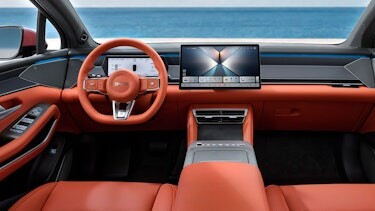
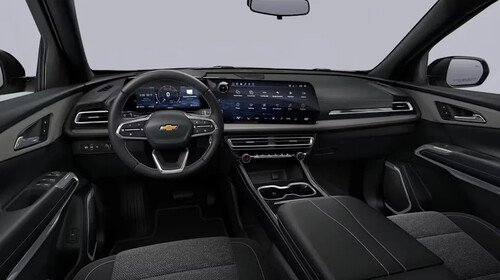
Gasgoo Munich- Kanzi may be a name unfamiliar to those outside the industry, but it is the 3D HMI engine from Rightware, a subsidiary of Thundersoft.Yet in the smart cockpit arena, Kanzi’s install base speaks for itself: it has become a widely adopted mainstream foundation for 3D HMI technology. On April 26 at the Beijing Auto Show, Thundersoft’s Rightware will unveil its next generation: Kanzi 4.0 and Kanzi AI. As AI integration accelerates across the industry, Thundersoft is leveraging Kanzi to seize the moment. It is positioning itself to lead the coming revolution in super-fusion AI agent interaction.AI Goes Mobile: HMI Faces a RebuildOver the past two years, bringing AI into vehicles has become an industry consensus. Automakers frequently cite large language models and AI agents. But a hard reality remains: today’s mainstream smart cockpits still rely heavily on standalone apps and isolated functions. Executing complex tasks across different applications is cumbersome, meaning frontend interactions have yet to fully unlock AI’s potential.Qian Qiang, CEO of Thundersoft’s Rightware, observes that software logic is shifting from stacking functions to understanding intent and orchestrating services. With "AI as OS" becoming the core of the smart cockpit’s underlying rebuild, the HMI—the "face" of the cabin—needs its own fundamental upgrade.Industry analysts argue that automotive HMI is undergoing a foundational shift—from a simple entry point for function controls to a comprehensive, full-scenario intelligent interaction system.This transformation will drive six major trends. AI agents are moving toward proactive, scenario-based interactions. Multi-modal fusion is building natural interaction systems. There is a shift toward "App-less" architectures integrated with rendering services. Experiences are evolving from standardized to personalized. HMI is assuming safety roles in human-machine co-driving. Underlying architectures are evolving toward an open ecosystem of cockpit-driving fusion.Image source: Thundersoft (same below)Qian told Gasgoo that the core trend ahead is the combination of cockpit-driving fusion and AI agents. Previous efforts at fusion were limited to one chip powering multiple screens or simple desktop switching. Now, full underlying connectivity and an App-less approach are possible. This allows an AI agent to uniformly manage all services across both the cabin and driving domains.In practice, a user simply states their destination, and the system automatically plans the route, adjusts cabin settings, handles perception, makes driving decisions, and even parks the vehicle. This is the essence of being "App-less." It shifts the focus from "users finding functions" to "functions finding users." The operating system transitions from managing applications to orchestrating services. Spotting this market shift, Thundersoft has pivoted its strategy to "ALL in AIOS." Its Dishui AIOS is precisely this type of super-fusion AI agent. Dishui AIOS is a new-generation, AI-native vehicle operating system. It is compatible with the OpenClaw framework and AI agent ecosystems. It is built around AI at its core. It establishes an AI-native architecture capable of edge-cloud collaboration, multi-modal perception, and complex task orchestration. Now upgraded to version 2.1, Dishui AIOS has enabled the AI cockpit to leap from "passive response" to "active intelligence."Within this architecture, Kanzi’s role is evolving from a standalone rendering engine to an AI execution layer. It translates the intent decisions of AI agents into real-time 3D visual presentations. It supports new forms of interaction such as dynamic generation, virtual-real integration, and seamless "one-shot" experiences. This marks the core upgrade direction for Kanzi as it moves from version 3.x to 4.0.Why Do Over 50 Global Automakers Choose Kanzi?The true test of a technical platform’s maturity lies in its user base and installation volume. Kanzi currently serves more than 50 global OEMs. In 2025, annual installations of Kanzi are projected to exceed 14 million vehicles. Kanzi’s client roster spans a wide array of global automakers, including Audi, Toyota, Honda, Ford, SAIC-GM, BYD, and Great Wall Motors.This broad adoption serves as powerful validation for Kanzi. Underpinning this customer matrix are three core capabilities cultivated over the past decade:First, cross-platform compatibility. It supports operating systems like Android, Linux, and HarmonyOS, and adapts to mainstream chips from Qualcomm, NVIDIA, and Renesas. Automakers avoid redundant development across different hardware platforms, saving considerable R&D costs.Second, efficient rendering. Through PBR materials, particle systems, multi-threading, and the Vulkan architecture, it achieves visuals close to game engines on automotive-grade embedded systems. Qian notes that Kanzi can reduce performance consumption by 30–50%, while cutting platform development workload by up to 50%.Third, proven mass production. It holds ISO 26262 ASIL-B functional safety certification and has withstood the rigors of large-scale OEM production, meeting strict automotive reliability requirements.As AI agents enter vehicles, Kanzi is evolving rapidly. The latest version, Kanzi 4.0, brings substantial upgrades across toolchains, rendering performance, and team collaboration.Regarding workflow efficiency, Kanzi Studio has added a one-click precise preview feature, eliminating the need for repetitive packaging, compiling, and waiting. Interface hierarchies are now clear at a glance, making debugging more intuitive. Design files can be version-controlled like documents using Git, preventing overwrites during collaboration. Combined with AI assistance, the overall development pace has accelerated significantly.Visually, the fluidity and realism of complex 3D scenes, dynamic lighting, and particle effects—such as rain and light halos—have all improved. It also supports mixing multiple fonts within a single interface, helping automakers cultivate unique brand visual styles.To lower the design barrier, Kanzi 4.0 utilizes the Prism Graph Editor for visual operations, enabling effects like color adjustment and background blurring that previously required coding.Viewed this way, Kanzi 4.0’s breakthrough lies in the comprehensive AI-enablement of its toolchain: designers simply describe an effect, and AI automatically generates complex modules like shaders, state managers, and render channels. What once required coding is now achieved with a single click.Industry recognition further validates Kanzi’s technical prowess. Thundersoft’s AquaDrive AIOS 1.0, a smart cockpit solution integrating Kanzi technology, recently won the German iF Design Award.Qian told Gasgoo that while everyone in the industry is discussing AIOS, most manufacturers are unclear on its design direction and path. Thundersoft possesses a mature understanding and practice in AI-native interaction and has already launched a production-ready solution—a key competitive advantage.From Product to Solution: Building a Full-Stack Closed LoopNo matter how powerful the technology, it must ultimately translate to customer value. Thundersoft is accelerating its strategic upgrade from a provider of standardized products to a co-creator of full-stack value in intelligent vehicles. Centered on defining the intelligent vehicle experience, it partners deeply with OEMs to build differentiated smart cockpits. It provides end-to-end empowerment from conceptualizing the experience and innovating interaction paradigms to delivering mass production.Development efficiency and resource reuse offer the most immediate value to customers. Kanzi’s integrated workflow allows designers and engineers to collaborate on the same platform, avoiding the repetitive cycle of "design draft → slicing → development → rework." It also provides a wealth of templates, such as instrument clusters, climate controls, drive modes, and VPA avatars. These are ready to use via drag-and-drop, significantly shortening project cycles.Global capability is another core advantage. Founded in Finland in 2009 and later acquired by Thundersoft, Rightware is inherently a global enterprise. According to Qian, Kanzi was born global. Its technical architecture was designed for the global market from the outset. This eliminates the need for repeated adaptation across different regions.Kanzi Hub (the release toolkit), along with the full product line including Kanzi Studio and Kanzi Maps, all adhere to unified global technical standards.Moreover, with R&D and business centers in 14 countries and over 40 cities worldwide, Thundersoft offers localized service. For automakers expanding globally, using Kanzi directly reduces the complexity and cost of overseas adaptation.Kanzi is also making forward-looking moves in intelligent assisted driving. Its Kanzi SR (Surround Reality) solution has been mass-produced by over 10 OEMs, including BYD, Chery, and SAIC-GM. Addressing industry challenges like high CPU/GPU consumption, data noise, and image jitter, Kanzi uses exclusive correction algorithms to transform raw perception data. This data is often riddled with deviations and interference. Kanzi converts it into clear, stable visuals.Kanzi ISR (Intelligent Surround Reality) achieves precise unification of multi-source perception data within a single coordinate system. It resolves core pain points for automakers in intelligent driving fusion reality. These include visual occlusion, high computing power consumption, and poor rendering quality. The Kanzi Real-Time Drive Mode is the industry’s first data-driven system of its kind, marking a leap from "manual selection" to "terrain-adaptive" operation. Both solutions have received national invention patents.While competitors remain focused on selling engine tools, Thundersoft is already delivering a full-stack solution comprising Dishui AIOS and 3D HMI. The technology stack is open and compatible, helping automakers avoid vendor lock-in.Leveraging its deep foundational technology, Thundersoft centers on AIOS to continuously integrate edge-cloud capabilities. It has built a full-stack technical service system spanning "chip-AIOS-middleware-application," securing an irreplaceable position in the smart cockpit sector. With a customer base covering major global automakers, it has an installation scale in the tens of millions. The company continuously drives technical refinement and iteration. Thanks to its comprehensive technical strength, Thundersoft was named a "Manufacturing Single Champion" in the smart cockpit field by the Ministry of Industry and Information Technology.Clearly, from technical reconstruction and product evolution to the scaled implementation of solutions, Thundersoft is building a complete closed-loop ecosystem for the smart cockpit industry.Conclusion:From 2D to 3D, from touch to multi-modal, from passive to active—every iteration of HMI redefines the relationship between human and vehicle. And AI is accelerating that process.With Dishui AIOS as the intelligent hub and Kanzi as the core 3D visual presentation layer, Thundersoft is building an AI-native, full-stack cockpit solution.At Thundersoft’s "Dishui AIOS Night" on April 26, Kanzi 4.0 and Kanzi AI will make their official debut. The event will also see the simultaneous release of Dishui AIOS 2.1, with AI at the core of the operating system. How far can AI-assisted generation go? How will collaboration with AI agents be reflected in the interface? What will it look like in a real driving scenario? The answers await at Thundersoft’s booth, E1-E109.