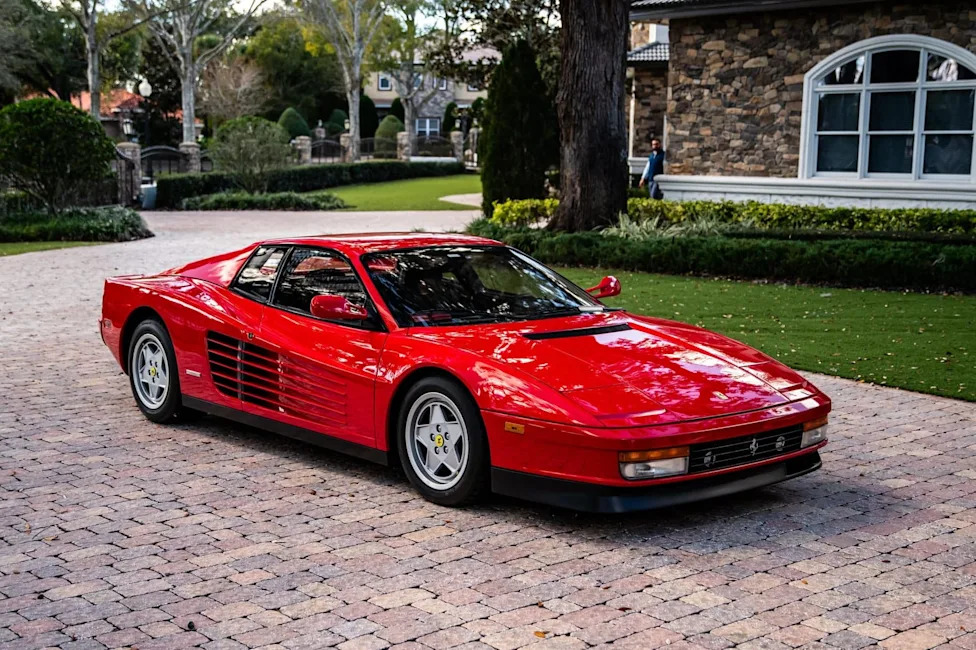
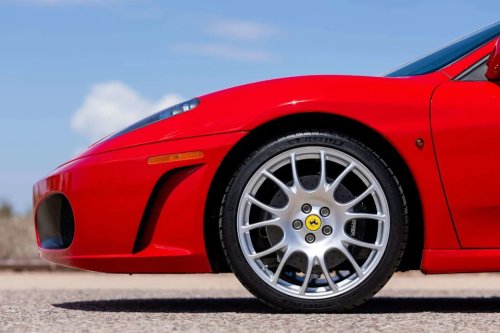
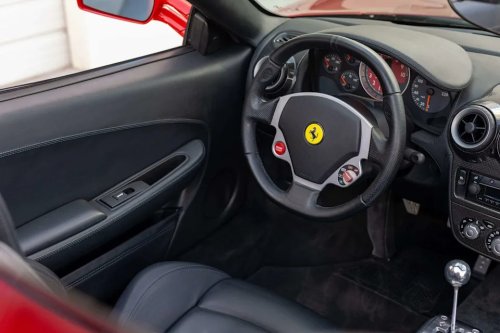
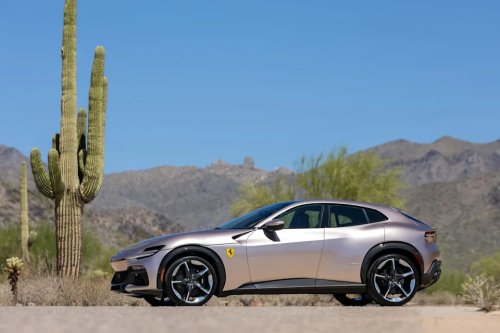
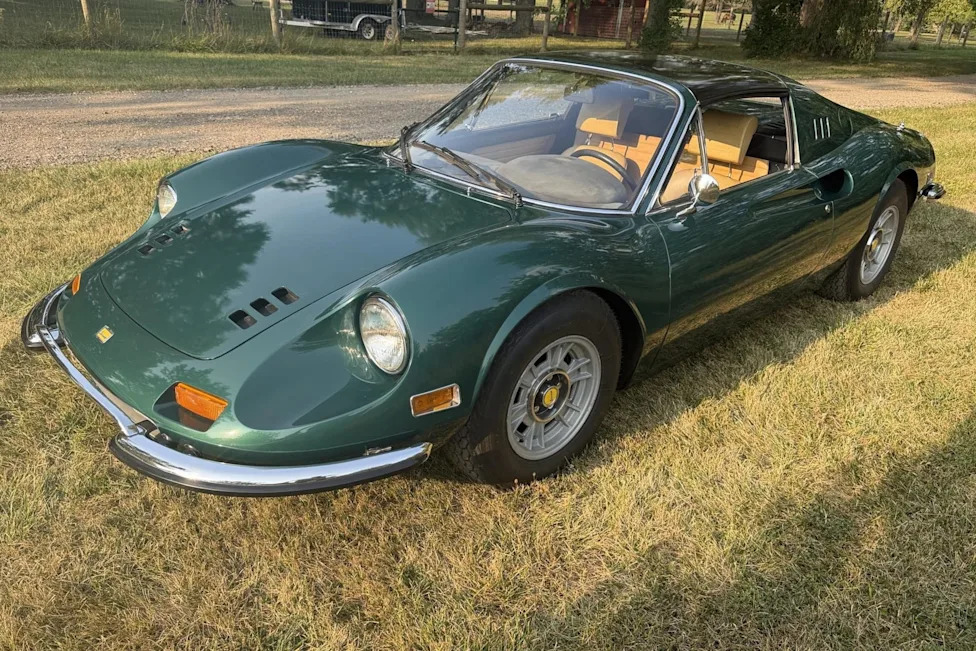
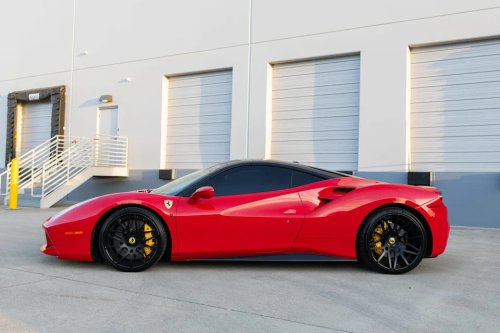
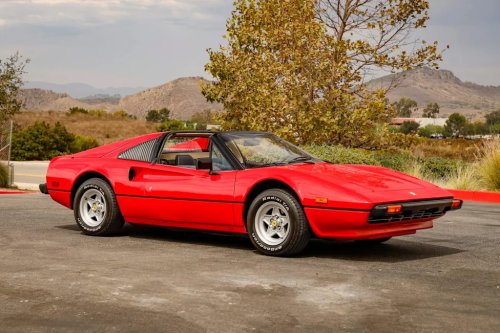
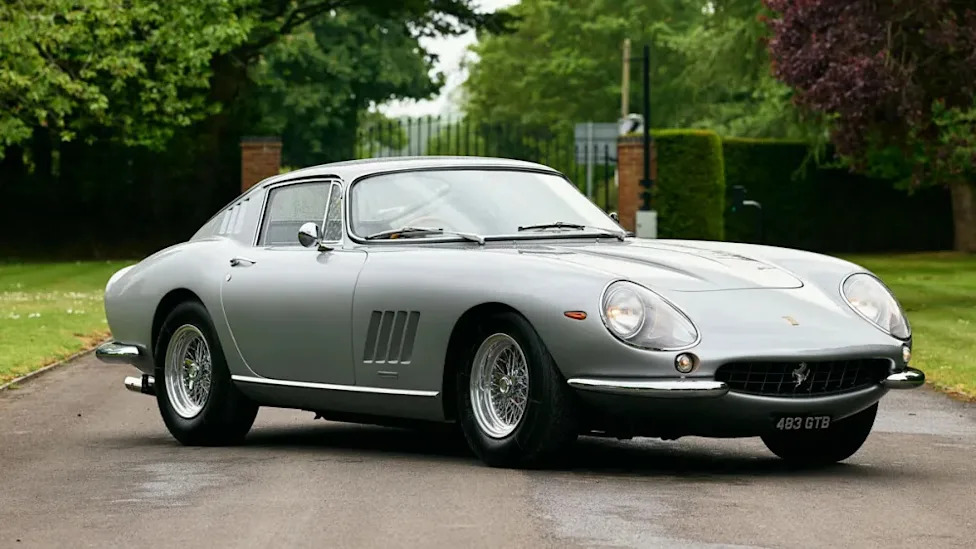
The Ferrari Raquel Welch Kept After a Movie Nobody RemembersBackfire NewsEL PuckettSat, September 12, 2026 at 8:00 PM UTCAdd us on GoogleThe Ferrari Raquel Welch Kept After a Movie Nobody Remembers"Fathom" cost 20th Century Fox $2.2 million to make in 1966 and clawed back barely $1 million in North American theaters. It's the kind of movie you've never heard of unless you're either a Raquel Welch completist or a Ferrari nerd who's stumbled across an old chassis card. But buried inside that spy-spoof flop is one of the stranger footnotes in Ferrari ownership history: a 1965 275 GTS Spider that Welch drove on screen, then simply kept.A Gift, Not a PaycheckNobody wrote that into her contract. Ferrari specialists who have since traced the car's ownership history identify it as chassis 07359, a 275 GTS built for the production and handed to Welch once filming wrapped, a personal gift rather than a studio payout. What makes the gesture stranger is who it came from. Welch and director Leslie H. Martinson reportedly clashed on the very first day of shooting in Spain, and according to screenwriter Lorenzo Semple Jr., the two never spoke again for the rest of the production. Somehow that fallout didn't stop a Ferrari from changing hands.Shooting wrapped in late 1966. Welch left Spain, married her manager Patrick Curtis in Paris that February, and by the following summer "Fathom" had already come and gone from theaters. The Ferrari stuck around a lot longer than the marriage or the memory of the movie.The Engineering That Made the 275 GTS MatterIt's worth explaining why this particular Ferrari is more than a prop with a good story attached. The 275 GTS, built between late 1964 and early 1966, belonged to the first Ferrari road car family to put the transmission out back in a rear-mounted transaxle and hang all four wheels on independent suspension, a genuine departure from the live rear axles Ferrari had been bolting to its GT cars for over a decade. Power came from a 3.3-liter Colombo V12 rated at a claimed 260 horsepower, run through a five-speed manual, with disc brakes at all four corners. Pininfarina drew the body, an all-steel spider shape distinct from the better-known 275 GTB coupe. Ferrari built only 200 of them, 19 in right-hand drive, before replacing the model with the 330 GTS in 1966.AdvertisementAdvertisementNone of that made it an exotic by today's standards. When new, a 275 GTS listed for about $14,500 in the U.S., real money in 1965, but well short of the price of true low-volume Ferrari specials of the era, and not far off what a nicely equipped Cadillac or Lincoln convertible cost at the time.What It's Worth NowThe market has since decided the 275 GTS is one of the more important two-cam Ferraris of the 1960s, and Welch's ownership only sweetens the pitch for whoever holds the title today. A separate 1965 275 GTS, chassis 07767, sold at Bonhams' Scottsdale auction on January 27, 2023, for $1,586,250, with no celebrity history attached. That's roughly 109 times its original sticker price, and it's the kind of number that explains why the vintage Ferrari market keeps producing headlines out of Monterey Car Week every August: rarity, mechanical significance, and a documented paper trail move seven-figure sums a lot faster than nostalgia alone.Why Hollywood Doesn't Hand Out Ferraris AnymoreTry to picture a studio letting a modern lead actor walk off a set with a seven-figure Ferrari prop and you'll understand how much the business has changed. Exotic cars used in film and TV production today are almost always insured, tracked assets, leased, borrowed from a dealer, or loaned directly by a manufacturer chasing product placement, with contracts that spell out who's liable if a stunt driver puts it into a wall. Ferrari itself still leans on real-world racing exposure rather than movie-set favors, as this season's racing coverage shows, and Hollywood keeps leaning on real drivers for authenticity instead of handing out keys, the way Tom Cruise's return to Daytona for "Days of Thunder 2" played out. Nobody's handing over pink slips as a thank-you gift; the insurance underwriters wouldn't allow it, and the tax implications of gifting a five-figure asset, let alone a seven-figure one, would get flagged well before a set wrapped.The Practical Side of Owning OneIf Welch's old Ferrari has you daydreaming about a two-cam 275 of your own, know what you're signing up for mechanically. These cars run six Weber carburetors that need periodic synchronization by someone who actually understands old Colombo V12s, a shrinking group of specialists whose labor rates reflect their scarcity. The all-steel spider bodies are decades removed from any factory rust-proofing and are expensive to restore properly once corrosion sets into the sills and floors. Parts aren't sitting on a shelf at the local dealer, either; sourcing correct trim, glass, and driveline components usually means working through marque specialists or having pieces fabricated to original spec. None of that is a reason to avoid one. It's a reason to budget for it, and to insist on an agreed-value classic car insurance policy rather than a standard auto policy that would total the car out at a fraction of its real worth after a fender-bender.The Car Outlasted the MovieModern celebrities still end up next to remarkable Ferraris and other low-volume machinery, but the path there usually runs through a checkbook rather than a wrap gift, see Fernando Alonso's one-of-38 Aston Martin Valiant, which he bought into rather than had handed to him. Welch died on February 15, 2023, at 82, after living with Alzheimer's disease in her final years. "Fathom" is barely a footnote in her filmography today, remembered mostly for a poster gag in "The Shawshank Redemption" that had nothing to do with it. The Ferrari she drove for a few months of location shooting in Spain, on the other hand, is still out there, still worth seven figures, and still telling a better story than the film that put her behind its wheel.








 +60 others