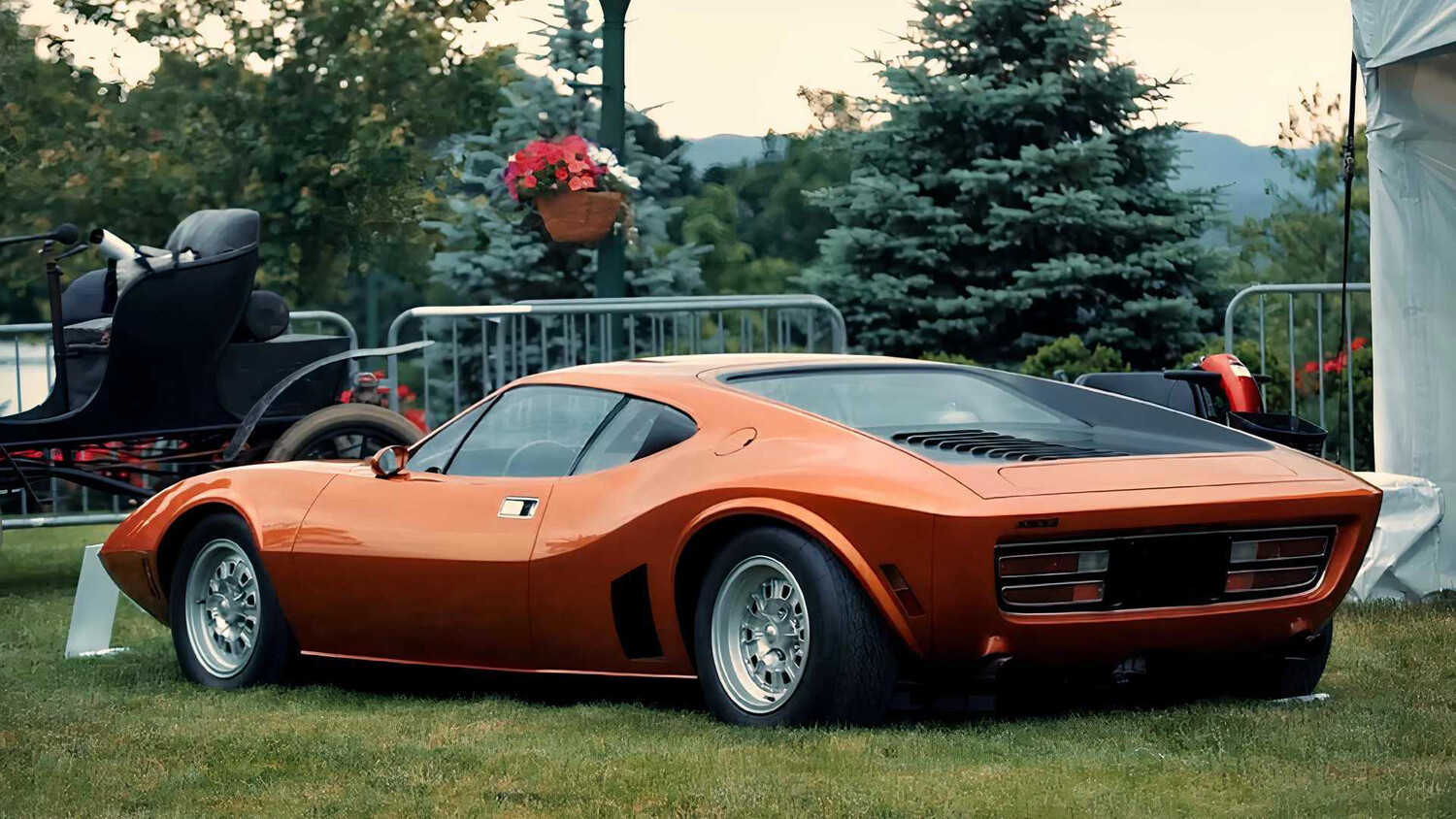
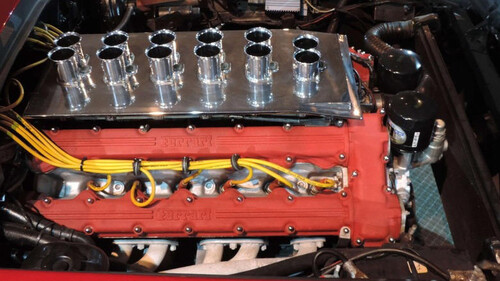
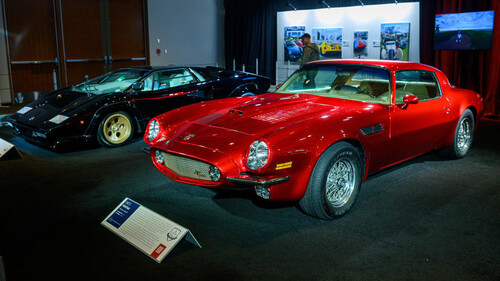
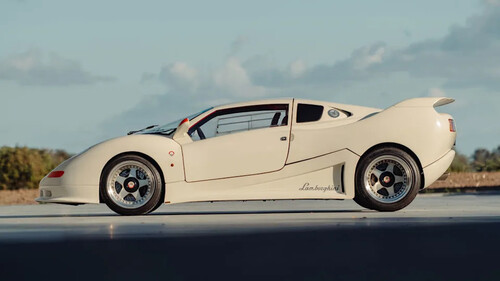
AMC was never supposed to end up here. It built its reputation on accessible performance and smart packaging, not world-beating engineering or exotic layouts. The Javelin and AMX gave buyers something fun without asking them to spend like they were shopping for a Ferrari, but there was always a ceiling. You knew where AMC fit.Then, for a brief moment in the late 1960s, that ceiling disappeared. Because instead of refining what it already did well, AMC went after something completely outside its lane. Not a better muscle car, and not a faster version of what it already sold. Something far more ambitious than it looked, and was engineered as it came out of Italy, not Wisconsin. And somehow, even with all of that, it got far enough that it almost became real. AMC Was Never Supposed To Build Something Like This MecumTo understand how wild the AMC supercar was, you have to look at where AMC actually stood at the time. This wasn’t Ford or GM with endless resources and global reach. AMC was the smallest of the major American automakers, constantly balancing survival with innovation. Every decision had to make sense financially, because there wasn’t much margin for error.That’s why its performance cars always followed a certain logic. The Javelin and Rebel leaned into existing platforms, and the AMX itself was a smart, stripped-down two-seater built from what AMC already had. Even when it went racing, AMC played the game carefully. So the idea of AMC suddenly deciding to build a mid-engine car aimed at Europe’s best wasn’t just ambitious. It bordered on irrational.Mecum This wasn’t a company that had ever explored mid-engine packaging. It didn’t have a history of building low-volume halo cars. And it definitely wasn’t known for chasing 170-mph top speeds. Everything about this project ran counter to how AMC typically operated, which is exactly why it happened, and in the end, why it failed so brilliantly. Then AMC Started Chasing Europe’s Best MecumInstead of developing the car entirely in-house, AMC turned to Italy. The project moved overseas, where experienced engineers and designers could bring the kind of layout AMC had never attempted to life. Giotto Bizzarrini, a name tied to the development of Ferrari and Lamborghini, became a key part of the engineering effort.The AMX/3 was designed around a mid-engine layout from the start, not adapted into one. That meant a completely different approach to weight distribution, suspension geometry, and cooling. Airflow had to be managed through the body in a way AMC had never dealt with. The chassis had to be stiff enough to handle high-speed stability, not just straight-line acceleration.Rare Cars / YouTube Visually, it followed the same philosophy. Low, wide, and sharply proportioned, the car looked far closer to a Miura than anything wearing an AMC badge. The stance alone told you this wasn’t a traditional American performance car. It sat planted, purposeful, and unmistakably European in execution.And importantly, this wasn’t just a concept being styled for attention. The AMX/3 was engineered to drive, tested at speed, and developed with production in mind. AMC wasn’t experimenting. It was trying to build something that could legitimately compete on a global stage.Fun Fact: Each of the six prototypes is slightly different, with changes to cooling, body details, and chassis setup, meaning there isn’t a single “correct” version of the AMX/3. Meet The Mid-Engine AMC No One Believes Is Real At the center of the AMX/3 was a mid-mounted AMC 390 cubic-inch V8 producing around 340 horsepower. That number doesn’t sound extreme today, but in the late 1960s, combined with the car’s layout and aerodynamics, it was enough to push the AMX/3 into true supercar territory.Top speed was estimated at around 170 mph, a figure that put it right in the conversation with Europe’s best. And unlike traditional muscle cars that relied on raw power, the AMX/3 was built to handle that speed. The mid-engine balance gave it a level of composure that American cars of the era rarely prioritized.Rare Cars / YouTubeTesting proved that point pretty quickly. The car was reportedly capable, stable, and far more refined at speed than anything else AMC had ever built. It wasn’t just quick in a straight line. It was designed to feel controlled and planted in a way that aligned with European expectations.Only six prototypes were completed, each hand-built with slight differences as the design evolved. That low number tells you how close this was to becoming something more. These weren’t rough ideas, they were finished cars, developed and ready for the next step.Fun Fact: One AMX/3 prototype was reportedly driven to nearly 180 mph at Monza during testing, which would have made it one of the fastest American cars of its time if it reached production. AMX/3 Key Specifications Every one of those specs feels like it belongs to Ferrari or Lamborghini, not AMC. And yet, AMC was the company that pushed it this far. Why The AMX/3 Never Made It To Production For all the progress AMC made, the reality behind the program became impossible to ignore. Costs escalated quickly, especially with development underway in Europe and production expected to remain low volume. Early estimates suggested the car would cost far more to build than AMC’s typical models, pushing it into a price range that didn’t align with the brand.At the same time, new U.S. safety and emissions regulations were beginning to reshape the industry. Bringing a low, mid-engine car like the AMX/3 into compliance would have required additional engineering and testing, adding even more cost to an already expensive project. A sad reality was coming to fruition.Rare Cars / YouTubeInternally, the numbers stopped making sense. AMC would have needed to sell the car at a price point that rivaled established European exotics, without having the reputation to support it. That gap was difficult to justify. So, despite having a working, tested car that could have entered limited production, AMC decided to cancel the program. It wasn’t a failure of engineering, but more of a reality check. This wasn’t a concept that never worked; it was a finished idea that simply didn’t fit the business.Fun Fact: The body design was influenced by Giorgetto Giugiaro’s work during his time at Italdesign, which helps explain why the car looks far more Italian than anything AMC ever produced. The AMC That Still Doesn’t Make Sense Today Rare Cars / YouTubeToday, the AMX/3 sits in a strange place in automotive history. It’s not widely known outside enthusiast circles, but among those familiar with it, it carries a sense of disbelief. Because even decades later, it doesn’t fully line up with what AMC was supposed to be. The surviving cars have become incredibly valuable, trading hands as rare pieces of lost supercar history. Recent AMX/3 Sales And Values There are only a handful of verified AMX/3 sales, which is exactly why each one carries weight. The best-documented example sold for $891,000 at a Gooding & Company auction, setting a benchmark not just for the model but for AMC as a whole. That result alone reframes the car from curiosity to a legitimate collector's piece.At the other end, a less refined example traded for around $400,000 in a private Facebook sale out of Fort Myers, Florida (which is where I live, and I find that quite insane). With so few cars and such different histories, condition, and provenance matter more here than almost anything else.Rare Cars / YouTube The AMX/3 doesn’t trade often enough to form a clean market trend, but when it does, it trades within the same range as established European exotics. That tells you this is more about what the car represents. AMC didn’t build the AMX/3 to play it safe or stay in its lane. It built it to prove it could compete in a completely different place.The AMX/3 doesn’t just add to AMC’s story, it changes it. For a brief moment, this was a company aiming far beyond what anyone expected, and getting closer than it probably should have, and that's the fun part.