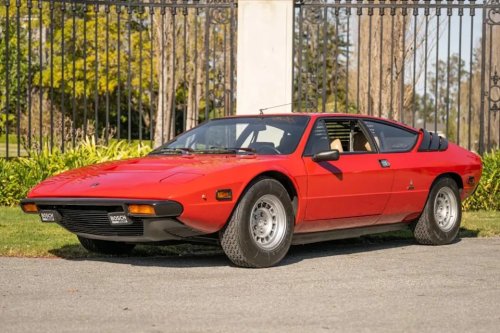
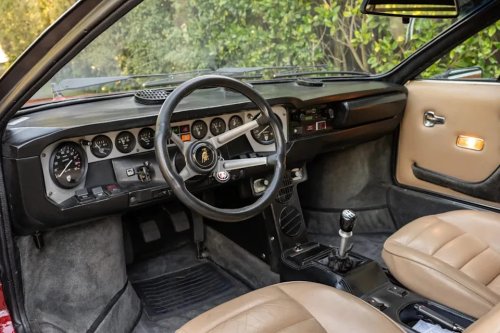
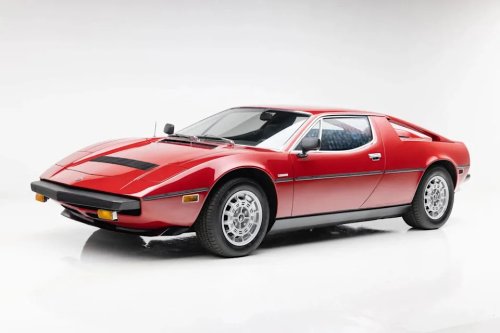
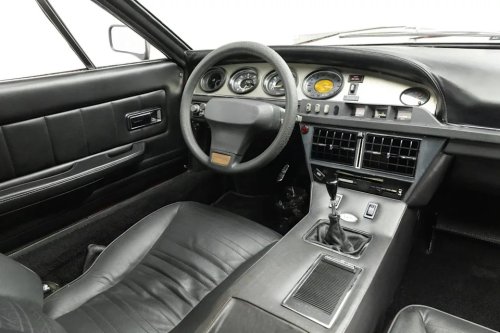
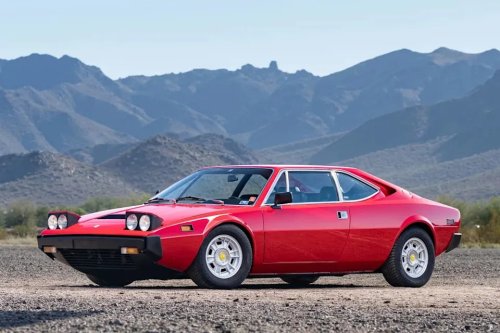
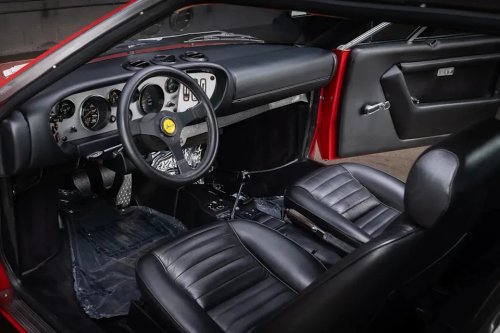
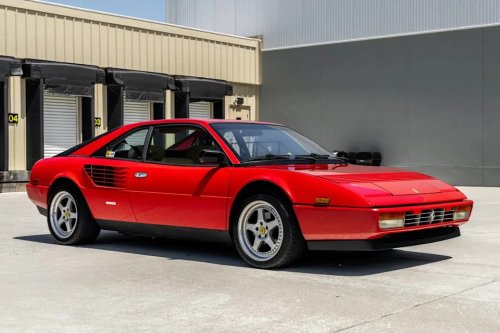
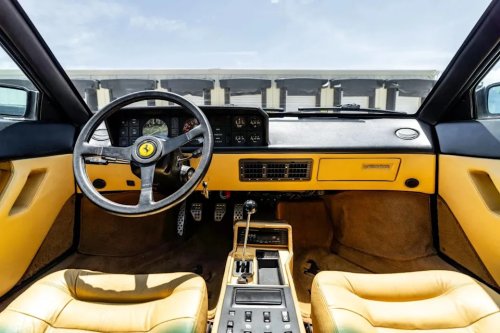
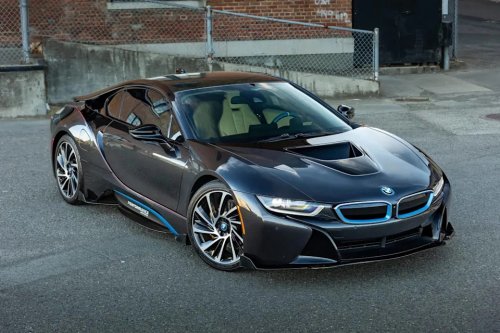
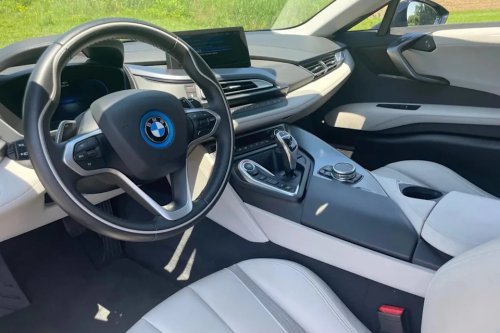
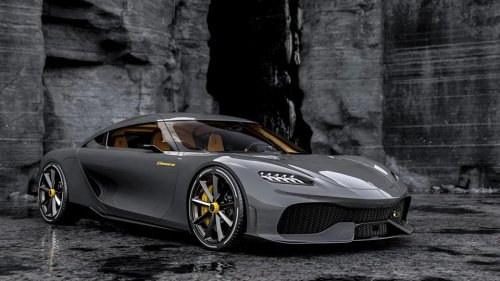
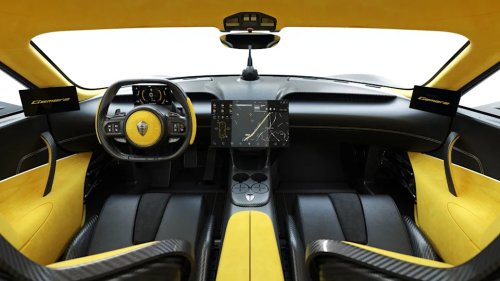
Packaging considerations place limits on how sports cars can be configured, especially if the manufacturer wants to put the engine within the wheelbase to optimize handling. Front-mid-engined sports cars such as the new Toyota GR GT place the engine behind the front wheels, but this requires an elongated shape and wastes a lot of space. Placing the engine ahead of the front wheels, where a regular car's rear seats would typically be, is more common, but it usually limits the layout to two seats.There have been some 3-abreast mid-engined sports cars like the Talbot-Matra Bagheera and Murena, the McLaren F1 and Speedtail, the Gordon Murray Automotive T.50 and T.33, the Scuderia Cameron Glickenhaus SCG 004S, the Czinger 21C, and the boutique Spanish Tramontana hypercar, but two actual rows and four passengers? Rear seats can be squeezed in if you move the engine back and stretch the wheelbase, but it was only ever attempted six times. The biggest surprise of all may be that you can still buy a car with such a layout today.Lamborghini Urraco (1972-1979)Italian automakers dominate this list, and although Maserati also had a mid-engine 4-seater on the market by 1972, Lamborghini already showed its Bertone-designed pre-launch Urraco at the 1970 Turin Auto Show, so it wins by a nose as the first car with this layout. The Urraco was meant to be a more accessible junior Lambo with rear seats to sell in higher volumes than the V12 flagships and to compete with the Porsche 911, and it's a segment that the automaker considers competing in again now, after a half-century hiatus.1975 Lamborghini Urraco P250Bring a TrailerThe Urraco was the Latin 911, and received a brand-new steel monocoque chassis developed especially for it, along with a new naturally aspirated V8 engine in capacities ranging from 2.0L to 3.0L and developing 180 to 247 hp. The engine was installed transversely, and all-round independent McPherson strut suspension was used in a bid to save enough space to squeeze everything in. All of this was fitted into a wheelbase of a mere 96.46 inches – shorter than a VW Golf 2. There may have been rear seats, but they were only suitable for the tiniest of children, and adults of small stature would endure only for short distances if the front seats were moved well forward.1975 Lamborghini Urraco P250 with beige interiorBring a TrailerMaserati Merak (1972-1983)Maserati's approach with the Merak was different, as it was essentially the existing 2-seater Maserati Bora converted into a 4-seater car, complete with the same platform and wheelbase. Finding extra space was tough, and partly achieved by swapping the Bora's V8 with a V6 engine made from aluminum and developed for use in the Citroën SM to shrink the engine bay.1975 Maserati MerakBring a TrailerWith its upright rear window and open flying buttresses, it's hard to believe a second row fits in. Indeed, these seats are so cramped that they were only really ever used for a few pieces of extra luggage, as only toddlers could really be transported in them.1975 Maserati Merak with black interiorBring a TrailerDino/Ferrari 208 and 308 GT4 (1973-1980)Ferrari stretched its 2-seater Dino 206/246 tubular spaceframe structure to create the 208 and 308 GT4, adding more than eight inches to the wheelbase to create space for a second row. It was initially marketed as a Dino until May 1976 and a Ferrari from then on. The Bertone-designed body's angular proportions invited many Urraco comparisons at the time; perhaps that is part of the reason Ferrari never asked Bertone to design a car for them again!1975 Ferrari 308 GT4Bring a TrailerIt used the same transverse V8 powertrain layout as the Lambo as well, but using Ferrari's naturally aspirated Dino V8 in 168-hp 2.0 and 252-hp 2.9L guises (the latter only with 240 hp in the U.S.). Just like its rivals, rear-seat legroom was virtually nonexistent unless the front seats were moved well forward, and they rarely carried more than a few pieces of luggage.1975 Ferrari 308 GT4 with black interiorBring a TrailerFerrari Mondial (1980-1993)The 1980 Mondial carried over a modified version of the GT4 tubular spaceframe, but with the wheelbase stretched an additional four inches to 104.3 inches. The Mondial was just the stretched version of the Ferrari 208/308/328 mid-engined 2-seater sports car of the '80s made famous by Magnum, P.I. on television.1988 Ferrari Mondial 3.2 CoupeBring a TrailerThe Mondial would spawn a Cabriolet variant, which had the distinction of being the only 4-seater, rear-engined convertible ever built in automotive history. Despite the wheelbase stretch, rear-seat legroom was still severely restricted by the limitations of the layout, and was toddler or emergency seating at most.1988 Ferrari Mondial 3.2 Coupe with beige interiorBring a TrailerBMW i8 (2014-2020)The BMW i8 brought the 4-seater mid-engined sports car into the 21st century with space-age looks and an advanced plug-in hybrid powertrain that changed the public perception of hybrids forever. It utilized a 131-hp front-wheel electric motor and a mid-mounted turbocharged 228-hp 1.5-liter 4-pot, which combined to produce 369 hp. The i8 was previewed as the 2009 BMW Vision EfficientDynamics show car, the 2011 i8 Concept, and the 2012 i8 Concept Spyder; the production variant came on stream in 2014. It could drive 15 miles on electricity alone.2017 BMW i8Bring a TrailerWith a long 110.2-inch wheelbase and a compact 3-cylinder engine installed transversely behind the passenger cabin, BMW managed to provide 28.2 inches of rear-seat legroom, which would be considered very cramped by most modern standards (even a Ford Mustang offers 29 inches), but it was more than any mid-engined 4-seater has had up until that time, and was just about adequate for small children to use on a regular basis.2016 BMW i8 with black and beige interiorBring a TrailerKoenigsegg Gemera (2026+)Which brings us to today, and the only 4-seater mid-engine sports car left, which is also a unicorn. Koenigsegg calls its Gemera hybrid a "Mega-GT"; it has up to 2,300 hp and massive Dihedral Synchro-Helix doors that provide easy access to both rows.2027 Koenigsegg GemeraStretching nearly 196 inches on a 118.1-inch wheelbase, it's Accord-sized, and Koenigsegg says it's been engineered to accommodate four adults of at least six feet tall, providing the interior space typically associated with a midsize sedan. It finally went into production in 2026, and only 300 will be built at a starting price of $1.7 million.2027 Koenigsegg Gemera black and yellow interiorFinal ThoughtsThe 4-seat mid-engined sports car was a flawed concept from day one, and though it's an interesting oddity that we enjoy chatting about today, it was never a practical car, and rear-seat space was usually so poor that humans could rarely be accommodated in the second row. Only the BMW i8 finally brought a modicum of 2nd-row liveability for small kids, and just as we thought we'd seen the best the format can offer, Koenigsegg upsets the apple cart with a multi-million-dollar hybrid hypercar that takes this flawed '70s Italian concept and turns it into a practical reality for adults – at a massive cost and with assured unicorn rarity value.



















 +57 others