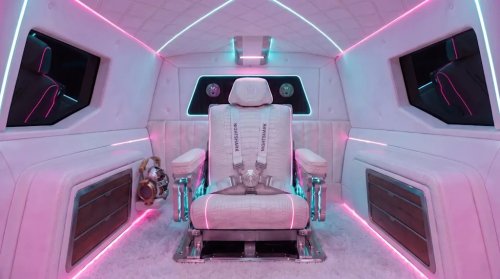
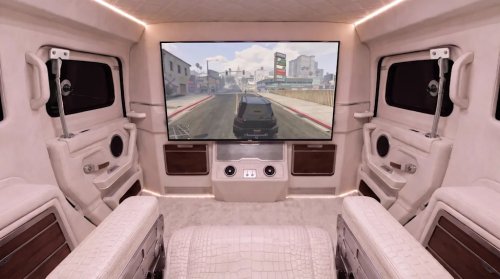
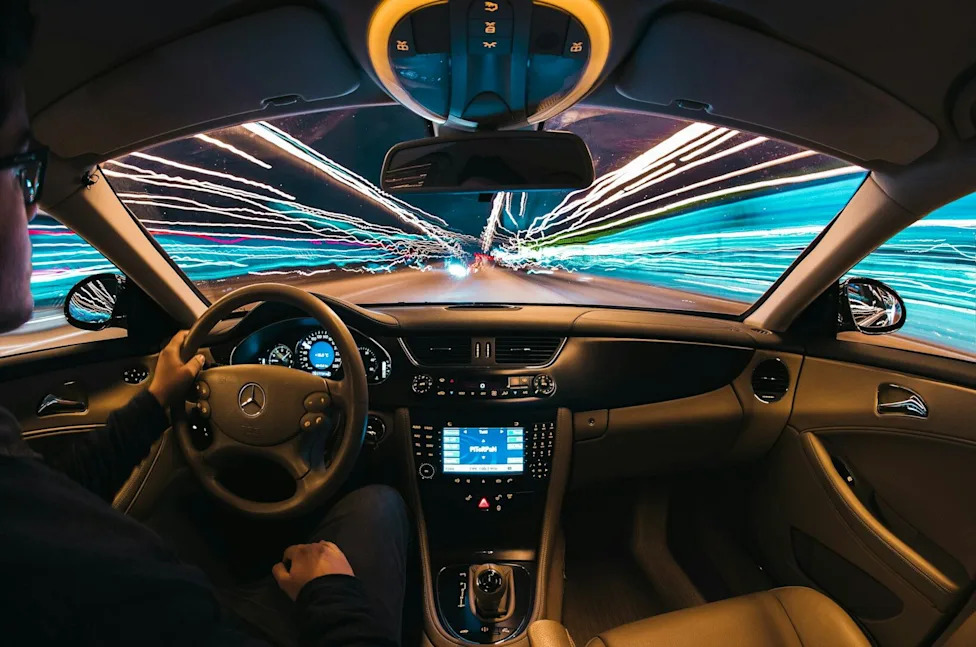
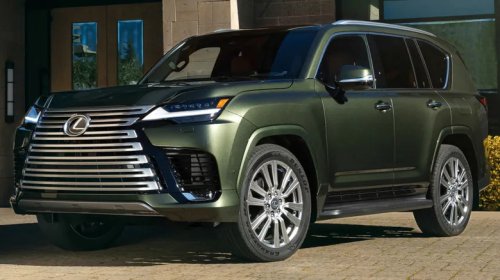
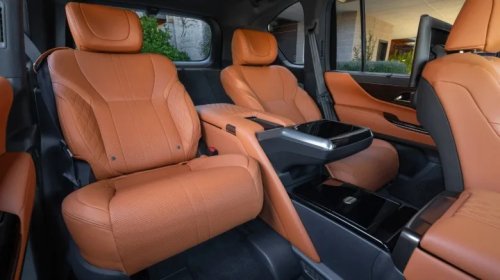
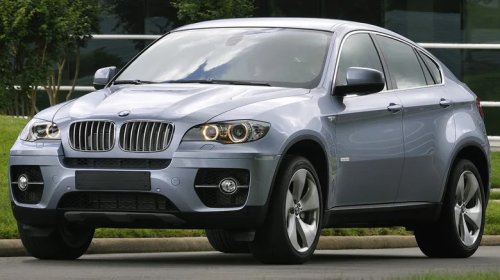
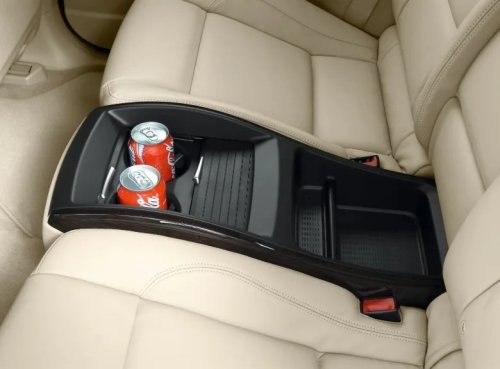
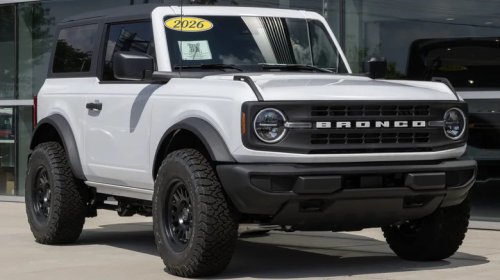
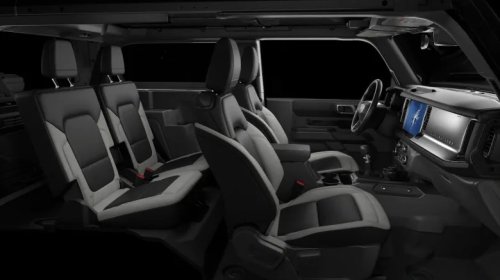
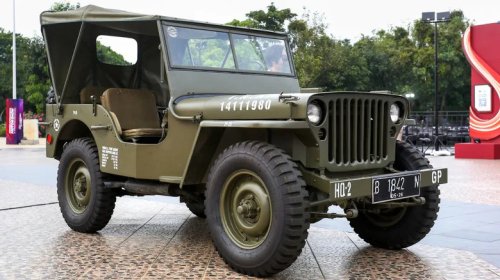
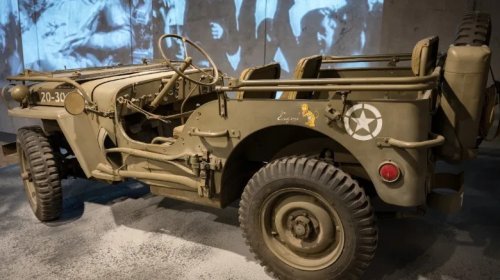
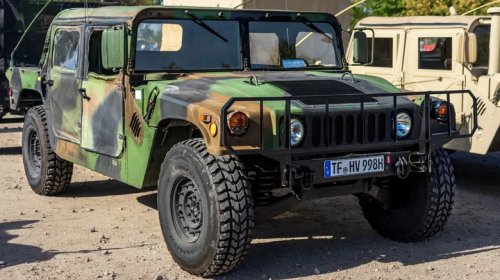
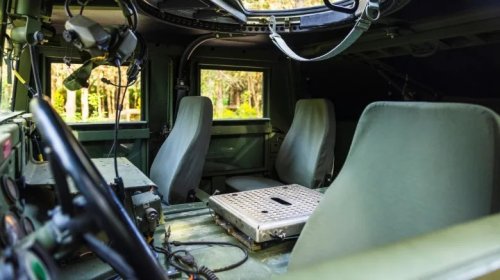
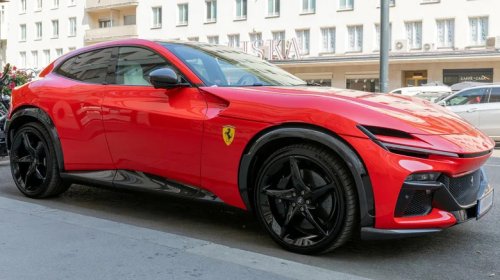
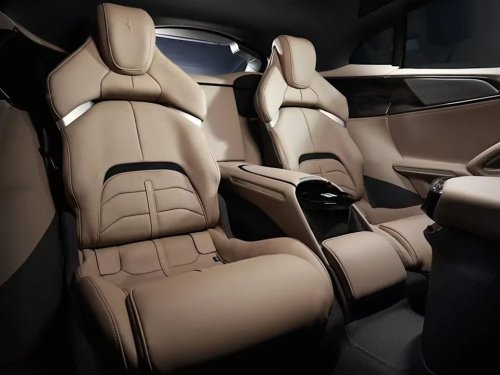
6 SUVs That Can Only Seat Four OccupantsJalopnikViraaj BhatnagarSun, September 27, 2026 at 12:05 PM UTCAdd us on GoogleSofikoS/ShutterstockMany purchase sport utility vehicles (SUVs) over sedans or wagons to accommodate several occupants while still having some, or in certain cases, plenty of usable cargo space left. Automakers often deliver on both of these fronts, with SUV seating becoming increasingly flexible. Most SUVs can hold at least five people, and many offer seating for seven or eight occupants. While often practical, these interior designs have us remembering SUVs that accommodated no more than four people.It's relatively rare that an automaker designs a big car like an SUV to seat such a small number of occupants. However, the six examples listed below, which include both old and new models, prove that each decision was a purposeful one. These purposes relate to aims like offering the best in rear-seat luxury, sacrificing space in the pursuit of performance, defining a niche segment, prioritizing off-road agility, or simply being an actual military vehicle built for function over comfort.Read more: 11 Of The Biggest V8 Engines Ever Put In Production CarsLexus LX 700h Ultra LuxuryLexusPriced at $143,050, not including a $1,450 destination charge, the Lexus LX 700h's top-spec Ultra Luxury trim is offered solely as a four-seater. All other trims of this full-size SUV (besides the five-passenger LX 600-LX 700h Overtrail) feature three rows of seating. As its trim name suggests, the LX Ultra Luxury is all about pampering each of its four occupants. Up front, both seats are heated and ventilated, and the driver's seat additionally gets powered lumbar support, 10-way power-adjustability, and a massager. Rear occupants, meanwhile, are seated in a pair of cushy captain's chairs that recline up to 48 degrees with heating, ventilation, and massage functions. Additional second-row features in the LX Ultra Luxury include a pair of 11.4-inch entertainment screens, wireless charging, and window sunshades.LexusThe Ultra Luxury trim is only available with the LX's 700h hybrid powertrain. This powertrain comprises a 3.4-liter twin-turbo V6 working in tandem with a 1.87kWh battery pack and an electric motor, along with a 10-speed automatic transmission. Total power output is 457 horsepower (hp) and 583 pound-feet (lb-ft) of torque. Four-wheel drive (4WD) is the sole drivetrain option.BMW X6 (2008-2011)BMWThe first-gen BMW X6 (2008-2014 model years), codenamed E71, is widely recognized as the car that popularized the coupe-SUV body style. In an effort to distinguish the E71 from practical family SUVs of the time (as well as the X5 on which it was based), BMW sold it as a pure four-seater from 2008 to early 2011.AdvertisementAdvertisementThis four-seat layout mirrored the cabin of a luxury grand tourer with standard 10-way electrically adjustable front seats, a memory function for the driver seat, and leather upholstery. The interior also featured a rear center console with creative small storage solutions (pictured). Since the X6 was down on headroom and rear legroom compared to the X5, it probably would've been less comfortable to squeeze three occupants in the back, anyway.BMWBMW started offering an optional rear bench for all 2011 BMW X6 trims except the ActiveHybrid. The 2011 X6's ActiveHybrid trim came with a 4.4-liter turbocharged V8 hybrid powertrain good for 400 hp and 450 lb-ft of torque, complemented by 4WD and a 7-speed automatic.Ford Bronco two-doorJonathan Weiss/ShutterstockWhen Ford revived the Bronco in 2020 — following a 25-year hiatus — it brought back the classic two-door body style alongside a longer, roomier four-door version. The two-door Bronco is available in only two trim levels, Base and Badlands, which are priced at $40,795 and $49,385, respectively, not including the $1,995 destination fee. Both trims come with standard bucket seats up front and a rear bench designed to hold two passengers. There isn't much in the way of creature comforts: the front seats offer just six-way manual adjustment, while the rear seats are fixed. You can opt for heated front seats as part of the Mid Package for the Badlands trim, which costs an additional $1,675 for the total package.FordNone of this is particularly surprising given that the two-door Bronco is all about off-road capability, not luxury or rear-seat comfort. In standard form, the two-door Bronco Base and Badlands are equipped with a 2.3-liter four-cylinder EcoBoost engine developing up to 300 hp and 325 lb-ft of torque. You also receive a 7-speed manual and 4WD, though a 10-speed automatic is available.Willys MB JeepDarthart/Getty ImagesAdvertisementAdvertisementThe original military Jeep, built by Willys-Overland during World War II, was designed with a no-frills four-seat layout in adherence to U.S. military requirements issued by the Army. Primary requirements included weighing no more than 1,300 lbs while still featuring a 600-lb payload rating and 4WD. The Army ended up choosing a prototype from Willys-Overland, and over 360,000 examples of its improved version, the Willys MB, were built during World War II. Ford also produced the vehicle under their license during the war, bringing production totals, when combined with Willys-Overland, to about 648,000. The Army initially requested three bucket seats; the production Willys-Overland could fit four total via two front bucket seats and one rear bench seat.Nikonysta/ShutterstockThanks to its relatively compact dimensions, curb weight that was still low at 2,450 lbs despite being raised from 1,300 lbs, 60-hp 2.2-liter "Go-Devil" engine, and excellent off-roading, the MB Jeep proved to be an invaluable military tool. It helped cavalry units conduct combat reconnaissance missions, transported generals and admirals across bases, hauled trailers full of essentials across the battlefield, ferried wounded soldiers to medical officers, pulled light artillery pieces into battle, and could even fit in glider planes.Humvee Model 998Sergey Kohl/ShutterstockDelivered by AM General from 1985 onwards, the High Mobility Multipurpose Wheeled Vehicle (or, as it's widely known, the Humvee) replaced the U.S. military's aging fleet of Jeeps and light trucks. The Humvee was designed around multiple interchangeable seating layouts, but the base M998 chassis — the very first version of the Humvee name — could be configured with a pair of front and rear bucket seats, along with a small cargo compartment all the way behind.A similar layout even made its way into the Humvee's civilian derivative, the Hummer H1 (1992-2006). Fitting a rear bench was likely difficult due to the famously huge central transmission tunnel that the H1 inherited from the Humvee.Karolis Kavolelis/ShutterstockUnder the hood, original versions of the Humvee Model 998 (up until 1994) came with a 6.2-liter diesel V8 developing 150 hp — a pretty paltry output for such a big engine. The mill was paired with a 3-speed automatic transmission, 4WD, and a 2-speed transfer case. In 1994, the Model 998A2 series of the Humvee was introduced, powered by a larger 6.5-liter naturally aspirated diesel V8 producing 160 hp, which was sent to all four wheels via a 4-speed automatic gearbox.Ferrari PurosangueLefteris_/Getty ImagesAdvertisementAdvertisementSporting a stratospheric price tag of over $400,000, the Ferrari Purosangue is easily the most expensive SUV on this list. It's also the one that places the greatest emphasis on the "sport" portion of "SUV." Ferrari uses the term Ferrari Utility Vehicle (FUV) to describe the Purosangue's form factor.Inside, all four occupants get individual heated bucket seats, with the front seats receiving 14-way power adjustability. Why Ferrari skipped a bench option for the Purosangue likely lies in its sporting intentions.FerrariBucket seats are much better at holding occupants in place during high-speed cornering, and since the Purosangue has gearboxes on both the front and rear axles, the transmission tunnel for the latter may have made it difficult to install a middle seat in the second row. The Purosangue is among the few V12 cars you can still buy. In fact, it's the only SUV currently on sale worldwide to be powered by a naturally aspirated V12, with its 6.5-liter engine producing 715 hp and 528 lb-ft of torque as it howls to 8,250 rpm. An 8-speed dual-clutch automatic transmission routes all that power to all four wheels.Want more like this? Join the Jalopnik newsletter to get the latest auto news sent straight to your inbox, and follow us or add us as a preferred search source on Google.Read the original article on Jalopnik.

















 +8 others