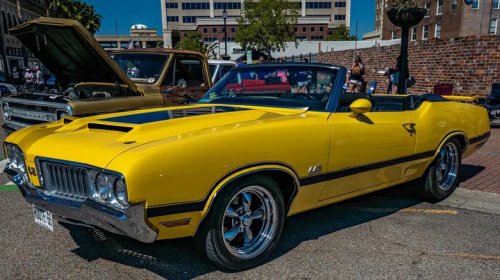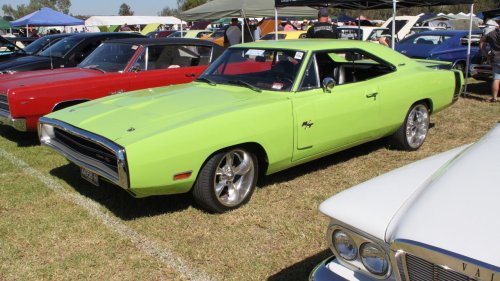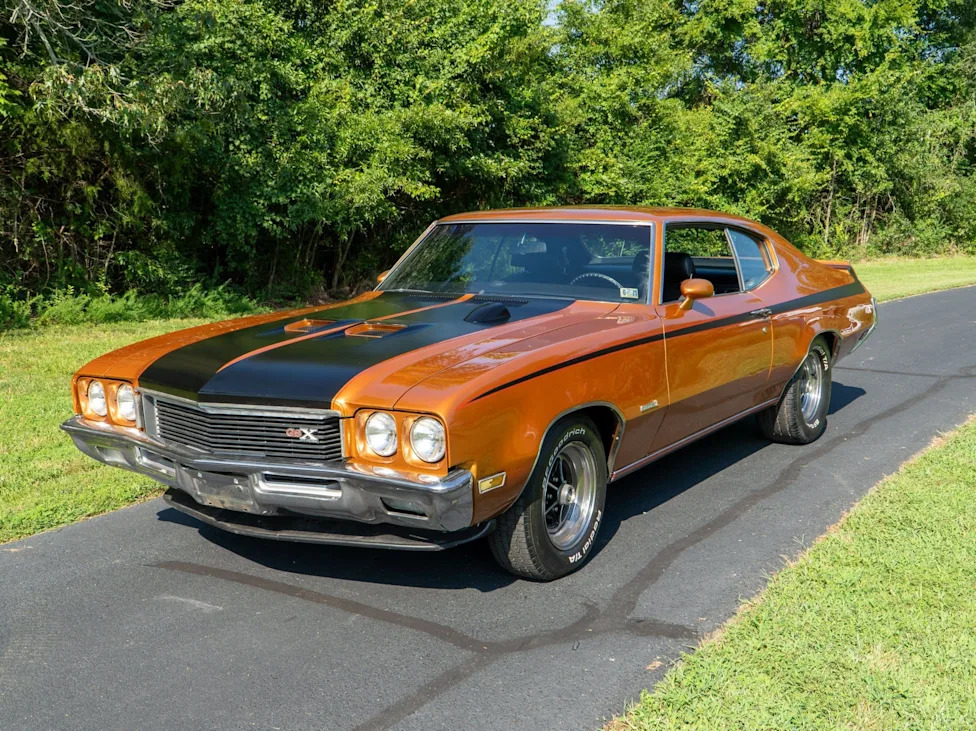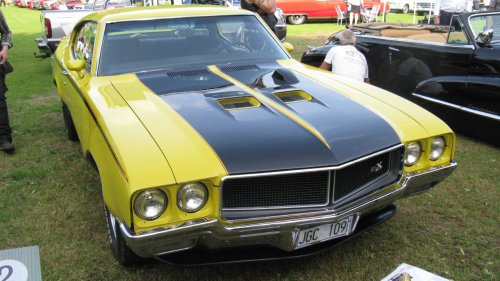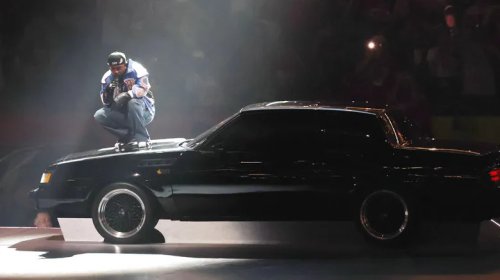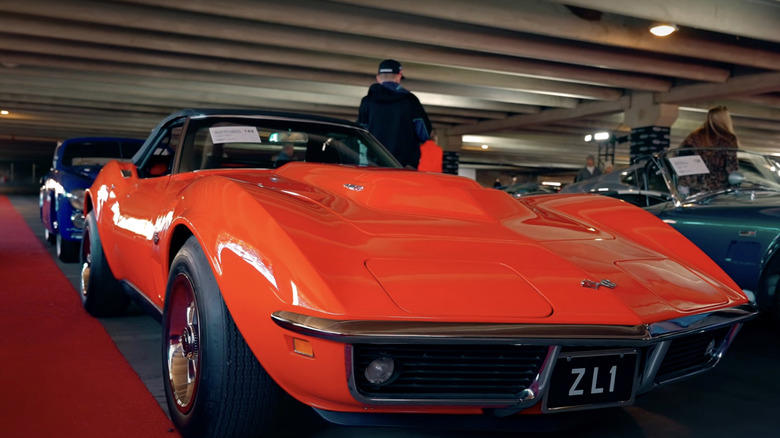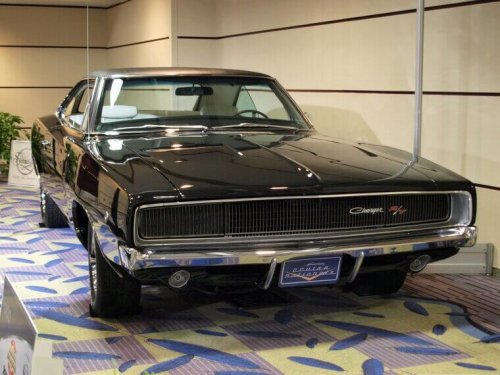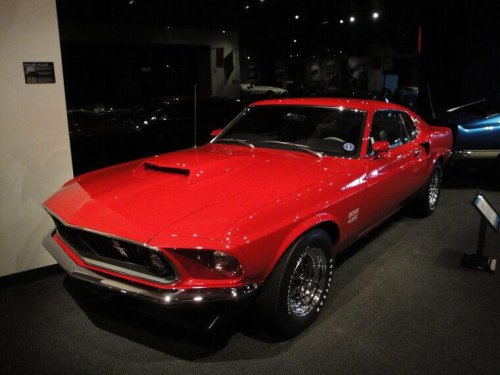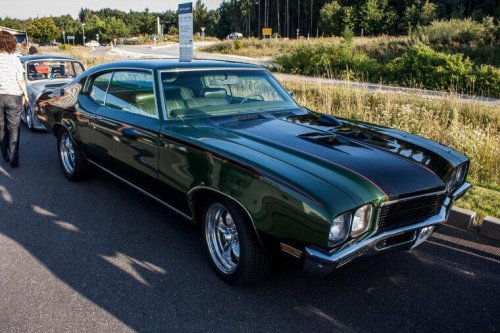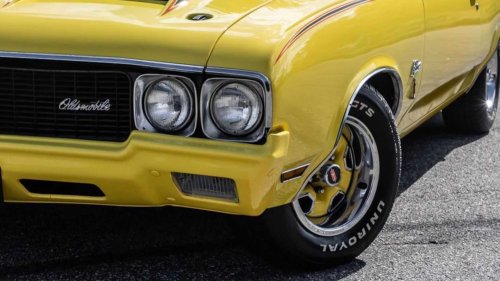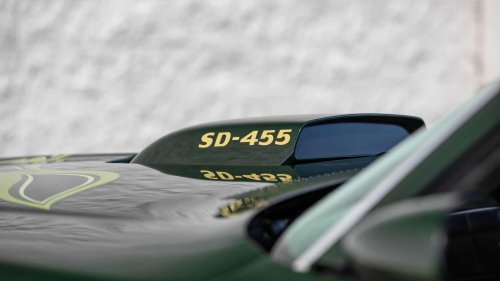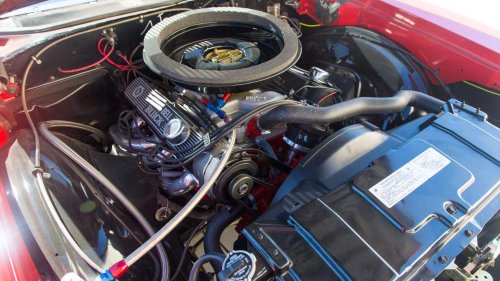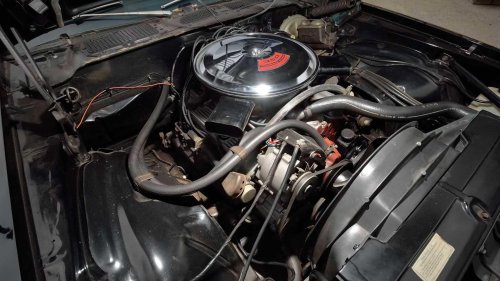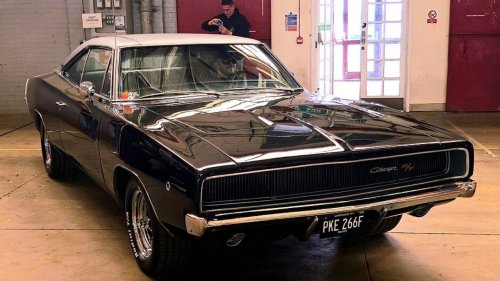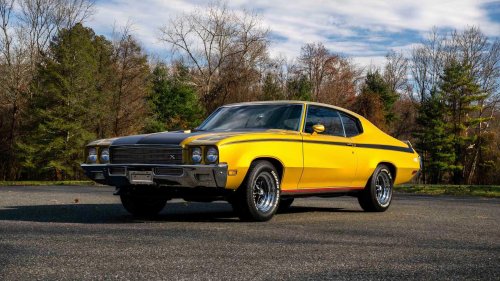
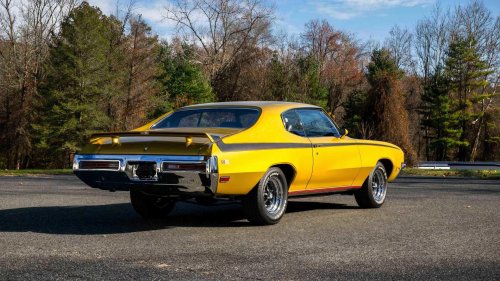
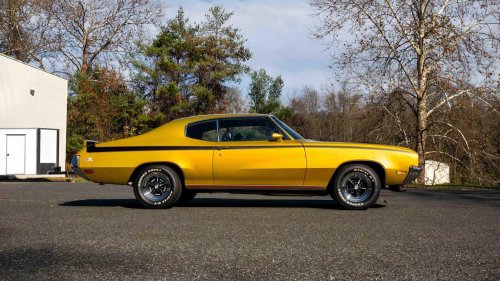
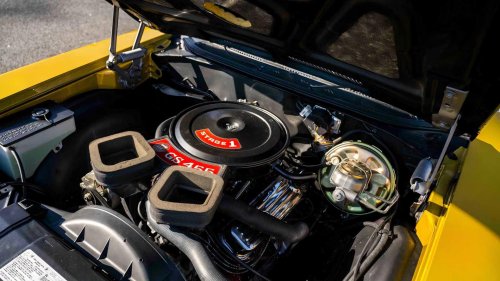
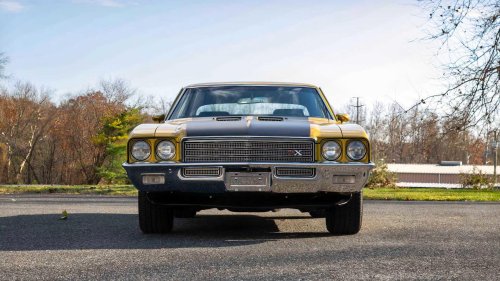
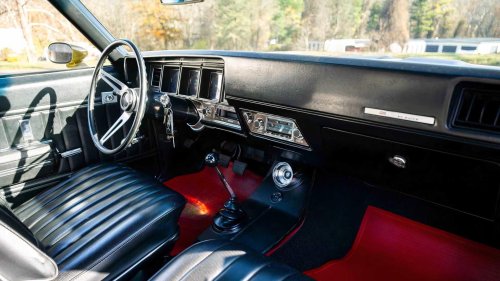
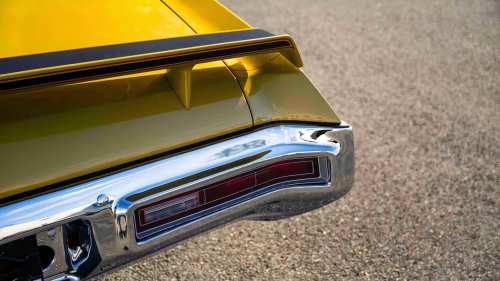
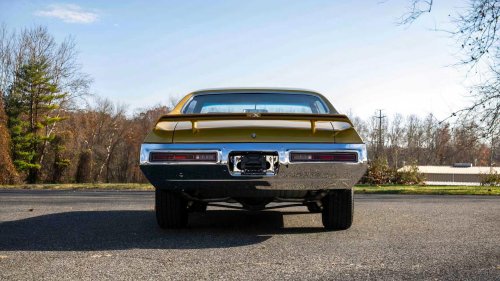



















There are plenty of pony and muscle car heroes that fill the pages of magazines and the rooms at auction houses. But one of the most impressive American performance machines of the Golden Era that tends to go unnoticed. It's a shame because this slightly forgotten muscle car had one of the most formidable V8s of the '60s and '70s, and a torque rating that would have the competition running for cover. It's time to check out the most underrated muscle car of all time... Buick Wanted A Slice Of The Muscle Car Action Mecum It's the late '60s, and the muscle car Golden Era is in full swing. Dealers can't sell this new Buick fast enough, with pony and muscle cars dominating the new, affluent, young demographic. But for every new model, facelift, and trim that carmakers can dream up, there has to be a halo model to sit at the front of showrooms to entice people in, as well as duke it out at the racetrack on weekends. Carmakers Were Rushing To Win The Horsepower And Torque Wars Mecum Cars like the 1969 Chevrolet Camaro ZL1, with a 430-horsepower and 450 lb-ft 427 V8, or the 1969 Dodge Charger Daytona with its groundbreaking aero and a 426 Hemi V8 pushing out 425 horsepower and 490 lb-ft, were brutishly powerful models that were like nothing else on the planet. They were also helping to win sales too, not just races, with 96,100 second-gen Dodge Chargers produced between '68 and '70, three times more than the original 35,000 units slated for production. Buick, a company with a long history of creating a combination of spongy dad-mobiles and the odd maniacal street racer, was looking at the muscle car scene in the late '60s and decided that it wanted a piece of the action. How Buick Developed Its Own Type Of Unhinged Muscle Car MecumBuick had been in the muscle car game for a while with the Skylark Gran Sport (mid-size A-body), which had arrived for '65. Customers had a choice of either a 340 ci or a 400 V8 engine, with the option of a 425 in the Riviera GS (full-size personal luxury). The Skylark became simply the Buick Gran Sport in 1967, with a series of coupes and convertibles, and the option of a 340, 350, or a 340-horsepower 400, with a choice of three- and four-speed manuals or a three-speed Turbo Hydra-Matic auto 'box.There was even a cold-air Stage I and Stage II induction option from '68, the former giving a sprint to 60 mph in 7.5 seconds, and by '69 power was up to 345 horsepower. Things were getting interesting with the GS, but Buick had another trick up its sleeve — it was called the GSX. The Buick GSX Stage 1 Is The Muscle Car Hero Everyone Forgot About MecumThe key to success with a lot of big muscle cars is torque, essentially getting these big brutes off the line quickly at lower revs. The king of torque in the '60s was the 1968 Dodge Charger R/T Hemi, a muscle car that had an otherworldly 490 lb-ft of torque from its 426 ci (7.0-liter) V8. This was enough to send the Charger to 60 mph in 4.8 seconds. Buick wanted a car that could match, or even eclipse, the Hemi Charger, so it set to work on a special version of the GS that would shock the establishment. When the GSX arrived, it out torqued even the Charger Hemi. The Buick GSX Looked As Badass As It Was Mecum In '70, Buick delivered what it hoped would be the knockout blow. The 350-horsepower 455 GSX was launched (although that figure was likely higher, nearer 400), arrived in badass Saturn Yellow or Apollo White with black stripes. This was basically a GS 455 with all the trimmings, with 3.42:1-geared Posi-traction differential, heavy-duty suspension, beefed up front and rear anti-roll bars, power front disc brakes, hood tach, spoilers, sway bars, Hurst-equipped four-speed, you name it.The '70 GSX could be had with any standard GS engine but the one to go for was the Stage I 455 with an advertised 360 horsepower and 510-lb-ft of torque — yes, that's right: 5.1.0 lb-ft of torque. That's more than a 1970 Chevrolet Chevelle SS 454 LS6, which has 500 lb-ft of torque at 3,600 rpm. The GSX is a monster. The mill featured 10.5:1 compression, a hotter camshaft, large-valve cylinder heads, and a quad-barrel Rochester carburetor, all tweaked for the Stage I package. There was even a more hardcore Stage 2, but that was designed for the track. Why The GSX Could Catch Out The Establishment Mecum The GSX was quick, with testing showing it was right up there with the muscle car elite. Motor Trend testing from the era showed a 13.38-second quarter-mile at 105.50 mph for a Stage I-equipped Buick, with a sprint to 60 mph in 5.5 seconds. A 1971 Hemi Charger R/T, equipped with a 425 horsepower and 490 lb-ft of torque 426 V8 wouldn't be able to stay up. That car could cover the quarter mile in 13.73 seconds, according to Hemmings. A 1971 Ford Mustang Boss 351, with a 330 horsepower and 370 lb-ft of torque V8, would complete the quarter mile in 14.1 seconds, according to an independent test. Why The '71 GSX Stage I Is Underrated MecumThe story goes that the GSX Stage I was so powerful, even Buick tried to hide its potency. The 360 horsepower rating of the 7.5-liter V8 was seen as significantly underplayed by the company, which could have affected its status as a legendary muscle car. But one of the reasons the GSX didn't get the recognition it deserved in the pantheon of muscle cars was the fact that Buick itself was at the tail end of a transition from grown-up, heavy luxury cars to stylish performance models, but the brand hadn't quite shaken off its traditional image like Ford had with the Mustang, or been an all out racier badge like Pontiac. Buick arguably didn't have the youthful following of Chevy or Ford, that is, until Kendrick Lamar stood on the hood of a GNX at the Super Bowl.Ultimately, the GSX was also a victim of timing, with power being cut due to emissions (350 hp for the Stage I in '70 to 345 in '71, and just 270 in '72), and the package only being available from '70 to '72, as the muscle car golden era came to the end of the road. In the end, just 678 GSXs were sold, says Hagerty, made up of 491 in yellow, and 187 in white. Buying A Buick GSX In 2026 (And A Hack To Saving Money) Mecum The '71 Buick GSX Stage I may not have the notoriety of some Chargers, Camaros, and Mustangs, but the prices suggest that it is highly sought-after. You'll be looking at $87,300 for a good condition example, but that's still pretty cheap compared to the $180,000 needed for a Dodge Charger R/T 426 Hemi of the same year. If you can forgo 30 horsepower and a slice of kudos, the standard GSX of '71 is just $56,300. A 1971 Buick GS 455 Stage I, which also has 345 horsepower, goes for $37,400 (these are all coupes, by the way, and convertibles often go for more).To save a heap of cash, you can also opt for a 1971 Buick Riviera GS, which has a 345-horsepower 455, but costs just $25,100 for a good condition example, or for even less, the 260-horsepower 1971 Buick GS will set you back just $17,000. Ultimately, if you want a muscle car that turns heads, but is a break from the norm, the Buick GSX (and some of its lesser cousins) offer a refreshing option.Sources: Hagerty.com; Classic.com