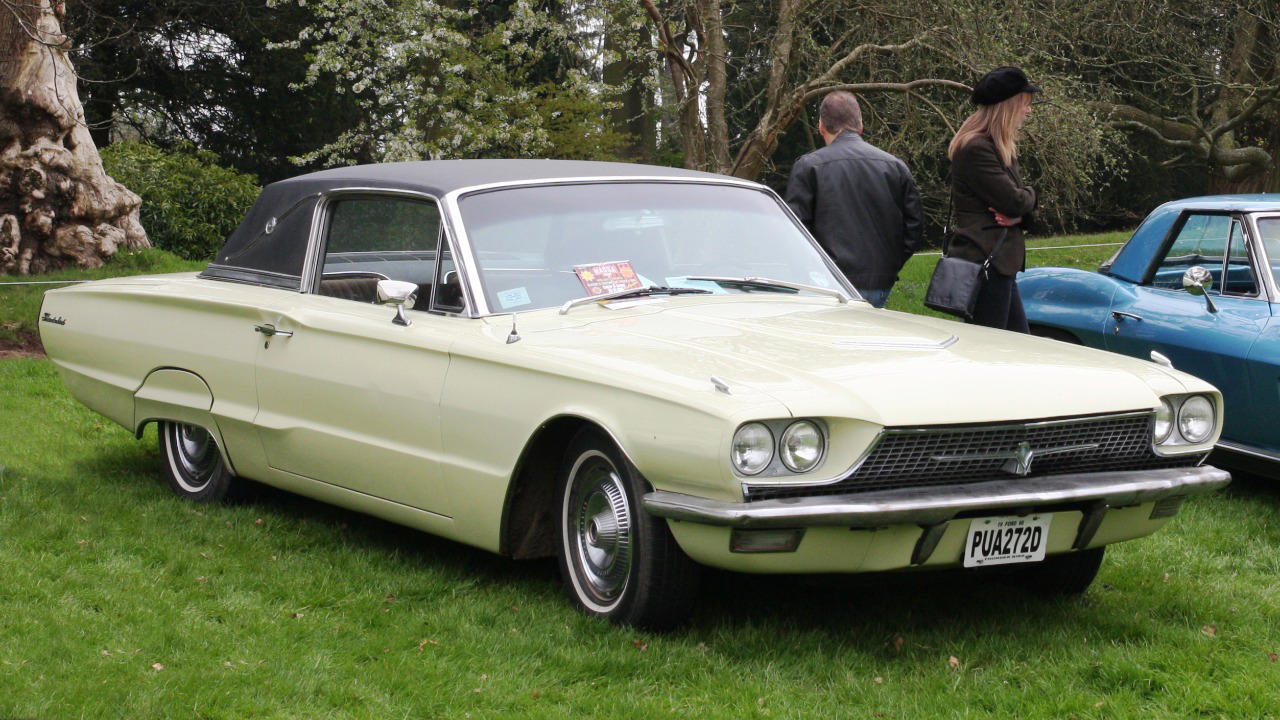



















The 1966 Ford Thunderbird looks refined but upkeep can catch new owners off guardThe 1966 Ford Thunderbird projects quiet confidence. Long, low sheetmetal, a crisply updated front end and a plush, gadget-filled cabin still give it a presence that modern crossovers cannot touch. Yet behind that refined image sits a car whose upkeep can surprise newcomers, especially those used to simpler classics. For buyers drawn in by the styling and the personal luxury story, the real question is not whether the Thunderbird looks the part. It is whether they are prepared for the weight, complexity and parts quirks that come with a mid-sixties flagship that tried to do everything for the driver. The appeal of a personal luxury icon The 1966 Thunderbird arrived as the last year of the fourth generation, with a frontal facelift under the direction of L. David Ash that replaced the earlier bumper-grille look with a more integrated nose. Period photos highlight the way that change sharpened the car and helped it age better than some of its contemporaries, especially in Town Landau and convertible form. Contemporary buyers could order a Ford Thunderbird Convertible with a big block Engine and a long list of comfort features. A later buyer guide for a 1966 Fordthunderbird Convertible Here describes the Ford Thunderbird Convertible as a true piece of Ford history, with the Thunderbird name attached to one of the brand’s most documented examples, complete with service records dating back to its original purchase. That level of documentation reflects how seriously many owners treat these cars. Modern listings still lean hard on that aura. One dealer advertises a 1966 Ford Thunderbird that comes fully loaded with factory options including air conditioning, power windows, power lock, power seats and a tilt steering column, described as a hallmark of Thunderbird innovation. Another seller markets a Ford Thunderbird Convertible as stunning and meticulously documented, underscoring how the model has shifted from daily driver to collectible object. How it drives: relaxed, heavy and surprisingly modern On the road, the 1966 car behaves like the personal luxury coupe it was meant to be. Owners who post long-term impressions on a detailed Ford Thunderbird Review at a site built on survey responses describe a very reliable drivetrain and relaxed highway manners. The big V8, automatic transmission and power steering combination suits long-distance cruising far more than back-road hustling. That character is baked into the chassis. In an online discussion about 1964 to 1966 Thunderbirds, one contributor on the 1964 to 66 Thunderbirds Car Forums at Edmunds argues that if a buyer wants a nimble cruiser, a Mustang is probably a better choice. The same writer calls these 60s Birds clumsy compared with lighter pony cars, a reminder that the Thunderbird was always closer in spirit to a big luxury coupe than to a sports car. Period styling choices reinforce that point. A later commentary on the 1966 Thunderbird Town Landau notes that the vinyl roof and fake landau bars of the Town Landau were part of a broader brougham fever, where visual cues of formality mattered more than outright performance. The result is a car that feels planted and secure but also heavy, especially in tight city streets or parking lots. Inside the Thunderbird: comfort with a cost The cabin is where the 1966 Thunderbird still wins hearts. Contemporary brochures and modern write-ups praise the wraparound dash, aircraft-style switches and deeply padded seats that make the car feel more like a lounge than a typical coupe. A later analysis lists a Very reliable drivetrain and a Power assist convertible top among the positives, while also warning that the car is Heavy compared to the first generation. That power top is a key part of the ownership story. The same write-up flags Potential complications if the power top fails, a polite way of saying that the complex hydraulic and electrical system can be expensive and time-consuming to repair. Owners of Ford Thunderbird Convertible models with the full power top mechanism often warn prospective buyers to verify that every stage of the cycle works smoothly before money changes hands. Video projects bring that complexity into sharp focus. In one long-running series on a 1966 Ford Thunderbird repair and refurbishment, the host spends Part after Part methodically chasing problems in the interior and electrical system. In Part 94, which is followed by Part 95 and at least 196 total segments in the broader playlist, the creator addresses Brake bleeding and tire balancing as part of a lengthy recommissioning. The sheer number of episodes illustrates how involved even a straightforward refurbishment can become. Rust, structure and what a “clean” car really means Rust is the first trap for many first-time buyers. In a widely shared thread titled Considering this 66 Thunderbird, a shopper posts photos of a potential purchase and asks whether it looks problematic. In the Comments Section, users like klompusjack and cobra93360 focus on the structural areas that matter most, pointing out that the rest of the car appears completely rust free and in great condition, then probing the underside and torque boxes for hidden issues. That exchange, preserved on Reddit, captures the anxiety around corrosion in a unibody car of this era. Unlike a body-on-frame pickup, the 1966 Thunderbird relies on its unibody shell for strength. Rust in the cowl, floorpans, rear substructure or the mounting points for the rear suspension can turn a seemingly decent car into a structural headache. Enthusiasts often advise using a magnet and a flashlight to check for filler and patchwork in those spots, since cosmetic paint can hide serious decay. Disassembly videos make that risk tangible. In an episode from Apr on the Auto Anatomy channel, the host returns to a Thunderbird project and starts disassembling the entire interior. As panels come off, the camera lingers on surface rust, old seam sealer and previous repairs that were invisible when the car was fully trimmed. That video, available on Auto Anatomy, is a reminder that a shiny dashboard and intact seat covers do not guarantee a solid shell. Mechanical quirks and parts availability Mechanically, the 1966 Thunderbird sits in a mixed zone. On one hand, the big block engines and three-speed automatics are shared with other Ford products and have a reputation for durability. On the other hand, suspension and steering parts specific to the model can be surprisingly difficult to source. Veteran owners in a thread titled Teach Me About 1966 Ford Thunderbirds recall that, as of Sep 21, 2021, some front end parts were NLA from mainstream suppliers. One poster remembers that 25 years ago ball joints were NLA from anyone, and that there were one or two companies that would take worn out ball joints and rebuild them. That kind of workaround still shapes how some shops approach chassis work on these cars. The same Teach Me About discussion on Ford Thunderbirds, continued on a second page that includes a post timestamped 9/21/21 9:36 p.m., shows how family history and nostalgia often outweigh rational concerns. A user with the handle ddavidv UltimaDork recalls that a grandmother drove one of these from about 1968 onward and that the car left a lasting impression. That emotional pull helps explain why buyers tolerate the extra effort required to keep them on the road. Electrical systems, power everything and hidden labor Electrical complexity is another source of surprise. By 1966, the Thunderbird was loaded with power windows, power seats, power locks and in convertible form a fully automatic top. Each of those circuits adds wiring, switches and relays that can corrode or fail after decades of intermittent use. Enthusiast projects show how that plays out in real garages. In the long-running repair and refurbishment series mentioned earlier, one episode from Jul focuses on comments from viewers and then moves into more brake and electrical work. The same creator later returns in a video from Jun to show the steering wheel and discuss how earlier fixes have held up, walking through the incremental progress that comes from chasing one small fault after another. That steering wheel segment appears around the 105 second mark in a clip that can be found at this link. Another project video that centers on a 1966 Ford Thunderbird repair and refurbishment, available at this channel, underscores the same theme. The host spends Part after Part tracing wiring, cleaning grounds and rebuilding switches, with the comments section turning into a running advice column. Owners watching these videos quickly learn that what looks like a simple electrical gremlin can involve hours of trim removal just to reach a buried connector. Driving costs and market expectations Market discussions on the used side frame the Thunderbird as a relatively affordable entry into 1960s luxury, provided the buyer accepts higher running costs. A general used car listing platform at Edmunds shows how 1960s cars sit far outside the normal depreciation curve, with condition and documentation driving value far more than mileage. Another tool at Edmunds appraisal lets owners plug in details to estimate retail and trade values, though for a niche model like the Thunderbird, real world prices often depend on how much a given buyer wants that specific car. In the grassroots forums, one user on Sep 21, 2021 notes that while purchase prices can seem low compared with muscle cars, ongoing expenses add up. Fuel consumption, insurance for a classic and the occasional large repair bill can easily erase the savings from a cheap initial purchase. That tradeoff is common across personal luxury coupes of the era, but the Thunderbird’s complexity pushes it further. Some owners try to control costs by doing as much work as possible at home. The detailed Ford Thunderbird Review at Carsurvey includes General Comments from a driver who lists the Year of manufacture as 1966 and explains that the first year of ownership involved catching up on deferred maintenance. That narrative matches the experience of many buyers who discover that a car which has seen mostly occasional use still needs a full service baseline. How enthusiasts vet a candidate car Given those realities, experienced Thunderbird fans have developed a checklist for evaluating potential purchases. The thread on 1964 to 66 Thunderbirds at Car Forums encourages shoppers to focus on rust free structure, complete trim and a functioning power top before worrying about cosmetics. The reasoning is simple. Paint and upholstery can be redone on a predictable budget, while missing trim or a dead top can consume thousands of dollars and months of hunting. In the Considering this 66 Thunderbird conversation on Reddit, commenters apply that logic in real time. They zoom in on the cowl, door bottoms and wheel arches, then ask for underside photos. When the original poster reports that the rest of the car appears completely rust free and in great condition, the replies shift to questions about service history and whether the power accessories all work. That sequence shows how structural soundness comes first, followed by mechanical completeness. More from Fast Lane Only Unboxing the WWII Jeep in a Crate 15 rare Chevys collectors are quietly buying 10 underrated V8s still worth hunting down Police notice this before you even roll window down The post The 1966 Ford Thunderbird looks refined but upkeep can catch new owners off guard appeared first on FAST LANE ONLY.