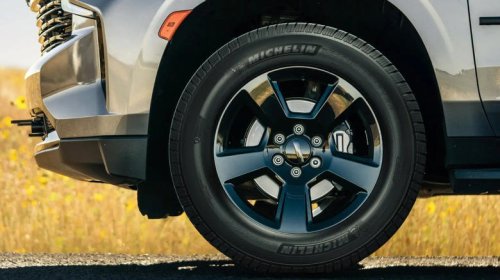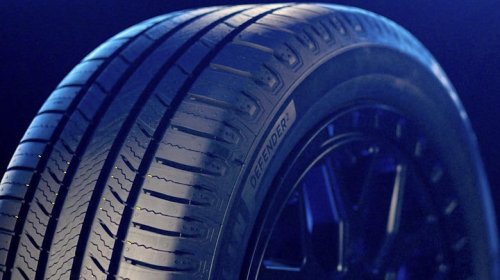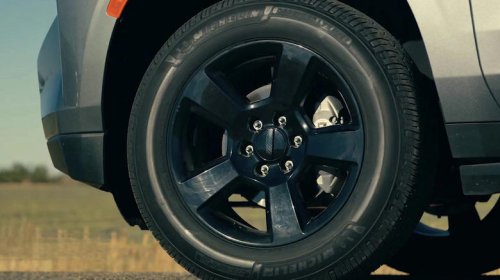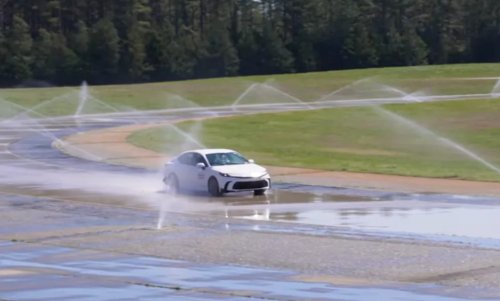
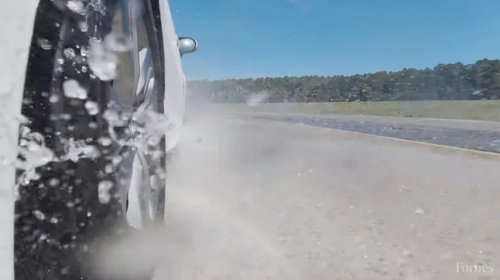
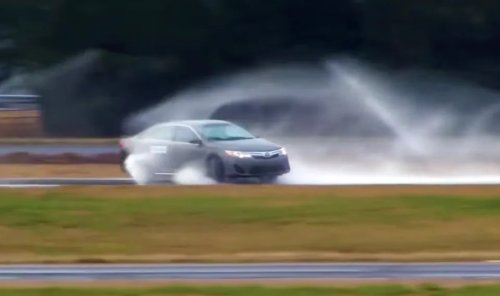
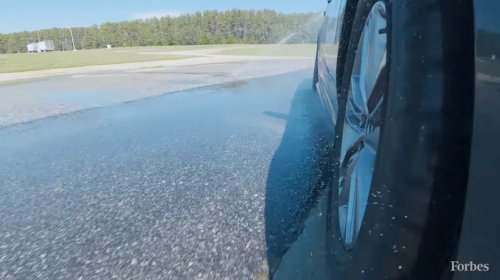
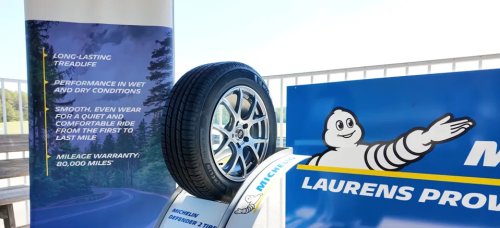



















Michelin's test track in Laurens, South Carolina, where we tested the Defender 2 tiresForbesIt's all too common: Buyers are told to buy a pair of new tires to replace a single damaged tire rather than just a replacement. Replacing both tires on the same end of the car where the tire was damaged will maintain wear consistency and protect the car's handling and suspension.This is where so many buyers do the clearly logical thing: They put those new tires on the car's front wheels and move the older, worn tires to the rear.It reasons, after all: Since most cars are either front wheel drive or all wheel drive, the new tires should go on the front, the end of the car that is doing most of the work, both steering and propelling the car.AdvertisementAdvertisementBut is this a mistake? It just might be.Putting The Front Tire Theory To the Test On A TrackMichelin invited Forbes to the company's proving grounds in Laurens, South Carolina to put this theory to the test. There, the company let us drive two of its test cars: A Toyota Camry outfitted with a set of new Michelin Defender 2 all-season tires on the rear wheels and a half-worn set of tires on the front wheels, and a Camry outfitted with new Defender 2 tires on the front wheels, half-worn tires on the rear.Then, we took each of the cars out on a track that resembled a highway in a downpour; water pooled on the pavement, creating slick conditions that would be challenging for any tire. With Derek Secord, senior subjective test driver at Michelin, in the passenger's seat, we set out on the track to get a feel for driving in rainy conditions and feel the performance of the new set of tires, both front-installed and rear-installed.Water is channeled away from the pavement as we driveNew Tires On The Rear: False Sense of Security?On our first lap around the wet track the Camry performed admirably. I pushed the car's speed, as Secord encouraged, but held on tightly to the steering wheel; I could feel the pull of the tires responding to the lack of traction. To keep up my speed I had to maintaining a lot of pressure on the steering wheel, easing off the accelerator when I felt the tires starting to slip—an innate response among most drivers who've driven in the rain.AdvertisementAdvertisementAfter a couple of laps, though, I was starting to feel the stress. Putting that much muscle into steering is a bit of a white-knuckle experience; it's when many drivers decide to either slow down or get off the road.But I could feel the tires doing their job, gripping the pavement when possible and channeling water away as needed. The third element was me: Feeling that response and adjusting as necessary to keep from losing control of the car.The moment we got into trouble: new tires on the front didn't provide enough feedback to let the driver know the rear tires had lost tractionFront Wheels With New Tires: A Better, Safer Experience?After those first few laps we swapped cars for another Toyota Camry equipped with Defender 2 tires, this time on the front wheels. Since this car is front wheel drive, I expected them to deliver muscular confidence on the wet track.And they did. Until they didn't.AdvertisementAdvertisementAgain, Secord encouraged me to get the car's speed up to about 40 MPH, admittedly a fast speed in standing water but not all that fast for an interstate highway in a rainstorm.The front tires gripped the pavement admirably, channeling away the water and maintaining solid contact. What they couldn't control was the performance of the rear tires: They lost traction and the car's momentum took control, spinning the car around in a full 180. It happened so fast I was surprised; I truly wasn't expecting it.But it all made sense: With the driver commanding more control over the front tires, the new tires on the rear are able to maintain control over things the driver can't.The Toyota Camry with new tires installed on the rear wheelsMaintaining Traction And Driver Feedback Will Prevent Spinouts"It's a fact of which end of the car hydroplanes first," Secord said. "And the feedback that the driver has from the vehicle. When you hydroplane on the front axle first, it's easy to see what's happening" because you have the steering wheel in your hands.AdvertisementAdvertisementI could feel the car's response more with the worn tires on the front than on the rear because the new tires did so much of the work for me. And that let me adjust continually to the road conditions.Where I got in trouble was feeling overconfident because the new tires on the front of the car were doing so much of the work for me. So when the worn tires on the rear overtook control, my control was lost. Even trying to regain control wasn't easy; all I really could do was brake."When the rear axle goes first, for an untrained driver, they're not used to the feedback of the vehicle yawing and moving around. And then the steering wheel isn't telling them much about what's happening either. So, you don't have as much time to react, and the vehicle inherently just wants to spin out," Secord said.The Michelin Defender 2 tire displayThe Right Tires Matter, TooWhen it's time to replace your tires, going with a set that will pair well with your worn tires is key; they will be relied on to do more of the work and will become those half-worn tires that will eventually move to the front wheels.AdvertisementAdvertisementMichelin's Defender 2 all-season tires are the company's best-sellers and for good reason; these premium tires deliver a confident performance in most road conditions and come with an 80,000-mile treadwear warranty.For drivers who need all-weather tires for driving in winter conditions including snow, we also tested the Michelin CrossClimate2 tires. While we didn't get to drive in snow, we did discover why its so important to pair the right tires with the conditions you'll face.And more impressively, we found out how much performance the right tires add to a car. I won't spoil it for you, but it was pretty stunning. Almost as surprising as spinning out with a brand new set of tires that I thought were properly installed. I'm just glad I now know the right way to add replacement tires to my car.This article was originally published on Forbes.com