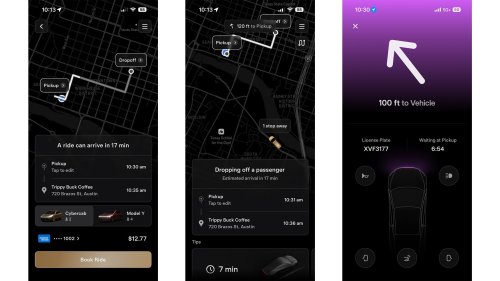
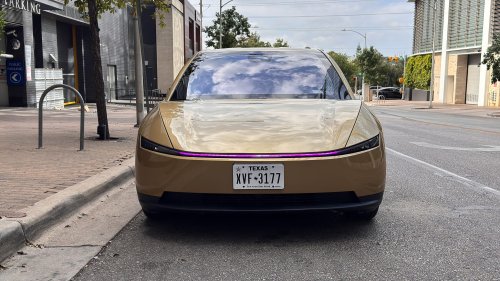
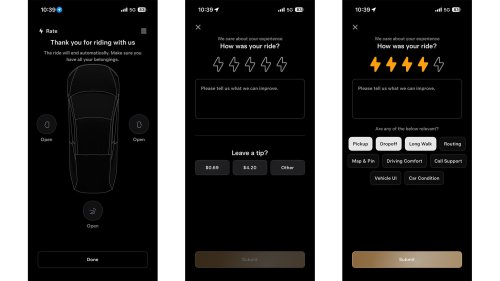
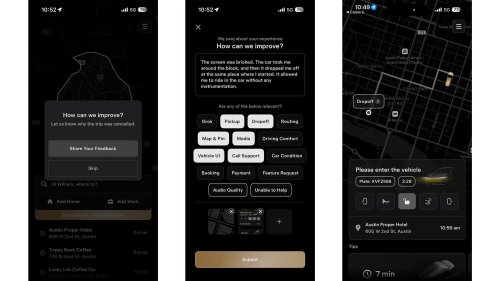
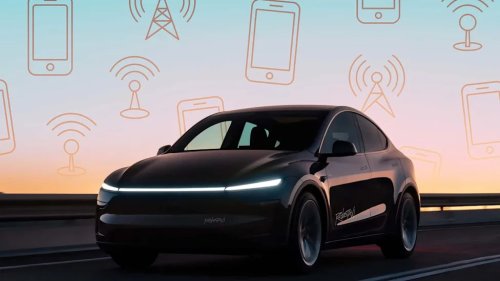
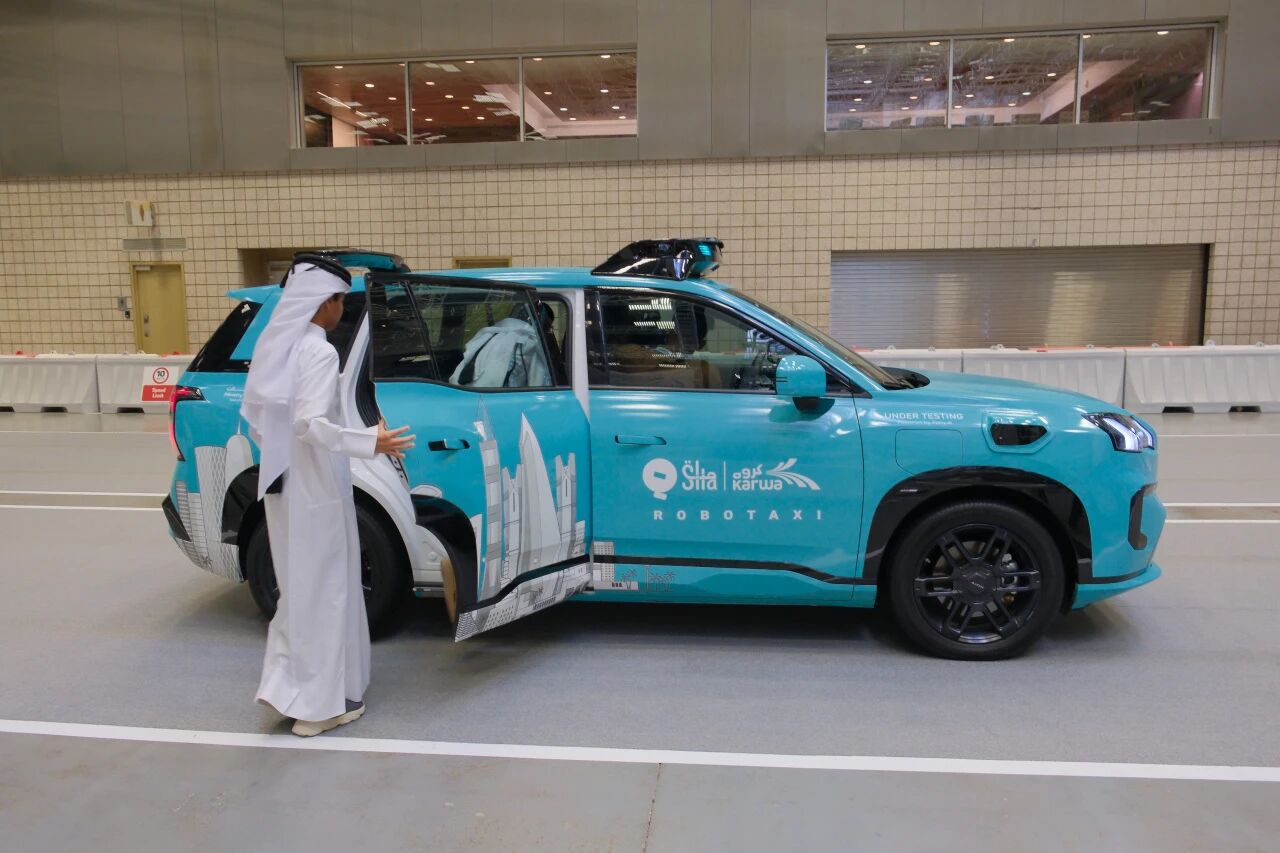
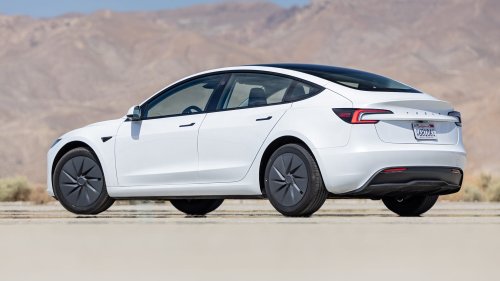
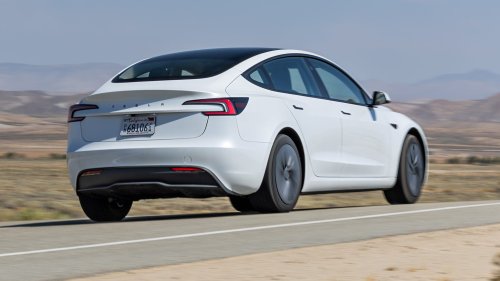
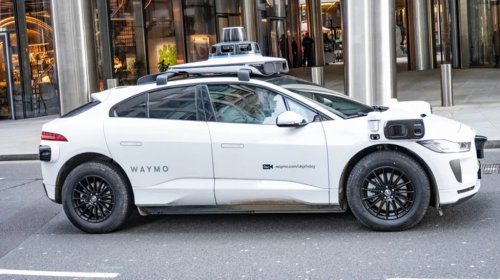
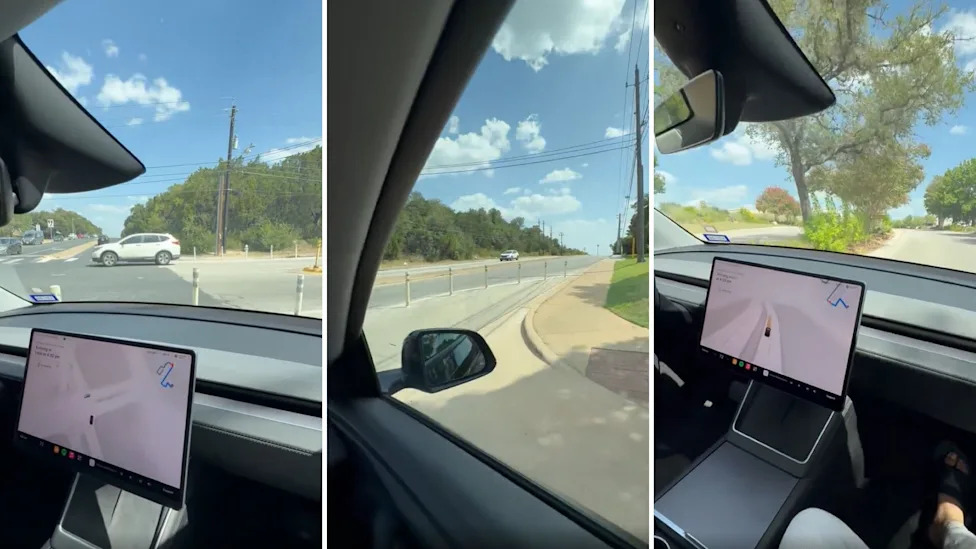
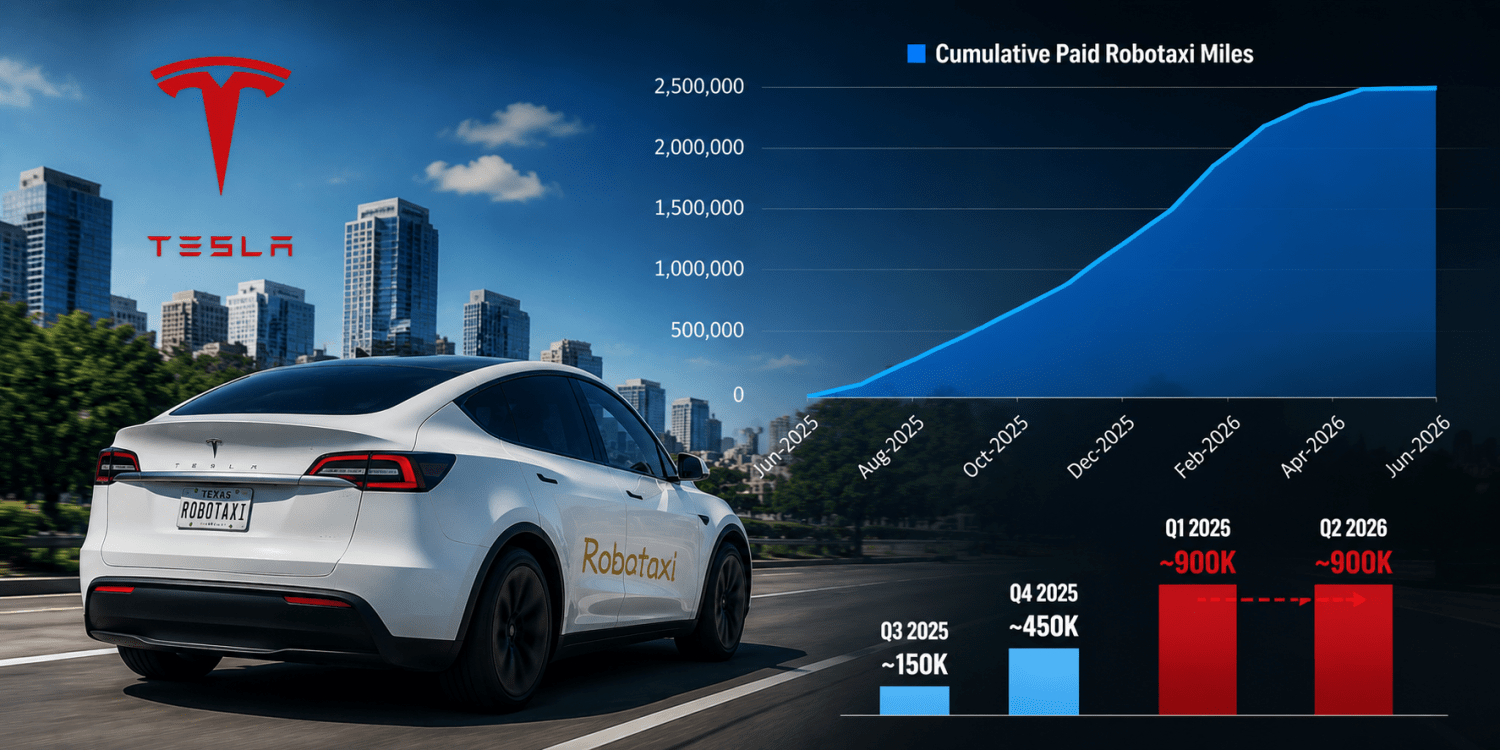
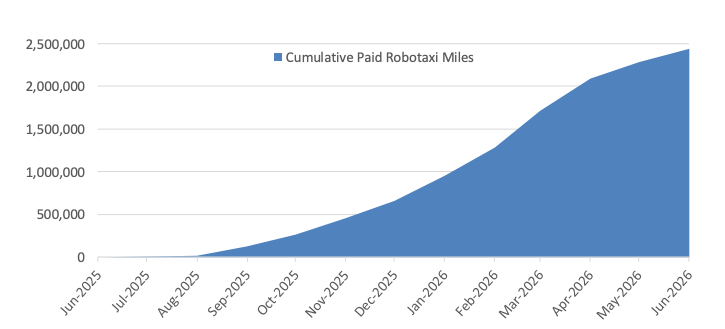
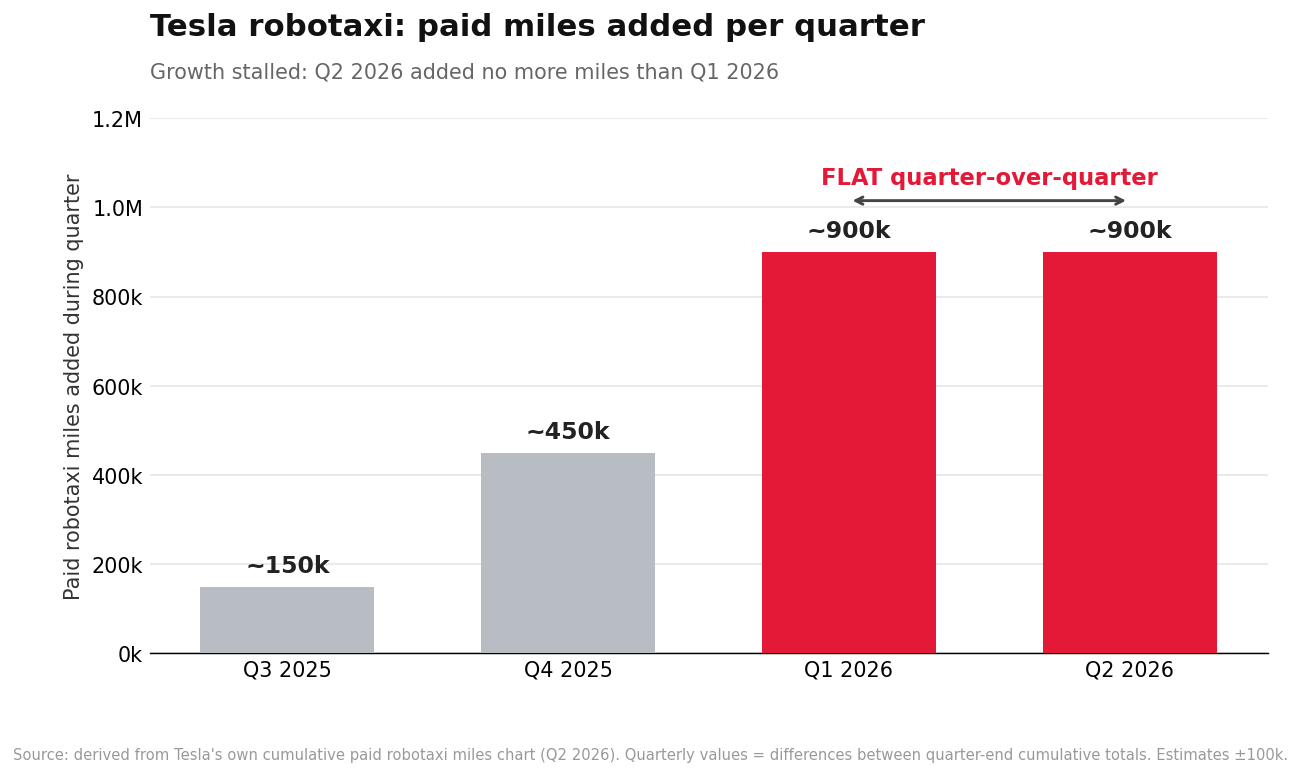
Tesla told shareholders this week that its Robotaxi service is expanding. The company’s own chart proves it isn’t. In its Q2 2026 update, Tesla leaned on a cumulative “paid Robotaxi miles” chart climbing past 2.4 million miles as its headline proof of momentum. But break that curve into quarters and the growth flatlines: Robotaxi added roughly 900,000 paid miles in Q2 2026, the same as it did in Q1. Why the chart looks better than the business A cumulative chart only goes one direction. It goes up. That’s the whole reason to put one in front of investors: the line always slopes to the top-right, no matter what’s actually happening quarter to quarter. The honest way to read it is to difference the quarter-end totals and ask how many paid miles the service added in each three-month window. Do that, and here’s what Tesla’s own numbers say: Advertisement - scroll for more content Q3 2025: ~150,000 paid miles added Q4 2025: ~450,000 Q1 2026: ~900,000 Q2 2026: ~900,000 Paid Robotaxi miles added per quarter, derived from Tesla’s cumulative chart in its Q2 2026 update. Q1 and Q2 2026 each added roughly 900,000 miles — flat. (Electrek) So the ramp was real through the end of 2025 and into early 2026. Then it stopped. Q2 added no more paid miles than Q1. The rate of growth didn’t accelerate. It plateaued. That’s the part the cumulative chart hides, and it’s the only part that matters if you’re trying to figure out whether this is a business scaling toward millions of rides or a pilot that leveled off. Adding cities on a map isn’t the same as scaling Tesla’s answer to the slowdown has been geography. On July 21, the day before earnings, the company added Robotaxi service areas in Tampa and Orlando and didn’t disclose how many vehicles it put in either one. But more dots on a map hasn’t meant more cars on the road. The active unsupervised fleet is roughly 21 vehicles across Austin, Dallas, Tampa, and Orlando. Austin peaked around 25 cars in late April and has since drifted down to about 17. We reported back in May that the Robotaxi fleet was actually shrinking, not growing, and the flat mileage in Q2 is what that shrinking fleet looks like on a spreadsheet. Spreading the same 20-odd vehicles across four metros instead of one makes for a better map and a worse service. The throughput didn’t move. Still a test, still with a monitor And, for the most part, these still aren’t driverless cars in the way Tesla’s marketing implies. Every “Robotaxi” ride in California runs with a Tesla employee sitting in the car as a safety monitor. That’s not a fleet operating on its own. It’s a supervised pilot with a paywall. Compare that to Waymo, which is doing hundreds of thousands of paid, genuinely driverless rides every week across several US cities, no one in the front seat. Tesla’s entire cumulative Robotaxi history, the full 2.4 million miles it just showed off, is a fraction of what Waymo turns over in a matter of weeks. That’s the gap Tesla is asking investors to look past while it points at a line going up. Electrek’s Take This chart vindicates what we’ve been reporting for months: Tesla’s Robotaxi is not scaling. It is, for now, a test program acting as a paid fare service. Tesla knows a cumulative chart is the friendliest possible way to show a business that’s stopped growing quarter over quarter, which is exactly why it’s the chart the company chose. The moment you convert it into the metric that counts, paid miles added per quarter, the “expansion” evaporates. Q1 and Q2 are the same. The fleet is smaller than it was in April. The cars still have a human babysitter. New cities on a slide don’t change any of that. Elon Musk has now missed his own short-term Robotaxi guidance three earnings reports in a row, and shareholders spent this quarter’s Q&A asking him why. The chart in the deck is the answer, if you read it correctly. Tesla has promised a million robotaxis on the road before. Several times. Until the paid-miles line starts bending back upward instead of settling into a straight slope, “expanding” is a claim the data doesn’t support. So here’s the question for the next earnings call: if the fleet is growing and the service area quadrupled, why did Q2 add the exact same mileage as Q1? If you’re driving an EV, powering it with home solar can cut your fueling costs to almost nothing. With electricity rates up almost 10% last year and expected to keep climbing, going solar is one of the best ways to protect yourself against rising costs. And with lease and PPA options, you can do it with zero upfront cost and start saving immediately. If you want to find the best deal, check out EnergySage. It’s a free service with hundreds of pre-vetted installers competing for your business, so you save 20 to 30% compared to going it alone. No sales calls until you pick an installer. Get your free quotes here. Stay up to date with the latest content by subscribing to Electrek on Google News. You’re reading Electrek— experts who break news about Tesla, electric vehicles, and green energy, day after day. Be sure to check out our homepage for all the latest news, and follow Electrek on Twitter, Facebook, and LinkedIn to stay in the loop. Don’t know where to start? Check out our YouTube channel for the latest reviews.



















 +51 others