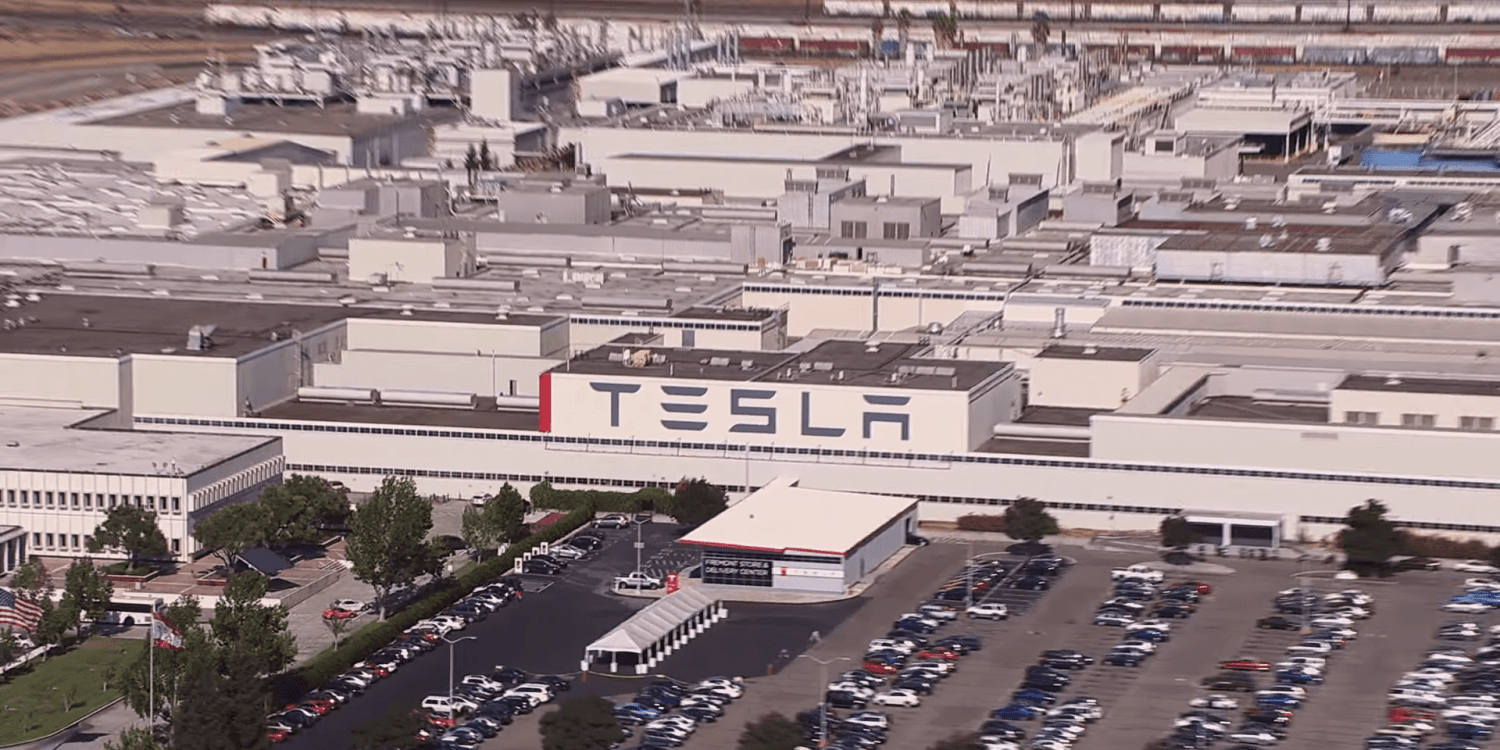
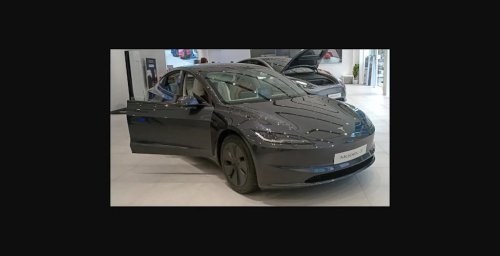
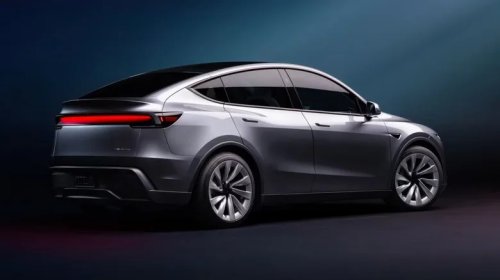
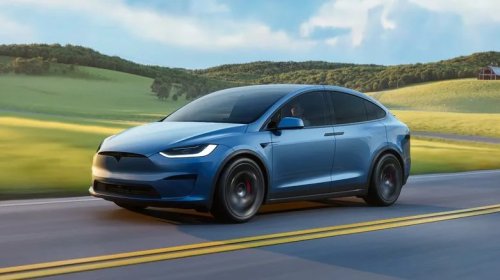
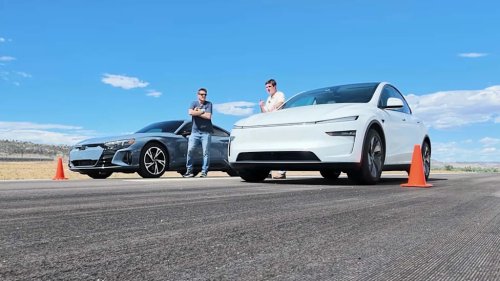
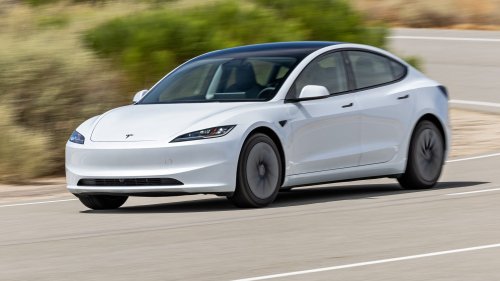
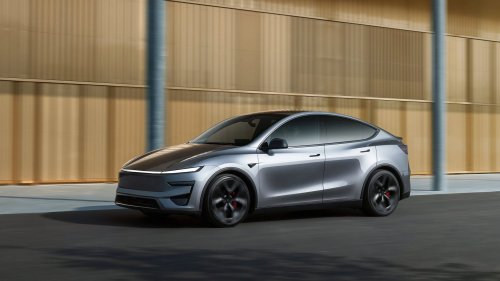
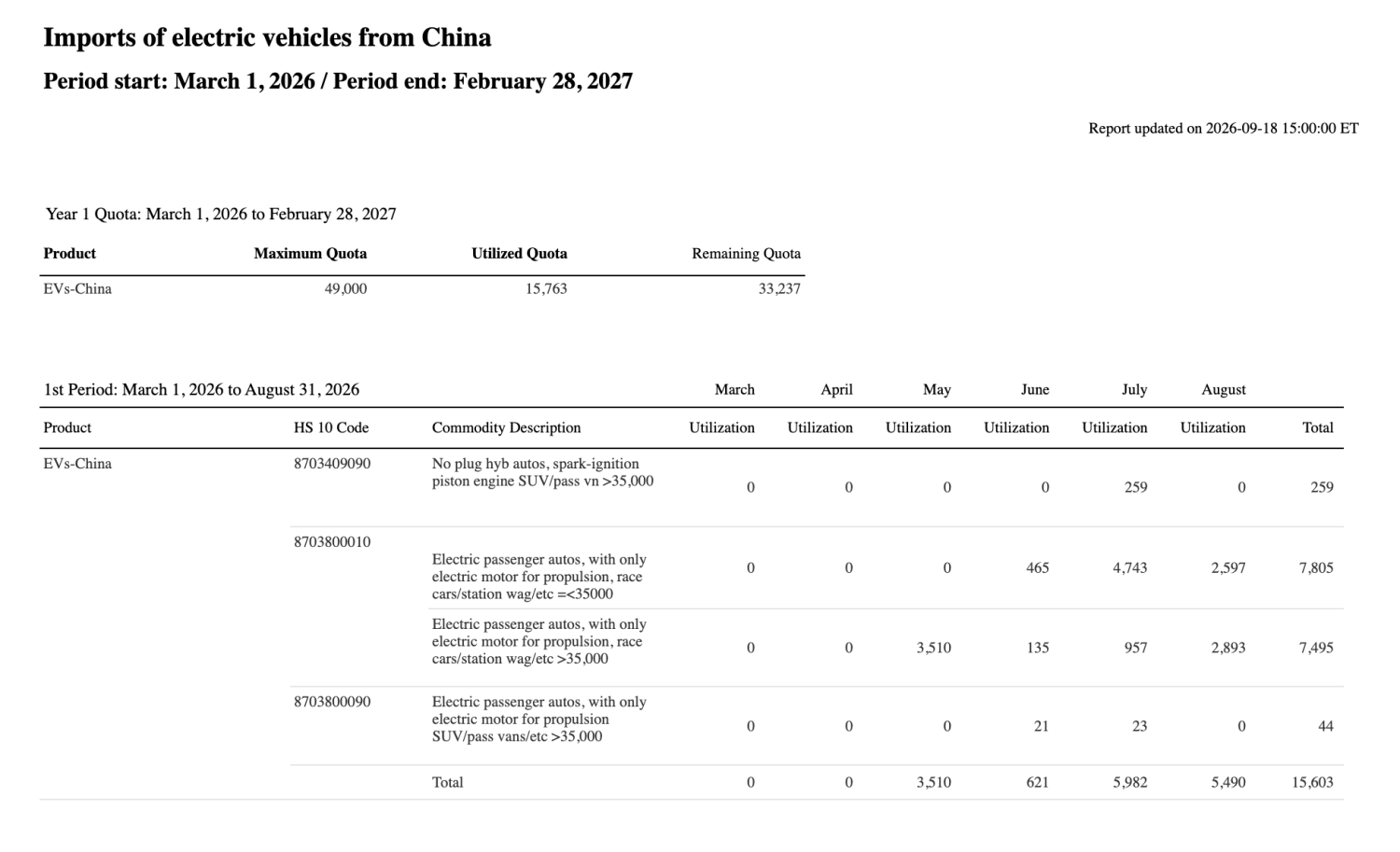
Canada has simply made the economics workable again That is a rather different story from the one that emerged when Ottawa announced in January that it would allow a limited number of Chinese-made electric vehicles into Canada at the country’s normal 6.1% tariff. The immediate reaction, particularly from Detroit, was about Chinese automakers gaining a foothold in North America. General Motors CEO Mary Barra called the policy a “slippery slope,” warning that Chinese manufacturers could use Canada as an entry point into a market closely tied to the United States. But there was already an American automaker familiar with that route. Tesla had been shipping vehicles from its Shanghai factory to Canada before Ottawa put a 100% surtax on Chinese-made electric vehicles in October 2024. In 2023, Tesla was preparing a Canada-specific version of the Model Y for export from Shanghai, and imports of automobiles from China through the Port of Vancouver jumped 460% that year to 44,356 vehicles. The 44,356 figure covered all automobiles, not Tesla alone, but Tesla was a significant part of the increase. There was nothing particularly exotic about Tesla’s decision. Shanghai had become one of the company’s most important production and export centers, sitting inside a dense Chinese supply chain for batteries, electronics and other EV components. If Tesla could build a vehicle there at a lower cost and ship it to a Canadian customer at a competitive price, the location of the factory mattered more to the accountant than the nationality of the company. Then Ottawa changed the calculation. Beginning Oct. 1, 2024, Canada added a 100% surtax to its existing 6.1% most-favored-nation tariff on Chinese-made EVs. Tesla shifted its Canadian supply away from Shanghai. The company had not suddenly decided that Shanghai was an inferior factory; the problem was that getting a Shanghai-built car into Canada had become much more expensive. That is what tariffs actually do. They don’t change what it costs to manufacture something in another country. They change whether the product can still be sold competitively after crossing the border. Now the arithmetic has changed again. Under the agreement announced in January, Canada removed the 100% surtax and established an annual quota of 49,000 China-made EVs that can enter at the 6.1% tariff. The first half-year allocation was 24,500 vehicles, and unused capacity was allowed to roll into the next period. Ottawa calls the arrangement managed market access, and the government has made clear that it wants the policy to encourage investment and participation in Canada’s EV industry rather than simply open the gates to unlimited Chinese imports. Tesla was ready In May, it began selling a Shanghai-built Model 3 Premium Rear-Wheel Drive in Canada for C$39,490, or roughly US$28,800. That was dramatically below the price of the Model 3 configurations available when Tesla had shifted Canadian supply away from China. The vehicles are not identical configurations, so the comparison should not be treated as a straight price cut on the same car, but the difference was large enough to make the economics of Shanghai obvious. Tesla’s China-built Model 3 also does not qualify for Canada’s federal EV purchase incentive because China does not have a free-trade agreement with Canada. That makes the sticker price even more significant. Tesla is not relying on the full Canadian subsidy to make the car look inexpensive; it is using a lower-cost production base and a much lower tariff. The Canadian government does not publish quota use by automaker, so it would be wrong to put a precise Tesla number on the imports. What Ottawa does report is that 15,603 China-made EVs entered Canada under the preferential arrangement between March 1 and Aug. 31. The first allocation was 24,500 vehicles, leaving 8,897 unused slots to be carried into the second period. With that carryover, 33,397 vehicles were available from Sept. 1 through Feb. 28, 2027. Industry reporting has identified Tesla as the dominant user of the quota so far. Other manufacturers are beginning to look at the Canadian market, but they do not start from the position Tesla has enjoyed for years. Tesla already has Canadian stores, service operations, charging infrastructure and a customer base. A Chinese automaker entering Canada has to build much of that from scratch. This is where the Canadian experiment becomes more interesting than the original argument about Chinese cars. No one said a company has to be Chinese to take advantage of Chinese manufacturing economics. Tesla is headquartered in the United States. Its Shanghai factory is in China. The Model 3 going to a Canadian customer can therefore be American in brand, Chinese in place of manufacture and global in its component supply chain. There is no contradiction in that. This is simply how the modern automobile industry operates. It also makes the protectionist argument considerably more complicated. If Canada had kept the 100% surtax, Tesla could still have sold cars in Canada. It just could not have used Shanghai as easily as a source of supply. Fremont and other Tesla factories could serve the market instead, but at a different cost. Once the tariff dropped back to 6.1%, Tesla had an economic reason to reconsider Shanghai. The factory never stopped being competitive. The Canadian market stopped being accessible to it. There is a larger issue here that has little to do with Tesla’s corporate identity. China’s advantage in electric vehicles is not confined to the companies whose names appear on Chinese badges. It is built into the industrial ecosystem around them. Battery production, materials processing, component suppliers, electronics, manufacturing equipment and logistics have developed at enormous scale. Tesla benefits from that ecosystem in Shanghai in much the same way that Chinese automakers do. Is Tesla a Chinese EV? That is why the North American debate over Chinese EVs cannot really be reduced to a contest between Chinese and Western brands. The production system itself has become global, and companies will use whichever part of it gives them the best economics. Tesla is particularly well placed to do that because it has factories in several regions and can move production and exports around changing trade conditions. Shanghai is not merely a factory for Chinese customers. It is an export base, and Canada is once again one of the markets it can serve from there. For Canadian consumers, the attraction is fairly straightforward. A Model 3 priced at about US$28,800 before taxes and other costs occupies a very different part of the market from an EV approaching US$60,000. The more affordable car is likely to generate more interest in electrification than an expensive one, particularly in a country where consumers have been dealing with high vehicle prices and where EV adoption still has room to grow. Canadian manufacturers see the other side of that equation. A lower-priced imported EV puts pressure on domestic production and on manufacturers that have invested heavily in North American factories. The 49,000-unit ceiling keeps the immediate threat relatively small, but Ottawa has also indicated that the arrangement is intended to attract investment and will evolve over time. The government is not treating the quota as a permanent wall. That is probably why Barra’s warning should not simply be dismissed because Tesla, rather than BYD, turned out to be the first big beneficiary. Her concern was about the creation of a foothold. Tesla already had one. It had customers in Canada. It had stores and charging infrastructure. It had experience selling electric vehicles there. What it lacked after 2024 was an economical way to use one of its most productive factories to serve that market. The 6.1% tariff restored that option. Canada raised tariffs to protect its automotive industry from the growing strength of China’s EV manufacturing sector. Two years later, an American company is using a Chinese factory to put a substantially cheaper electric vehicle back into the Canadian market. Whether that becomes the slippery slope Barra warned about is still an open question. The quota is small compared with Canada’s overall vehicle market, and the first allocation was not even fully used. Chinese brands still have to establish themselves, and Canada can adjust the rules if the experiment produces results Ottawa does not like. But there is something worth watching in what Tesla has already done. The company has shown that the important question is not necessarily whether a car is Chinese or American. It is where the car can be built competitively, what it costs to get it into a particular market and what tariff the customer has to absorb. Canada has merely made the economics work again. Comments? Feedback? Send me an email: tribs.tribdino@gmail.com



















 +49 others