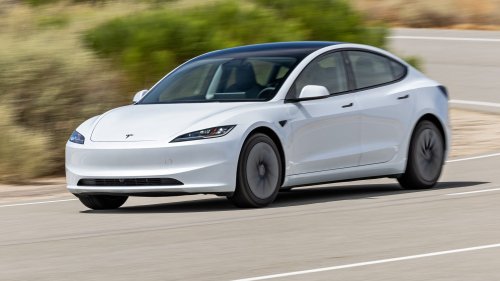
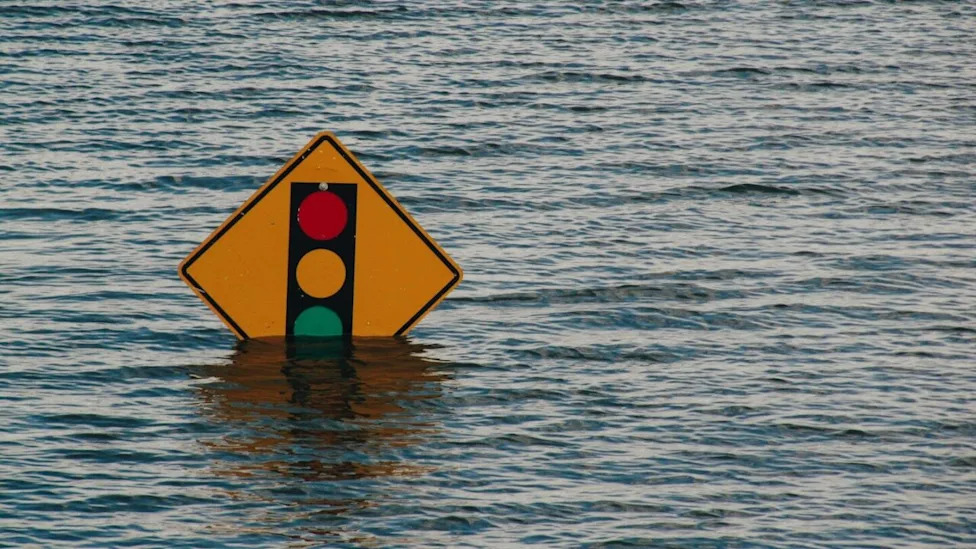
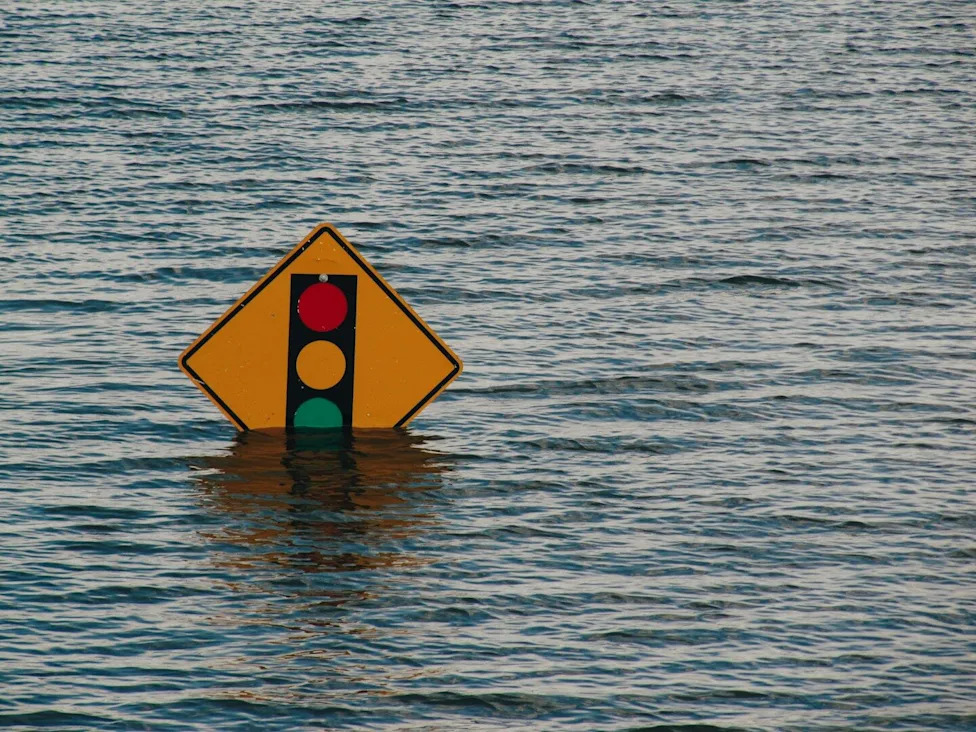


















Watch: A Tesla Floated Away in New Haven’s Flash Flood. The Real Warning Comes Weeks Later.The Auto WireJohn LloydTue, September 22, 2026 at 7:30 PM UTCAdd us on Google1 / 2Watch: A Tesla Floated Away in New Haven’s Flash Flood. The Real Warning Comes Weeks Later.Weight is supposed to be an advantage in bad weather. More mass generally means more grip, more stability, more resistance to being pushed around by moving water. A flash flood in New Haven, Connecticut this past weekend exposed the limits of that assumption. A Tesla, one of the heavier sedans on the road, didn't grip the pavement when the water rose around it. It floated.The storm hit southern Connecticut on September 13, dropping more than eight inches of rain in some spots and triggering flash flooding across the region. In New Haven, the worst of it pooled near Temple Street and Union Avenue by the train station, where standing water topped a foot and poured back out of the storm drains faster than the system could swallow it. Buses stalled. Cars stalled. One driver, Veronica, told WFSB she was taking her grandson and his friends to the train station when the water came up around her: "There was a little bit of water and we were driving through it and it was coming out of the sewers and we couldn't stop at that point so we kept going and now my car is stalling." A few blocks over, a red Tesla did something more dramatic than stall. Video captured by Storyful contributor Jacqueline Pawlowski, and shared widely on Instagram by the Daily Mail, shows the car easing into the floodwater, then losing contact with the road entirely and drifting sideways down the street on the current. The driver got out safely and later recovered the car once the water dropped. First responders spent the day repeating the same line to drivers across the state: turn around, don't drown.Here's the part that's easy to miss watching the clip: the Tesla floated because of what's underneath it, not in spite of it. Every current EV battery pack is a large, flat, sealed box bolted to the floor of the car — sealed against water intrusion by design, because a leak into a charged high-voltage battery is a fire hazard, not just a stalling hazard. That same seal is what lets the pack act like a pontoon the moment the car loses contact with the road. Pair a sealed underbody with a tightly sealed cabin — EVs are built airtight for aerodynamics and range — and you get a vehicle that traps enough air to float, current and depth permitting. A gas car with an open engine bay tends to flood and settle in place. A sealed EV can go for a ride.AdvertisementAdvertisementThe floating is the visible danger. The one that plays out over the following days is not. NHTSA's guidance on hybrid and electric vehicles states plainly that batteries in hybrid and electric vehicles "are highly corrosive" and "should not be exposed to standing water," warning that flood damage can cause an "immediate or delayed release of toxic and/or flammable gases and fire" — sometimes days or weeks after the water is gone. Tesla's own owner's manual tells drivers whose car has been submerged to treat it like an accident with their insurer, avoid driving it, and tow it at least 50 feet from any structure until it's inspected. The Auto Wire has covered this exact pattern before — flooded EVs catching fire well after a hurricane had already passed — and Florida fire crews were still warning owners about it a year later.That delay is what makes a flooded EV a different kind of used-car risk than a flooded gas car. A soaked engine either dies or it doesn't, and you usually find out within a drive or two. A soaked battery pack can pass a test drive, sell at auction with a clean-looking title if the flood damage was never properly reported, and fail — or ignite — weeks later in someone else's garage. Insurers are increasingly totaling EVs after any meaningful submersion for exactly that reason: the real risk doesn't show up on a test drive. A drowned engine dies on the spot. A drowned battery can wait weeks to tell you it's dying.The New Haven video will keep circulating because it's dramatic — a car adrift on a city street, a driver wading after it once the water calms. But the lesson worth keeping isn't about one driver's decision to cross deep water. It's about what a modern EV does the instant it loses contact with the road, and what it can still do long after the tow truck hauls it away. If you're shopping for a used EV and it spent any time in a flood zone this year, that history matters more than it ever did for a gas car. Would you trust a flood-damaged EV that "checked out fine," or is that exactly the kind of risk you'd walk away from?The post Watch: A Tesla Floated Away in New Haven's Flash Flood. The Real Warning Comes Weeks Later. appeared first on The Auto Wire.