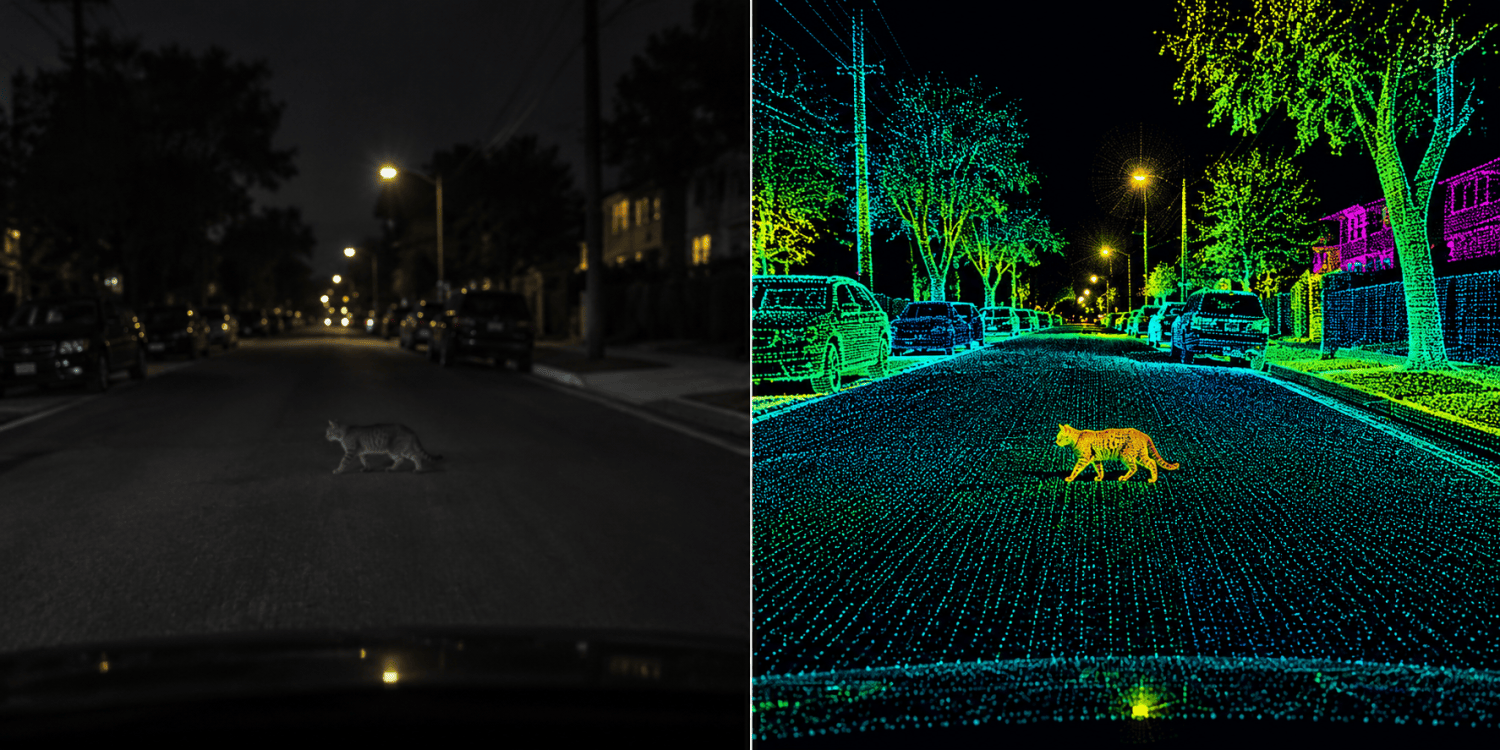
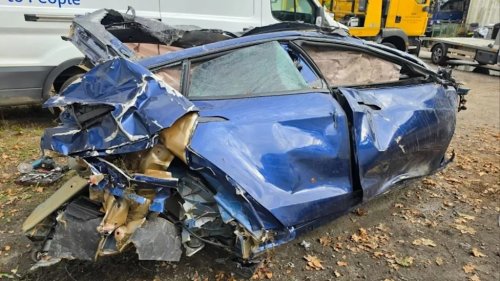
Tesla Autopilot Crash Data: The Regulatory Gap Every Driver-Assist Owner Should KnowTesla is throwing a party in Austin on September 3 to launch the Cybercab, a two-seat pod with no steering wheel and no pedals. The invitation, sent to sweepstakes winners from its robotaxi app, promises attendees a look at full autonomy. It also specifies that your plus-one can't be a content creator, which tells you roughly how much of the evening is engineering and how much is stagecraft.Worth remembering, as the confetti falls, what happened the last time a court asked Tesla what one of its cars saw before it hit someone.Five seconds nobody could findOn April 25, 2019, a 2019 Model S running Enhanced Autopilot went through a T-intersection in Key Largo at roughly 62 mph and struck a parked Chevrolet Tahoe. Naibel Benavides Leon, 22, was killed. Dillon Angulo was critically injured. The driver, George McGee, had dropped his phone and bent down for it.AdvertisementAdvertisementThe lawsuit that followed turned on a single artifact: the collision snapshot. Not the airbag module. Not the speed trace. The snapshot is what the Autopilot computer wrote about its own perception in the seconds before impact — the object list, the planned path, the camera frames. It is the difference between knowing a car was going 62 and knowing whether the car understood there were human beings in front of it.Related ArticlesVolkswagen Wants an American Pickup Truck by 2030 – and Might Need Ford to Dodge a Tariff It Basically InventedLexus Australia Boss Wants Car Data Rules as Strict as Safety StandardsFor years, Tesla's position was that it could not produce that file. Then a security researcher who works under the handle @greentheonly, and who had previously collected Tesla bug bounties, sat down with the car's Autopilot computer and pulled the snapshot off it. Along with it came the server acknowledgment showing Tesla's own systems had received the file within moments of the crash. Court filings in the case establish that the local copy on the vehicle was subsequently flagged for deletion as part of normal post-crash handling.On August 1, 2025, a Miami federal jury found the Model S was sold with a defect that legally caused the harm, assigned Tesla 33% of the fault, and awarded $19.47 million to the Benavides estate, $23.1 million to Angulo, and $200 million in punitive damages. On February 20, 2026, Judge Beth Bloom denied Tesla's motions to gut or retry the case, finding the trial evidence "more than supports" what the jury did. The full docket is public. Tesla is headed for the Eleventh Circuit, and has argued a pretrial agreement caps punitives at three times compensatory — which still leaves a nine-figure number.Why the file survived, and why that's not a Tesla quirkHere's the part that actually teaches you something, and it isn't about Tesla specifically.AdvertisementAdvertisementOn flash storage, "deleting" a file usually doesn't scrub anything. The filesystem removes the pointer that says where the data lives and marks those blocks available for reuse. Until something writes over that physical space, the bytes sit there intact. This is first-week material for anyone doing digital forensics, and it's why a laptop and the right tooling can recover a file that a device swears is gone.Which means two things. First, a car's ADAS computer is a storage device that behaves like any other storage device, and "we no longer have it" and "it cannot be recovered" are very different statements. Second — and this is the part owners should internalize — every mile the car is driven after a crash is another chance for those blocks to get overwritten. Evidence in a modern car has a shelf life measured in ignition cycles.The regulatory hole you're standing inFederal law does govern crash data. Part 563 of Title 49 sets uniform rules for event data recorders: which elements get captured, how they're formatted, and — crucially — it requires manufacturers to make sure a commercially available tool exists that can read them. That's why an independent reconstructionist with a Bosch CDR kit can pull a delta-V and a throttle trace from almost any car in the country without the automaker's permission.NHTSA is expanding that. A final rule published in December 2024 stretches EDR pre-crash capture from five seconds at 2 Hz to twenty seconds at 10 Hz — a forty-fold increase in resolution over the run-up to a wreck. Compliance was set for September 1, 2027, and the agency has since proposed delaying it a year after petitions from the industry.AdvertisementAdvertisementNow the hole. Part 563 covers vehicle dynamics. Speed, brake application, accelerator position, belt status, airbag deployment, crash pulse. It says nothing about perception. There is no federal requirement that an automaker record what its driver-assistance system detected, no required format for that data, no survivability standard for it, and no obligation whatsoever to make a tool available so anyone outside the company can read it.So in a crash where the entire question is what the computer saw and what it decided to do about it, the only data with a legally guaranteed access path is the data that can't answer the question.What NHTSA does and doesn't knowThe agency's window into these systems is the Standing General Order on crash reporting, which requires manufacturers to report crashes where an automated or Level 2 system was engaged within 30 seconds of impact. The third amendment, effective June 16, 2025, loosened it: the one-day deadline for the most serious crashes became five days, part of a broader push to reduce reporting burden. NHTSA has since sought comment on streamlining it further.Those reports are self-reported by the manufacturer, populated from the manufacturer's own telemetry, on the manufacturer's own reading of what its software was doing. They are also how defect investigations start. NHTSA opened PE25012 on October 7, 2025, covering an estimated 2,882,566 Teslas equipped with FSD (Supervised) or FSD (Beta), after logging 58 incidents involving cars "proceeding through red traffic signals" and driving the wrong way. A separate FSD probe into reduced-visibility crashes was upgraded to an Engineering Analysis in March 2026.Practical takeaways, and they are not theoreticalIf you own anything with a Level 2 system — a Tesla, a Ford with BlueCruise, a GM with Super Cruise, a Honda with Sensing — here's the operational advice.AdvertisementAdvertisementDo not let the car get driven or repaired after a serious ADAS-involved crash. Not to the body shop under its own power, not around the yard. Every power-up risks overwriting.Fight the salvage clock. Your insurer's incentive after a total loss is to take title and move the car to auction, where it gets parted out. That timeline runs in weeks. Once the ADAS computer is in a bin in another state, the evidence is gone in the ordinary course of business, and nobody has done anything wrong. A written preservation demand to your carrier, early, is the cheapest insurance you'll ever buy.Related ArticlesDunlop Is Warning California About Its New Tire Rule. The Vote Already Happened.Volkswagen's CEO Called It a 'Mega-Crisis.' His Own Numbers Say the Real Enemy Is the Org ChartAsk for the ADAS module specifically, not "the crash data." A standard EDR download will produce a tidy report that says nothing about perception. If your attorney doesn't know the difference between the restraint control module and the autonomy computer, get one who does.AdvertisementAdvertisementUnderstand comparative fault math. The Miami jury put 33% on Tesla. That's not a rounding error — it's the whole architecture of these cases. Two thirds of the blame stayed with human conduct, and a third moved because the plaintiffs could show the machine's own record of what it perceived. Without the snapshot, that third has nowhere to attach.Which brings us back to AustinThe Cybercab has no steering wheel. There is no inattentive driver to absorb 67% of the fault. Tesla builds it, Tesla's software drives it, Tesla operates the fleet, and Tesla holds the only copy of what it saw.That's not an accusation. It's a structural description, and it's true of Waymo and every other operator too. In a driver-assist crash, at least there are two parties with an interest in the truth. In a driverless one, the defendant is the sole custodian of the evidence, in a data category with no federal access rule attached to it.Event data recorders got standardized in 2006 after roughly a decade of litigation forced the question. Perception data is sitting about where EDR data was in the late nineties: technically excellent, commercially proprietary, and legally unreachable unless somebody sues and gets lucky with a researcher and a laptop.AdvertisementAdvertisementThat's a poor way to run an evidentiary system. It's a worse one to scale to a fleet.Join our Newsletter, follow our Instagram page, and connect with us on Facebook.

















 +36 others







![Not sold on Tesla Powerwall? There are great battery alternatives out there [update]](https://cdn.topcarnews.net/thumb/id/aHR0cHM6Ly9pMC53cC5jb20vZWxlY3Ry-ZWsuY28vd3AtY29udGVudC91cGxvYWRz-L3NpdGVzLzMvMjAyNi8wNy9ob21lLXNv-bGFyLWJhdHRlcnkucG5nP3c9MTUwMCZh-bXA7cXVhbGl0eT04MiZhbXA7c3RyaXA9-YWxsJmFtcDtzc2w9MQ/18e81f395a77dbb42269ab5e106fea41.png?t=20261006&post_id=68280)