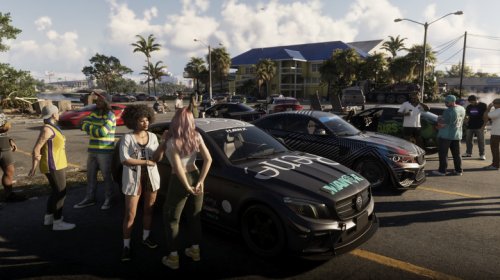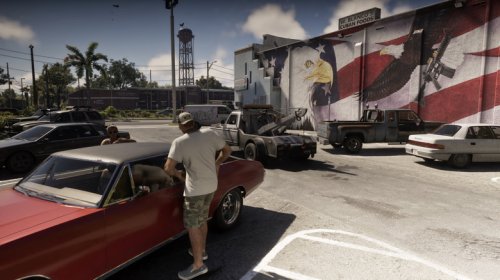
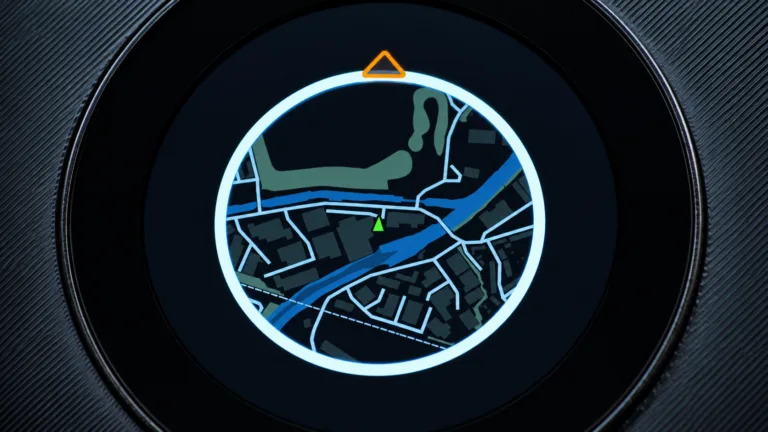



















Someone Turned a $20 Chip Into a Real-Life Need for Speed Underground 2 MinimapMotorBiscuitAlex HarringtonSun, September 20, 2026 at 8:06 PM UTCAdd us on GoogleSomeone Turned a $20 Chip Into a Real-Life Need for Speed Underground 2 MinimapVideo game nostalgia usually stays on the screen. Andy Valentine, who builds car tech under the YouTube channel Garage Tinkering, decided that wasn't good enough and spent roughly a month turning the corner-of-screen minimap from Need for Speed Underground 2 into a working GPS display for his real Nissan 350Z (he's got taste). The result runs on a microcontroller that costs about as much as a tank of gas, and it does something no hobbyist project seems to have pulled off before: real-time satellite navigation, styled like a 2004 street racer, rendered on hardware that was never supposed to handle it.The chip in question is the ESP32-P4, paired with a 3.4-inch Waveshare display running at 800×800 pixels. That combination is the most capable option in the ESP32 family. And that's important because everything Valentine tried to build depended on pushing that hardware past its comfort zone. He sees the whole minimap as one piece of a larger digital dashboard project for the 350Z, styled entirely after Underground 2's neon-and-HUD aesthetic, so it made sense to build the navigation display in the same visual language as the gauges around it.Why a $20 Chip Needed 236GB of Map DataThe big problem is that a microcontroller can't render a live map the way a phone or a car's built-in nav system does. There's no horsepower for that kind of on-the-fly graphics work, so Valentine had to fake it by prerendering the entire map in advance and feeding the chip only small slices of it as the car moves. He used QGIS, a geospatial mapping tool, to build out coverage for more than half of the United Kingdom's road and trail network at zoom level 16, pulling road and terrain data from Ordnance Survey and points of interest like airports, seaports, car parks, and service stations from the UK Department for Transport.AdvertisementAdvertisementFuel stations turned out to be the outlier, since no single UK dataset tracks them properly. Valentine worked around it by mining OpenStreetMap's full country dataset with a Python script hunting for locations tagged "amenity=fuel," converting each hit into usable coordinates whether it appeared as a single point or the outline of a building.Once the source data was in place, QGIS chopped the whole map into roughly 2.5 million individual tiles, and the numbers involved are genuinely ridiculous. Turning the raw output into tiled images took about 35 hours of processing. Reformatting all of it into a file type the ESP32 could actually read took another 18 hours. Copying the finished 236GB library onto an SD card took a further 22 hours on top of that, meaning the map itself was days in the making before a single line of navigation code even ran.Getting the Map to Move Without Choking the ChipStorage was only half the fight. An ESP32 can't hold every tile in memory at once, so Valentine built the system to load new tiles dynamically based on the direction of travel, since each tile takes about a tenth of a second to pull from the SD card. Loading everything at once simply wasn't an option on hardware this modest."If we can't do it on this, it's not doable on the SP32, frankly," he said.AdvertisementAdvertisementHis first working version rotated the entire map to match the direction the car was pointing, mimicking Underground 2's on-screen minimap exactly. It also made the display stutter badly, because rotating a large grid of tiles in real time was more than the chip could smoothly handle. The fix was to flip the logic: the map now stays locked north-up, using a NEO-6M GPS module for positioning, while a rotating car icon shows heading instead. It's a small difference from the source game's look, but it bought back the smoothness the project needed, all running on C++ code built around the LVGL graphics library.Real-world testing went about as well as it could, honestly, correctly placing Valentine in a parking lot on first boot, tracking him accurately through a roundabout and a hard corner, and successfully flagging a nearby petrol station as he drove past it. The build isn't fully installed in the 350Z yet, and Valentine has said he plans to spend the coming weeks getting it properly integrated alongside the rest of his Underground 2-inspired dashboard, complete with 3D-printed housings and custom circuit boards.What makes this really interesting, though, isn't just the novelty of a video game HUD escaping into the real world. It's a reminder of how much untapped capability sits in cheap embedded hardware once someone refuses to accept that a 'chip can't handle that'.Nobody needs a Need for Speed minimap to get to work on time, but this is as badass a mod as it can get if you grew up driving a green and purple Fairlady.