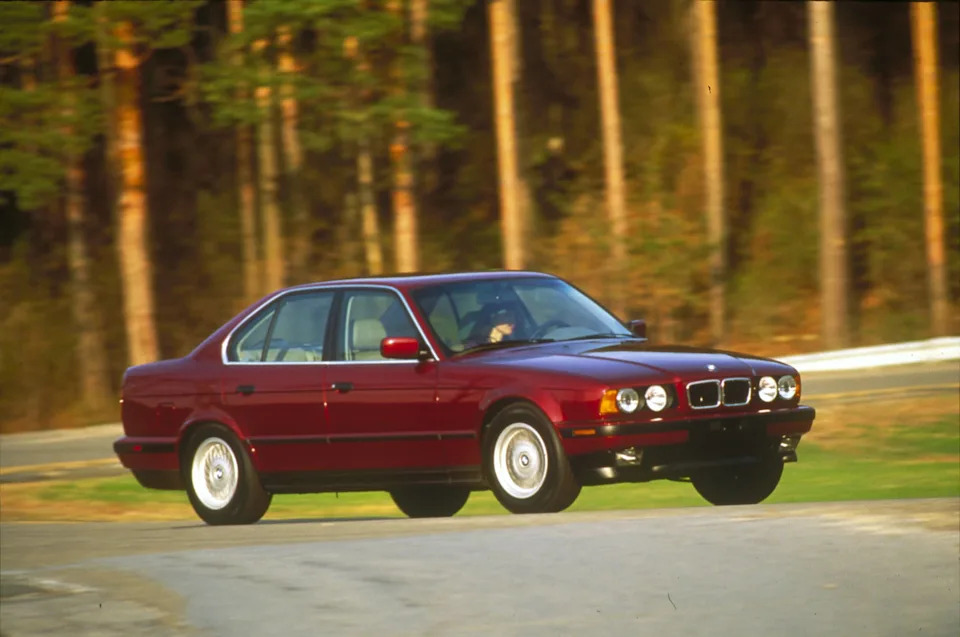
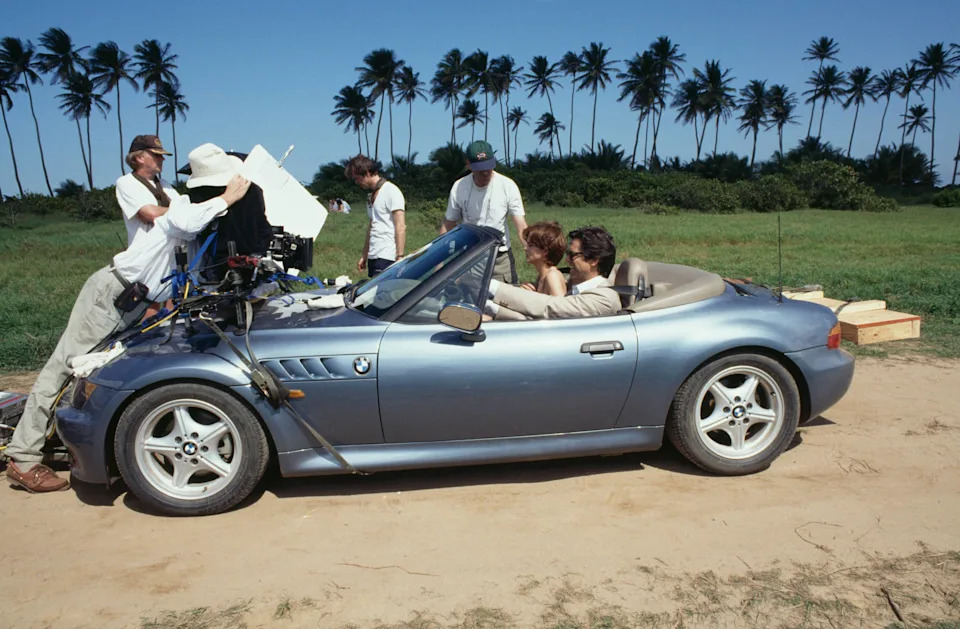
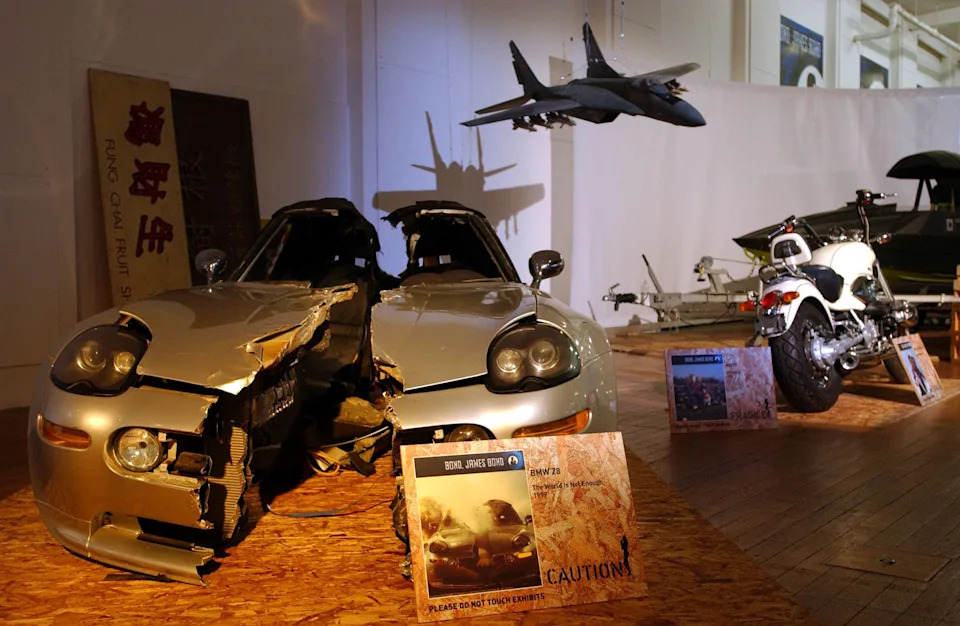


















This is How James Bond Turned BMW Into a Real Status SymbolAutoblogJames OchoaSat, September 19, 2026 at 1:30 AM UTCAdd us on GoogleAutoblog and Yahoo may earn commission from links in this article.Ready For Close-Up In the 1995 film GoldenEye, Pierce Brosnan's James Bond slid behind the wheel of a BMW Z3 roadster in a Q Branch briefing scene that lasted approximately forty-five seconds of screen time. The car appeared in no action sequences. It performed no stunts. It drove briefly through a Cuban landscape that was actually filmed in the Bahamas, and then disappeared. In terms of actual screen presence, the Z3's appearance in the film was among the most modest in Bond car history, but the commercial result was not modest at all. BMW paid millions $ to place the Z3 in the film and before GoldenEye had finished its opening weekend, BMW had received 9,000 orders for a vehicle that was not yet available for purchase. AdvertisementAdvertisementBy the time the car reached showrooms as a 1996 model, the entire production run of more than 15,000 units had been sold out. The special "007 Edition" Z3, finished in Bond Blue and limited to 100 units, sold out the day it was made available. The advance sales generated by a forty-five second cameo in a spy film amounted to $240 million. It was, by any measure, one of the most effective pieces of automotive marketing in history. It was also the opening move in a genius marketing strategy that would help transform BMW from a respected German manufacturer into one of the most aspirational automotive brands on earth.BMWView the 3 images of this gallery on the original articleBMW Before Bond In the mid-1990s, BMW was far from struggling; in fact, it was already a household name. The Bavarian Motor Works' U.S. division had been officially selling cars in the United States since 1975, and were expanding its stateside reach. In 1994, it opened up a manufacturing facility in Spartanburg, South Carolina, which helped establish itself in the upper tier of the American luxury market. The 3 Series was regarded as the definitive driver's car, while the 5 Series competed directly with the Mercedes E-Class and the Audi A6. The 7 Series offered genuine competition to the S-Class at the very top of the segment. But being aspirational is a different quality from being respected, and in 1995, BMW had the latter more completely than the former. A brand like Ferrari was aspirational; kids and teenagers around America put posters of their cars on their walls. Aston Martin was also aspirational in a specifically British way, as it was forever associated with James Bond. BMW was the choice of people who had done their research. It was a luxury car for professors, architects, or engineers; the kind for those that read way too much Car & Driver and Road and Track. Simply put, it was a dad's car; a distinction that really mattered as BMW prepared its most aggressive global expansion, and it was this distinction that BMW sought to solve.Keith Hamshere / Getty ImagesView the 2 images of this gallery on the original articleThe Z3 and GoldenEye The brand's product placement was assembled by a marketing executive named Karen Sortito, who had come to BMW after stints at major Hollywood studios and understood the intersection of film and brand marketing in ways that most automotive executives did not. Sortito recognized that GoldenEye represented an unusual opportunity: Bond was returning to cinema screens after a six-year absence, Pierce Brosnan's casting had generated enormous anticipation, and the film's producers at EON Productions were actively looking for commercial partners to help offset the production's costs. AdvertisementAdvertisementThe timing also conveniently aligned with a specific product launch. BMW had designed the Z3, its first roadster manufactured in Spartanburg, to reach showrooms in early 1996. The car needed a launch moment that would communicate its personality immediately and globally, without the years of brand-building that conventional marketing required. Bond provided exactly that context: a character whose association with beautiful machines, sophisticated taste, and international glamour was so deeply embedded in popular culture that a single scene of him accepting the keys to a new car from Q Branch would transmit the vehicle's entire intended identity in under a minute. In the film, Q explained to Bond that the car was fitted weith a selection of gadgets, including an ejector seat, parachute system, self-destructing system, stinger missiles behind the headlights and a special radar system. Apart from the radar, none of these gadgets were actually used, as BMW's prototype could not be modified or damaged ahead of the production launch. In the movie, once Bond got the car from Q, he drove it briefly on an undisclosed Caribbean island and allowed the audience to feast their eyes on a slick new sports car. The Z3's appearance in GoldenEye would mark the first time that a car manufacturer had a full-fledged promotional tie-in with a theatrical feature, and it worked. If the Z3 was good enough for James Bond, a Z3 was good enough for anyone; even G-Unit's Tony Yayo.A Remote-Controlled V12 7-SeriesThe success of the Z3's placement in GoldenEye put BMW in the right position. The Bavarians returned in 1997's Tomorrow Never Dies with a more prominent arrangement — one that was described at the time as part of the largest product placement deals at the time. The film doubled down on BMW's involvement; not only did the film feature a BMW 750iL as Bond's primary vehicle, it also featured a BMW R1200 C motorcycle ridden by Bond and Michelle Yeoh through the streets of Bangkok.At first, the 750iL may not seem like a "Bond car." It wasn't a sports car, it was a full-size luxury sedan — the kind of vehicle that was meant to be chauffeur driven with a head of state or a corporate executive in the backseat. On the surface level, it may lack the sporting character that other cars featured in the franchise historically projected, but it would prove its chops during a memorable chase scene in the film. Famously, Bond drove the V12 7-series with a modified Ericsson cell phone while hiding in its spacious backseat in order to escape a horde of bad guys in a Hamburg parking garage. AdvertisementAdvertisementThe marketing value of the 750iL placement was different in kind from the Z3's, as the production team realized the true marketing value that the James Bond brand and association had for advertisers. According to a November 1997 report by Entertainment Weekly before the movie released, MGM and United Artists coordinated a marketing frenzy worth over $100 million that tied in several brands alongside BMW, including menswear specialists Brioni, Omega watches and Smirnoff vodka. "Companies will pay for a property that is targeted to their own advertising goals," Karen Sortito, MGM/UA's executive VP of worldwide promotion told EW at the time.Yui Mok - PA Images / Getty ImagesThe Z8 and the End of the PartnershipThe third and final film of BMW's Bond partnership was in The World Is Not Enough, which was released in 1999. The film famously introduced the Z8; a titanium-bodied, V8-powered roadster whose design referenced the legendary 507 of the 1950s. Three handmade Z8 prototypes were provided for filming, which appeared in proper action sequences and featured proper Bond gadgets like missile launchers concealed behind the side vents. In addition to the film, the Z8 also appeared in James Bond video games James Bond 007: Agent Under Fire and 007 Racing.From BMW's perspective, the Z8's appearance in the film was perfectly calibrated to the car's market positioning; even if the car ended up getting sawed-up in half by the film's main antagonist. The associated with such a character and franchise meant that the Z8 was a premium product meant for discerning individuals, and James Bond was the perfect manifestation of their action fantasies. The BMW partnership would end in 2002 with the release of Die Another Day, when Ford — the then-owners of Aston Martin, had reportedly paid $35 million to return Bond to not only return Bond to the Aston Martin brand, but to also show off the rest of its portfolio to an international audience. In addition to the gadget-stuffed Aston Martin Vanquish driven by 007, Ford also showed off the then-new Thunderbird, which was the personal vehicle of Bond girl Halle Berry, as well as a gadget-stuffed Jaguar XK8 (which Ford also owned at the time) driven by the film's main antagonist. What the Partnership Actually Built Although its appearance in the films could not be directly tied to the films directly, the three-film BMW partnership coincided with one of the most significant periods of growth in the brand's history. American BMW sales increased by nine percent in 1996 alone; the year the Z3 reached showrooms, and continued to climb through the remainder of the decade. The brand's global expansion also accelerated throughout the same period: BMW began selling in new markets, extended its model lineup downward with the 1 Series and beyond its brand upward with acquisitions like Rolls-Royce in 1998, and established the kind of cultural visibility that seemed to only be achievable by more serious luxury marques. AdvertisementAdvertisementThe causal relationship between the Bond films and BMW's growth is impossible to isolate cleanly. The brand was already on an upward trajectory, the products were genuinely excellent, and the 1990s were a period of prosperity in BMW's key markets that would have driven sales regardless of any marketing campaign. But what the Bond partnership provided was something more specific and more durable than a sales spike: it provided a story. Brands that are truly aspirational are ones whose aspiration persists through time and are attached to the badge rather than to any specific vehicle. They are brands that have accumulated enough cultural narrative to be recognizable even to people who have never engaged with the product directly. Ferrari earned it through decades of racing history and the mystique of Enzo. Porsche had Le Mans, road racing and a poster-car in the form of the 911. Aston Martin also had the mystique of Le Mans, but it also had Bond. In 1995, BMW and its engineering and racing credentials, wanted a piece of that too.Related: I Drove The 2026 BMW i4 M60 For A Week: Here's My Honest Review Of BMW's 593-HP Electric Gran CoupeGone, But not Forgotten.BMW has not returned to the Bond franchise since the partnership ended in 2002. The brand has found other cultural platforms, whether it be art collaborations, film festivals, Formula 1, Formula E and other racing support, but nothing that replicated the specific alchemy of the Bond years. The Z3 and the Z8 remain, in automotive memory, exactly what the placement intended them to be: the cars that James Bond drove, which meant something far beyond the tagline of "the ultimate driving machine." AdvertisementAdvertisementBMW did not invent the concept of placing a car in a film. It did invent the modern understanding of what that placement could be worth when the film, the brand, the car, and the cultural moment were exactly right.This story was originally published by Autoblog on Sep 19, 2026, where it first appeared in the Features section. Add Autoblog as a Preferred Source by clicking here.