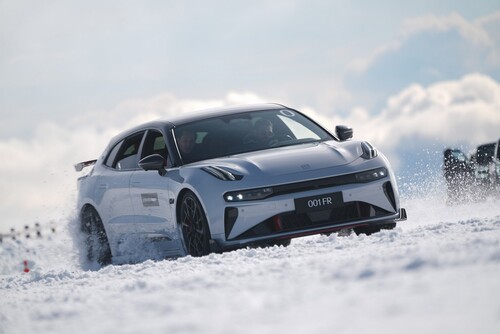
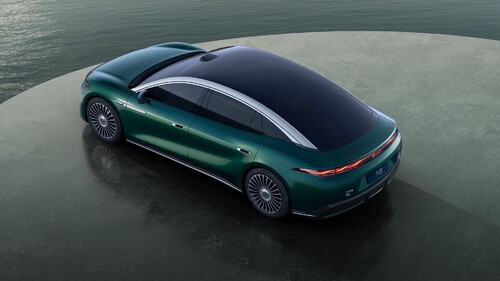
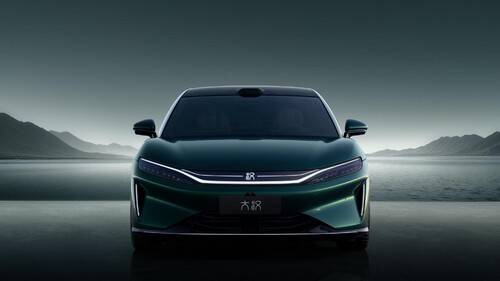
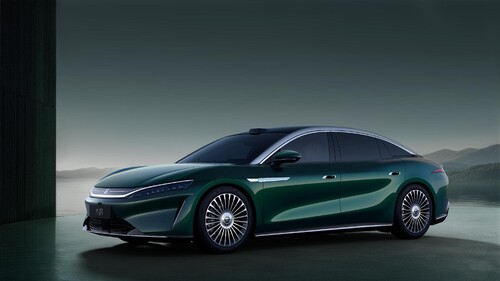
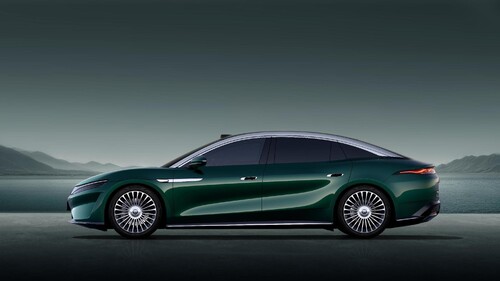
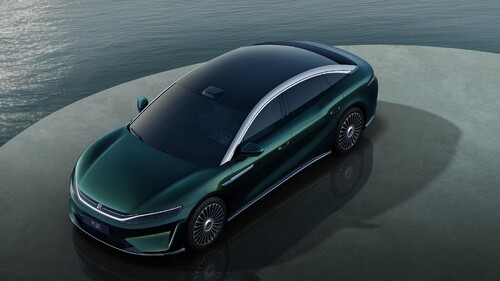
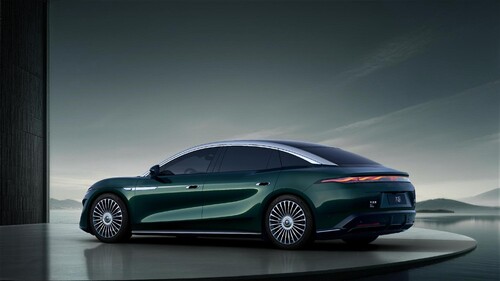
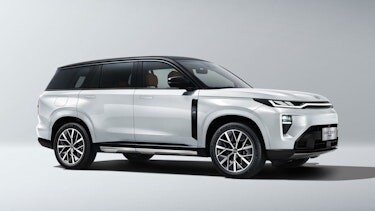
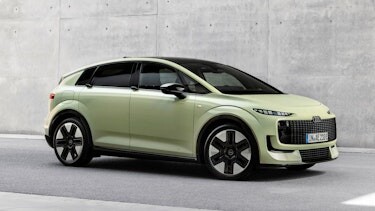
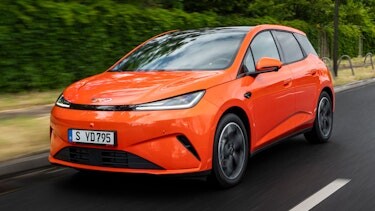
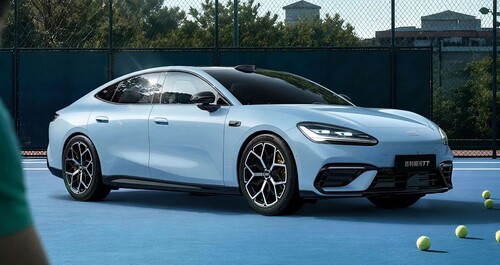
Gasgoo Munich- On June 11, the all-new smart #6 hit the market with a limited-time starting price of 177,900 RMB. Officially dubbed a "new-generation luxury hatchback sedan," this new model attempts to carve out a niche in China's fiercely competitive new-energy sector with a dense stack of features: standard LiDAR across the lineup, ZF closed-loop steering, 1,810 kilometers of combined range, and over 100 high-end configurations.As "luxury from entry-level" becomes standard industry boilerplate, where does smart actually differentiate? A brand once defined by "small" is launching a nearly 5-meter hatchback — will the market accept this identity reconstruction? Backed by Mercedes-Benz design and Geely's tech platform, can this joint-venture "new force" truly establish a third path distinct from native startups and traditional automakers? Understanding these issues isn't about finding a binary answer, but about identifying the right vantage point to evaluate the #6's market outlook and smart's strategic pivot.Can the hatchback form sustain smart's brand transformation?The smart #6 has chosen a segment long undervalued in the Chinese market: the premium hatchback sedan.In terms of product definition, smart aims to resolve the core paradox of traditional hatchbacks: stylish but impractical. By widening the trunk opening to 1,000 mm, allowing the rear seat backrest to recline up to 122°, extending the seat cushion to 547 mm, and creating a 2-meter flat bed space with the seats folded, the #6 directly addresses the hatchback's historical weaknesses: cramped rear quarters and limited cargo capacity.But a deeper issue lies in consumer psychology: the hesitation toward hatchbacks stems not just from product flaws, but from a gray area in category perception.In the Chinese auto market, the binary divide between sedans and SUVs remains entrenched. Since hatchbacks sit somewhere in between, smart must spend resources to educate the market: choosing a hatchback is not a compromise.More intriguing is smart's strategic intent behind choosing the hatchback form. Historically, smart built its image on "urban agility" with micro cars. In the electric era, the #1, #3, and #5 have gradually shifted the lineup toward mainstream sizes. With a length of 4,906 mm, however, the #6 has completely severed ties with the "small" label.The hatchback form appears to be smart's attempt to strike a balance between bulk and design flair. It needs a large body to house batteries, range, and family space, yet wants to retain enough styling identity to avoid becoming a bland three-box sedan. Whether this balance holds will ultimately be decided by consumer aesthetics.Another selling point heavily emphasized by the company is "emotional luxury." From the 192 circular holes — each just 0.7 mm in diameter — on the star turbine air vents, to the industry-first UFO-style floating high-frequency speakers, to nearly 800 light points and 256-color ambient lighting throughout the cabin, smart is betting big on atmosphere. As Yang Jun, CTO of smart's global company, put it, the industry has moved from "material luxury" to "emotional luxury." The logic holds: as hardware specs homogenize, cabin atmosphere, ritual, and interaction are becoming new sources of premium value. Yet the challenge remains: emotional luxury requires brand equity to convert into real purchase motivation. When buyers weigh the #6 against mature rivals at the same price point, whether "star turbine vents" will tip the scale remains to be seen.The triangular game of cost, pricing, and brand premiumThe smart #6's most aggressive product strategy move is making over 100 high-end features standard across the lineup. This includes LiDAR, map-free city NSP pilot assist, ZF closed-loop steering, and Sennheiser audio — features typically reserved for top trims or optional packages on competitors.Looking at the spec sheet, the hardware gap between the 177,900 RMB entry-level version and the 217,900 RMB top trim has been minimized to the extreme. To an extent, this upends the traditional logic of tiered configuration pricing.The upside of this strategy is clear: it quickly builds a user perception of value and sincerity, reducing decision paralysis caused by configuration anxiety. In the 2026 China market, consumers are far more sensitive to feature reduction and optional packages, making full standardization an efficient way to build trust. Meanwhile, high configuration density gives smart the technical confidence to face off against brands like Tesla and Xiaomi — at least on paper, the #6's hardware stack matches rivals in its price bracket.But the flip side deserves scrutiny. Standardizing features means a significant rise in fixed costs. The procurement costs for LiDAR, premium audio, and electronic suspension don't vanish just because they're standard; they must be amortized across every unit sold.Given limited sales, this cost structure will undoubtedly put significant pressure on profitability.In the profit model of traditional luxury brands, high-spec trims yield far higher margins than base models, relying on configuration differences to create price tiers. By flattening the configuration curve on the #6, the difference between entry and top trims now hinges mostly on core hardware like battery capacity and drivetrain, rather than smart features. This implies smart has abandoned the opportunity to capture higher margins through low-cost, high-perception items like software and comfort features.As the industry broadly shifts toward a "hardware pre-installed, software subscription" model, the smart #6 has chosen a divergent path.The survival space of the joint-venture "new force"Placing the smart #6 in a broader industry context reveals the survival state of a specific breed of automaker: the joint-venture new-energy brand. A joint venture between Mercedes-Benz and Geely Holding, smart possesses both the genes of a century-old luxury marque and the prowess of China's top-tier local manufacturing and supply chain.This "hybrid" model has been adopted by several joint ventures in recent years, with varying market results.smart has opted for a "premium high-ground" strategy — adhering to Mercedes design and global standards while leveraging Geely's SEA architecture and Leishen hybrid technology. The #6's core powertrain — the new Leishen Hybrid EVO engine with 47.26% thermal efficiency — is the latest fruit of Geely's tech ecosystem.This technology sharing brings efficiency gains, but it also makes brand distinction a continuous challenge: consumers may wonder about the positioning differences between the smart #6 and Geely's Galaxy series.smart Global CEO Tong Xiangbei emphasized at the launch: "The gene of a luxury joint venture enables smart to do what others cannot." This statement captures the theoretical advantage of the JV new force — gaining Mercedes' design soul and quality standards while enjoying Geely's tech efficiency and cost control. Yet in the actual market, whether this "combined advantages of both" translates into perceived value depends on whether the brand can tell a compelling story. It cannot be a simple sum of "Mercedes design plus Geely technology"; it requires an organic chemical reaction.Another critical variable is globalization. Reports indicate smart's products and services now cover 41 countries and regions. For the #6, while China is the priority, performance overseas — particularly in Europe — is equally crucial. European consumers accept hatchbacks far more readily and hold a deeper historical affection for the smart brand. If the #6 gains traction in Europe, global scale effects could significantly improve the cost structure, bolstering price competitiveness back in China.However, Europe's EV market is equally fierce, with models from Volkswagen and Renault demonstrating strong product strength. Add to that the uncertainty over EU tariffs on Chinese-built EVs, and it remains to be seen whether smart's "dual home markets" strategy can truly succeed.In summary, the launch of the #6 marks smart's completion of a product line expansion from micro cars to large-size vehicles. From the #1 to the #6, smart has achieved a category leap in under four years that might take a traditional automaker a decade.This speed reflects systemic efficiency, but it also imposes new demands on brand positioning: how to expand product boundaries without diluting brand identity.When a new car attempts to cover everything — urban commuting, family outings, long-distance travel, intelligent tech, and luxury atmosphere — can it still maintain a clear, sharp brand personality? The answer to that question will determine whether smart can truly establish a niche in the next phase of competition.