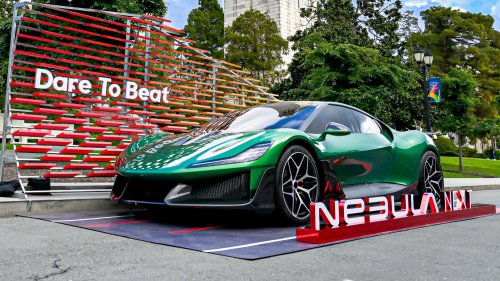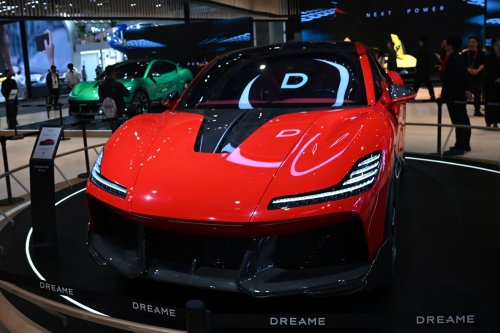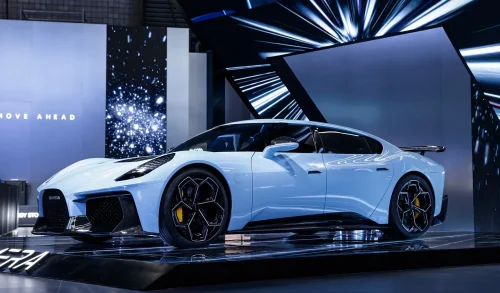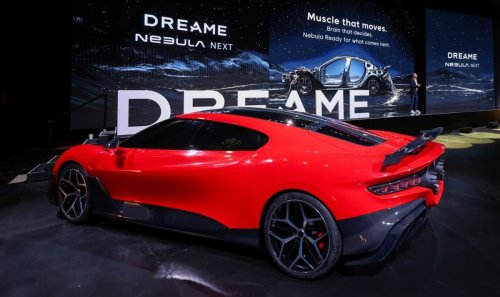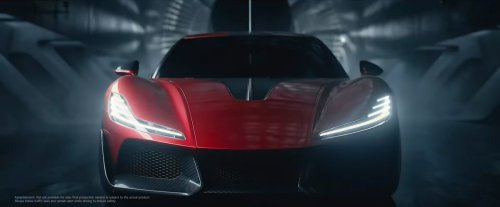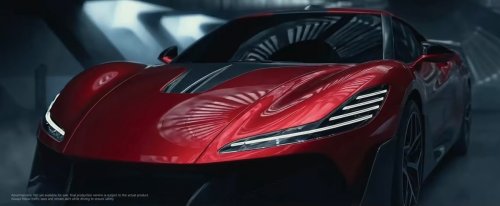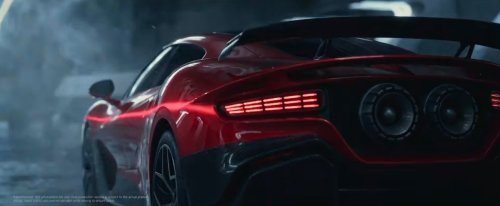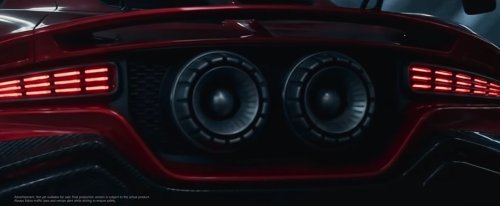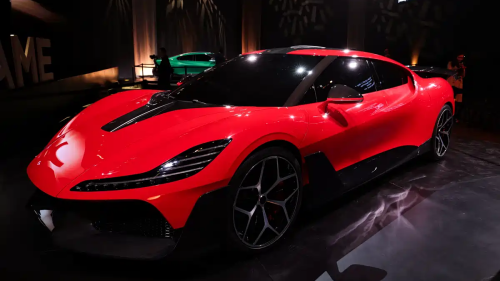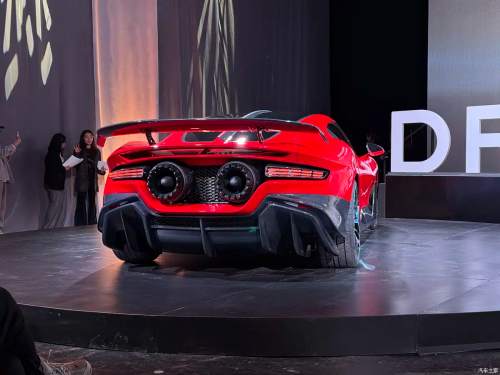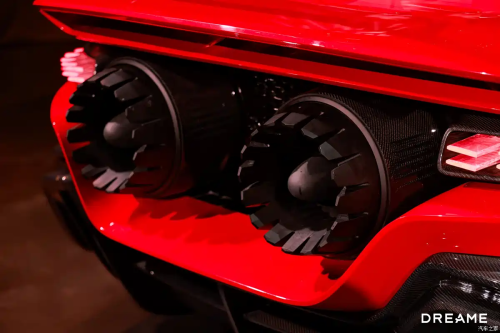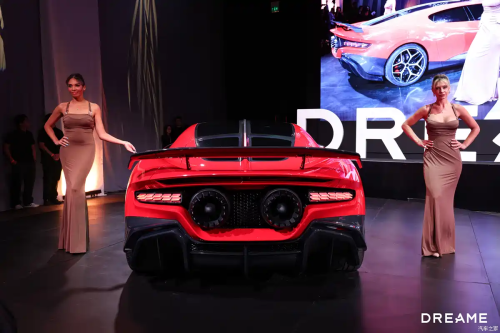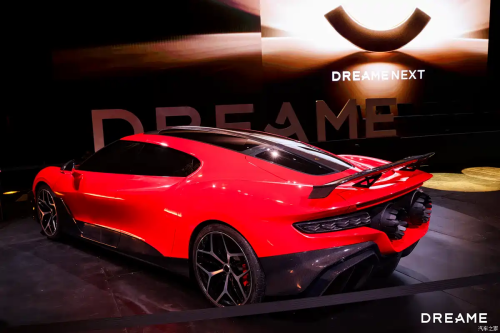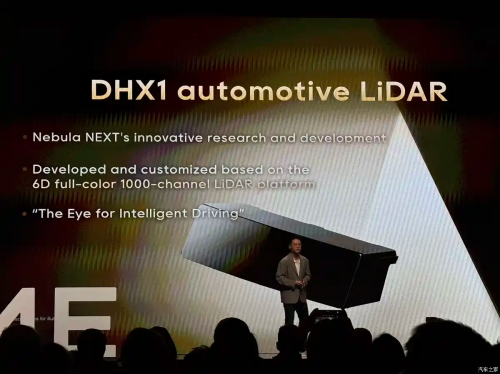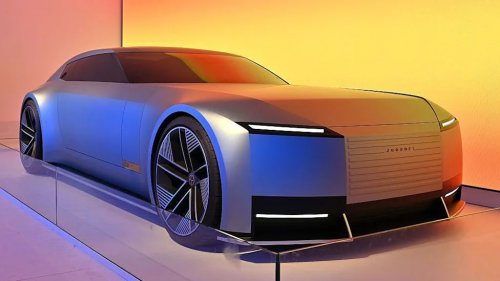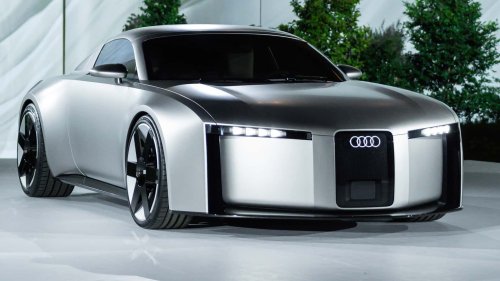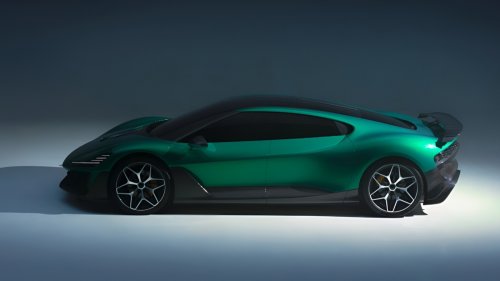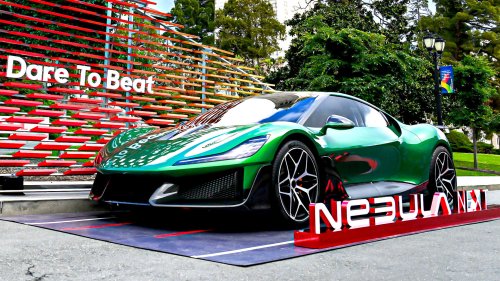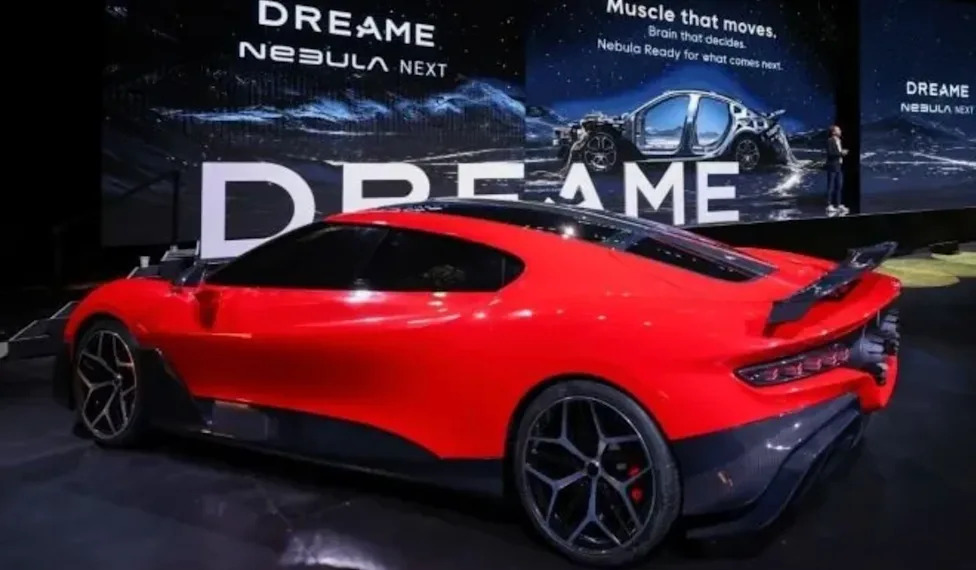



















Rocket-Powered EV Dies With Chinese Vacuum Maker's Car DivisionA Chinese company that makes very good robot vacuums told the world it would build a car that hit 62 mph in 0.9 seconds using strap-on rockets. Roughly four months later, that car is gone, along with the division that was supposed to build it.Dreame Technology posted a statement to its official Weibo account on August 25 titled, roughly, an explanation of the company's strategic focus and business development. It says the company has adjusted certain businesses that were in an exploratory phase, that the accumulated technology and research will be folded back into its remaining R&D system, and that it will now concentrate on four areas: smart home, outdoor and garden, smart mobility, and embodied intelligence.Read that list again. "Smart mobility" in Dreame's vocabulary means electric two-wheelers. The word "car" does not appear anywhere. That is a corporate obituary written in the passive voice, and if you have followed enough startup collapses you know exactly what "exploratory phase" is doing in that sentence.AdvertisementAdvertisementWhat was actually promisedDreame's own press release from April 27 in San Francisco is still live, which makes for uncomfortable reading. The Nebula NEXT 01 JET Edition was described as an electric vehicle carrying a "custom-built dual solid-fuel rocket booster system" that responded in 150 milliseconds, produced peak thrust of 100 kN, and delivered 0-100 km/h in 0.9 seconds. Stanford's Sebastian Thrun, the man most responsible for modern autonomous driving, stood on stage and said he'd never seen a product announcement this exciting.Related ArticlesStreet Outlaws Racer Dies Following Crash at Ohio's KD Motorsports ParkThailand's Auto Tax Overhaul: Why Japanese Carmakers Are Fighting BackThe supporting cast of claims was equally aggressive. A solid-state cell using sulfide chemistry, 60 Ah, above 450 Wh/kg in lab testing. A fully by-wire chassis with 14 degrees of freedom, sub-millisecond response, electromagnetic active suspension, dry brake-by-wire, a turning radius under five meters, tank turns and tire-blowout stabilization. CTP 4.0 pack integration that deletes the crossbeams and longitudinal beams from the battery structure. An L3+ autonomy stack. A LiDAR unit called DHX1. Production in 2027, in a factory outside Berlin.AdvertisementAdvertisementThat is not a car program. That is eleven car programs, each of which would be a decade of work at a company that already knows how to build cars.The rocket claim, taken seriously for one minuteHere is the part worth understanding, because the physics is genuinely interesting and almost nobody explains it.An electric car's launch is limited by the contact patch. You can have 2,000 horsepower and it doesn't matter, because grip caps you somewhere around 1.5 g even on slicks with meaningful downforce. That's why a Rimac and a Tesla Plaid end up closer together off the line than their power figures suggest.AdvertisementAdvertisementA rocket bypasses the tires entirely. Thrust acts on the chassis, not through the driven wheels, so it isn't grip-limited. In principle, a rocket car can beat any tire-driven car to 60 mph.Now run Dreame's own arithmetic. 100 kN is about 22,480 pounds of force. Drop that into a 2,000-kg vehicle and you get roughly 50 m/s² — a bit over 5 g — which mathematically produces 0-100 km/h in about 0.56 seconds, not 0.9. Dreame's headline figure is slower than its own thrust claim implies, which is the tell. Numbers that were actually derived from a design tend to be consistent with each other. Numbers assembled for a press deck tend not to be.Then there's the problem that ends the conversation: solid-fuel rocket motors cannot be throttled or shut off. Once you ignite a solid propellant grain, it burns until the propellant is consumed. That is why solids are used for boosters and ejection seats and not for anything that needs modulation. Terminating thrust early requires deliberately venting the case, which is a destructive event by design. So the "150 millisecond response" being advertised describes ignition lag, not control authority. You get one binary decision, on, and then whatever happens next happens.Put that in a road car and you've built a device where the driver's only input is commit. There is no lift. There is no ABS intervention that matters. If the road curves, you don't.AdvertisementAdvertisementThis has been tried, and it worked, and nobody repeated itRocket cars aren't a novelty someone invented for CES. On May 23, 1928, Fritz von Opel fired 24 solid-fuel rockets in the tail of the Opel RAK 2 at Berlin's AVUS and reached 238 km/h in front of 3,000 spectators, with side wings fitted specifically to keep the thing on the ground. Opel's own account says the run proved "rocket propulsion is powerful and controllable."It also notes that von Opel wore no helmet, sat behind a single armor plate separating him from the propellant, and that the whole thing was over in three minutes. The follow-up rail vehicles were less lucky — RAK 4 detonated on the track and authorities banned further runs.Ninety-eight years later, nobody has homologated a rocket-assisted passenger car, and it isn't for lack of imagination. It's because solid propellant is classified as explosive material under transport and storage law nearly everywhere, including Germany, where the Berlin factory was supposed to go. There is no vehicle type-approval category under UN ECE regulations for a car that carries live rocket motors. No mainstream insurer writes that risk, because there's no actuarial basis and standard auto policies exclude explosives outright. Even if Dreame had built exactly what it showed, the car would have been a track toy with a fire marshal on standby.AdvertisementAdvertisementThe battery number people should learn to interrogateSet the rockets aside, because the solid-state claim is the one that will keep resurfacing from other companies. Dreame said 450 Wh/kg, single cell, in lab tests. Two things to notice.First, "single cell in lab tests" is not a product. Pack-level energy density typically lands at 60 to 75 percent of cell level once you add housing, cooling, busbars, and crash structure. A genuine 450 Wh/kg cell might yield something around 300 Wh/kg at the pack — impressive against today's commercial lithium-ion, but a very different number than the headline.Related ArticlesDodge Is Recalling the Durango's Spoiler a Third Time Because the Last Two 'Fixes' Never Actually Fixed ItToyota's Grand Highlander Skipped the Screen Door on Its Grille, and Now the Feds Are Asking WhyAdvertisementAdvertisementSecond, sulfide electrolytes react with atmospheric moisture to produce hydrogen sulfide. That's not a footnote; it dictates dry-room manufacturing and drives cost hard. Anyone claiming a mass-producible sulfide cell is claiming a manufacturing breakthrough, not a chemistry one.Worth flagging for owners generally: the CTP 4.0 approach Dreame described, stripping structural beams out of the pack so the pack itself carries load, is a real and increasingly common technique. It saves weight and space. It also means moderate side-impact damage can write off an entire battery, which is a meaningful driver of the rising total-loss rates insurers have been complaining about on structural-pack EVs. That trend is real regardless of what happened to Dreame.The Dyson lesson, learned againThe precedent here is exact. James Dyson's company spent years and £2.5 billion on an EV, had running prototypes, and killed it in October 2019. Dyson's statement is blunt: they "simply cannot make it commercially viable." Dyson kept the solid-state battery work and walked away from the car.AdvertisementAdvertisementDreame's ending is less dignified because Dreame never got as far. There were no deposits taken publicly, no order books, no customers left holding anything. Suppliers and roughly a thousand hired engineers are a different story.What to take from itConsumer electronics firms keep concluding that a car is just an appliance with more parts. Xiaomi proved it can be done. Xiaomi also spent a decade and billions getting there, and shipped a competent sedan rather than a rocket sled.The practical rule for anyone reading a CES reveal: a physical car on a show stand tells you a company can commission a body. It tells you nothing about whether a chassis exists underneath it. Ask what's been type-approved, ask what's on a proving ground, ask what the pack-level number is, and treat any acceleration figure that beats the tire-grip ceiling as a claim requiring an explanation of how physics is being circumvented.AdvertisementAdvertisementDreame will be fine. Its vacuums are genuinely good and its 200,000-rpm motor work is legitimately advanced. But the Nebula Next 01 Jet Edition is now what it probably always was: a very expensive piece of stagecraft that briefly convinced a lot of people that solid rocket boosters were a feature and not a felony.Images Via: DreameJoin our Newsletter, follow our Instagram page, and connect with us on Facebook.