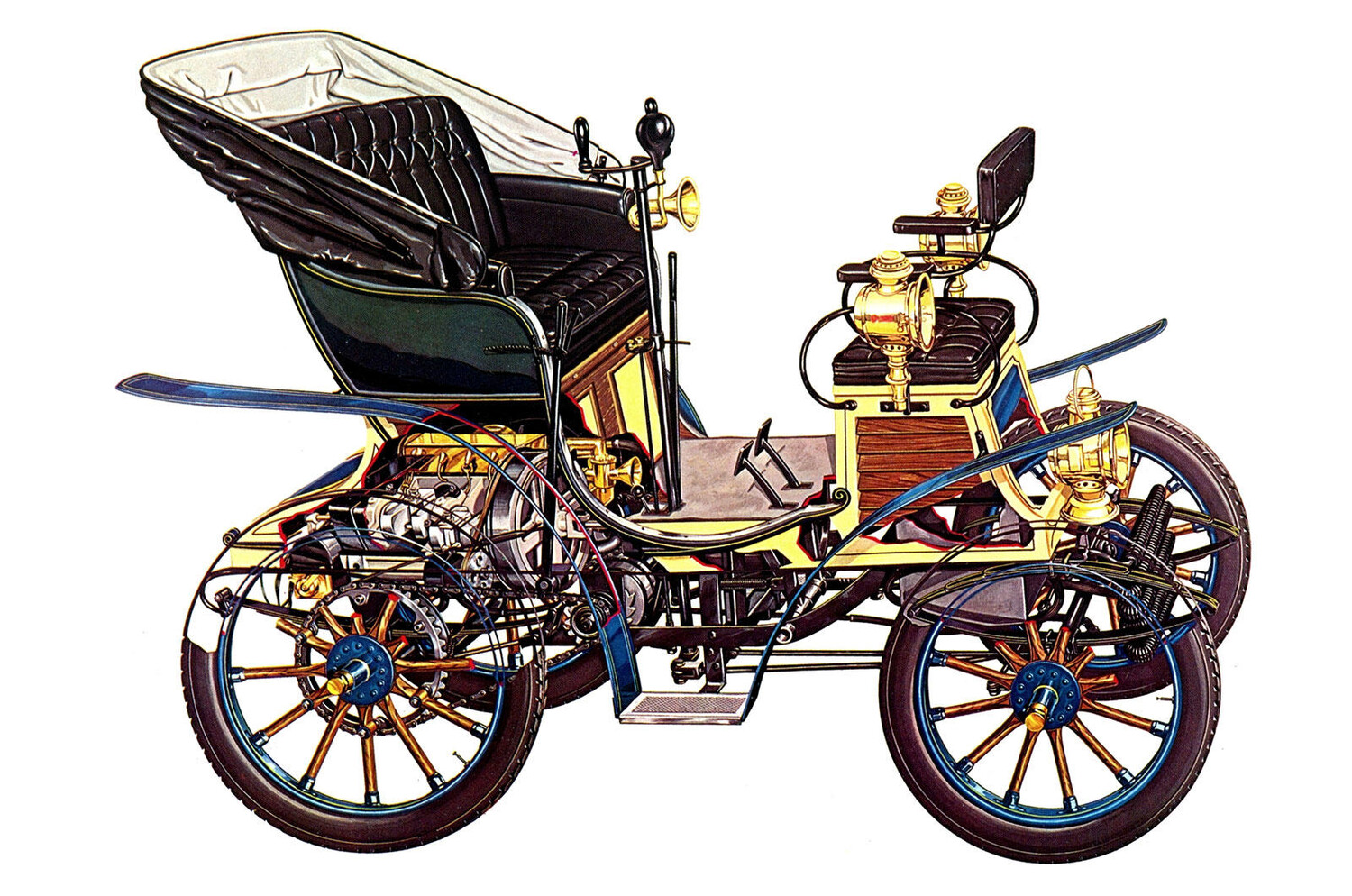
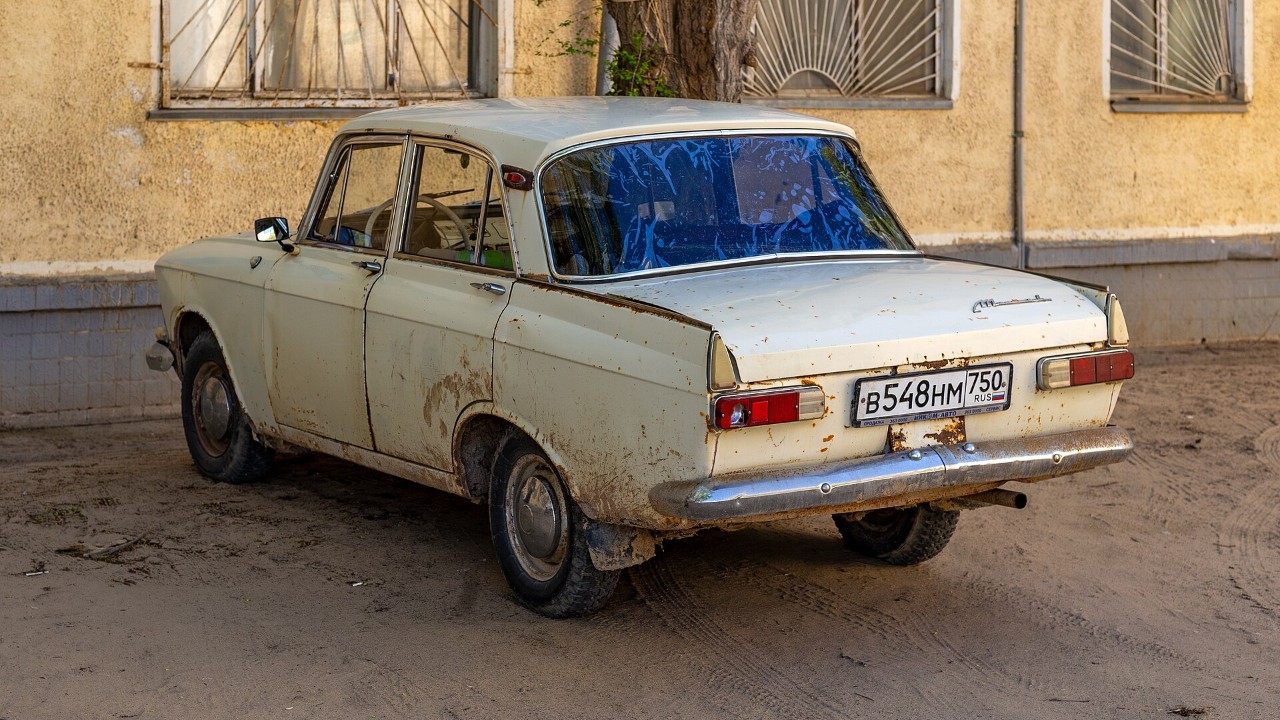
In 1973, the Moskvitch 412 won all 33 British Class D saloon races it entered. That is not the result most people expect from a Soviet family car. Yet the plants in Moscow, Izhevsk, Zaporizhzhia and Lutsk, plus the GAZ works, built plenty of machines with real character behind the plain styling. Most of them never reached American roads, so they are easy to forget. They were simple and tough, and owners often did their own repairs. As a result, many of them feel honest and mechanical in a way modern cars rarely do. These 12 are our picks for the Soviet-era cars that people who love driving can enjoy today, and the verdict on each is our opinion. However, every year, engine and production figure below comes from the records. Some of them were rally heroes, while others simply refused to quit. 1. Moskvitch 412 The Moskvitch 412 arrived in 1967 with a 1.5-liter overhead-cam four, and it had a racing career nobody saw coming. Importer Satra put the car into British saloon racing, and Lancaster Insurance’s look back at the 412 notes that it won all 33 Class D races it entered in 1973. The class rules were based on pre-tax price, so the cheap Russian sedan raced on its own terms. Driver Tony Lanfranchi won the Castrol and Britax sections in 1972 with a Moskvitch 412. According to a Moskvich history from GW2RU, his car cost under £600 and beat a BMW 2002 Tii and a Ford Capri. Meanwhile, the factory sent four 412s on the 1968 London-Sydney Marathon, and all four reached the finish. Moscow built the 412 until the mid-1970s, while the Izhevsk plant kept a version going until 1997. In our view, this is the Soviet car to start with. It has an eager overhead-cam engine, a tough body and a race record that few people know. Find a straight, rust-free example and enjoy the attention at any show. 2. Moskvitch 408 The 408 is the car that introduced the British to Moskvitch. It made its debut at the Earls Court Motor Show in 1964 and became the first model of the brand sold in the UK. Power came from a 1.4-liter four, and the car seated five without fuss. British critics were not kind about the styling. Even so, Lancaster Insurance recalls that Motor magazine admitted in 1966 that no Western car offered so many features for so little money. In fact, the 408 rode on 13-inch wheels, a first for the Soviet car industry, according to GW2RU. It also had independent front suspension and a four-speed gearbox with synchromesh on every gear. Moscow and Izhevsk built the 408 from 1964 to 1975. For several years, more than half of the cars went abroad, according to GW2RU. That export push made the 408 a familiar face in Western Europe for a while. Our take: the 408 is the gentler, more old-fashioned sibling of the Moskvitch 412. Its engine is less eager, but the steering, the light controls and the boxy cabin make it a relaxed classic for back roads. If you want a Moskvitch with period charm and a slower pace, start here. 3. Moskvitch 401 The first Moskvitch was really a German car. After 1945, the Moscow factory received tooling from Adam Opel’s dismantled Rüsselsheim plant, and its first model was identical to the prewar Opel Kadett. Unique Cars and Parts’ lost marques history tells the story, and GW2RU dates the 400 from 1946 to 1954. The 400 had a four-cylinder engine with 23 bhp. Then in 1954, the factory raised output by three horsepower and renamed the car the 401. It was a tiny gain, but it marks the point where Moscow began to develop the design on its own. Driving a 401 today means a trip back to the 1930s. The car is narrow and light, with a small four and skinny tires. Because it shares so much with the Kadett, it also makes a fascinating side-by-side comparison at any European classic meet. We love it for its honesty. There is no power steering, no power brakes and no pretense, only a small car that needs a driver who plans ahead. If you enjoy prewar cars but want something more unusual than a Ford Model A, a well-sorted 401 rewards patience. It also gives you a direct link to the very first chapter of the Moskvitch story. 4. ZAZ-965 Zaporozhets Production of the first Zaporozhets began in October 1960 at the ZAZ plant in Soviet Ukraine. The ministry chose the Fiat 600 as its model to follow. Even so, the little car had its own engineering, including an air-cooled V4 mounted in the tail. That first engine displaced just 746 cc. Later, the 965A moved up to an 887 cc unit and stayed in production until 1969. The rounded car earned the nickname “horbatyi,” meaning hunchback, though factory workers reportedly avoided the term. The 965 also had a humane side. According to Curbside Classic’s Zaporozhets history, the ZAZ-965B of 1962 and the 965AB that followed used hand controls for throttle, clutch and brakes. That made the car usable for drivers with disabilities. In our view, the 965 is the most charming of the whole Zaporozhets family. It is tiny, noisy and light, and the rear engine gives it a playful tail. You sit upright and wind it up through the gears like a small sports car on a budget. Buy one for weekends, and keep spare ignition parts in the glovebox for the air-cooled V4. 5. ZAZ-966 The ZAZ-966 replaced the hunchback shape with a square, modern body in November 1966. Its most obvious feature sits behind the doors. Two large round air intakes feed cooling air to the rear-mounted engine, and they earned the car the nickname “ushastyi,” or big-eared. The budget 966V kept an 887 cc V4. However, the standard 966 arrived in 1968 with the 1,197 cc MeMZ-968 V4, rated at 40 PS. That was a large jump for a car this light, and it changed the driving experience. The car could finally keep pace with traffic outside the city. Curbside Classic dates the 966 family from 1966 to 1972. In those years, it served as a first car for many Soviet families. Because the engine sits over the driven rear wheels, the 966 finds decent grip on loose surfaces. Our take: the 966 is the Zaporozhets that looks best in photos and feels best on the road. The ears give it a cartoon face from the side, while the bigger engine gives you enough power to enjoy it. When you shop, check the engine for overheating history, because air-cooled V4s hate dirty fins. 6. ZAZ-968 The ZAZ-968 arrived in 1971 as a mild update of the 966, without the fake front grille. Under the rear lid sat the familiar 1.2-liter air-cooled V4. ZAZ then built the 968A alongside it from 1973 until 1980. After that, the 968M took over and stayed in production until June 1994. It dropped the side scoops, so owners renamed it “mylnitsa,” the soap box. In total, the Zaporozhets family reached about 3.4 million vehicles from 1960 to 1994, a huge number for such an odd little car. Curbside Classic also lists a series of 968 versions with special controls, including cars for drivers without legs. That practical side kept the 968 on the road long after rivals moved on. Eventually, the front-wheel-drive ZAZ Tavria with a water-cooled engine replaced it. We’d pick a 968 with its ears intact for the full experience. It is the final form of the eared Zaporozhets, and the sound of that V4 at full throttle is unforgettable. It is also simple enough to fix at home. Look for solid floors and a clean title before anything else. 7. IZh-2125 Kombi Long before the hatchback became normal in Russia, Izhevsk built one. The IZh-2125 Kombi launched in 1973 on a modified Moskvitch 412 base. It used a five-door liftback body with a steeply sloped rear pillar. Retrospectives often call it the first Soviet hatchback, about a decade before the Lada Samara. It also became the first Izhevsk car sold for export. The engine was the same UZAM 412 four used in the Moskvitch, so it shared the sedan’s eager nature. A facelift arrived in 1982, and the car became the IZh-21251. Production ran until 1997. That long life tells you how well the design suited Soviet buyers. Families needed space for luggage, tools and produce from the countryside, and the Kombi carried all of it under one big hatch. In our view, the Kombi is the cleverest car on this list. It drives like a Moskvitch 412 yet works like a small estate. The big tailgate makes loading easy, and the shape still looks modern from the side. If you want one Soviet classic that earns its keep at the hardware store, this is it. 8. 1969 GAZ-21 Volga The GAZ-21 Volga was the first car to wear the Volga name. GAZ built it from 1956 to 1970 and made 639,478 of them. From 1957, a 2,445 cc aluminum overhead-valve four powered most cars. A 1969 car belongs to the third series, built from 1962. It wears the “Baleen” grille with 34 thin vertical rods, and it lost the leaping deer hood ornament of the earlier cars. Inside, the wide bench seats and the large dashboard feel like a scaled-down American sedan. The Volga had 230 mm of ground clearance and unusually thorough rustproofing for its time. That made it a good fit for unpaved roads. Exports also began in 1958, the same year the Volga won a Grand Prize at the Brussels World’s Fair. In Belgium, importer Sobimpex even assembled diesel-powered “Scaldia-Volga” versions, and those outsold the petrol cars there. Our take: the Volga is a big, soft cruiser that you drive with your shoulders. It floats over bumps that would shake a Moskvitch, and the torquey four never feels stressed. We’d pick a third-series car for its cleaner grille. A good one will feel solid enough to drive across a continent. 9. LuAZ-969 The LuAZ-969 began as a military idea. After the Korean War, Soviet designers wanted a light front-line transporter similar to the American “Mechanical Mule.” That project, known as the TPK, later grew into a small civilian utility car. According to a Bibimot history of the LuAZ, the civilian model went on the assembly line in 1966. The first version drove its front wheels, and the original Zaporozhets engine made about 30 hp. Even so, it had 283 mm of ground clearance on 13-inch wheels. Production moved to the Lutsk plant in Soviet Ukraine, where the car earned the name “Volyn.” The later 969M ran from 1979 to 1996 with a 40 hp Zaporozhets engine. In practice, it suited rural owners who needed something smaller and lighter than a UAZ. We love the LuAZ for its simplicity. It is a box on wheels, and its high ground clearance lets it crawl over ruts that would stop a regular car. It is slow on the highway, but that is beside the point. Buy one for muddy lanes and fishing trips, and expect plenty of questions at the trailhead. 10. Moskvitch 2140 rally car The Moskvitch 2140 took over from the Moskvitch 412 in January 1976. It kept a modified 412 platform and the 1.5-liter UZAM-412 engine, rated at 75 hp. AZLK built it in Moscow until July 1988. Russian magazine Za Rulem notes in its history of Moskvitch in motorsport that the 2140 got standard front disc brakes. The rally cars used them too. At the same time, the magazine admits the 2140 won far less than the 412, even though AZLK exported it in much larger numbers. That does not make a rally-prepared 2140 any less fun. It shares the 412’s tough body and rear-wheel drive, so it slides predictably on gravel. In 1981, the 2140 SL added plastic bumpers and a revised interior, and export versions carried the name 1500 SL. Eastern Bloc rally cars have their own fan base, much like the Skoda 110 R that became a rally sleeper. Our take: a 2140 rally car is the cheapest way into historic rallying with a Soviet twist. It is honest, easy to repair and great fun sideways. Check the shell for old crash damage first. 11. Moskvitch 2141 Aleko The Aleko was AZLK’s leap into the modern world. Sales began in 1986, and the car moved Moskvitch to front-wheel drive with a five-speed manual gearbox. Unique Cars and Parts notes that early cars used the 1.6-liter engine from the Lada VAZ-2106. The minister of the automobile industry wanted the upper body to match the French Simca 1307. As a result, engineers reused the roof’s structure and the window seal shapes, while everything below was new. The factory claimed a drag coefficient of 0.35, which was respectable for a mid-1980s family hatchback. In France and Germany, buyers knew the car as the Lada Aleko. A Bulgarian plant in Lovech also built it under licence in the late 1980s. Production of the original Aleko continued in Moscow until 1997. In our view, the Aleko deserves more respect than it gets. It has a huge cabin, a big hatch and a comfortable ride on poor roads. Its handling is safe rather than sporty, but it feels far more modern than the 2140 it replaced. If you want a usable Soviet car for daily errands, a well-kept Aleko makes a practical choice. 12. GAZ-M20 Pobeda “Pobeda” means “Victory,” and the name says everything about its timing. The first production car left the GAZ line on June 21, 1946. It was one of the first Soviet cars of original design, with slab-sided “ponton” styling and a unit body. Power came from a 2,112 cc sidevalve four with 50 PS. Stalin himself chose that four-cylinder over a 62 PS six. The Pobeda was also the first Soviet car with turn signals, two electric wipers, an electric heater and a factory radio. GAZ built 235,999 of them through 1958, including 37,492 taxis and 14,222 four-door cabriolets. Meanwhile, Poland’s FSO built the design under licence as the Warszawa from 1951 to 1973. For a look at how other Eastern Bloc makers tackled the same era, see how the 1956 Skoda Spartak modernized Eastern Europe. Our take: the Pobeda drives like a gentle 1940s American sedan with a European accent. It is slow, but it is smooth and wonderfully solid. It is also the root of a whole family, because the Polish Warszawa kept the basic design in production until 1973.

 Liked by Benjamin Macdonald, Charlotte Hall

























 Liked by Benjamin Macdonald, Charlotte Hall