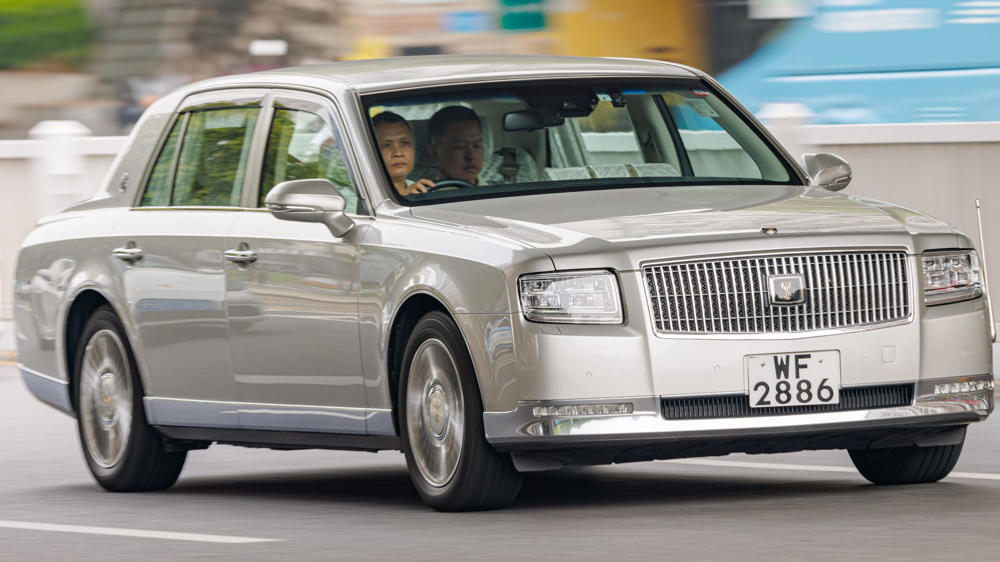
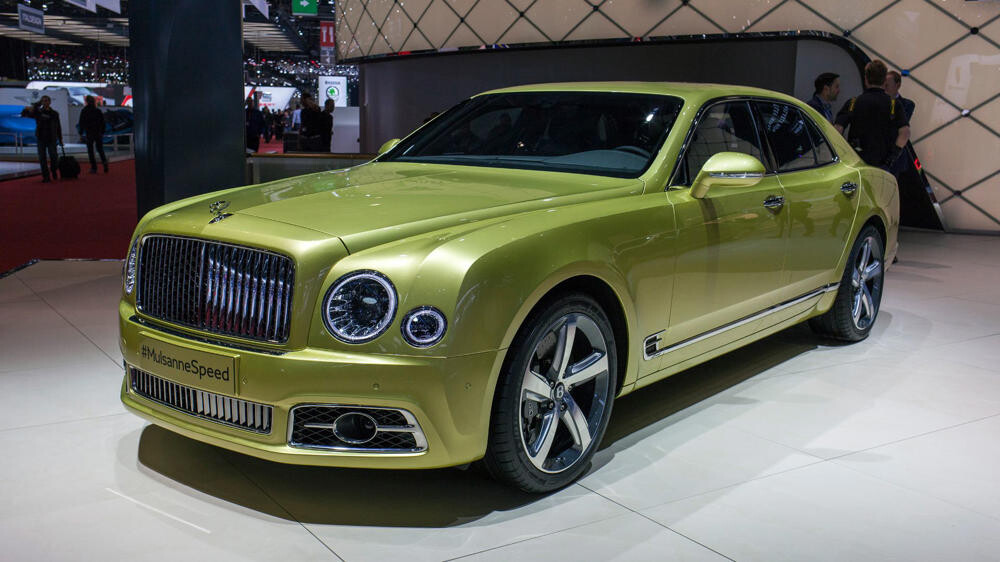
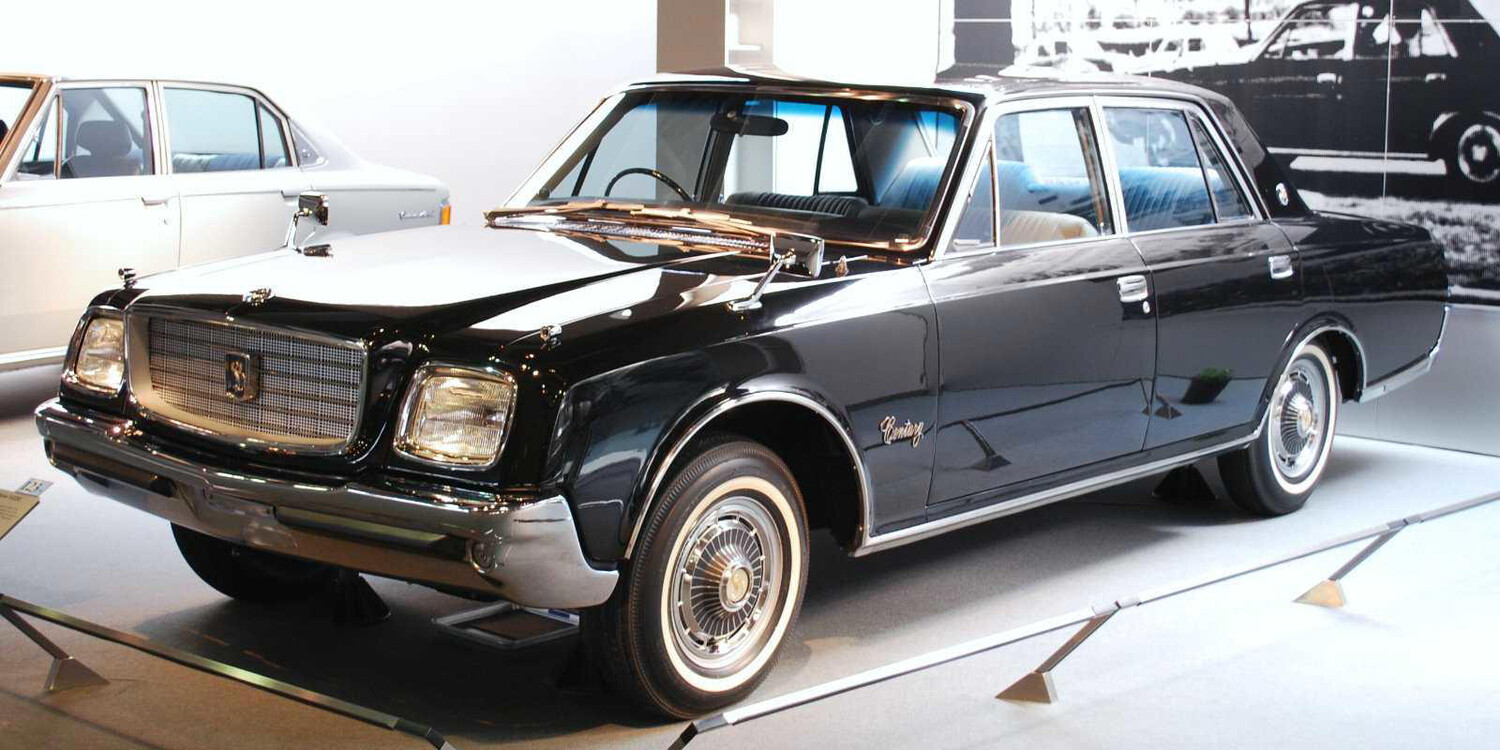
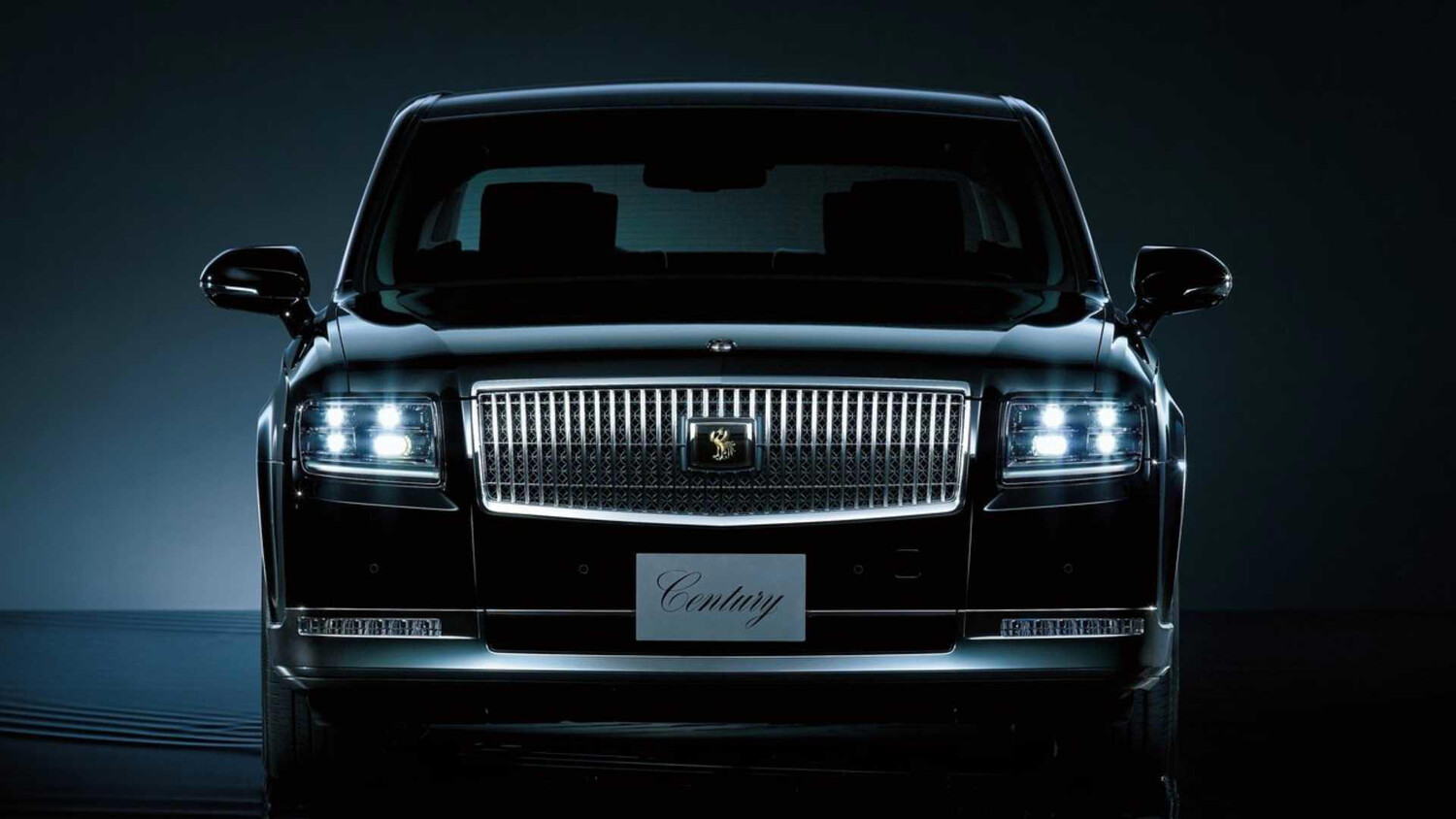
In 1988, Lincoln built 201,113 examples of the Lincoln Town Car, the best year the brand had ever seen. That big, square, body-on-frame V8 sedan was selling at a time when most of the industry was racing toward front-wheel drive and smaller engines. Plenty of 1980s buyers clearly wanted the old recipe. The decade of digital dashboards and aero styling also kept a surprising number of luxury cars stuck in their ways. Some held on to separate frames and big V8s. Others stuck with decades-old platforms, three-speed automatics or a single shape that barely changed for 30 years. A few did the opposite and bet on futuristic tech so hard that they now look like props from a period sci-fi film. These ten are our picks for the 1980s luxury cars that feel most locked in their own moment. The choices are our opinion, but every figure comes from sources we checked. Sit in any of them today, and the era comes rushing back. 1. 1985 Lincoln Town Car The 1985 model year brought the first real update to the Lincoln Town Car since its 1981 debut. Lincoln redesigned the bumpers to blend into the body, reshaped the rear fascia and taillamps, and tidied the trunk lid into the rear fenders. Inside, buyers could now order Ford’s first CD player and a 12-speaker JBL sound system. Underneath, nothing modern happened. The car still rode on the rear-drive Panther platform with a separate frame, and its 302-cubic-inch V8 made 140 horsepower in 1984 and 1985. Lincoln built 119,878 Town Cars for 1985, all of them sedans. For buyers who wanted the most, the Cartier Edition had been the top trim since 1982. That mix is exactly why it lands at the top of our list. The 1985 car had a CD player in the dash and a separate frame underneath, so it straddled two eras at once. In our view, nothing says “mid-1980s American luxury” more clearly than a Lincoln Town Car from this period. Collectors have started to notice, too. We looked at why collectors are circling the Town Car Cartier in an earlier piece. If you want one, the 1985 to 1989 cars offer the cleaner, updated look. 2. 1985 Chrysler Fifth Avenue The Fifth Avenue began in 1982 as the Chrysler counterpart of the Dodge Diplomat. By the mid-1980s, it was the holdout in Chrysler’s lineup. Every Fifth Avenue from 1984 to 1989 used a 318-cubic-inch V8 and the three-speed TorqueFlite automatic, a combination that would have felt familiar to a buyer from 1970. For 1985, Chrysler revised the V8 and raised its output from 130 to 140 horsepower, while torque climbed to 265 lb-ft from 230. Buyers responded. Production reached 109,971 cars that year, one of only two years the model passed 100,000. Starting with the 1984 models, Chrysler moved production from Windsor, Ontario, to St. Louis. Later, from mid-1987, the car moved again to the American Motors plant in Kenosha, Wisconsin. In the end, it became the final rear-wheel-drive Chrysler sedan of the 20th century. Over its life, Chrysler built 569,114 of this generation. In our opinion, that padded, pillowy interior and formal roofline make it one of the purest time capsules of the decade. Better still, it outsold its Dodge Diplomat and Plymouth Gran Fury siblings by a wide margin. 3. 1985 Rolls-Royce Silver Spirit Rolls-Royce introduced the Silver Spirit in 1980 as its new mainstream saloon. It looked fresh, with crisper lines than the car it replaced. However, it carried over the basic design of the Silver Shadow underneath, so much of the hardware was familiar from the 1960s. The engine was the 6.75-liter V8, and the gearbox was a GM-sourced THM400 three-speed automatic. The Silver Spirit also became the first car with a retractable Spirit of Ecstasy. Between 1980 and 1989, Rolls-Royce built 8,126 Silver Spirits. Fuel injection did not become standard for every market until the Mark II arrived in 1989. That means a mid-decade car like this 1985 example belongs to an older school of engineering. In our view, a Silver Spirit is a perfect snapshot of 1980s British wealth. It has wood, leather, a tall grille and a three-speed automatic, with no interest in looking sporty. Unlike most cars on this list, its shape has aged gracefully, even if the cabin screams its decade. If you’re shopping, remember that standard fuel injection for every market only came with the 1989 Mark II. 4. 1984 Aston Martin Lagonda Series II If the Silver Spirit looked backward, the Lagonda looked so far forward that it got stuck there. William Towns designed it, and Aston Martin launched the wedge-shaped saloon at the 1976 London Motor Show. Deliveries, though, did not begin until 1979. The Series 2 car came with a digital LCD dashboard and touch-button controls, at a time when most cars still used needles and toggle switches. Developing that electronics package reportedly cost four times the car’s entire budget. Time magazine judged the electronics as ones that “would be impressive if they ever worked.” Power came from a 5,340 cc V8 rated at 280 horsepower, and contemporary road tests measured fuel economy of about 12.5 mpg. The price was huge, too. In 1980 the Lagonda retailed at £49,933. Aston Martin later built 75 Series 3 cars in a single year and 105 Series 4 cars through January 1990. Across all its series, it built only 645 cars. We covered the Lagonda’s 50th birthday earlier this year. Our take: no car looks more like the 1980s idea of the future than this one. That is exactly why it feels so frozen in time today. 5. Toyota Century VG40 Toyota named the Century after the 100th birthday of Sakichi Toyoda, the founder of Toyota Industries, who was born in 1867. The first-generation car arrived in 1967 and stayed in production until 1997. During that 30-year run, its exterior styling stayed largely consistent. The biggest change came in November 1982. Toyota fitted a 4.0-liter 5V-EU V8 and gave the car a major facelift, creating the VG40. Then, in September 1987, it swapped the hydraulic three-speed automatic for an electronically controlled four-speed. Demand grew during Japan’s bubble economy, too. Sales doubled from 1,027 in 1985 to 2,117 in 1989. The Century was never about fashion. Rather than chase new shapes, Toyota gave it engine and gearbox upgrades and minor cosmetic changes, and left the basic look alone. It is often used by the Imperial House of Japan, the Prime Minister and senior government leaders, so its job was to look dignified rather than new. In our view, the VG40 is the most completely frozen luxury car of the lot, because it was already a time capsule when it was new. If you’re curious how these cars traveled, we covered the Century’s unusual history outside Japan separately. 6. 1982–1985 Bentley Mulsanne Turbo Bentley named the Mulsanne after the long straight at Le Mans, a nod to the brand’s racing wins in the 1920s. The Turbo version made its debut at the 1982 Geneva Motor Show. A Garrett AiResearch turbocharger gave the 6.75-liter V8 a 50% increase in power, to 300 horsepower, and a top speed of 135 mph. According to Sports Car Market’s profile of the 1982–85 Mulsanne Turbo, magazine testers recorded 0-60 mph times in the high sevens to low eights. That was impressive for a car of its size. The same profile notes the body-colored radiator grille shell, a subtle signal that this Bentley was different. However, it also warns that brake jobs can run around $5,000. Bentley built only 516 Mulsanne Turbos, 498 of them on the standard wheelbase and 18 long-wheelbase cars, before the Turbo R replaced it in 1985. In our view, this is the car that gave Bentley a sporting identity of its own again. Yet the cabin, with its wood and leather and simple three-speed automatic, could only come from the early 1980s. Our advice is simple: budget for a thorough inspection before you buy. 7. 1987 Mercedes-Benz 560 SEL stretch limousine The W126 S-Class was the most popular S-Class ever built. Mercedes-Benz built 892,123 of them between 1979 and 1991, the highest production of any S-Class on record. Chief designer Bruno Sacco led the team that gave it a smoother, more aerodynamic shape while keeping the traditional S-Class look. The 560 SEL sat at the top of the range from September 1985 to October 1991. Its 5.5-liter M117 V8 made 299 PS in European ECE form, while the catalytic-converter version for the U.S. made 242 PS. Even in standard long-wheelbase form, it was a serious executive car. Still, some buyers wanted more room, so coachbuilders cut and stretched these sedans into limousines. Trasco Bremen, for example, offered a stretched version called the 1000 SEL. A stretched 560 SEL like this 1987 car is about as 1980s as luxury gets. Picture that long, boxy body pulling up to a hotel driveway or rolling through a music video. In our view, it captures the decade’s taste for excess better than almost anything else on four wheels. Because coachbuilt cars vary widely, check the conversion’s history and paperwork before you buy one. 8. 1985 Mercury Grand Marquis Mercury’s Grand Marquis became its own model line in 1983, built on the rear-drive Panther platform it shared with the Ford LTD Crown Victoria. That year Mercury split the car into an unnamed standard trim and the top-trim LS. The LS sat at the top of the range. The powertrain was pure Detroit. A 302-cubic-inch V8 drove the rear wheels through a four-speed AOD overdrive automatic. In the U.S., the V8 made 140 horsepower in 1984 and 1985. The Grand Marquis also sold strongly. Mercury built 147,139 of them for 1985, and the whole 1983 to 1991 generation totaled 987,818 cars. For 1988, a mid-cycle update restyled the front and rear fascias and blended the bumpers into the body. As a result, the 1985 car is the last of the fully squared-off look, with its formal roof and upright grille. We think the Grand Marquis from this period feels like a living room on wheels. If you’re shopping for one, look for a car with its original velour or leather interior intact. Those cabins are what make it special. 9. Lincoln Continental Mark VII Lincoln introduced the Mark VII in August 1983 as a 1984 model, and it was a big step away from the land-yacht Marks of the 1970s. It came with four-wheel air suspension as standard. It was also the first modern American-made car with a replaceable-bulb headlamp system. Power came from a 140-horsepower 5.0-liter V8. Lincoln kept the designer-edition tradition alive, too. Bill Blass and Versace editions launched with the car in 1984, although the Versace version disappeared for 1986. The oddest choice was a BMW turbodiesel six. Hagerty’s look at the diesel Mark VII lists it at 115 horsepower and says it was sold only for 1984 and 1985. It also notes that most estimates put total sales at about 500 to 1,500 cars. That diesel option sums up the early 1980s perfectly, because fuel worries were still fresh. In our view, the Mark VII is the most interesting luxury coupe Detroit built that decade. If you want the easiest one to live with, pick a gasoline V8 car. A diesel is a curiosity for collectors who enjoy chasing parts. Over the full run through 1992, Lincoln built 190,832 Mark VIIs. 10. 1987 Mercury Colony Park From 1984 on, every full-size Mercury station wagon wore the Colony Park name. That meant woodgrain panels down the sides, a long roof and the same Panther chassis as the Grand Marquis sedan. In fact, the 1983 Grand Marquis wagon had been effectively a Colony Park without the woodgrain. By 1987, the 302-cubic-inch V8 had gained multi-port fuel injection, which raised its output to 150 horsepower from 1986. It still sent power through the four-speed AOD automatic to the rear wheels. Mercury built 120,503 Grand Marquis models for 1987, and the Colony Park shared that car’s chassis and V8. For 1988, Mercury restyled the front and rear fascias and blended the bumpers into the body. Even so, few cars feel as frozen in time as a woodgrain wagon. In our view, cars like this were the last of a long American tradition. We think the Colony Park is the classiest way to remember it. If you find one, check the wood-look trim closely, because faded or peeling panels are the first thing buyers notice. Mercury kept building full-size Colony Park wagons until 1991.

 Liked by Mason Fortin, Victoria Bouchard


















 Liked by Mason Fortin, Victoria Bouchard