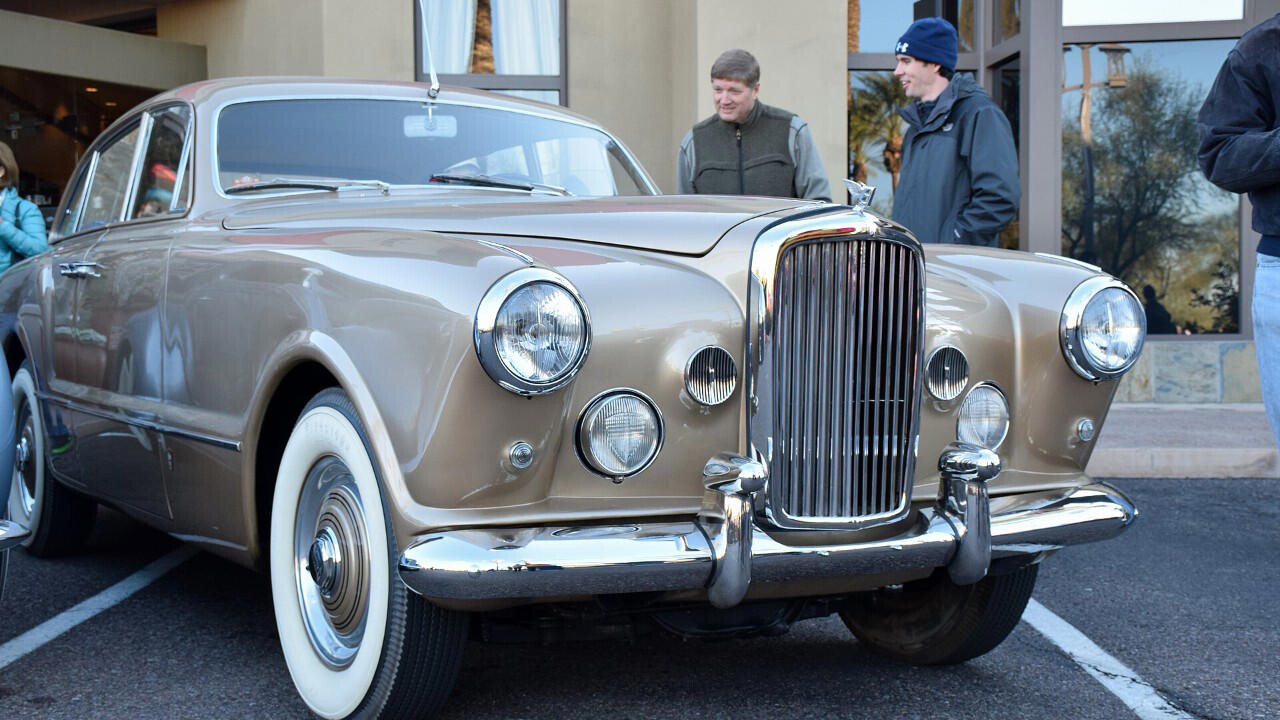
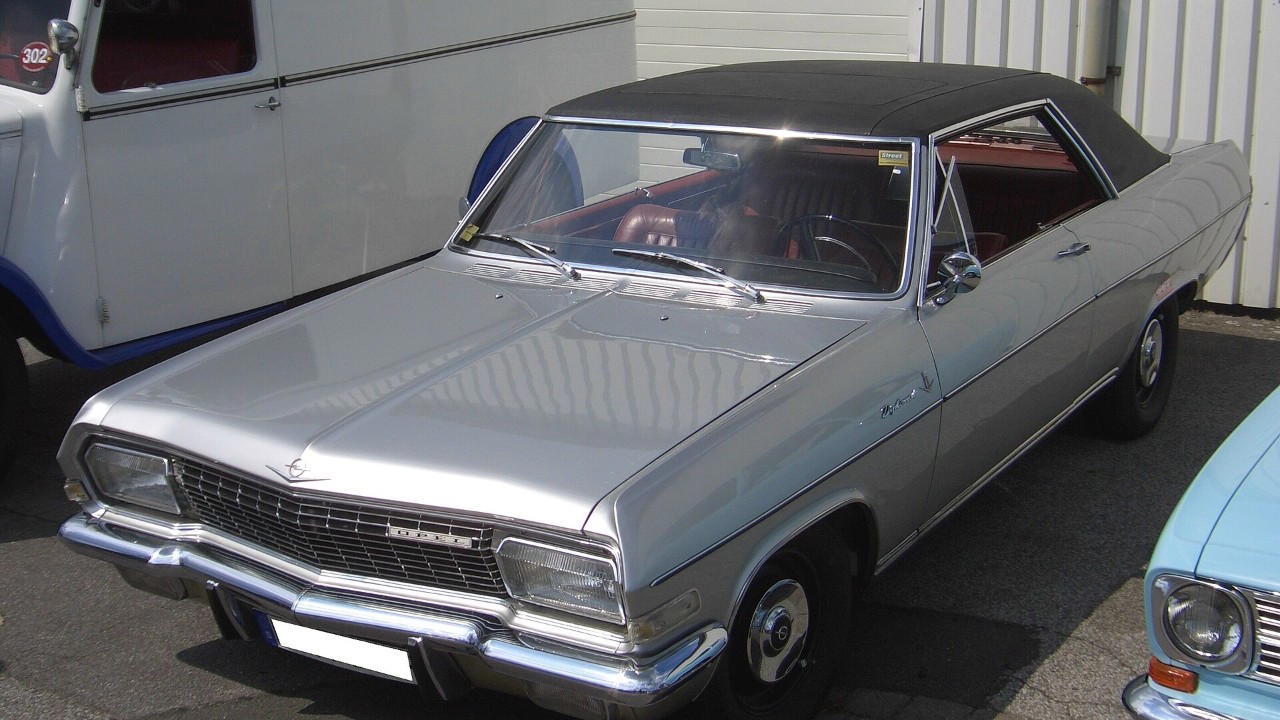
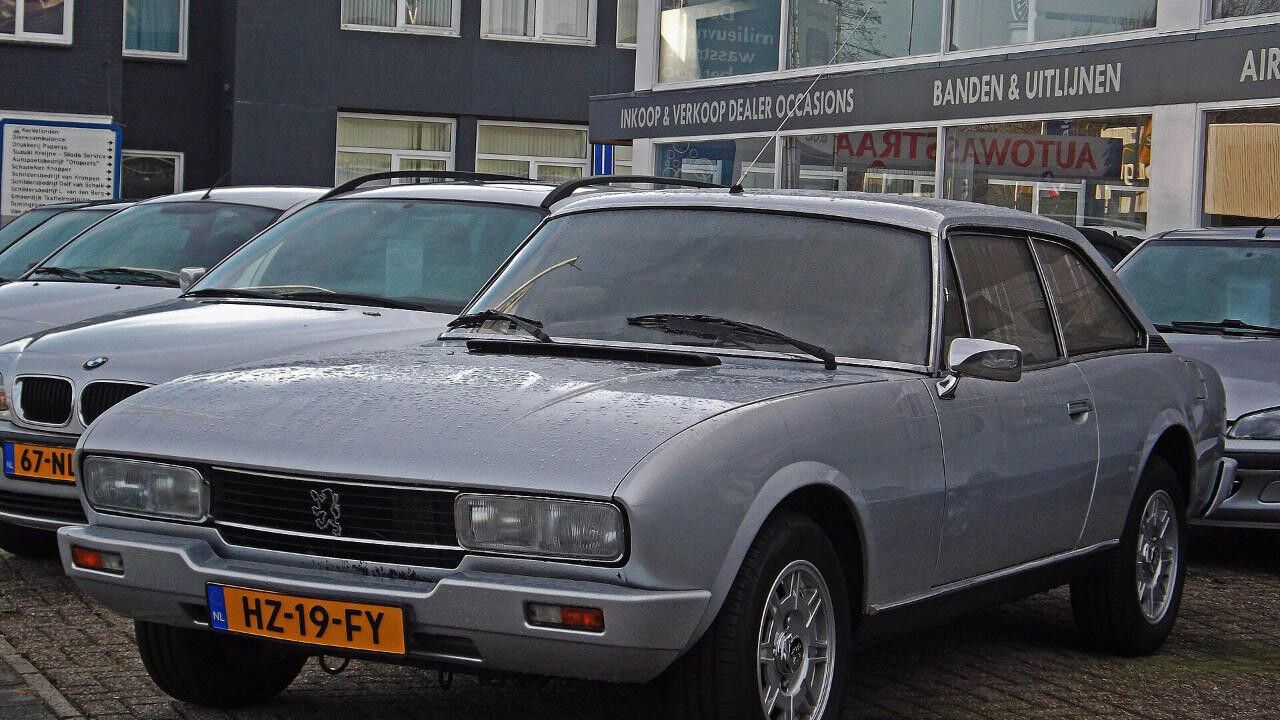
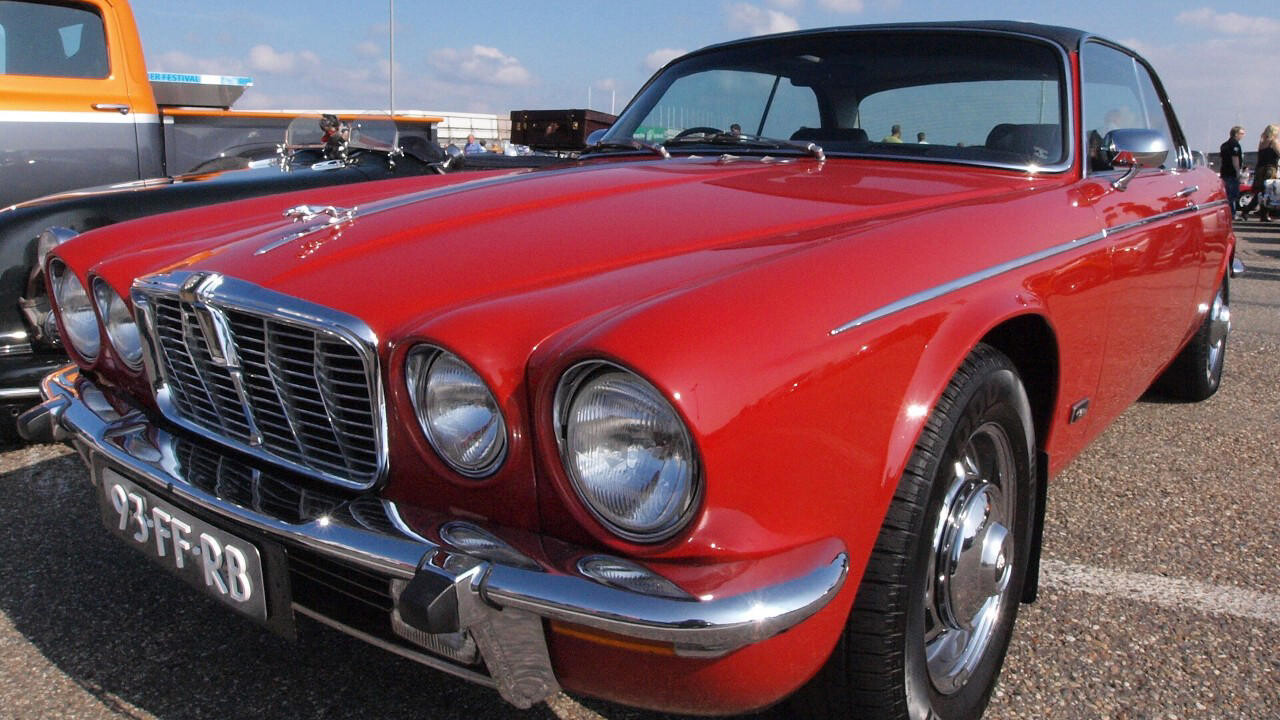
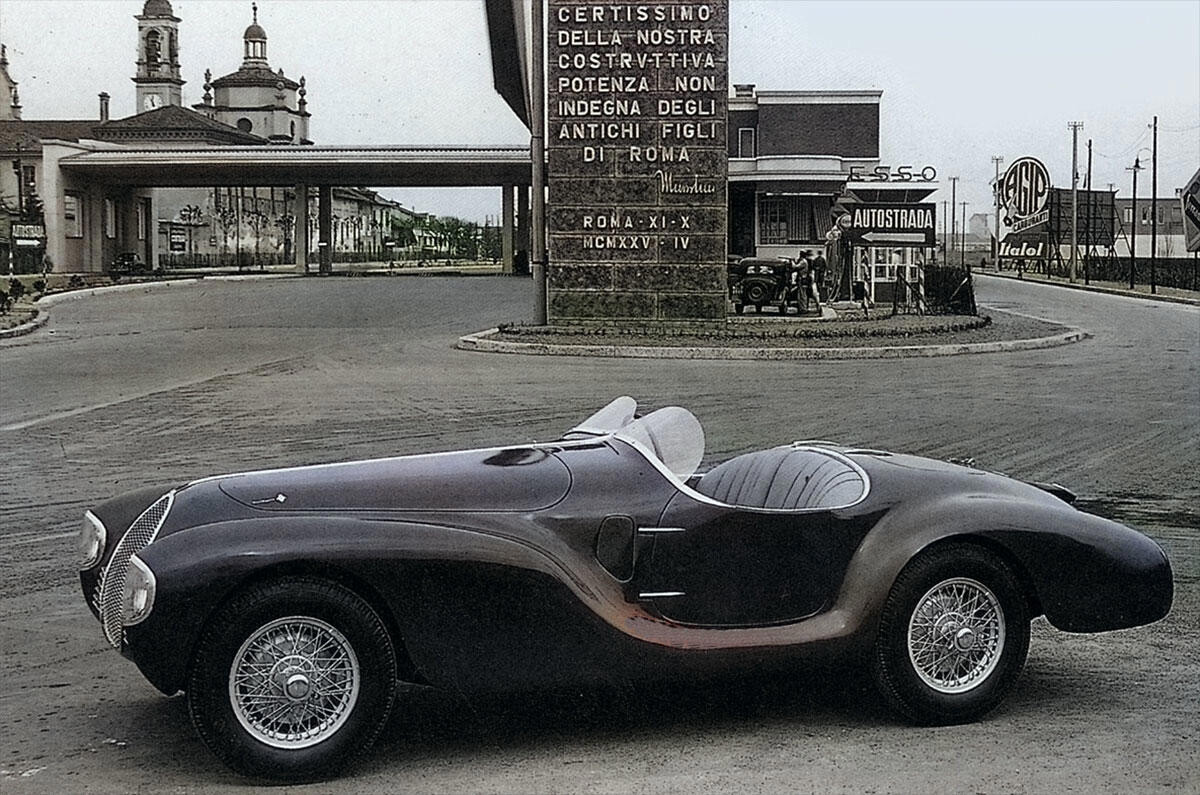
Autocar once called the Bentley R-Type Continental the fastest four-seat luxury saloon in the world, and Bertone gave one example a body all its own. After all, a coupe like that was never meant to blend in. It was built for people who could afford a long hood, two doors and a back seat they rarely used. That kind of car ages in a special way. Ordinary sedans from the same years rarely draw a second look, but a great luxury coupe gathers a crowd at every gas station. Its proportions now look nothing like modern traffic, and its rarity makes each sighting feel like an event. So we picked 12 vintage luxury coupes that, in our view, stop traffic decades later. In addition, they come from Britain, Germany, Italy, France and Switzerland. The facts come from maker archives, coachbuilder records and period data. The verdicts, though, are ours. 1. 1953 Bentley R-Type Continental by Bertone Even in standard form, the Bentley R-Type Continental was a statement. According to Bentley’s heritage collection notes, the company built 208 between 1953 and 1955. HJ Mulliner bodied 193 of them in lightweight aluminium. In period, Autocar called the car the fastest four-seat luxury saloon in the world. Its 4,566cc six-cylinder engine made 153 bhp in Bentley’s own figures. As a result, it could reach 115 mph. In fact, the prototype averaged 118.75 mph over five laps at the Montlhéry track in France. For a heavy, hand-built car in the early 1950s, those were remarkable numbers. Still, the car in our photo is rarer. The Carrozzieri Italiani coachbuilder archive lists a one-off Bertone body built in 1953 for Chicago businessman Stanley “Wacky” Arnolt. Bertone then showed it at the Paris and London motor shows that year. As a result, it blends British engineering with Italian lines in a way no Mulliner car does. Our take: any R-Type Continental draws a crowd, but the Bertone car is a true unicorn. Its Italian shape over a Bentley chassis makes it one of the most unusual postwar British luxury coupes. If it ever appears at a show, it will be the car everyone talks about. 2. BMW 503 coupe The 503 was BMW’s postwar bid for the luxury market. According to BMW Group Classic, it debuted at the Frankfurt IAA in September 1955 alongside the famous 507 roadster. Albrecht Graf Goertz designed both cars. Production then began in May 1956. Under the long hood sat an alloy V8 of 3,168cc. It made 140 bhp at 4,800 rpm, and BMW quotes a top speed of 190 km/h, or 118 mph. That was strong performance for a 2+2 grand tourer of the mid-1950s. However, the price kept it out of reach for nearly everyone. The 503 cost DM 29,500 when new. In the end, BMW built just 273 coupes, all by hand. That small number partly explains the car’s star-studded owner list. For example, film star Curd Jürgens and Yugoslav leader Tito both owned 503s. In our view, the 503 coupe is one of the most underrated BMWs ever built. The 507 roadster gets the headlines and the auction records. Yet the 503 has the same designer, the same V8 and a cleaner, more formal shape. Park one next to a modern BMW and the crowd will choose the old car every time. 3. 1964 Lancia Flavia Coupe The Flavia Coupe hides serious engineering under its crisp Pininfarina lines. Pininfarina built its body on a shortened version of the Flavia sedan’s platform. The result was a tidy two-door that arrived soon after the sedan’s 1960 launch. Above all, the layout made it unusual. Lancia used an aluminium flat-four engine and drove the front wheels. As a result, about 62% of the weight sat over the front axle to help traction. Also, Lancia fitted disc brakes at all four corners, made by Dunlop. The car in our photo is a 1964 example, from the first series. Later, Lancia restyled the coupe heavily for 1969 with new bodywork shown at Geneva. That later car looks quite different, so in our view the early shape is the true Pininfarina Flavia. Our take: the Flavia Coupe is pure Italian restraint. It has no fins and no chrome excess, just clean edges and a low roofline. People who know Lancias will cross a parking lot to look at one. Everyone else will simply wonder what it is, and that is half the fun. 4. 1965 Mercedes-Benz 220 SE coupe The 220 SE coupe took a sedan’s chassis and gave it a far more elegant body. First, Mercedes-Benz introduced it in February 1961. Paul Bracq designed it, along with the matching cabriolet. The key difference sits at the back. Mercedes sedans of the day wore pointed tailfins, and the coupe did not. Instead, Bracq gave it a squarer, more subtle tail and a long, low roof. In our view, that decision aged beautifully, because the coupe looks modern while the finned sedans look very much of their era. Power came from a 2.2-liter M127 inline-six rated at 120 PS. That was not a lot, yet it suited a car built for smooth, fast touring rather than racing. In total, Mercedes built 14,173 coupes in the 220 SE version between 1961 and 1965. The later 250 SE, 280 SE and 280 SE 3.5 kept the same basic shape until 1971. In our view, the 220 SE coupe is one of the best-looking Mercedes ever made. It has a tall grille, slim pillars and just enough chrome. When one rolls past, people turn and look, even if they cannot name it. 5. Opel Diplomat A V8 coupe The Diplomat V8 coupe is the Opel that most people never knew existed. Opel built it from 1965 to 1967, in limited numbers. Karmann, the coachbuilder behind many famous German bodies, built the coupe bodies. The engine was pure American muscle. Opel was owned by General Motors, so it borrowed the Chevrolet 327 small-block V8 with 5.4 liters. That made the coupe a fast, smooth grand tourer with a very un-German soundtrack. Moreover, it was the only engine offered in the coupe. The price, however, was huge. The Diplomat V8 coupe cost DM 25,500, roughly the price of seven Volkswagen Beetles. Not surprisingly, very few buyers took the plunge. In total, Opel built only 347 coupes. Our take: the Diplomat coupe is a fascinating mix of German build, Karmann craftsmanship and Chevy V8 power. Its long, clean body wears the look of a 1960s American personal car, yet it carries an Opel badge. That contradiction makes it a showstopper. Most onlookers will not believe it is an Opel until they see the badge. 6. Fiat 2300 S coupe The 2300 S coupe proves that Fiat could build a true luxury grand tourer. Its shape first appeared as a Ghia prototype at the 1960 Turin Motor Show. Sergio Sartorelli of Ghia designed the 2300 Coupe, and production cars went on sale in 1962. The S version was the one to have. Abarth tuned its six-cylinder engine, which used two twin-choke carburettors. Fiat rated it at 136 hp CUNA, or 150 hp SAE. Abarth’s role went further, too. Fiat gave the tuner an exclusive contract to road-test every S coupe for 200 km before delivery. Overall, Fiat built about 7,000 2300 Coupes across all versions. Coupe production ended in early 1968. For that reason, it is an unfamiliar shape to many car fans. As a result, the car remains a mystery to many classic car fans today. In our view, the 2300 S coupe is one of the most elegant Italian coupes of the 1960s. It has a low, wide stance and a clean glasshouse. Many people mistake it for something far more exotic. That surprise is exactly why it stops traffic now. If you shop for one, look for an S with its Abarth-tuned engine intact. 7. Monteverdi High Speed 375L The Monteverdi High Speed 375L is a Swiss luxury GT with American muscle. Peter Monteverdi launched the High Speed series in 1967. From 1969, the 375L became the main model, with a new body built mostly by Carrozzeria Fissore in Savigliano. Power came from big Chrysler V8s. Monteverdi rated the original engine at about 375 hp on the gross SAE scale, which gave the car its name. Later cars used the 7.2-liter Magnum 440. In 1972, the German magazine Auto Motor und Sport tested a 7.2-liter 375L and recorded 229.3 km/h, or 142.5 mph. That combination of Italian coachwork and American muscle was typical of the era’s boutique GTs. Monteverdi, however, gave his cars a sharper and more formal style than most. Production ended in 1976, and the total stayed small. Our take: the 375L is a car that makes people stop and ask questions. Its long hood and crisp roofline look Italian, yet the badge is Swiss and the engine is American. We think it is one of the great forgotten grand tourers. After all, Monteverdi never built cars in large numbers. 8. 1971 BMW 2800 CS The 2800 CS was the first of BMW’s big E9 coupes. It replaced the 2000 C and 2000 CS in 1968. Karmann built the bodies and assembled the cars at its plant in Rheine. The engine was BMW’s 2,788cc M30 inline-six with a single overhead camshaft. In addition, it made 170 PS at 6,000 rpm. That was strong for a luxury coupe of its day, and it gave the car the smooth pull that BMW sixes became known for. Meanwhile, the rear axle came from the smaller Neue Klasse sedans. Early cars even used drum brakes at the rear. BMW built 6,283 manual 2800 CS coupes between 1968 and 1971. Our photo shows a 1971 car, from the final year before the 3.0 CS took over. Only 276 of the manual coupes came in that last year, according to the production table. In our view, the 2800 CS is the purest version of the E9 shape. It has slim pillars, a huge glass area and no wings or spoilers. That is why it looks so light and airy next to modern cars. 9. Peugeot 504 coupe The 504 coupe is a French luxury car with an Italian body. Franco Martinengo at Pininfarina styled it, together with the matching cabriolet. Then Peugeot unveiled both at the Geneva show in March 1969. Pininfarina did more than draw the lines. It built the bodyshells in Turin, and Peugeot then completed final assembly at its Sochaux plant. That two-country arrangement made the coupe feel special, in our view, next to Peugeot’s sedans. The best engine arrived later. From September 1974, Peugeot offered the 2.7-liter PRV V6 rated at 136 PS. Later V6 coupes gained fuel injection and a five-speed manual. By October 1977, Pininfarina had built about 27,000 coupe and cabriolet bodies. Production finally ended in August 1983, after a run of more than 14 years. Our take: the 504 coupe is one of the most graceful shapes Pininfarina ever drew for a mainstream maker. It is long and low, with a clean, sloping tail. Even so, few American car fans know the shape well. That makes it a head-turner at any US car show today. 10. Jaguar XJ12 Coupe The XJ12 Coupe took Jaguar’s big sedan and removed the pillars. Jaguar showed the two-door XJ at the London Motor Show in October 1973. However, it took about two more years to reach showrooms. For example, sealing the frameless windows proved a major problem. The result was a true pillarless hardtop. Roll down every window, and the whole side of the car opens up. Jaguar fitted a vinyl roof to every coupe as standard. Under the hood of the XJ12 version sat the 5.3-liter V12. In our view, that engine made the coupe one of the smoothest cars on the road in the mid-1970s. The coupe’s career was short. Jaguar built it only from 1975 to November 1977. Broadspeed even raced an XJ12C in the European Touring Car Championship. Its best result was second at the Nürburgring in 1977, before British Leyland cancelled the program. In our view, the XJ12 Coupe is one of the most beautiful Jaguars ever built. Its low roof and clean side profile look better than the sedan’s. Buyer advice: check for water leaks and wind noise. Also, the pillarless roof can flex enough to crack the paint, so remove the vinyl before any repaint. 11. De Tomaso Longchamp The Longchamp was De Tomaso’s luxury coupe, and it shared its heart with the Pantera supercar. Tom Tjaarda drew it at Ghia, influenced by his earlier Lancia Marica prototype. De Tomaso first showed it at the 1972 Turin Motor Show. The engine was the 5.8-liter Ford 351 Cleveland V8, the same unit used in the Pantera. At first, De Tomaso rated it at 330 hp, with an official top speed of 240 km/h. That made the Longchamp a genuine high-speed grand tourer. Yet it had room for four people and a long, crisp body that looked very formal. Even so, production lasted from 1972 to 1989. Over those 17 years, De Tomaso built just 409 cars, including 395 coupes and 14 Spyders. The Longchamp also shared its chassis with the Maserati Kyalami, developed while De Tomaso owned Maserati. The two cars share no body panels, though. Our take: the Longchamp is one of the rarest Italian luxury coupes of its era. It looks sharp and serious, and most people have no idea what it is. We also think its Ford V8 makes it less daunting to own than many Italian rivals. 12. 1979 Lancia Gamma Coupe The Gamma Coupe was Lancia’s flagship two-door, and it carried some of the cleanest lines of the late 1970s. Specifically, Aldo Brovarone, Pininfarina’s chief stylist, designed it. Because the flat-four engine sat low, he could lower the hood line and steepen the windshield. The 2.5-liter flat-four made 140 PS. Lancia sold the Gamma Coupe from 1977 to 1984, and Pininfarina’s records list 6,790 coupes. That is not a large number for a car sold across Europe over seven years. The Gamma also has a famous weak spot. Its engine used timing belts, and Lancia drove the power-steering pump directly from the left-hand camshaft. Heavy loads on the pump, such as turning to full lock at startup, could make the belt skip or snap. As a result, the engine could suffer serious damage. In our view, the Gamma Coupe is a beautiful car with one well-known weakness. Its crisp, wedge-like shape looks great at any show. Buyer advice: look for a car with recent belt service, and never turn the wheel hard while the engine is starting.

 Liked by Hannah Brown, Daniel Nelson























 Liked by Hannah Brown, Daniel Nelson