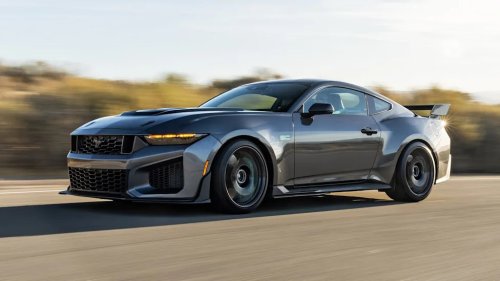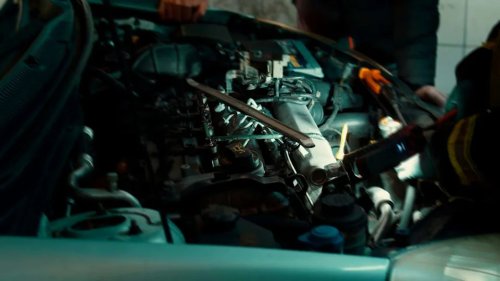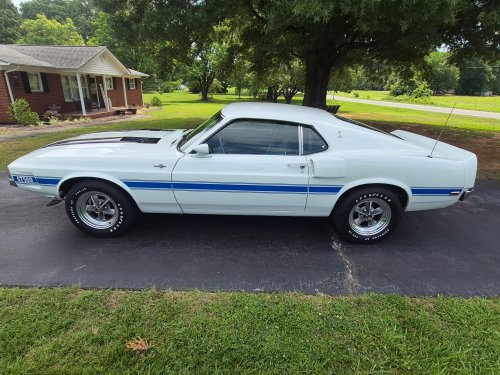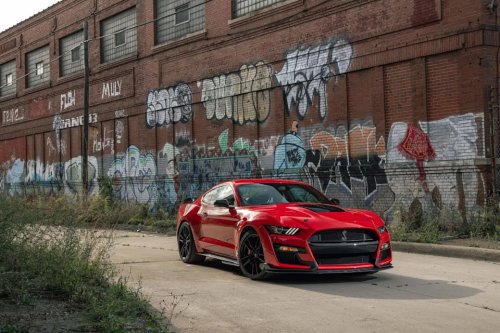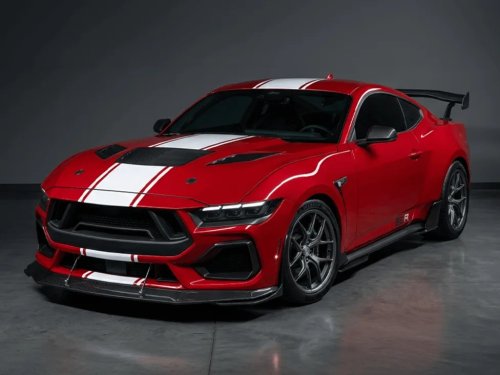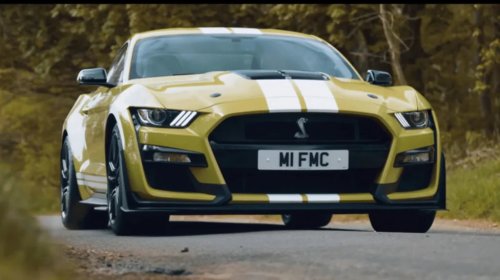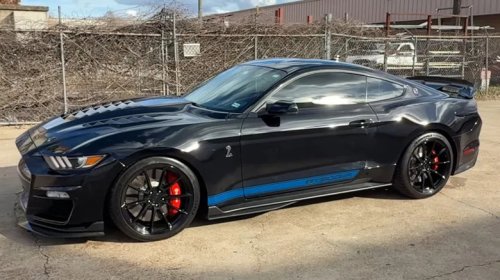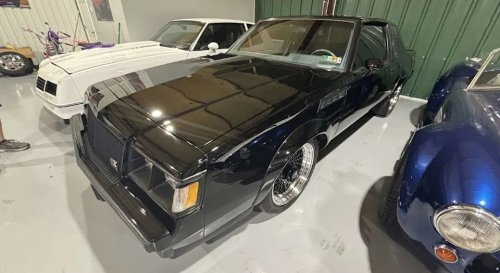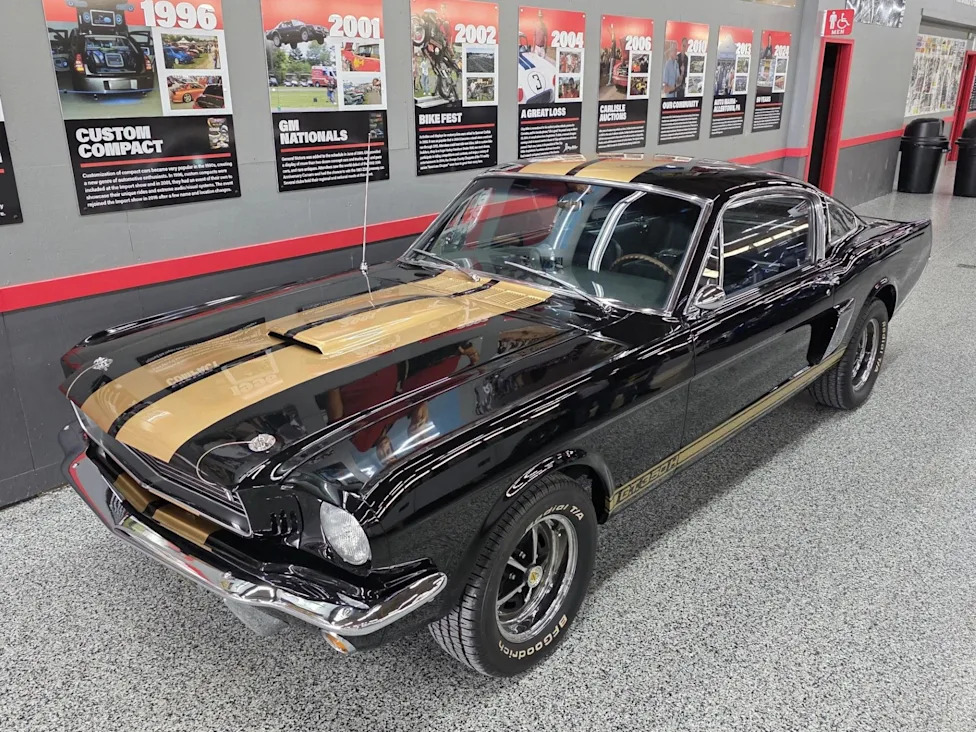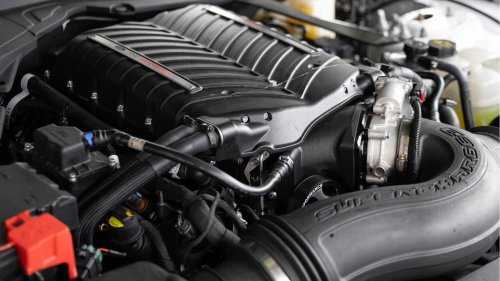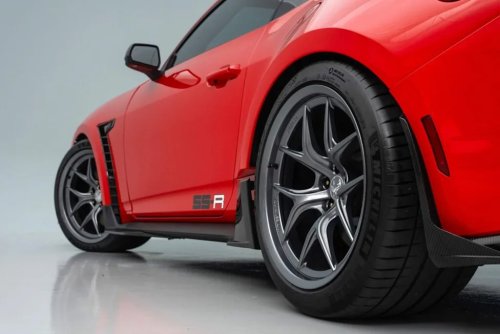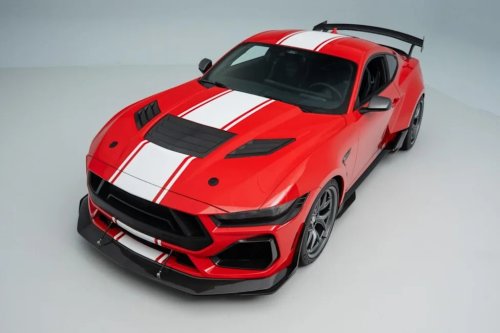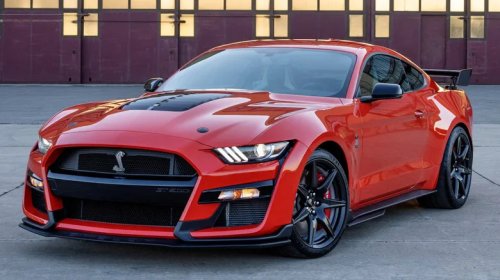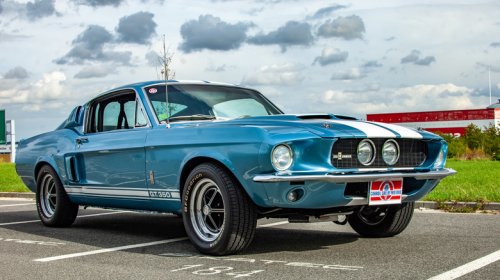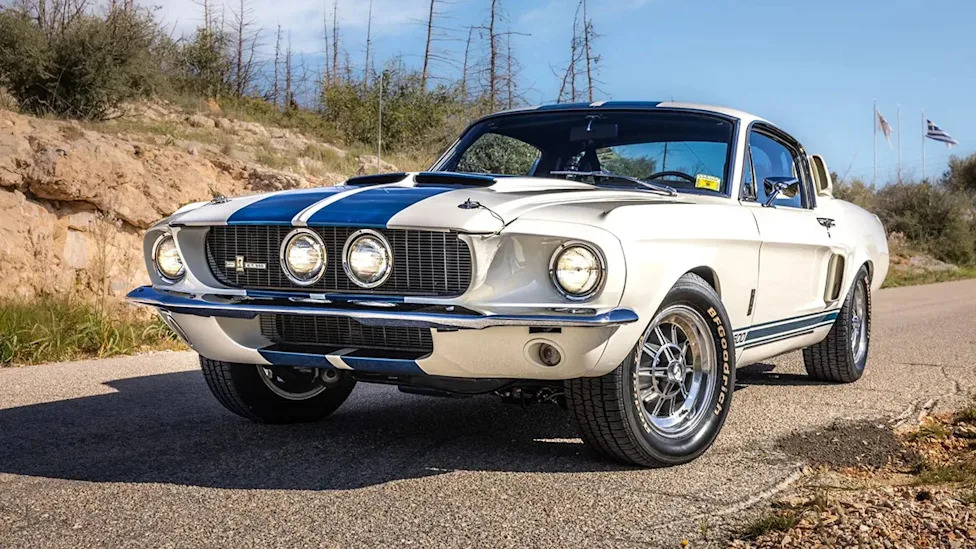



















Robert Pattinson Bought a Shelby Mustang and Can’t Remember Which One — But He Remembers the Part That MattersBackfire NewsEL PuckettFri, September 18, 2026 at 8:00 PM UTCAdd us on GoogleRobert Pattinson Bought a Shelby Mustang and Can’t Remember Which One — But He Remembers the Part That MattersRobert Pattinson, talking to GQ around his new Jaeger-LeCoultre ambassadorship, worked his way around to the car he bought during Twilight and could not quite land on what it was."I got this Shelby Mustang, which is the car I always wanted when I was a kid," he said. "I think it was a GT350, maybe, or a Fastback, like the one from Gone in 60 Seconds."Then the part that matters: "But you don't realize that it's not a car that you can drive every day. The number of times that I had humiliating experiences, where it would choose to just not start or break down, always in front of enormous groups of tourists or something like that, and I'd have to push it around the corner." His conclusion was that he needed "something that just works."AdvertisementAdvertisementTwilight shot from March 7 to April 21, 2008, based out of the Portland area, with reshoots in Pasadena that August. So the picture is a 21-year-old buying a 1960s carbureted V8 and using it as transportation through a Pacific Northwest spring. Everything that happened next was not bad luck. It was physics operating on schedule.Why a carbureted V8 strands you, specificallyPeople say old cars are unreliable and leave it there, which is useless. The failure modes are known, repeatable and almost all traceable to four systems that modern cars solved decades ago.The ignition. A period-correct 1960s Ford V8 runs breaker points, a mechanical switch with a rubbing block that physically wears against the distributor cam. As it wears, the point gap closes, which retards timing and weakens spark. That drift is continuous and it does not announce itself. Points also pit and burn. A car that started fine last week can refuse today with nothing having visibly changed, which is exactly the "it would choose to just not start" experience he describes.The choke. A carburetor cannot measure what you are asking it for. On a cold, damp 45-degree Oregon morning it needs a choke plate to richen the mixture, and factory automatic chokes work off a thermostatic coil that gets lazy with age and carbon. Too little choke and it will not fire. Too much and it floods, at which point you are holding the throttle wide open and cranking while people watch.AdvertisementAdvertisementThe fuel pump. A mechanical pump driven off the camshaft pulls fuel through the line rather than pushing it. That means the entire supply line sits under vacuum, and warm fuel in a warm engine bay can boil in the line, creating a vapor lock that the pump cannot move. The classic presentation is a car that runs perfectly, gets shut off, sits 20 minutes in the sun, and then will not restart until it cools. Modern cars do not do this because the pump lives inside the tank and pushes.Cooling. A 1960s V8 with a belt-driven fan has no thermal headroom at idle. The fan only moves air proportional to engine speed, which is backwards from what you need, because sitting still in traffic is exactly when airflow disappears. Add an aging radiator with partially blocked tubes and a stop-and-go commute becomes a temperature-gauge staring contest.Then, if it really was a GT350, layer on the specific problem: that car was built as a homologation special. Solid lifters that need periodic adjustment, a cam ground for high-rpm breathing, a suspension set up for handling rather than potholes, and in the early cars a locked or aggressively limited differential that fought you in parking lots. It was never intended to be a commuter, and Shelby built cars to win races rather than to be pleasant, and did not pretend otherwise.About that Gone in 60 Seconds comparisonWorth untangling, because it trips up a lot of people shopping for one. The hero car in the 2000 film is a 1967 Mustang fastback restyled to evoke a GT500. It is not a Shelby that left the factory as a Shelby. That distinction is the entire ballgame on value, since a real Shelby carries a documented serial number and registry history and a tribute car carries neither.AdvertisementAdvertisementIt also has a market of its own now. The first officially licensed Eleanor build has been offered for sale, which is a strange thing to be able to write about a movie prop lineage, and a useful reminder that "looks like the film car" and "is a Shelby" are two separate purchases at two very different prices.What you actually do about itIf you want a 1960s Shelby or a fastback and you want to drive it more than four times a year, there is a well-trodden list, and the smart version of it is reversible. On a documented car, every irreversible change costs you money at resale, so the rule is: keep the original parts in a labeled box.Electronic ignition conversion. A points-replacement module that fits inside the stock distributor eliminates the single most common no-start cause, holds timing indefinitely and cannot be seen with the distributor cap on. It is the highest-value modification available to a classic V8 owner, and it unbolts.An electric fan with a thermostatic switch. Decouples cooling from engine speed and fixes traffic overheating outright.AdvertisementAdvertisementAn electric fuel pump, or a return-style line. Pushing fuel instead of pulling it ends vapor lock. A low-pressure electric pump near the tank, feeding the stock carburetor, solves it without touching the induction.A modern alternator. Early cars with generators or low-output alternators cannot keep up with headlights, wipers and a heater simultaneously, which is a problem in Oregon specifically.Full EFI retrofit, if you are willing. Self-learning throttle-body systems now bolt onto a standard four-barrel intake and give you cold starts, altitude compensation and no more choke. It is the most transformative change and the most expensive one, and on a numbers-matching Shelby it is also the one that will generate an argument with the next buyer.The part that is quietly funny"I need something that just works" is a reasonable thing to want, and it is also getting harder to buy than it sounds. J.D. Power's 2026 Vehicle Dependability Study put the industry at 204 problems per 100 vehicles, the worst result since the study was redesigned in 2022. Premium brands scored worse than mass-market ones, 217 against 200. The single biggest problem category was infotainment at 56.7 problems per 100 vehicles, and four of the five most-reported individual problems involved connecting a phone.AdvertisementAdvertisementLexus topped the study for the fourth straight year at 151. So the answer to Pattinson's question exists. It just means accepting that the thing which reliably starts every morning is not going to make anyone look up when it does.There is a version of this story where a celebrity gets mocked for not knowing what car he owned. That misses it. Buying the poster car at 21, discovering it needs to be understood rather than driven, and giving up is the most common arc in this hobby. Most people just do it without tourists watching.Your Turn: Do you know every detail of your own car, or are you a little fuzzy too? Let us know in the comments.