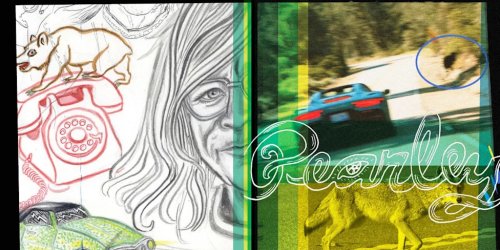
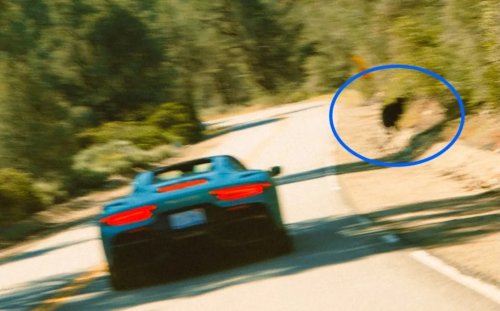
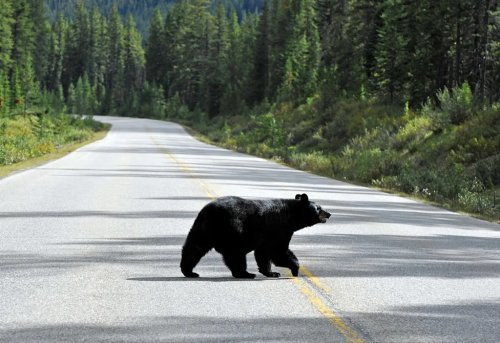
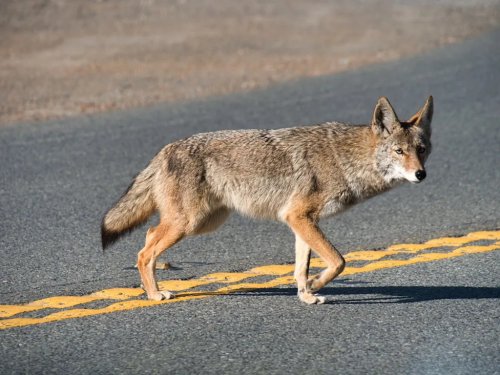
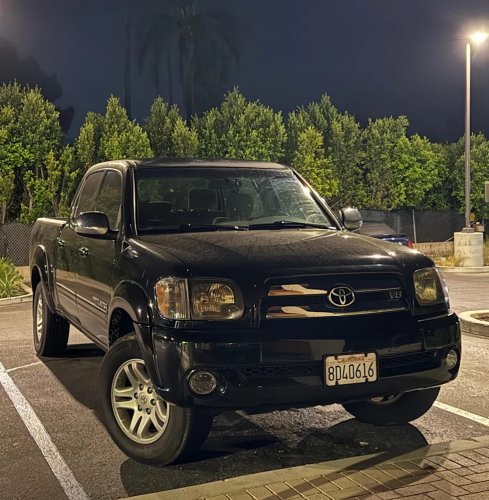
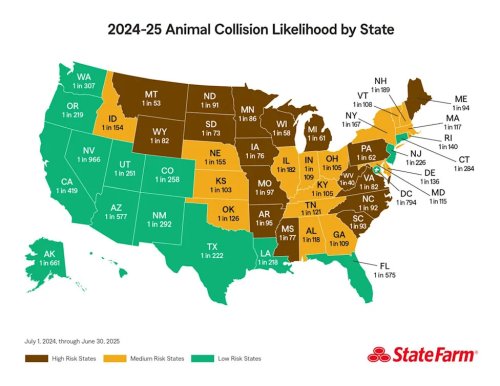
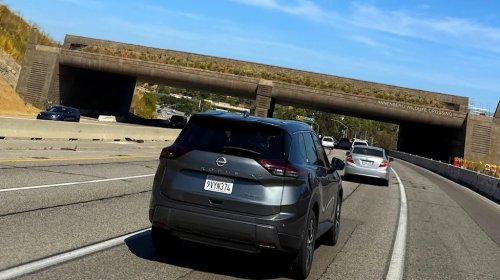
Pearley: Roadkill Leaves a ScarILLUSTRATION BY JULIE MURPHY / PHOTOGRAPHY BY JC Shamrock - Getty Images (ILLUSTRATION BY JULIE MURPHY / PHOTOGRAPHY BY JC Shamrock - Getty Images)My job was easy. I was the second driver with Zac Palmer in putting together his comparison of the Maserati MCPura Cielo and McLaren Artura Spider. It was Zac's story. All I had to do was keep whichever car I was driving right side up and do whatever photographer Jonas Jungblut needed doing.Along the empty backroads of eastern Ventura County, we blasted along without doing anything particularly stupid. Then, around a corner in one of the more wooded areas, there was a California brown bear sitting in the middle of the road. Except that the California Brown Bear is extinct, so what's now left in the state are various shades of American black bear. Whatever. It was A BEAR… in the middle of the road. Oblivious up to the moment two mid-engine sports cars startled it. With bear-like indifference, it thought whatever it is bears think, and trotted off long before we got near it.Jonas nearly got a good photo of it. Nearly.That's a bear inside the circle. It wouldn't stop and pose with the Maserati.Jonas Jungblut (Jonas Jungblut)The startling thing about seeing this bear in the road, in that space between the Pacific Coast and the I-5, is that I can still be startled. Just when I think I've seen everything, there's a bear in the road.This bear was photographed in Canada. But it's close to what we saw in California.oversnap - Getty Images (oversnap - Getty Images)A few weeks later, I was back in Ventura County wandering around in my old Toyota Tundra. It was the day after my birthday, and I was on a therapeutic drive, clearing my mind's existential cobwebs while contemplating how freakishly old I am. It was already late as I drove through the city of Ventura. Then a dove gray cat bolted out in front of my truck. I just missed it.AdvertisementAdvertisement"In all the years I've been driving," I thought to myself as the cat skittered away, "I've never hit an animal. That's lucky."A few minutes later, heading along CA-33 (the straight part before the good part) between the 101 freeway and the town of Ojai, I was doing about 70 mph in the left lane. Suddenly, a coyote bolted out in front of me.Time expanded, a millisecond became a moment, and I registered the coyote's features in the dim illumination of the truck's headlights. Brown, blonde, and reddish fur, alert ears pointing skyward, a long snout, lean body, and goldish brown eyes staring straight at me.Coyotes in California weigh in at between 10 and 35 pounds according to the state's Department of Fish and Wildlife. That's no match for a Toyota pickup doing 70 mph.JC Shamrock - Getty Images (JC Shamrock - Getty Images)Then I heard a thud as my truck's plastic bumper cover hit the coyote's body, and I felt the left front tire roll over its body. I pulled into the right lane, slowed down, and a Lexus RX sped past me. At the first exit, I got off the 33 and pulled under the first streetlight I came upon. I feared that not only would the truck be damaged, but that I'd be looking at gory viscera. Thankfully, there was no apparent damage and no sign of the coyote I had hit.AdvertisementAdvertisementI got back on the 33 and headed back toward Ojai. A few yards up, there was the coyote's lifeless body in the left lane. A few minutes earlier, it had been alive, obeying its coyote instincts and pursuing coyote things. Now it was a carcass for drivers to avoid. Coyotes haven't evolved to deal with four lanes of traffic ripping at 70 mph.I was tempted to stop and move its body. But my self-preservation instincts thought better of it. And it was already about one in the morning.My Tundra a few minutes after hitting the coyote and parked at a Starbucks. I was looking at it while I wrote about the incident. No damage to the truck.John Pearley Huffman (John Pearley Huffman)Driving into Ojai, I stopped at a Starbucks on the edge of town. It was closed, but wicker chairs and tables were still outside. I had my laptop with me and wrote out my thoughts immediately, which I posted on my Facebook.Insurer State Farm released data in 2025 estimating more than 1.7 million insurance claims involving animal collisions between July 1, 2024, and June 30, 2025. That left American drivers with a 1-in-139 chance of hitting an animal during the year. In some states, hitting an animal during a driving lifetime is a near certainty.AdvertisementAdvertisement"I hit at least one," reports my friend Luther Abel from his redoubt in the wilds of Wisconsin. "A chipmunk. I felt horrible." According to State Farm, drivers in Cheese Land have a one in 58 chance of making a claim after hitting an animal. The third most likely of the states for such an event.My cardiologist, Michael Shenoda, hit a deer with his car while living in Michigan. "It totaled the car," he explains while rolling up his left sleeve. "And I have a slight scar on my arm from the hot airbag." Michiganders are number four on the State Farm's probability list at one in 61. But Michigan has almost twice the human population of Wisconsin, so that explains why, during my every trip to that state (where my bosses are), I'm amazed by all the roadkill.Numbers one and two on State Farm's survey are West Virginia at one in 40 and Montana at one in 53. But both those states are lightly populated. Pennsylvania comes in at number five, with a one-in-62 probability, and has a population slightly higher than Michigan's. So, Pennsylvania is where the greatest number of claims are filed.States with many rural roads have higher incidents of animal collisions, according to State Farm. The danger to animals is obvious, but the danger to drivers varies by animal size. Hitting a moose in Alaska or a wild boar in Texas is more dangerous than a snake in Nevada.State Farm® (State Farm®)Deer are the animals most likely to be hit, and white-tailed deer weigh between 90 pounds for a small doe and 300 pounds for a large, mature buck. Hitting a chipmunk is sad, but hitting a deer can be seriously consequential for all parties involved. State Farm reports that 1.1 million of the 1.8 million claims from animal collisions come from hitting deer. In 2023, 235 Americans died in car crashes with animals, according to the IIHS.AdvertisementAdvertisementHere in California, the odds of hitting an animal resulting in an insurance claim are one in 419. But my truck's encounter didn't result in an insurance claim. Intuitively, it makes sense that most collisions with smaller animals—dogs, cats, squirrels, raccoons, skunks, rats, and the like—will not produce enough damage to result in a claim. That has me concluding that virtually all of us who drive will eventually hit an animal of some sort.What's astonishing about my hit with the coyote is how it has reached a part of me I only suspected existed. I've owned and loved animals that died on the road—Walter the German Shepherd and Val, my gray-and-white cat, come to mind—but I remember them for how they lived as companions and pets. What I have with that coyote is an image of the unsuspecting look on its face. That instant is all I knew of the animal, but it's a bond nonetheless. The image will be with me the rest of my life."All animals are equal," wrote George Orwell in his novel Animal Farm, "but some animals are more equal than others." Coyotes aren't an endangered species in California. To many, they're pests. Mountain lions, on the other hand, are threatened and magnificent predators. Almost regal. They are far more equal than scrawny coyotes.At the northern edge of Los Angeles County, barely south of Agoura Hills, there's a construction project that has seemingly gone on forever. It's called The Wallis Annenberg Wildlife Crossing, and it spans across the six existing lanes of the 101 freeway. It's a wildly ambitious project to provide a safe path for wildlife above traffic. The Wildlife Crossing's dedicated website features, no surprise, a photo of a mountain lion at its top. After delays and cost overruns, the total to build the crossing has blasted past a reported $114 million. It's scheduled to, finally, open this December, "in conjunction with the P-22 Day Festival," according to one report. P-22 was, of course, a tracked mountain lion known to live in Los Angeles's Griffith Park.The long-delayed, $114 million Annenberg Wildlife Crossing spans the 101 freeway just south of Agoura Hills, California.John Pearley Huffman (John Pearley Huffman)That I live in a country so rich that it can spend that much money to build a heavily vegetated bridge for animals to cross the freeway is kind of amazing. But even if the glamour animal is the mountain lion, some coyotes, deer, and maybe bears and stray chipmunks will get to use it too. And that's gratifying. Ultimately, it's not only animals that will benefit from such a dedicated structure. We humans will also avoid the mental scars that come when our vehicles hit one of those creatures.You Might Also LikeIf You Can Only Own One Car, Make It One of TheseThese Are the Most Popular Cars by State









 +43 others