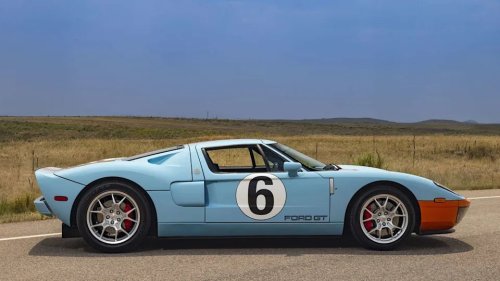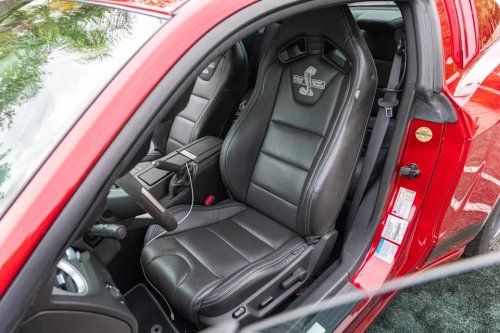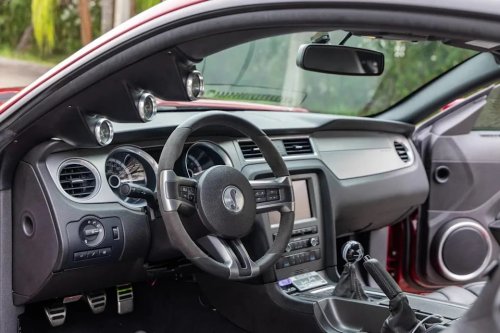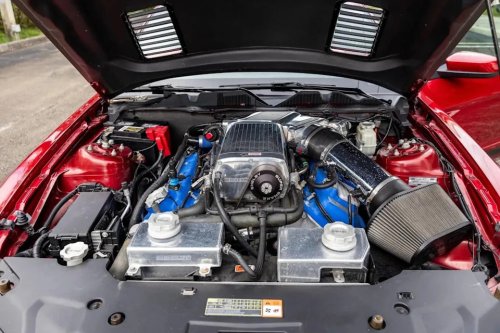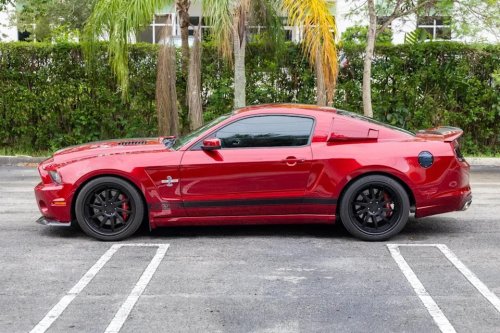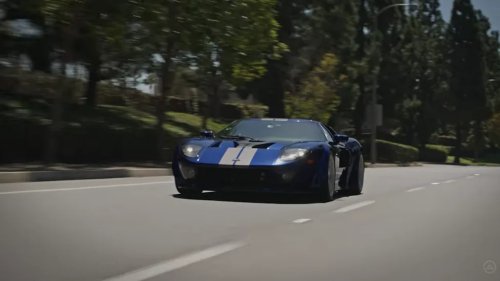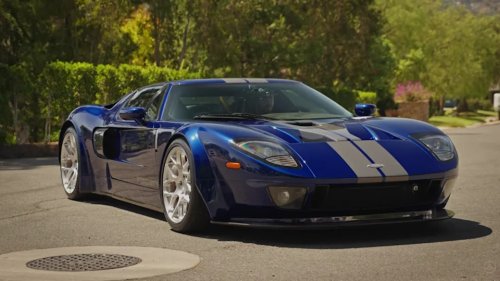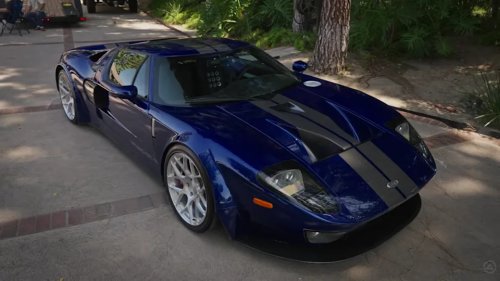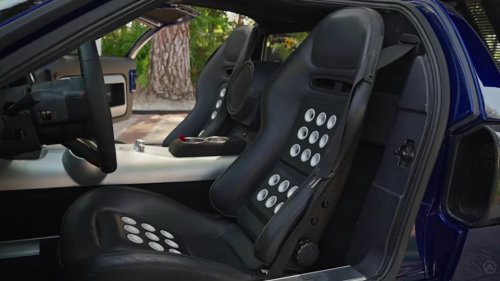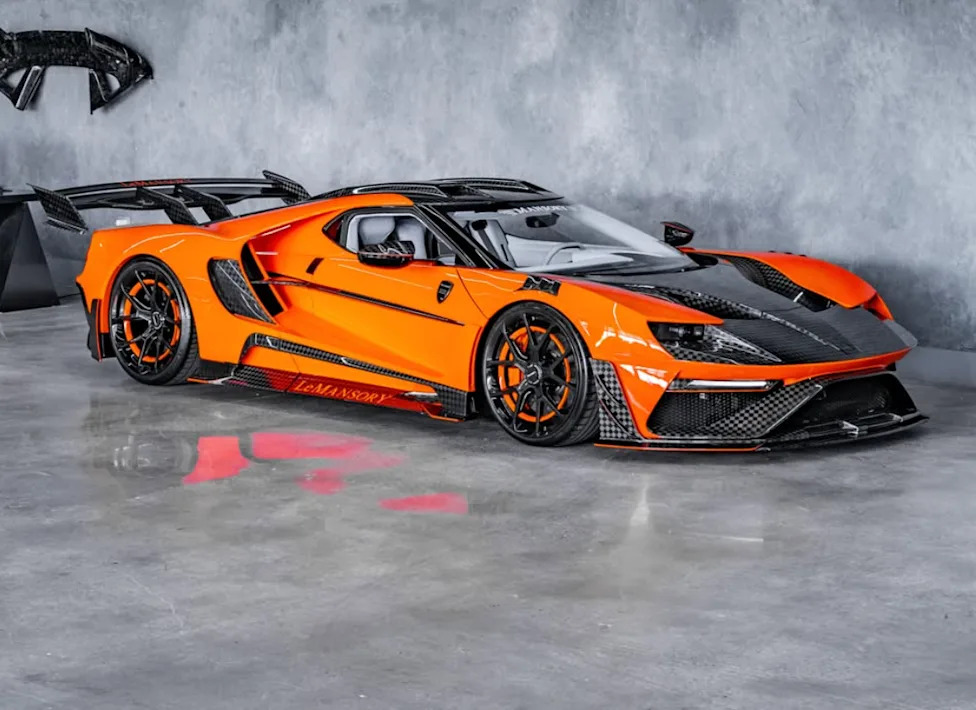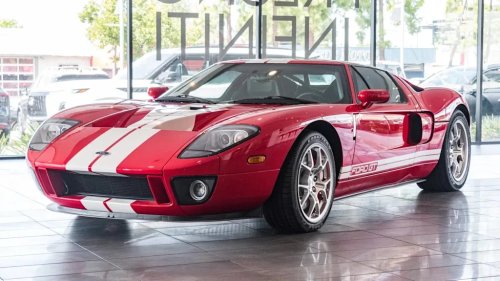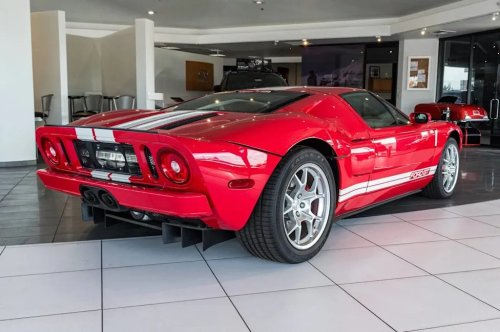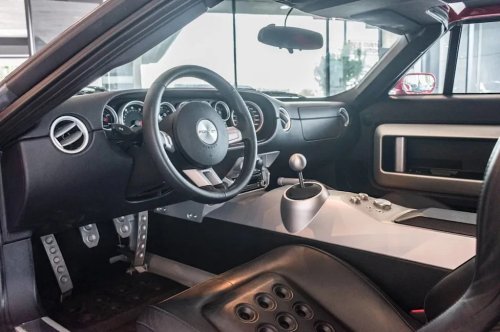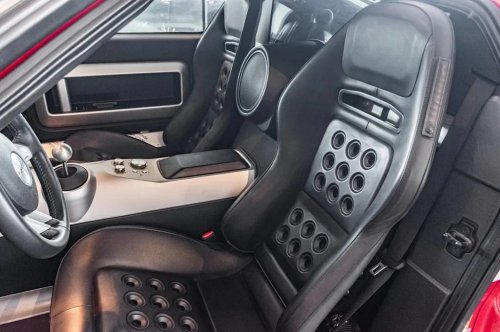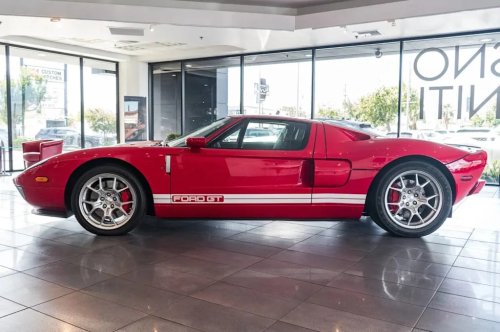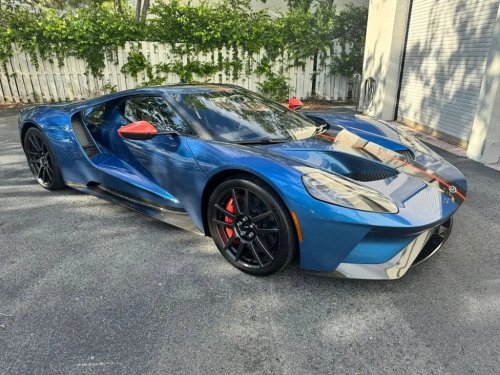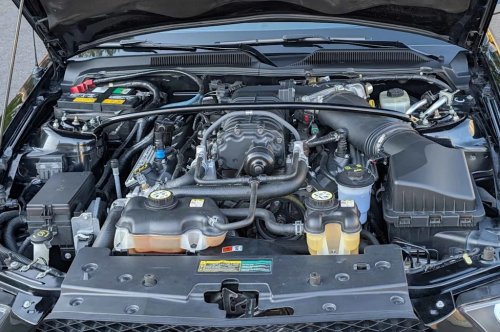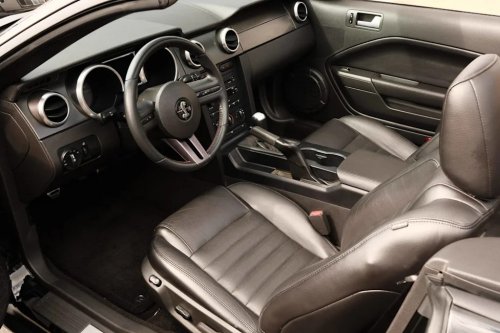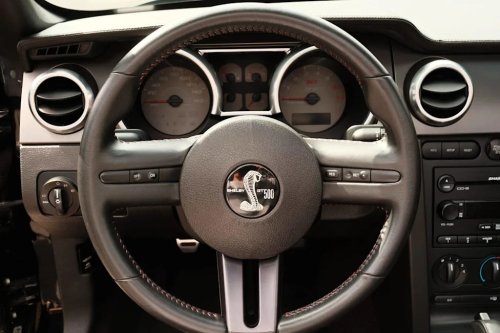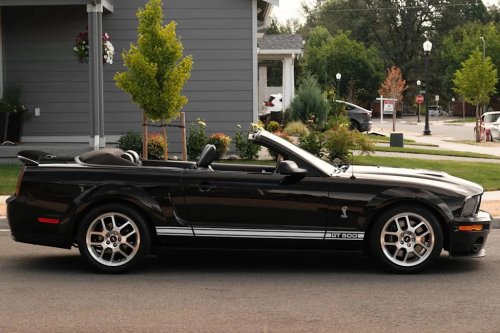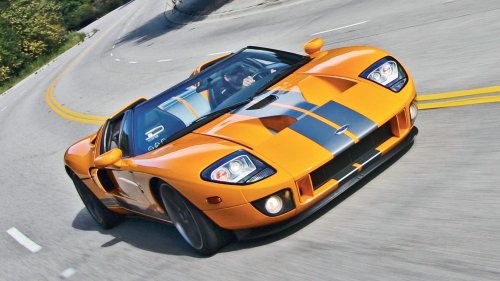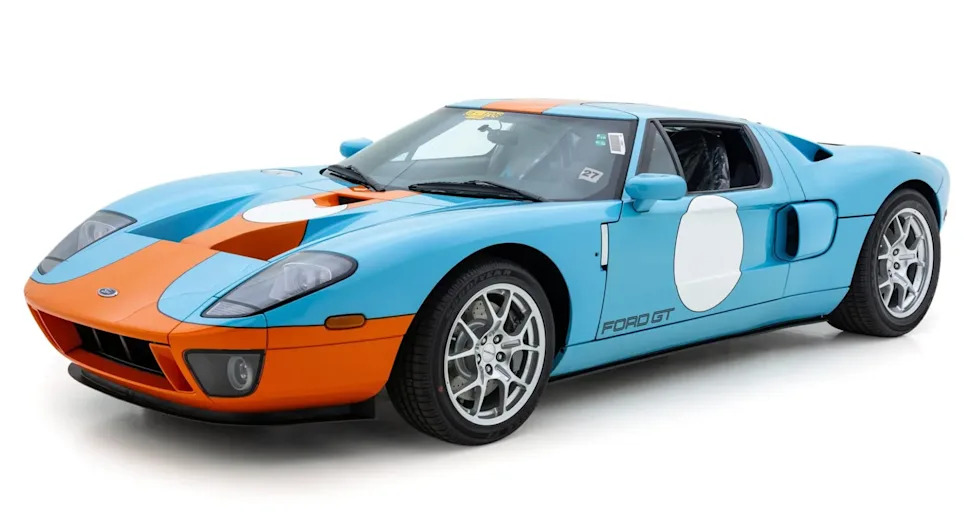


















Record $2.1M Ford GT Sale: The Mileage Cliff ExplainedEight Miles, Two Million Dollars, and the Number Nobody Is Talking AboutThe headline figure from Bring a Trailer's August 4 auction is $2,101,000 — a 2006 Ford GT Heritage Edition with eight miles on the odometer, and the highest recorded sale for a first-generation GT in Classic.com's database. That's the number that traveled. It isn't the interesting one.The interesting one is $451,000.That's the gap between what the car brought at auction and what a dealer had been asking for the same VIN, sight unseen, a few weeks earlier. Chassis 1FAFP90S06Y401706 surfaced in Maryland Heights, Missouri as a fixed-price listing at $1,650,000 on May 19, 2026. Nobody wrote the check. Two and a half months later, the same eight-mile car in an open-bid format produced $2.1 million. Same paint, same odometer, same everything — a 27 percent swing generated entirely by putting two buyers in a room and letting them look at each other.AdvertisementAdvertisementIf you own something rare and you've been quietly shopping it through a broker, that's your data point for the year.The mileage cliff is steeper than you thinkHeritage Edition values in 2026 have not been climbing on a smooth ramp. They've been climbing in tiers, and the tiers are sorted almost purely by odometer.Related ArticlesOne Rivian Hire Reveals the Company's Real Plan for Commercial VansA DUI Camaro Crash Ended Inside a Bedroom — the Insurance Gap Is the Real StoryPull the year's results and the pattern is blunt. A 197-mile car brought $1,320,000 at Mecum's Kissimmee sale in January. A 156-mile car brought $1,292,500 at Mecum Indy in May. Drop to 662 miles and you're at $967,500 (RM Sotheby's Miami, February). At roughly 4,000 miles, $793,500. At 13,000 miles, $660,000. At 15,000 miles, $681,500.AdvertisementAdvertisementSo the market pays roughly $600,000 to go from "driven a little" to "essentially never driven," and then pays another $800,000 on top of that to go from "essentially never driven" to "still has the assembly-line grease pencil on it." Meanwhile, an 8,000-mile Heritage went unsold at Barrett-Jackson's Scottsdale fall auction in October 2025. There is no reward for the middle of the range.For context, Classic.com's benchmark value for a first-gen Heritage Edition sits at $711,059, against $448,306 for a standard-livery first-gen GT. Call it a quarter-million-dollar premium for a paint code. Which brings us to the mechanical reality.You are buying pigmentThe Heritage package changed nothing under the skin. Same mid-mounted supercharged 5.4-liter modular V8, same 550 horsepower, same Ricardo six-speed transaxle, same hydroformed aluminum chassis and Brembos at all four corners. The blue and orange is a finish, not an engineering package. Every dollar of that premium is Gulf Oil nostalgia and a production cap of 343 cars.AdvertisementAdvertisementThat matters for two practical reasons. First, a livery is reproducible in any competent paint booth, and the spread between base and Heritage is now large enough to make a re-shoot financially attractive to the wrong sort of person. Build documentation and VIN verification aren't paperwork fetishism at these prices — they're the entire basis of the premium.Second, "never driven" and "mechanically excellent" are not synonyms. Seals shrink. Fuel systems varnish. The GT runs a dry-sump oiling system that has no interest in sitting for twenty years. Hagerty's model notes on the first-gen flag early-production electrical faults, suspension control arm issues, main seal oil leaks, and axle bolt failures across the run — all corrected under warranty at the time. A car that never visited a dealer likely never had those campaigns performed, and the warranty window closed roughly fifteen years ago.The recall problem nobody wants to solveHere's the wrinkle specific to any low-mile 2005–06 GT, and it's worth knowing before you bid.AdvertisementAdvertisementEvery 2005–2006 Ford GT built between February 20, 2004 and September 22, 2006 falls inside NHTSA recall 15V-319, Ford's 15S21 campaign, covering Takata PSDI-4 driver-side inflators. Ford's Part 573 filing puts the combined GT and Mustang population at 1,018,622 vehicles with an estimated defect rate of 100 percent, and describes the failure mode plainly: the inflator can rupture in a deployment event. A separate passenger-side campaign, 16V-384, swept in GTs sold or registered in high-humidity states.Now solve that for a wrapper car. The remedy requires a dealer, and getting to a dealer requires either a transporter or miles on the odometer — and on this car, miles are worth something in the neighborhood of $100,000 apiece. Ford has used mobile technicians and towing for Takata remedies elsewhere, which is the only sane path here. But it means the "untouched since assembly" claim and "recall-complete" claim exist in tension, and the buyer of any static GT should be pulling the VIN through NHTSA's free recall lookup rather than taking a listing's word for it. Federal law bars dealers from delivering a new vehicle with an open recall; a twenty-year-old collector car changing hands privately carries no such obligation. The open campaign travels with the car.Related ArticlesCalifornia Just Handed Waymo Its Biggest Robotaxi Expansion Yet — 18 Counties, No DriverWashington Dusted Off a 96-Year-Old Tariff Law Nobody Had Ever Used — and Detroit Is the Guinea PigWhat owners should actually doAdvertisementAdvertisementIf you have a low-mile first-gen GT, three things changed this month. Your agreed-value policy is almost certainly stale — a $700,000 declared value on a car the market now treats as a seven-figure asset leaves you underinsured on a monocoque that is difficult and expensive to repair correctly. Your exit strategy should probably involve an auction floor rather than a broker's asking price. And if you were considering driving it, understand that the market has priced each mile at a rate that makes a weekend blast the most expensive tank of fuel in North America.The rest of us get the better end of the deal. The eight-mile cars are now financial instruments. The 15,000-mile cars — same engine, same gearbox, same noise, sorted and serviced and actually usable — are trading at a third of the price. That's not a consolation prize. That's the correct car.Images Via: Bring a TrailerJoin our Newsletter, follow our Instagram page, and connect with us on Facebook.