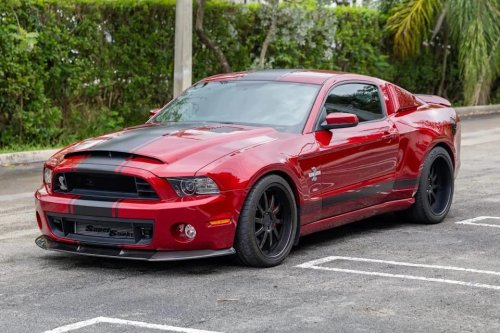
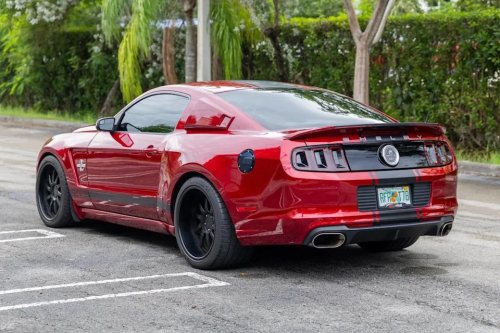
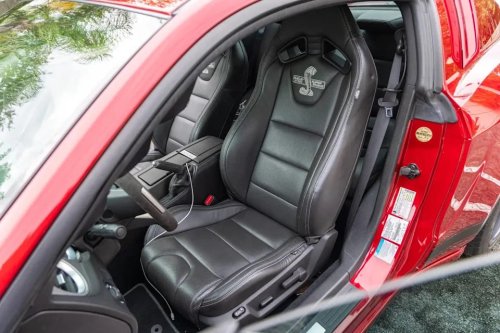
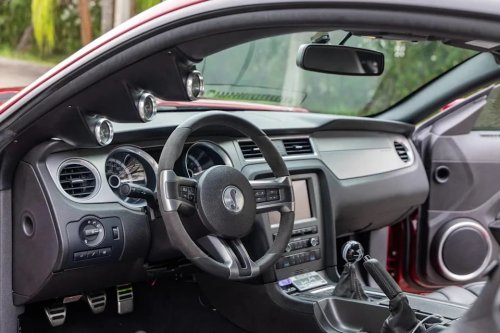
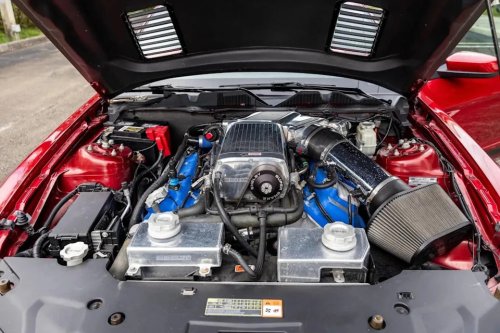
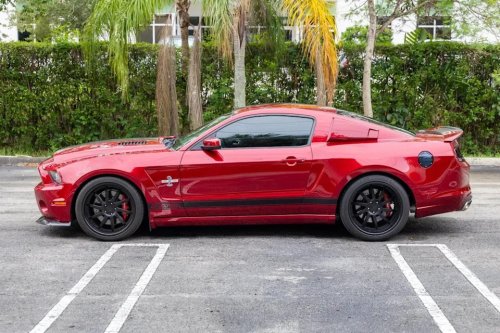
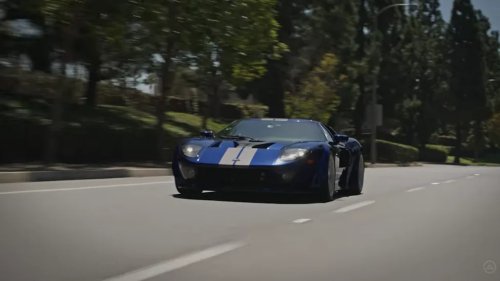
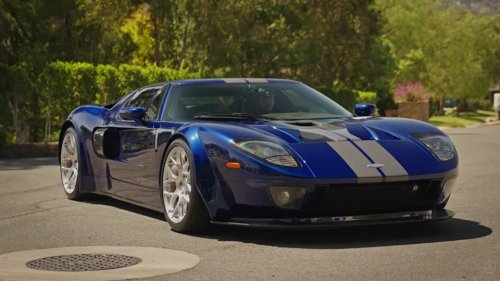
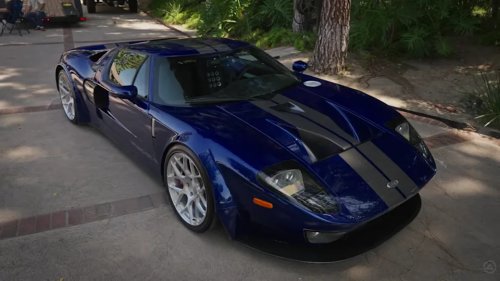
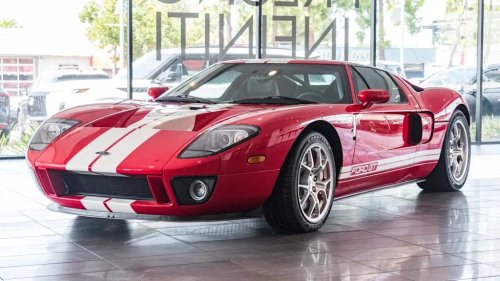
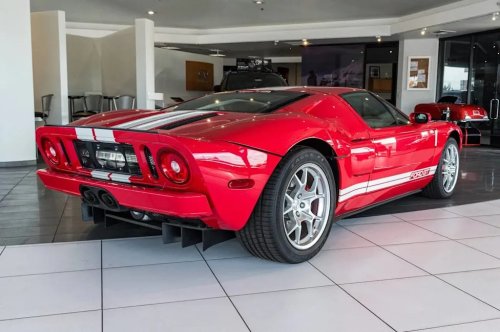
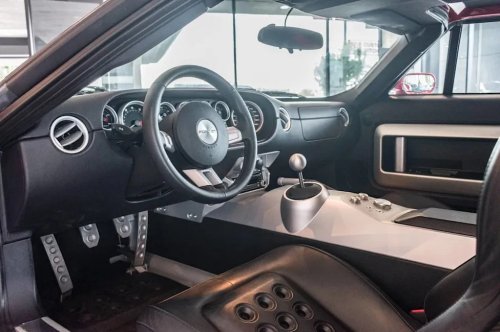
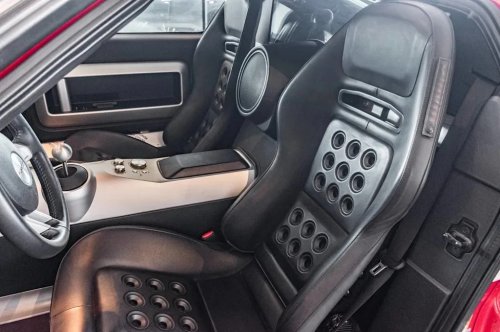
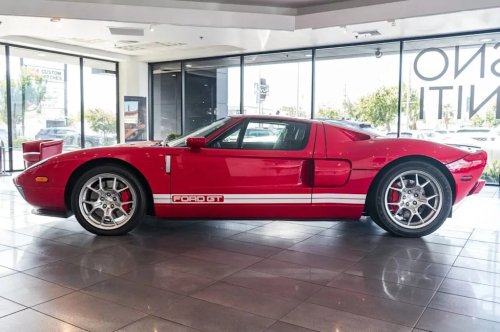
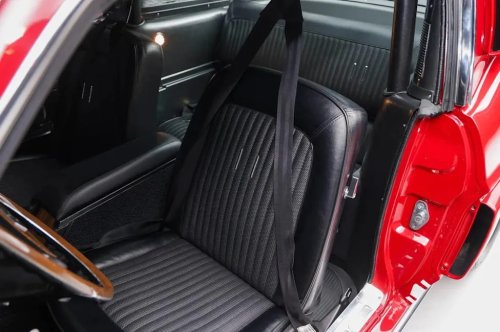
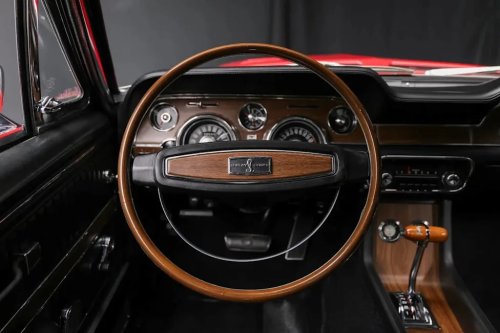
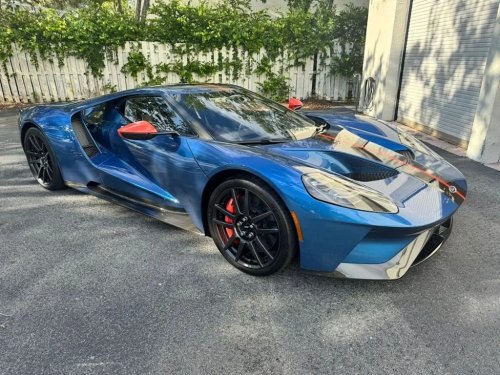
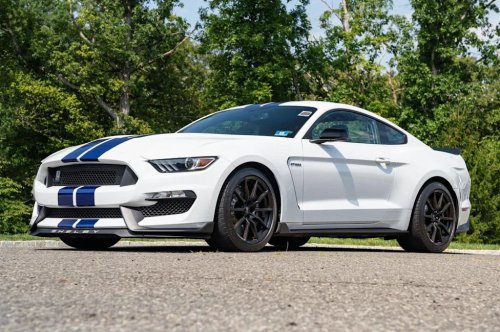
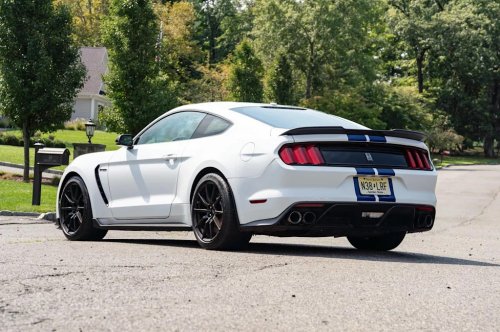
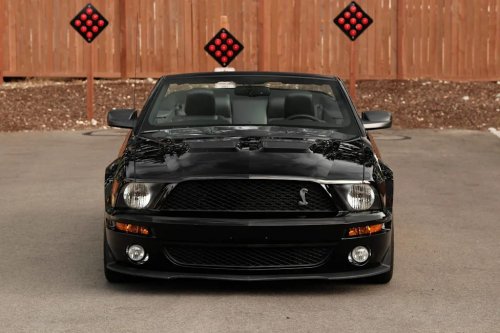
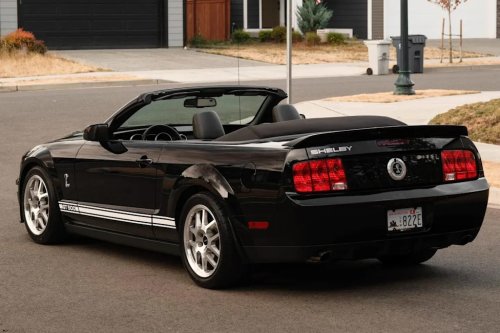
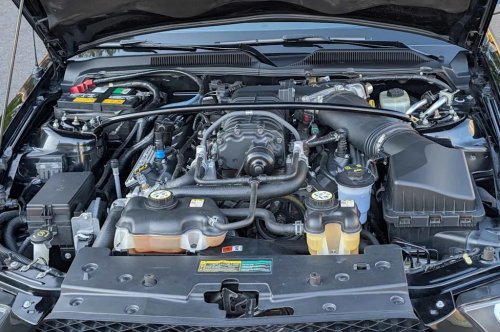
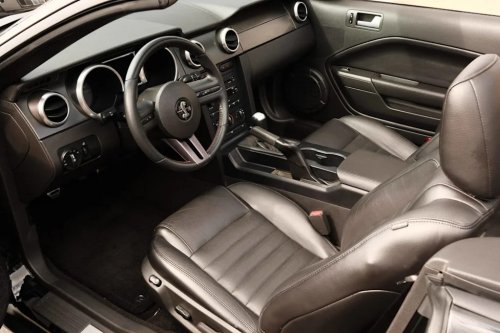
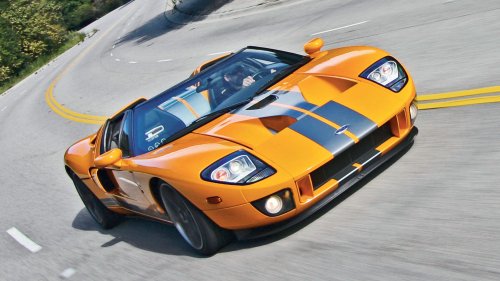
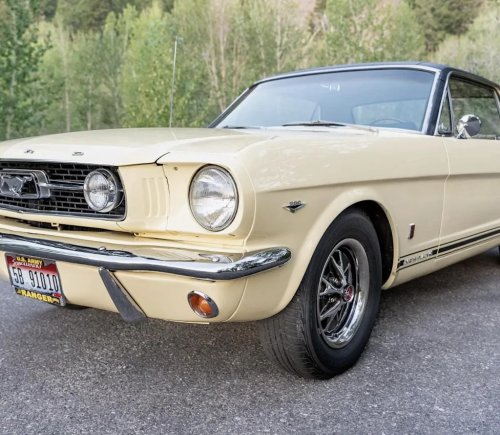
A Modern Ford GT Outbid a Genuine Boss 429 at Barrett-Jackson Las Vegas — And That Gap Is the Real StoryModern Car CollectorShawn HenryTue, September 15, 2026 at 6:30 PM UTCAdd us on GoogleBarrett-Jackson's Las Vegas sale ran September 10 through 12 inside the West Hall of the Las Vegas Convention Center, and the top five results had almost nothing in common with what most people picture when they hear "collector car." A 2019 Ford GT Lightweight Carbon Series topped the docket at $968,000. A 2025 Porsche 911 GT3 RS Weissach followed at $495,000. A heavily customized 1962 Chevrolet Corvette convertible brought $456,500. A carbon-bodied Mustang built to resemble a famous movie car sold for $440,000. And in fifth place — the only genuine, numbers-matching vintage muscle car among them — a 1970 Boss 429 closed the top five at $429,000.The headline is that a modern Ford GT was the most expensive car sold in Las Vegas. The real story is buried a few lines further down that list: a factory-built supercar with barely 1,100 miles on it comfortably outsold a documented, matching-numbers Boss 429 with a genuine NASCAR homologation pedigree. That result isn't an accident, and it isn't really about the Ford GT being "rare" in the way collectors have traditionally used that word. It's a signal about where serious money is moving in this market, and why.The winning GT (Lot #742) came from the Coe Private Collection with a single owner and 1,102.7 actual miles, finished with the factory Lightweight Package, a titanium exhaust and Brembo carbon-ceramic brakes, chassis number K063. Those details matter more than they might first appear. Ford built the second-generation GT in extraordinarily small numbers — 1,350 units across the full 2016-2022 run, assembled at a rate of roughly one car per day at Multimatic's low-volume facility in Markham, Ontario. Just as important, Ford didn't simply sell these cars; it allocated them through a vetting process run by Ford Performance, first to motorsport-connected buyers and later to a curated list of applicants. That allocation history is itself a form of provenance, baked in before the car ever left the factory. It's the same instinct behind a Ford GT that led a record-setting result at GAA Classic Cars this summer — the market has decided that a documented chassis number and a clean mileage history function for the modern GT roughly the way a matching-numbers block once did for a muscle car.AdvertisementAdvertisementThere's also motorsport pedigree behind the number. The GT is a direct descendant of the GT40 that won four consecutive 24 Hours of Le Mans starting in 1966, and the modern car earned its own chapter in that story: a Ford GT won its class at the 2016 24 Hours of Le Mans, fifty years after the GT40's famous 1-2-3 finish. Collectors bidding on this generation of GT aren't simply paying for horsepower or carbon fiber. They're paying for a factory-sanctioned link to one of the most storied programs in American motorsport, delivered in a package that's usable, insurable and requires none of the restoration guesswork of a sixty-year-old race car.None of that makes the Boss 429 any less significant. Built by Kar Kraft in 1969 and 1970 specifically to homologate Ford's semi-hemispherical 429 "shotgun" V8 for NASCAR — an engine that, ironically, never actually raced in the Mustang — the Boss 429 required modified front shock towers just to fit under the hood. Roughly 1,359 were built across both years. The Las Vegas car carried its factory-original, matching-numbers 429, a matching-numbers close-ratio four-speed and a 3.91 Traction-Lok differential, with 16,082 miles on the odometer — about as correct and as documented as this model gets. Genuine Boss 429s remain in steady demand; a recent GAA Classic Cars sale featured several examples crossing the block. What Las Vegas shows isn't that the Boss 429 is losing relevance. It's that the ceiling for a properly documented modern supercar has risen to meet, and in this case exceed, a genuinely blue-chip piece of muscle-car history, in the same room, on the same night.A fastback Mustang in the Boss 429's idiom. The genuine article at Barrett-Jackson Las Vegas carried factory-original, matching-numbers hardware throughout.The car that finished just ahead of that Boss 429 makes the point even sharper. Lot #738 was a 1967 Ford Mustang "Eleanor" Widebody Licensed Carbon Edition — not a surviving vintage Shelby, but a modern tribute built around the fictional character car from Gone in 60 Seconds, powered by a 750-horsepower Roush-supercharged Coyote V8 and finished in a licensed, certified hybrid carbon-fiber body. It sold for $440,000. This isn't a one-off curiosity: a similarly licensed Eleanor tribute sold for $550,000 at Barrett-Jackson's inaugural Columbus auction earlier this year. Two sales, two states, comparable results — evidence of a legitimately repeatable, liquid market for a car whose value has almost nothing to do with factory originality and everything to do with story and image. Collectors have always paid for narrative as much as specification. What's changed is which narratives are now worth six figures.The rest of the top five reinforces the same pattern. The Porsche 911 GT3 RS Weissach that sold for $495,000 was a 2025 model with 4,098 miles — another factory-limited, track-focused car bought new and brought back to market almost immediately at a premium, part of the same broader strength showing up across the modern GT3 family this year. The custom 1962 Corvette convertible at $456,500 wasn't an original or numbers-matching car either; it was built and finished to a personal specification. Four of the five best results in Las Vegas, in other words, were either brand-new-generation supercars or cars deliberately modified or built from scratch. Only the Boss 429 represented traditional, unmodified, factory-original collectibility — and it still finished fifth.AdvertisementAdvertisementFor serious buyers, the lesson isn't that vintage muscle is falling out of favor, or that one Barrett-Jackson sale should be read as a referendum on collector taste generally — a single auction in Las Vegas is one data point, not the whole market. But it is a useful snapshot of where documentation and desirability are converging right now. Chassis numbers, factory allocation records and delivery mileage now do for a modern supercar what a stamped block and a broadcast sheet have long done for muscle cars, and buyers should treat that paperwork with the same seriousness. The tribute-car segment, built almost entirely on licensing, screen accuracy and build quality rather than originality, has matured into its own trackable category with real price discipline, not a novelty on the fringe of the hobby. And genuinely correct, numbers-matching history, while still the safer long-term hold, as recent record prices for cars like a numbers-matching Mercedes-Benz 300 SL Roadster make clear, is now competing directly against cars whose appeal comes from an entirely different source.That's really the takeaway from Las Vegas. Collectors have always paid for stories as much as for specifications. What changed on that sale floor is simply which stories are worth the most right now — and for a growing share of buyers, the story of a factory-allocated, Le Mans-linked Ford GT with 1,100 miles on the clock is worth more than the story of the muscle car that used to define this hobby.Join our Newsletter, follow our Instagram page, and follow us on Facebook.