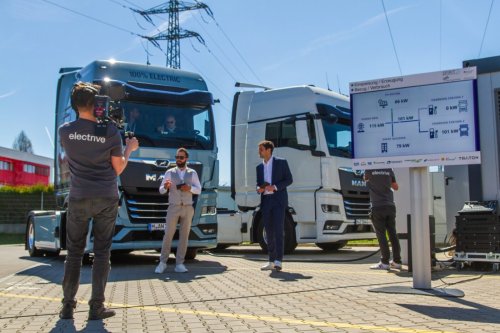
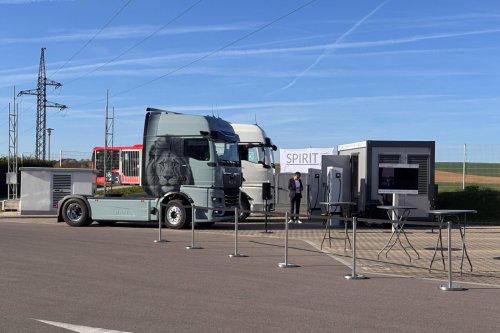
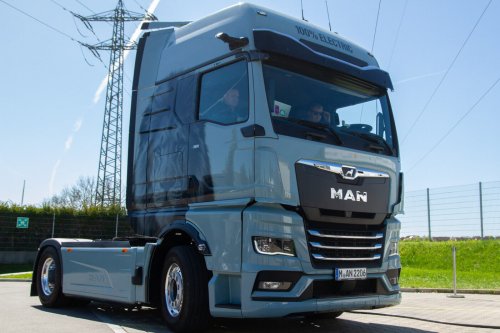
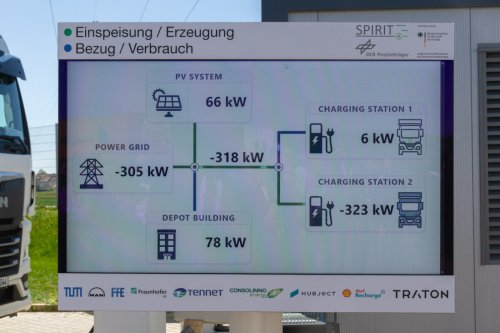
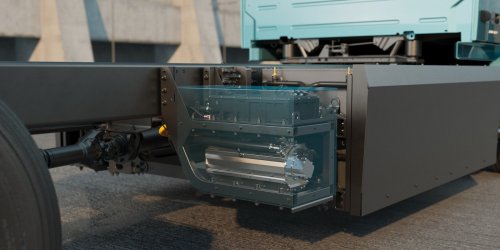
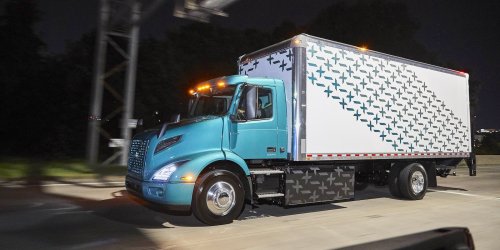
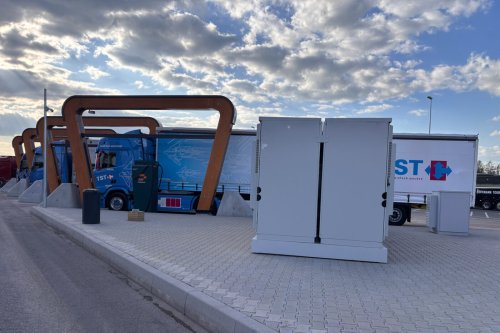
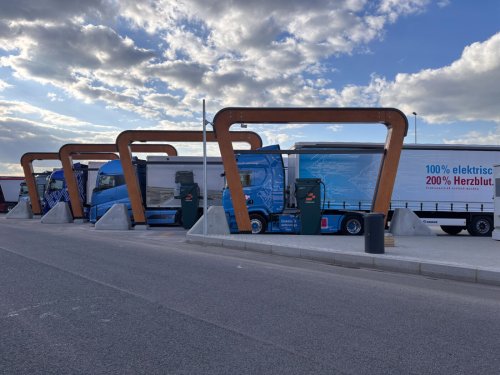
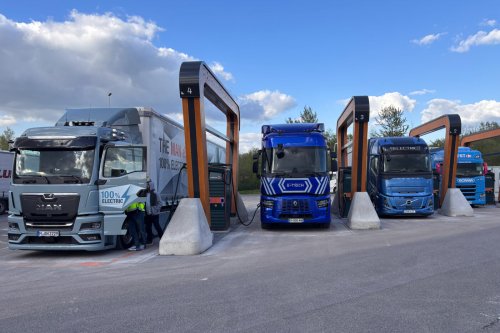
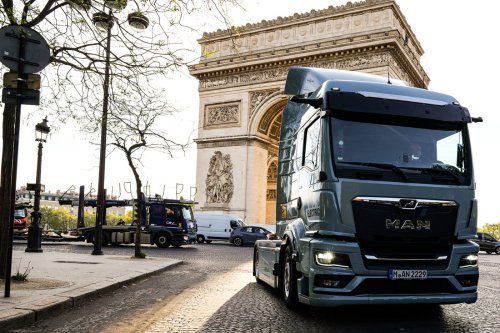
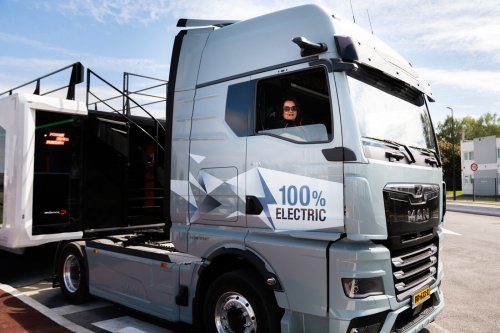
Image: MANThe German research project SPIRIT-E was launched in 2024, aiming to identify barriers to the electrification of heavy-duty transport and develop solutions. A key focus has been bidirectional charging for commercial vehicles so their large batteries can stabilise and support grid functions, smoothing out peaks of renewable energy, making power available when and where it is most needed.The federally funded project is set to run for three years. On Friday, the SPIRIT-E project team publicly demonstrated bidirectional truck charging under real-world conditions at the premises of logistics company Schmid near Regensburg in east of the German state of Bavaria. The demonstration featured a battery-electric MAN eTGX with 480 kWh of usable battery capacity.The consortium behind SPIRIT-E is led by the Technical University of Munich (TU München), with additional partners including MAN Truck & Bus, the Research Centre for Energy Economics (FfE), SBRS, the Fraunhofer Institute IEE, Hubject, Consolinno Energy, and TenneT. According to the project partners, the technology could become a key lever for cross-sector energy solutions, pointing out that bidirectional charging transforms electric trucks into flexible energy storage systems. The research partners point out that enabling the trucks to both charge and discharge energy to and from the grid enhances the economic viability of fleet operations while relieving pressure on the energy system. Image: Peter Schwierz Image: MAN Image: MANThe project team is focusing on three applications: in the Vehicle-to-Site (V2S) and Vehicle-to-Vehicle (V2V) approaches, a company can use the energy stored in the truck’s battery directly at its own site to avoid peak loads, increase self-consumption of photovoltaic electricity, or support building infrastructure. One of the key findings of the project so far is that, in practice, this can lead to savings of around ten to 20 per cent on electricity costs for the user. For a truck covering 100,000 kilometres per year, this could equate to up to 20,000 kilometres “at zero cost.” Both use cases were successfully demonstrated near Regensburg when the specially equipped MAN eTGX charged a second MAN eTGX via SBRS’s bidirectional charging station. The depot’s power supply also functioned seamlessly.The third application highlighted by SPIRIT-E is the Vehicle-to-Grid (V2G) function: here, the electric truck feeds energy back into the public grid—such as during periods of high electricity prices or to support grid stability. The project partners say that this gives operators the chance to generate additional revenue. The SPIRIT-E partners also say that by the end of this decade, V2G is expected to become an increasingly attractive business model, as energy markets, grid services, and logistics processes become more closely intertwined. During the demonstration near Regensburg, up to 325 kW was fed back into the grid from the electric truck. This was the highlight of the event—and a world first!MAN emphasises that it is the first manufacturer in the commercial vehicle sector to functionally demonstrate bidirectional vehicle technology as part of a research project. The MAN truck was specifically modified for the tests. As the project’s main participant, MAN says it has already implemented real energy flows, including nighttime power supply to a building or charging electric cars from the truck’s battery.Georg Grüneißl, Head of Product Strategy at MAN Truck & Bus, comments: “Bidirectional charging is transforming the role of the electric truck. Our eTrucks effectively become power banks on wheels that can help lower energy costs while strengthening the energy system as a whole. SPIRIT‑E has demonstrated the substantial potential of this technology and how electric trucks can actively contribute to the energy transition in the future.”According to the project partners, the use case is likely to be particularly relevant for electric trucks in regional transport with an annual mileage of less than 100,000 kilometres. This also implies that bidirectional charging is not universally suitable for all truck applications. The reason is clear: to recoup the high investment costs for electric trucks, many operators aim to minimise the downtime of their battery-electric vehicles. However, it is precisely these downtimes that are crucial for bidirectional charging, as the truck must remain connected to the charging station for extended periods to absorb and feed back electricity.press.mantruckandbus.com, ffe.de