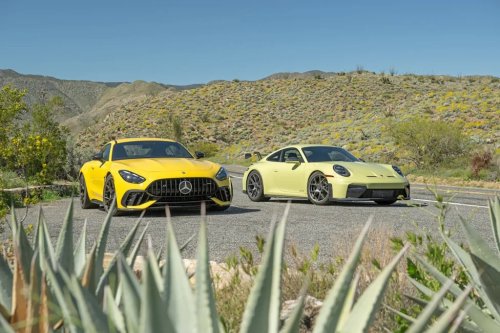
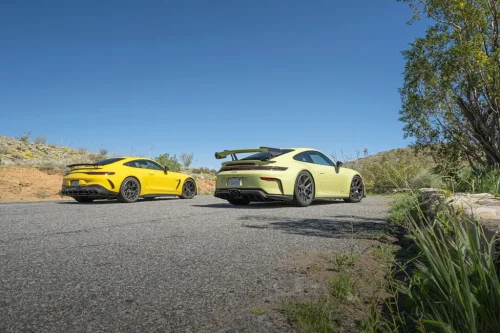
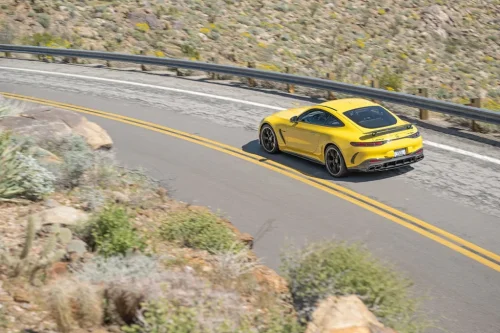
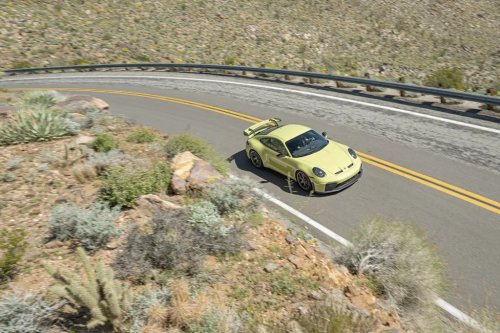
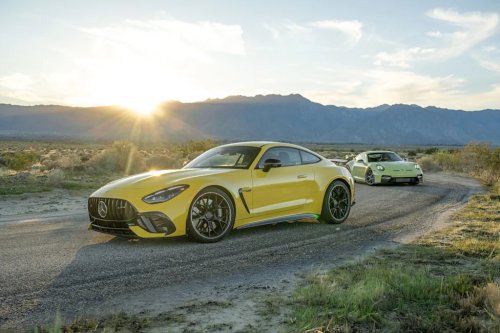
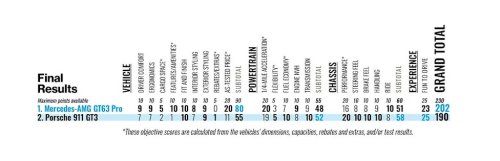
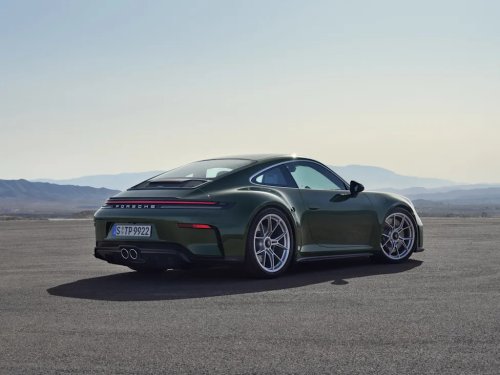
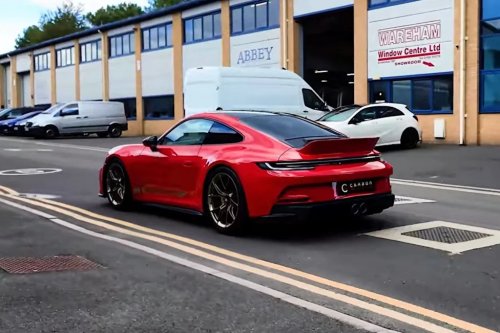
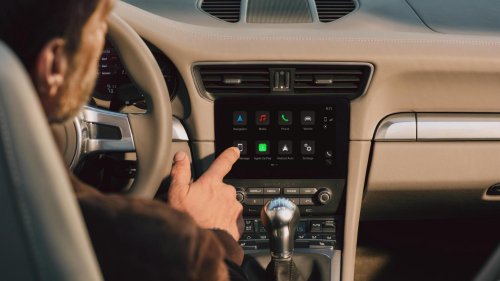
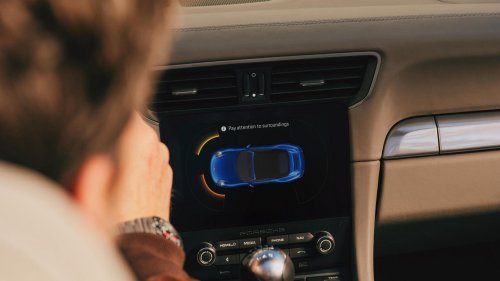
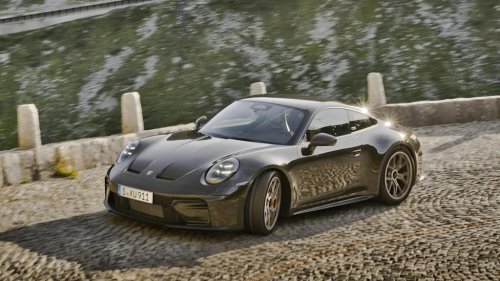
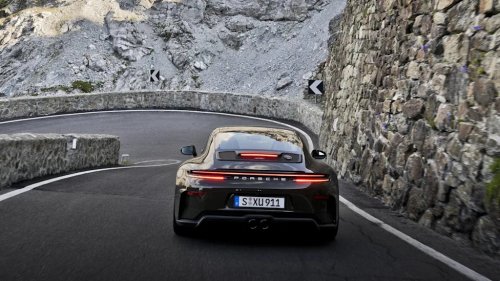
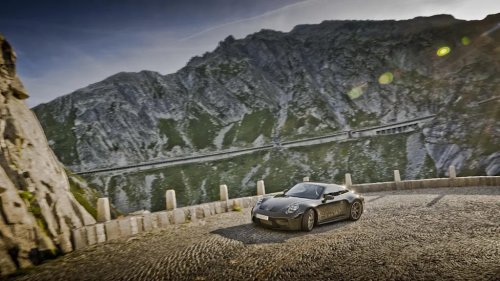
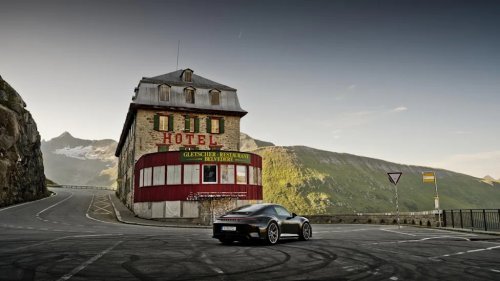
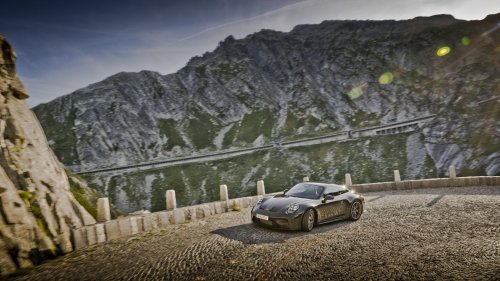
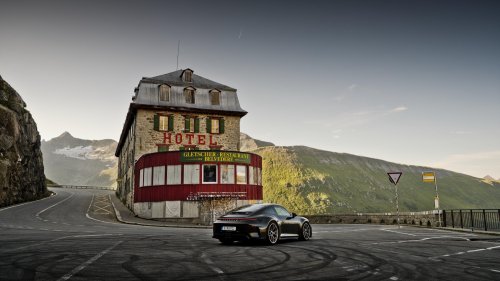
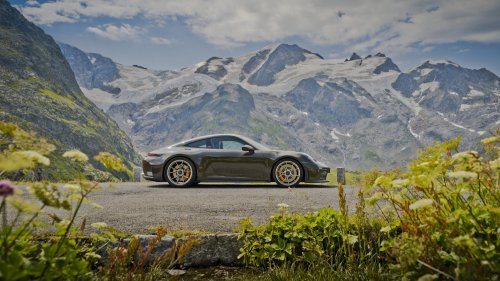
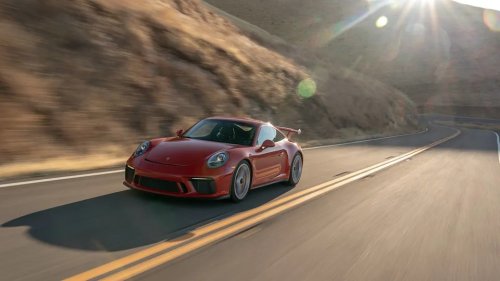
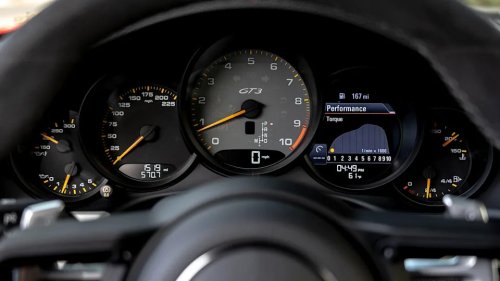
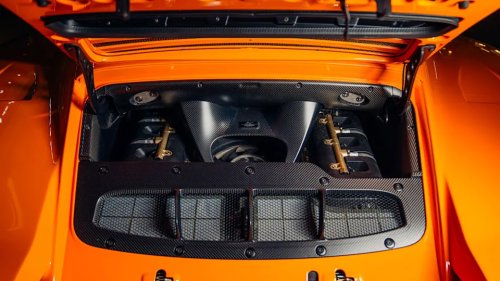
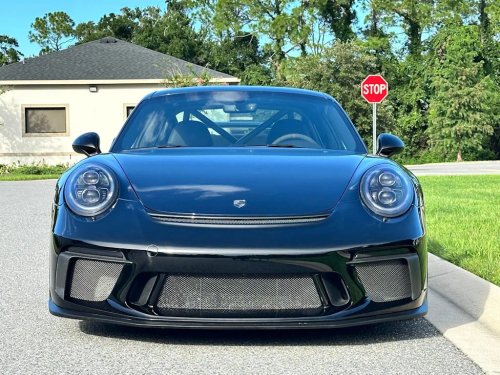
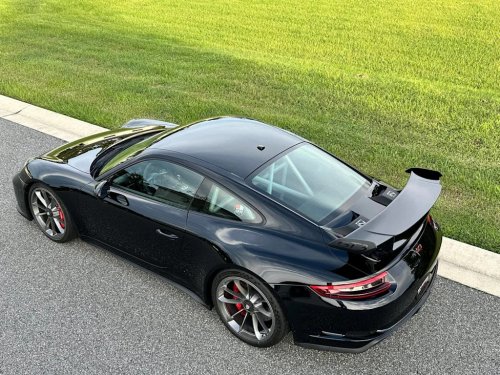
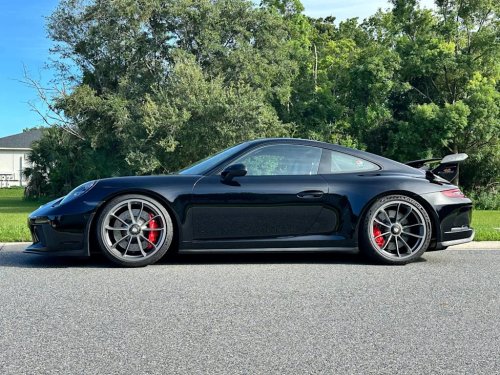
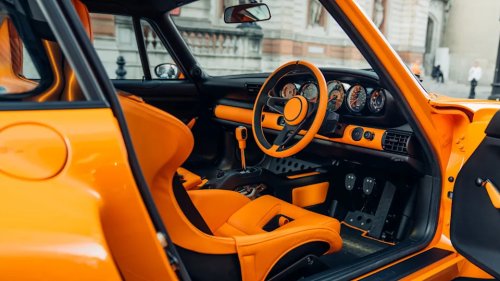
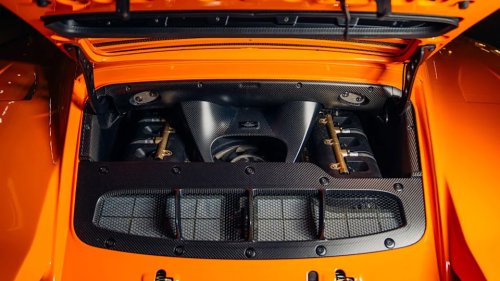
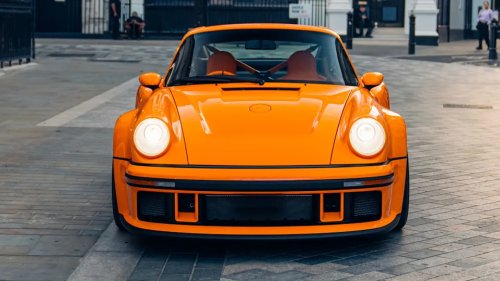
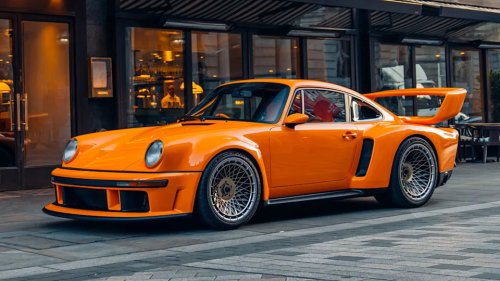
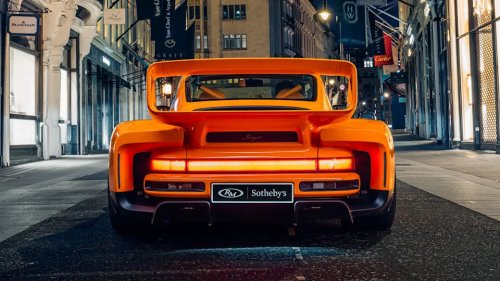
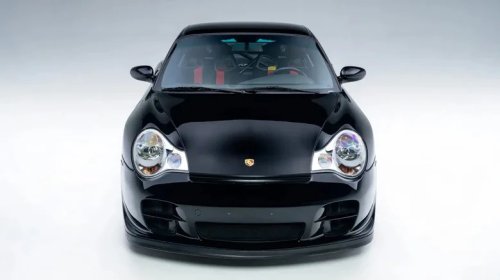
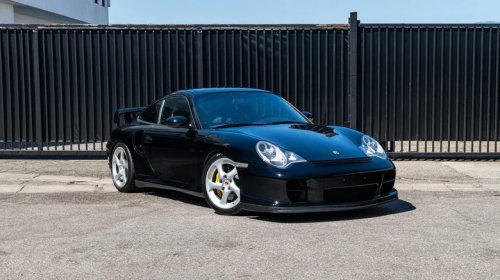
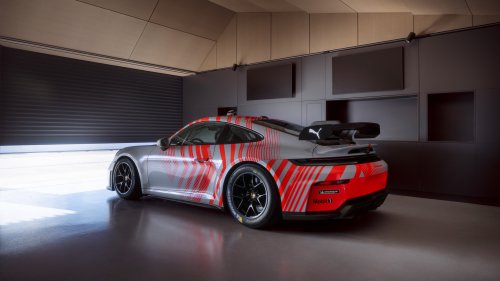
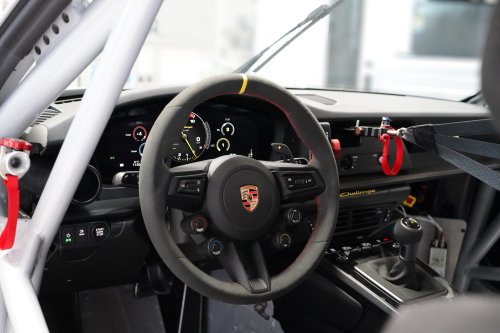
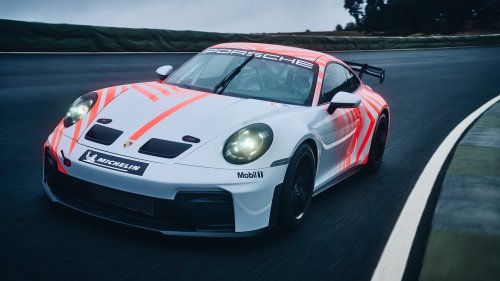
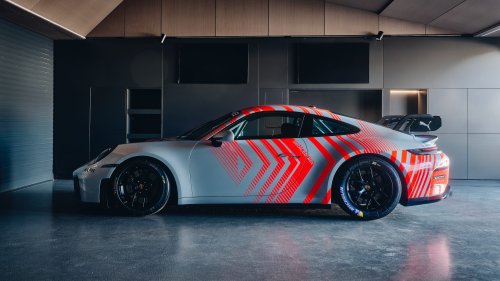
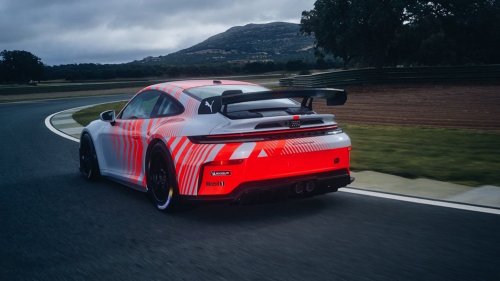
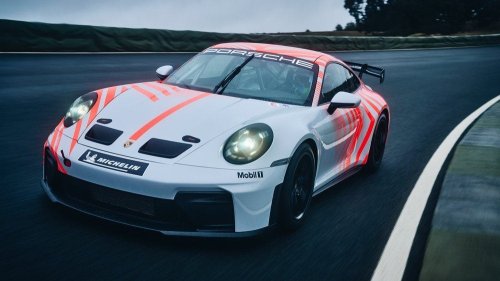
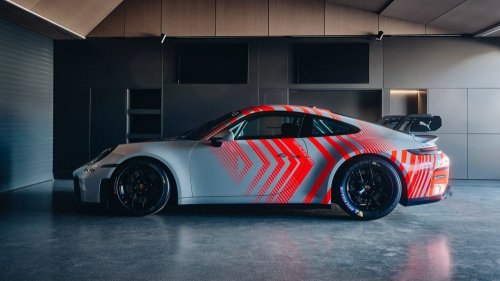
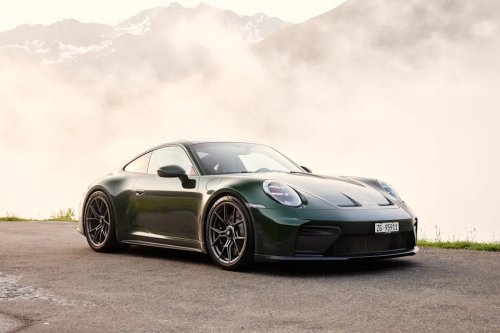
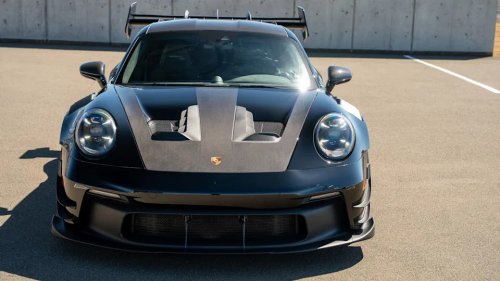
Porsche 911 GT3 vs. Mercedes-AMG GT63 ProJessica Lynn Walker - Car and DriverFrom the July/August 2026 issue of Car and Driver.It's Stuttgart versus Affalterbach, GT3 versus GT63. The GT3 is the most focused and uncompromising version of the Porsche 911, as the GT63 Pro is for the AMG sports-car lineup. Mercedes-Benz's AMG division has had Porsche's 911 in its sights for ages. Does this latest version have what it takes to topple the reigning sports-car king?Under the Mercedes-AMG's extended proboscis sits a twin-turbocharged 4.0-liter V-8 that cranks out a stellar 603 horsepower and 627 pound-feet of torque, with no added electric motors for extra oomph. The wet-sump V-8 pairs with a nine-speed automatic transmission and an all-wheel-drive system that features a front-axle-disconnect mode.AdvertisementAdvertisementThe 911 GT3, on the other hand, stashes a naturally aspirated 4.0-liter flat-six in the trunk. This dry-sump pancake sends its 502 horsepower and 331 pound-feet of torque directly to the rear wheels through a seven-speed dual-clutch automatic transmission. The Porsche also undercuts the mass of the Mercedes by 1058 pounds, 3214 to 4272, with a much smaller portion of its weight on the front axle, 38.7 percent to the AMG's 54.2 percent.The Mercedes-AMG GT63 Pro has a base price of $205,550, and our test example stickers at a relatively modest $216,910. Everything having to do with performance comes standard, including the carbon-ceramic brakes and even the Pro's liquid-cooled transfer case and differentials to extend track work. The only vaguely suspension-related extra-cost item is the $1800 front-axle lift system, which is pretty much necessary if you ever use a driveway. Michelin Pilot Sport Cup 2R tires are a no-cost option. Ditto the Sun Yellow paint. The priciest add-ons were the AMG carbon-fiber trim ($2850), the Driver Assistance package ($1950), and black nappa leather and microfiber upholstery with yellow contrast stitching ($1900). Our test vehicle also had the $1600 black micro-fiber headliner. After that, it was all minor stuff, the list terminating with a $110 AMG fuel cap.Jessica Lynn Walker - Car and DriverThe 911 GT3, meanwhile, starts at $239,850, and our sample, a victim of Porsche's notorious options sheet, rings in at $313,010. Some of the most expensive items on the list are necessary for weight savings. Highlights include the Weissach package ($20,490), forged magnesium wheels ($17,840), and carbon-fiber folding bucket seats ($7270). Together, these features shave a claimed 48 pounds off the car's weight. The wheels account for 20 of those pounds. The rest is down to the lightweight bucket seats and the Weissach package's carbon-fiber roof, front trunklid, rear anti-roll bar, and rear wing. Optional carbon-ceramic brakes ($11,330) bring additional weight savings, not to mention fade-free stopping prowess. Other significant bits include the front-axle lift system ($3890) and Cartagena Yellow Metallic paint ($1580).Interior and ExteriorPorsche strips the 911 bare in GT3 guise, giving the feeling that it is pared down to the essentials. The optional race-derived front seats are tight fitting and feature massive side supports that aren't adjustable. Even the backrest angle is fixed. You can adjust them for height, but they mostly look and feel like racing seats.AdvertisementAdvertisementSimilarly, the steering wheel is covered with microsuede drawn so tight that you can almost feel the tires touching the road, even when sitting still. The GT3 itself is tightly strung and best suited for track work but little else. This Porsche looks the part of a race car too, its wide bodywork festooned with meaningful flips and scoops, punctuated by a glorious stand-up wing.Mercedes-AMG GT63 ProHIGHS: Stonking fast, smoother ride, nicely trimmed inside.LOWS: Less ultimate grip, brakes are a tad grabby, greater thirst.VERDICT: A trackworthy machine that you can daily easily.Intriguingly, the AMG looks oddly similar to the Porsche when viewed from directly behind or the rear-three-quarter perspective, wing and all. Sure, there's a longer wheelbase and a bigger schnoz to accommodate the engine, but if you block out everything forward of the A-pillar, it shares the gently sloping roofline of the 911. What's dissimilar is what's inside, as the GT63 feels like any other Mercedes GT coupe, with fully power-adjustable heated and ventilated seats, an extensive infotainment system, a head-up display, and even a heated steering wheel. It looks absolutely racy but is also luxurious. You will want to take it to the track, but it doesn't make you feel like you must in order to get your money's worth.If you need to pack up and go somewhere, the AMG is the far better choice. In either car, you can put stuff unrestrained in the area where the no-cost back seats would be (rear seats are available on the clipped-wing GT3 Touring). But officially sanctioned storage amounts to just five cubic feet in the GT3's front trunk, while you have up to 11 cubic feet of space under the GT63's hatch. That's more than enough to accommodate a weekend getaway for two or a single person's Costco run.Powertrain and PerformanceAt full beans, the AMG is quicker than the 911. It shoots to 60 mph in 2.6 seconds and covers the quarter-mile in 10.8 seconds at 128 mph. The Porsche needs another couple of ticks to make those milestones, as 60 mph arrives in 2.8 seconds and the quarter-mile takes 11.0 seconds at 125 mph. The Mercedes-AMG freight train keeps on pulling and widens the gap at 160 mph, hitting that heady speed in just 18.8 seconds, 2.6 seconds quicker than the GT3. The Merc eventually terminates at a claimed 197 mph, while the Porsche purportedly gets up to 193 mph.Porsche 911 GT3HIGHS: Velcro-like cornering grip, clairvoyant brakes, reactive shift paddles.LOWS: Stiff-legged ride, uninviting interior, significantly louder inside.VERDICT: A finely honed tool that is the best at what it does.AdvertisementAdvertisementThe thing is, the Porsche's snappier gearbox is quicker in every rolling-start test, from the 5-to-60-mph street start to the 30-to-50-mph and 50-to-70-mph passing sprints. The margin isn't huge, only two- or three-tenths of a second, but here the 911's lower mass and the crispness of its dual-clutch transmission shine through. The lighter weight also makes a difference in braking and max-g cornering. The Mercedes puts up a heroic 70-mph stop of 137 feet and a skidpad orbit of 1.11 g's, but the Porsche does even better with stupendous markers of 129 feet and 1.19 g's of stick.At wide-open throttle, the GT63 sounds positively lovely, its guttural V-8 tone spitting out 89 decibels of baritone glory. The GT3 emits compelling noises too, but at its 9000-rpm redline (the GT63 revs to 7000 rpm), they're more like a shrieking buzz. The only way the 97-decibel wail is tolerable for long is if you have the muffling effects of a helmet, which, frankly, you probably do.Jessica Lynn Walker - Car and DriverDriving ExperienceThese full-whack measurements do miss some critical subtleties, if anything about these machines can be termed subtle. The 911's relative lack of sound deadening also affects road noise all the time, including when the car is driven more sedately. When cruising at 70 mph, we measured the Porsche at 76 decibels and 37 sones, far noisier than the AMG GT63's 70 and 26.The 911's phenomenal brakes are consistently immediate, and you never have to think about what you're going to get out of them. Not so with the Merc's, as there's an ever so tiny initial delay followed by a small dose of overbite that saps a bit of your attention. Same goes for turn-in, which is all but instantaneous in the 911, whereas the AMG takes a wee bit of time for the extra front weight and wheelbase to grip up. It sometimes comes across as a whiff of understeer, but this chassis offers incredible balance as it begins to let go. If we didn't have the GT3 to compare it with, it would seem to react more or less immediately.Jessica Lynn Walker - Car and DriverBut that's on the smoothest roads. When the pavement gets coarse and cracked, as it often does in the desert, where we had this showdown, the Porsche is not happy. For one, its adaptive dampers start at the Sport setting and get stiffer from there. The Mercedes scores points because it retains a Comfort setting, but its Sport mode still offers a more compliant ride than the Porsche's. Sure, the GT3's upper and lower control-arm front suspension is a huge plus, because the front end remains resolutely on the ground instead of exhibiting typical Porsche 911 patter in certain corners. But the AMG feels more softly sprung at times and comes with active roll stabilization, meaning it can vary the roll stiffness almost infinitely from zero resistance to full hard in the blink of an eye.Jessica Lynn Walker - Car and DriverThe Winner Is . . .Anyone with a fleet of cars and a metric ton of money, who can choose their vehicle for the day on a whim and make plans accordingly, will want the Porsche 911 GT3. Who cares if you're saddled with a barely adjustable race-car interior? What's the problem with a stiff suspension when you're simply lapping your favorite road course? The directional reactivity and all-encompassing road feel are part of the appeal. The GT3 is made for a precise circumstance: going flat-out on a track.AdvertisementAdvertisementBy contrast, the Mercedes-AMG GT63 Pro ultimately has a much wider envelope of performance. This car is not as single-minded as the Porsche, but that can be a good thing. Sure, it's not as quick around Virginia International Raceway's Grand Course, where it was seconds off the GT3's pace at our last Lightning Lap event. But the Mercedes is considerably more tolerable should you decide to put it into daily use, and that makes it a winner. This killer gee is the killer GT.Car and Driver➡️ Skip the lot. Let Car and Driver help you find your next car.Shop New Cars Shop Used CarsYou Might Also LikeGift Guide: Best Ride-On Electric Cars for KidsFuture Cars Worth Waiting For: 2025–2029