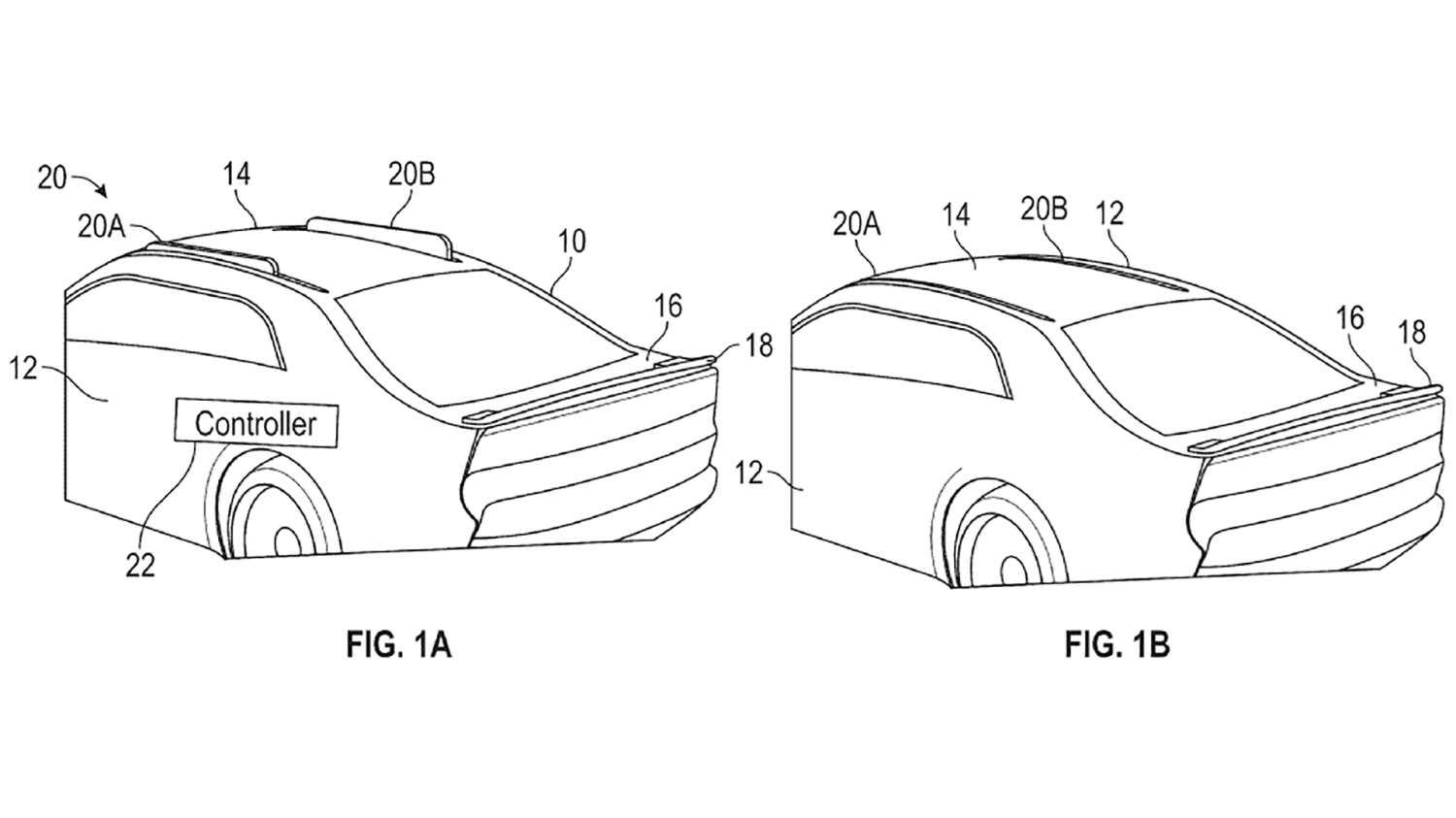
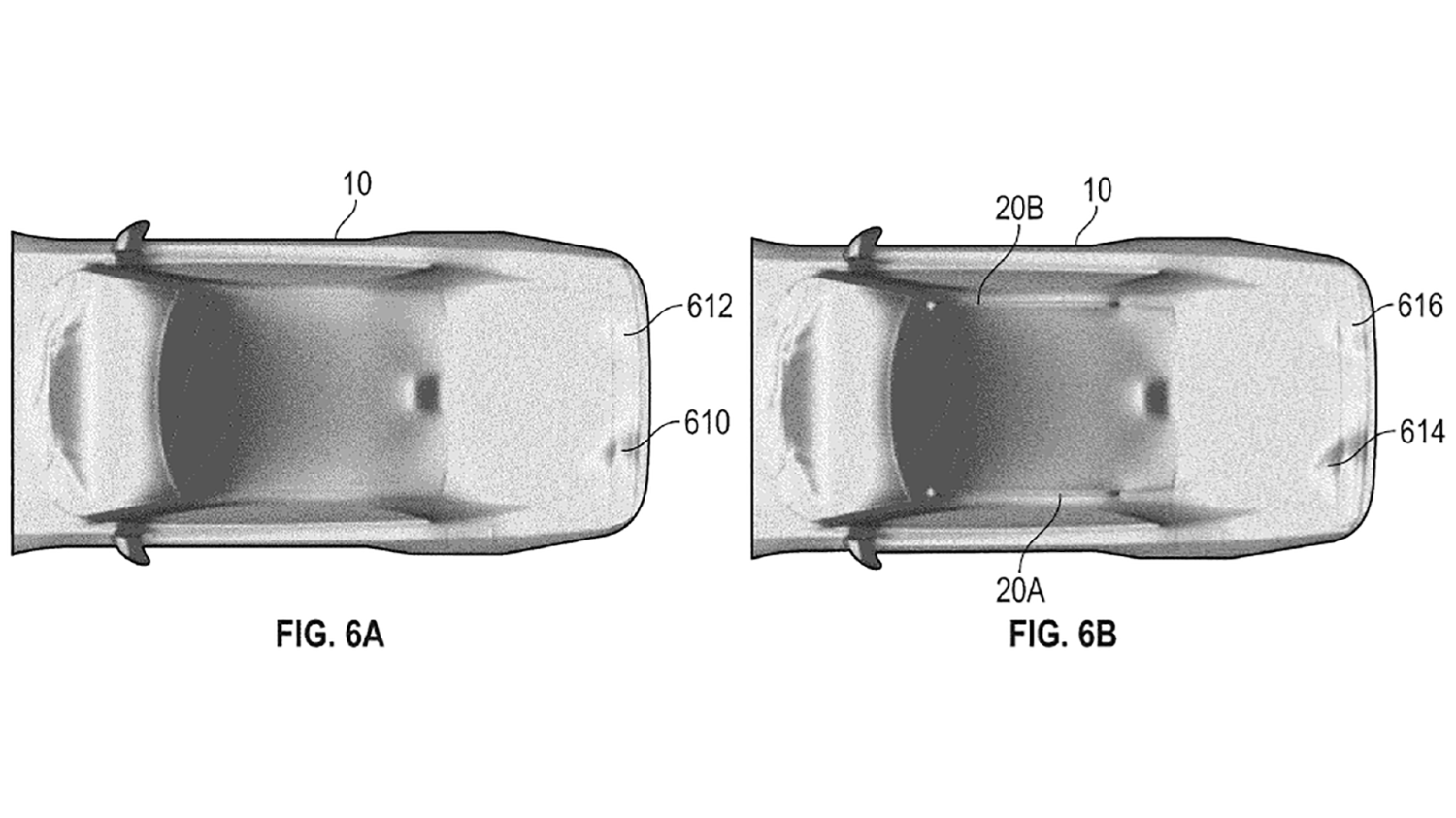
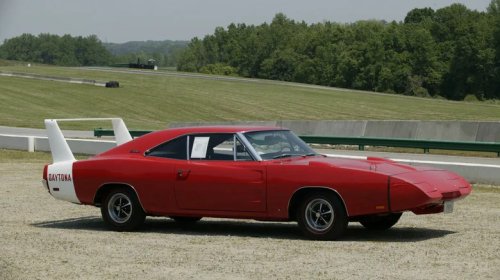
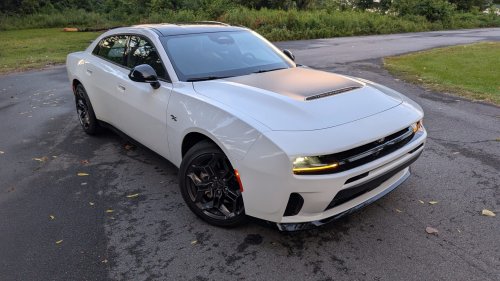
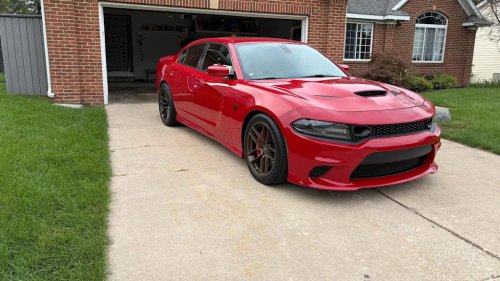
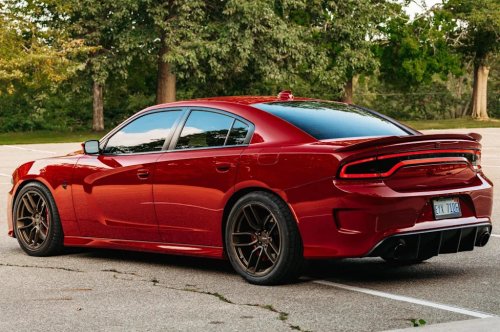
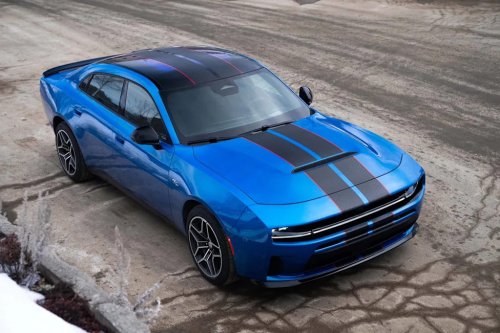
It seems Dodge wants to chase Porsche when it comes to finding imaginative ways to deploy active aero. CarBuzz uncovered a Stellantis patent for a device that deploys from the roof of your car. But, instead of going across the back of the car like a wing, it's two devices that run front to back like the roof rails on your Dodge Durango. You could call them roof rails that pop up at high speeds, but these aren't for SUVs. In fact, it looks like the Dodge Charger is the target vehicle.Inflatable roof rails on a Dodge Charger? This one is too weird to resist. Let's take a closer look. Yes, A Patent For Inflatable Roof Rails StellantisStellantis has engineered a set of active aerodynamic devices that run front to rear on your vehicle instead of side to side. If you're wondering why on earth the company would do that, you're not alone. Fortunately, some of that is covered in the patent drawings and the filing.In the design, the vehicle already has a rear spoiler on the trunklid. That spoiler is used in the usual way, to affect downforce and airflow at the back of the car. But, as Stellantis says in the filing, those spoilers aren't effective at certain speeds unless they can move. Making one that moves is expensive.The company's solution is a pair of inflatable roof rails that pop out of the roof at the sides of the vehicle. From what we can tell, they come out where the drip rails (or roof seam trim) would normally go.They really are inflatable. A decorative trim piece hides the rails when they're not in use, but then they pop up with pumped air as needed. Otherwise, Stellantis would have to use rigid panels, which would either look horrible because they're always deployed or take up huge amounts of headroom. They do cover that possibility in the patent, though. Device Sends More Air Over The Rear Spoiler Stellantis The roof-mounted rails help channel air to the rear spoiler, making it more effective at speeds where the wing isn't working at its best. No, the new rails don't create downforce directly; it's all about putting more air over the fixed element at the back.Computers in the vehicle would use sensors to decide when to deploy. In the patent, company engineers suggest they would go up at 55 mph. There would also be different modes, like a drag race mode where they're always up, or a braking mode where they deploy and stay up above 45 mph if you're braking hard.The patent drawings show the deployable roof rails on what looks like a Dodge Charger. They could work on any vehicle with a trunk, though, including the upcoming SRT Copperhead model that is part of the company's flurry of new models. The patent doesn't describe using them on an SUV's upright hatch, but the idea could still work.We're picturing a Dodge Charger merging on the highway beside us, then watching the roof rails suddenly popping up as the car gets to highway speeds. It's a hilarious image. But if it works to improve high-speed handling and stability, is it really that funny? CarBuzz Insight – Why This Matters: Modern vehicles are capable of extreme speeds, where handling stability is crucial. Automakers must also struggle to balance costs with that need, and to make sure a vehicle returns maximum fuel economy.Those needs fight against each other, and that leads to creative ideas. Is this patent a little too creative? Maybe. But we can also see buyers making them permanently deployed, to look like the rails and turn-around flaps on the top of a NASCAR racing Charger. Don't laugh, we still see plenty of Chargers with their yellow bumper protectors in place.Patent filings do not guarantee the use of such technology in future vehicles and are often used exclusively as a means of protecting intellectual property. Such a filing cannot be construed as confirmation of production intent.Source: US Patent & Trademark Office